Nordic Capitalism Comes to Seattle: Can the Nordic Model Survive Its Own Branding?
But in 2026, the conversation is changing. The Nordic model is no longer just a feel-good reference point for people frustrated by American inequality or Canadian housing pressure. It is being tested by aging populations, labor shortages, AI disruption, climate transition, migration politics, defense spending, and the return of hard security in the Nordic-Baltic region. The question is no longer simply whether North America can learn from the Nordics. It is whether the Nordics can keep delivering on the promise that made them so admired in the first place.
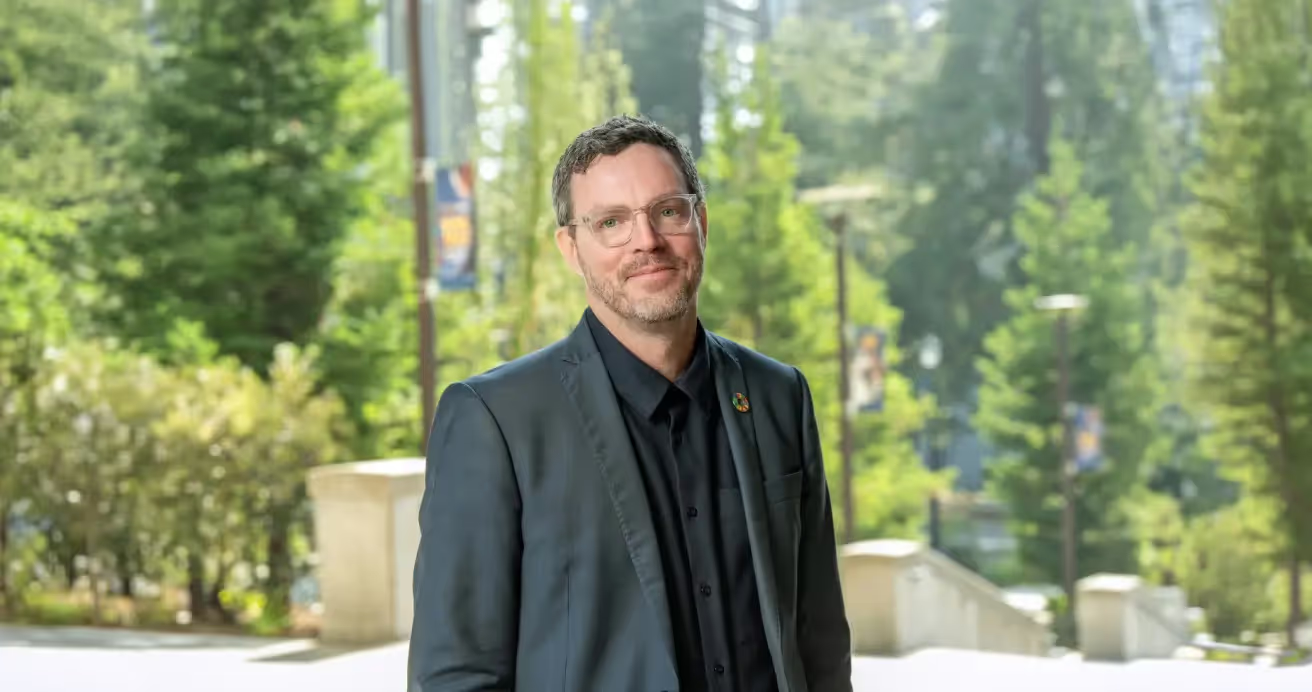
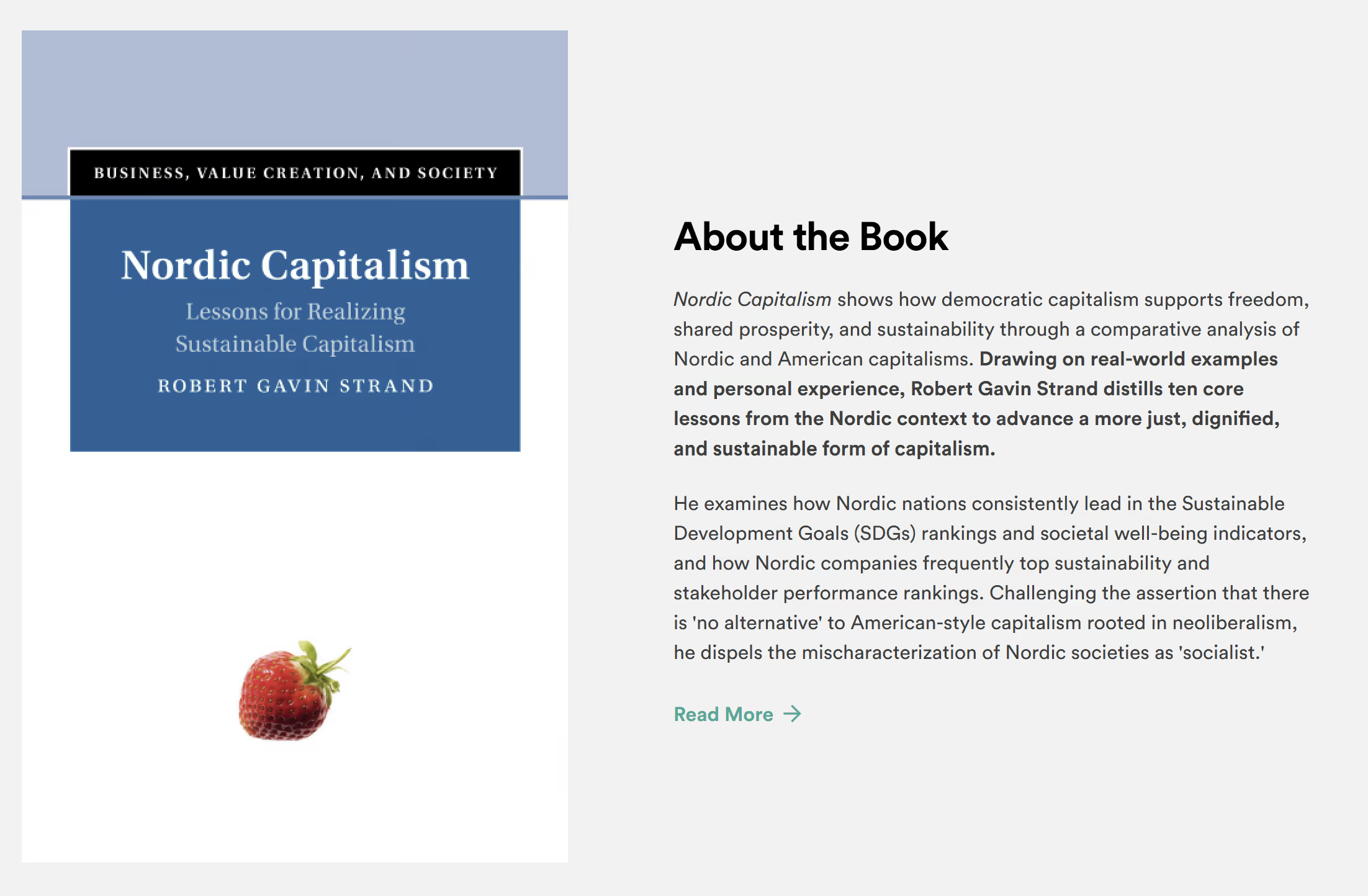
That question comes to Seattle on May 14, when the National Nordic Museum hosts Robert G. Strand for its Nordic Innovation Series event, “Meet the Author, Nordic Capitalism.” The museum frames the series as a way to bring “the most impactful ideas from the Nordics to Seattle,” building on its Nordic Innovation Summit. Strand’s new book, Nordic Capitalism: Lessons for Realizing Sustainable Capitalism, published by Cambridge University Press, argues that Nordic societies offer not socialism, as they are often mischaracterized in American debate, but a distinctive form of democratic capitalism organized around freedom, shared prosperity, dignity, and sustainability.
Featured Event & Book
Go deeper into Nordic Capitalism
Join the National Nordic Museum’s Nordic Innovation Series with Robert Gavin Strand, author of Nordic Capitalism: Lessons for Realizing Sustainable Capitalism, and continue the conversation beyond the article.
That distinction matters. The Nordic model is not a museum piece and not a mood board. It is a set of institutions, trade-offs, norms, policies, and political bargains. It depends on taxation, yes, but also on labor-market coordination, public investment, high employment, trust in institutions, broad social insurance, competitive firms, and an unusually strong belief that economic life should serve more than shareholder value.
For Seattle, this is not an abstract conversation. The city sits at the intersection of technology, wealth creation, inequality, housing stress, environmental ambition, and deep Nordic heritage. Ballard’s Nordic roots are not separate from Seattle’s modern innovation economy; they are part of the civic story that makes the National Nordic Museum an unusually fitting place to ask whether capitalism can be both dynamic and humane.
The timing is also significant. In March, Nordregio released State of the Nordic Region 2026, its flagship regional development report. The report describes a region navigating “overlapping transitions and heightened uncertainty,” including demographic shifts, economic restructuring, the green transition, and a changed geopolitical environment. Its focus on demography, labor markets, and the economy gives the Nordic capitalism debate a harder edge. The Nordics may still be admired for high employment and social cohesion, but the report emphasizes that regional outcomes are uneven and that territorial context matters.
In other words: there is no single Nordic story. There are metropolitan success stories, rural and peripheral pressures, labor shortages, infrastructure gaps, and regions trying to reposition themselves in a greener, more digital, more insecure economy. That complexity is exactly what often gets lost when the Nordic model becomes a brand.
The branding problem is not trivial. “Nordic” has become a powerful commercial language in North America. It suggests simplicity, fairness, quality, nature, wellness, and modernity. It sells furniture, skincare, tourism, architecture, organizational culture, and even leadership advice. Much of that appeal is earned. Nordic countries have repeatedly performed well in international measures of trust, well-being, sustainability, and social outcomes. Finland, for example, topped the World Happiness Report for the eighth consecutive year in 2025, with other Nordic countries clustered near the top.
Yet branding can soften the politics. A candlelit image of hygge does not explain collective bargaining. A photo of a bike lane does not explain land-use policy. A baby box does not explain tax design. A sauna does not explain why citizens accept relatively high taxation in exchange for universal systems. Scandinavian countries fund large-scale public services through broad tax bases, including consumption taxes and social contributions, not only through taxing the very rich. The model’s appeal is inseparable from its costs.
That is where North American admiration often becomes selective. Many people want Nordic outcomes: lower insecurity, better family policy, less medical anxiety, stronger public infrastructure, more trust. Fewer want the political discipline required to build and maintain them. Nordic capitalism is not simply capitalism with nicer branding. It is capitalism constrained, redirected, and legitimized by institutions that require buy-in across society.
It is also capitalism under pressure.
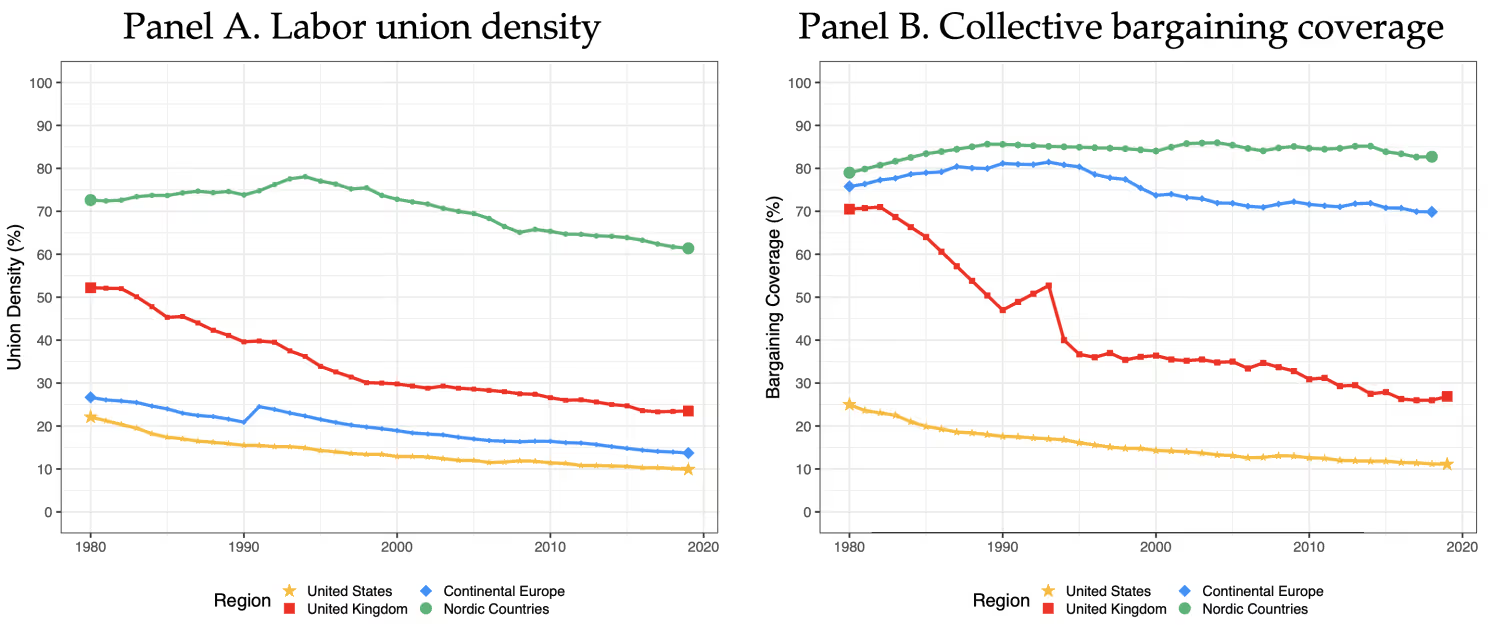
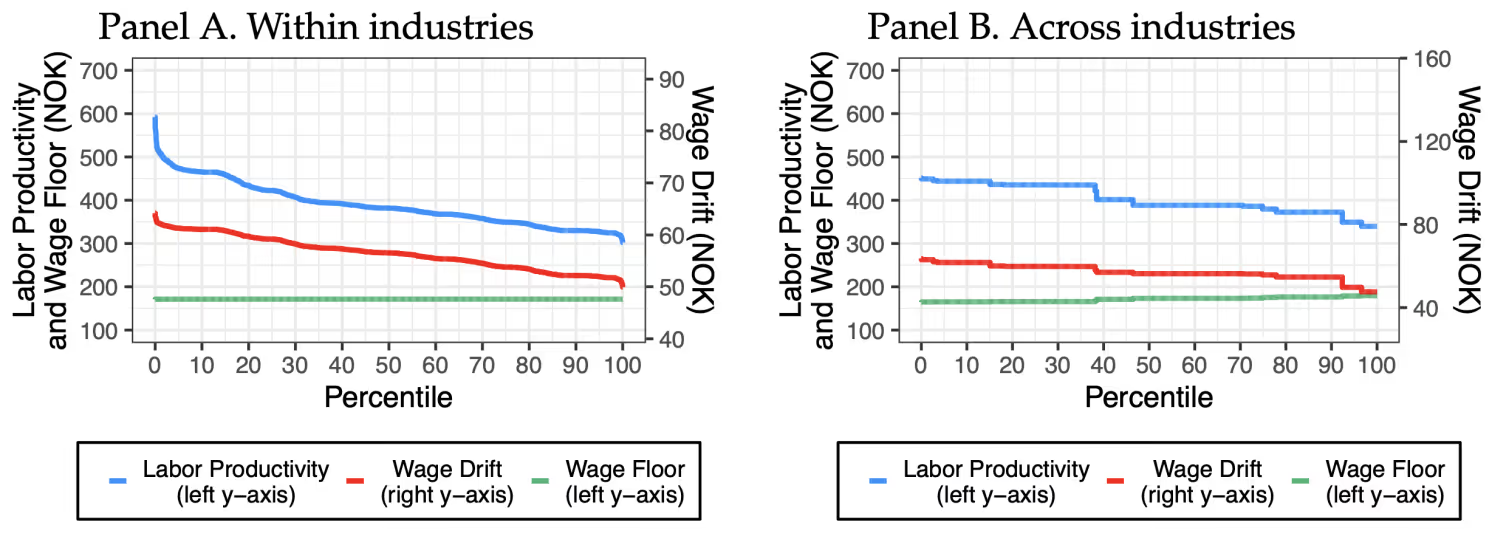
Source: Bhuller et al. (2022).
AI is already reshaping the future of work, and the Nordic promise of high labor-force participation will be tested by automation as much as by aging. Defense spending is rising across Europe, especially in the Nordic-Baltic security environment after Finland and Sweden’s NATO accession. The Nordic-Baltic Eight—Denmark, Finland, Iceland, Norway, Sweden, Estonia, Latvia, and Lithuania—has become more visible as a regional security actor, especially as Europe adapts to Russia’s war against Ukraine and renewed Arctic and Baltic tensions.
Climate transition adds another layer. The Nordics are widely associated with green policy and sustainability, but decarbonization is not a branding exercise. It affects industrial policy, energy security, mining, land use, Indigenous rights, urban planning, and rural employment. Nordregio’s 2026 report makes clear that economic restructuring and the green transition do not land evenly across the region.
Migration and integration are similarly central to the model’s future. The Nordic welfare state was never as homogenous as outsiders imagined, and in recent decades the region has become more diverse. The challenge is not whether the model can survive diversity, but whether its institutions can keep turning diversity into inclusion, labor-market participation, and trust. Nordic-Baltic cooperation projects such as FOR-IN 2.0 show that refugee and immigrant integration remains an active regional policy priority.
For North American readers, this is where the Nordic model becomes most useful—not as a fantasy of perfection, but as a living case study in institutional maintenance. The Nordics do not prove that social trust magically appears. They show that trust is built, budgeted, defended, and sometimes strained.
That lesson is particularly relevant in Seattle. The city knows innovation, but it also knows displacement. It knows world-class companies, but also visible inequality. It knows sustainability language, but also infrastructure bottlenecks and housing conflict. A conversation about Nordic capitalism in Seattle is therefore not merely a foreign-policy or heritage event. It is a local mirror.
The Nordic Museum’s event asks, “What is Nordic Capitalism?” The answer may be less romantic than the branding suggests, and more useful because of it. Nordic capitalism is not anti-market. It is not nostalgia. It is not a universal template that can be copied without context. It is a reminder that markets are designed by societies, that prosperity depends on legitimacy, and that people are more willing to accept change when they believe the risks and rewards of change are shared.
For The Northern Voices audience, the deeper question is not whether the United States or Canada can become Denmark, Finland, Iceland, Norway, or Sweden. They cannot, and the Baltic countries add yet another set of histories, pressures, and lessons. The better question is what Nordic and Baltic experiences reveal about the choices North American societies still have.
Can innovation be tied to social purpose rather than only valuation? Can climate transition create regional renewal instead of regional abandonment? Can labor-market flexibility coexist with security? Can business leadership be evaluated not only by growth, but by contribution to social resilience? Can heritage communities help translate these ideas across the Atlantic without reducing them to slogans?
The Nordic model’s greatest export may not be policy itself. It may be permission: permission to imagine capitalism differently.
That is why the Seattle conversation matters now. At its best, Nordic capitalism challenges two lazy assumptions at once. It challenges the American idea that inequality is the unavoidable price of dynamism. It also challenges the romantic idea that Nordic success is effortless, harmonious, or guaranteed.
The model survives only if it remains more than a brand. It survives if it can adapt to AI, aging, migration, climate pressure, geopolitical insecurity, and regional inequality without abandoning the principle that prosperity should be broadly shared. It survives if Nordic societies continue to do the hard institutional work behind the soft-power image.
And it survives, perhaps, if North American audiences learn to look beyond the bicycles and the beautiful chairs—and ask how the system underneath was built.

)%20(1).avif)