The New Choir Generation: Why Group Singing Still Matters Across the Nordic and Baltic Diaspora
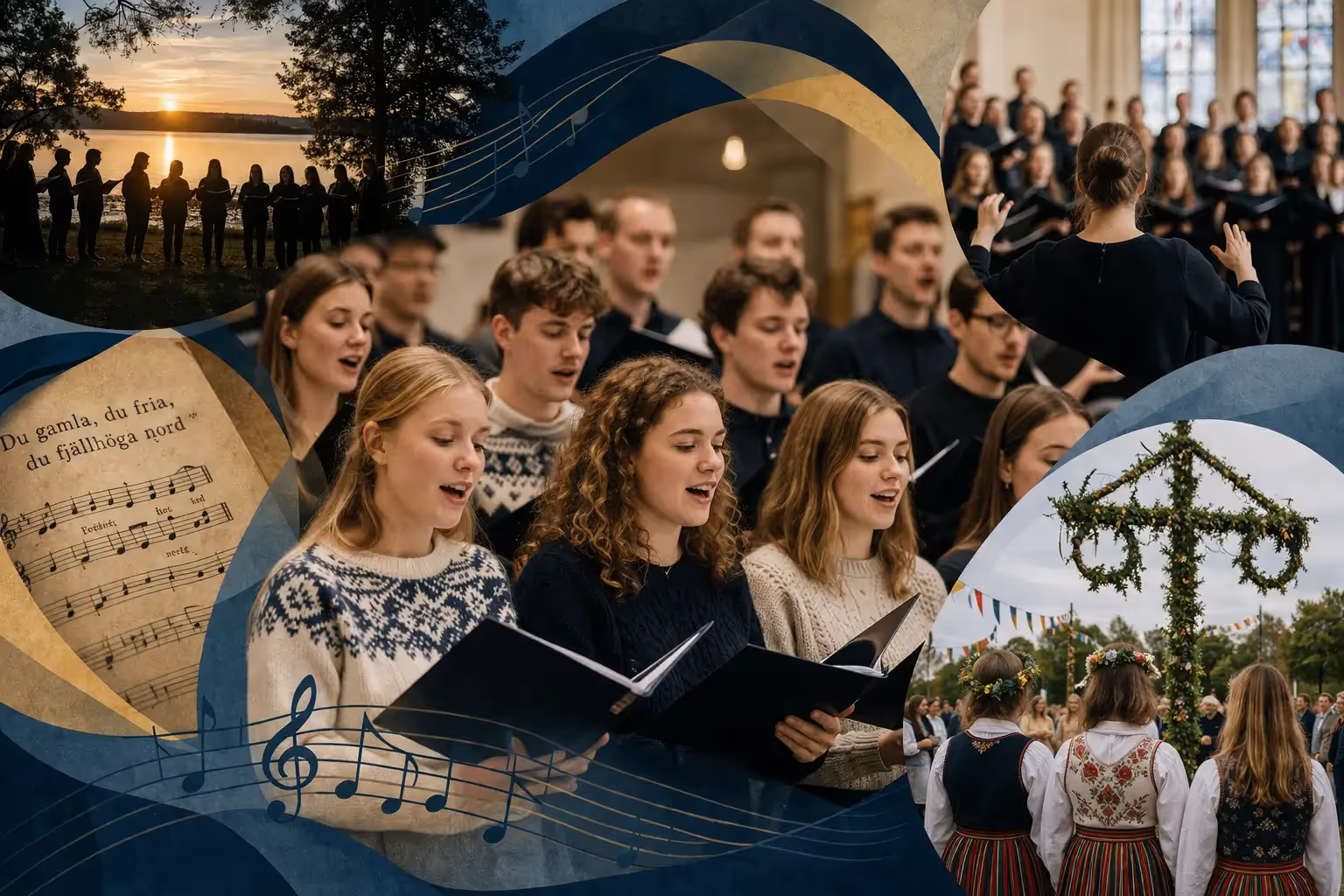
Long before many people can explain their connection to a place, they can often sing it.
Across Nordic and Baltic communities in North America, choir culture remains one of the most visible, durable, and emotionally immediate forms of cultural continuity. It appears in churches and concert halls, at song festivals and community gatherings, in rehearsal rooms rented for a few hours on weeknights, and in the memories people carry of grandparents who sang before them. For some, it begins with formal training. For others, it begins simply with being invited into a room where everyone seems to know when to stand, when to breathe, and when a song means more than entertainment.
That may be part of choir culture’s lasting power. It is artistic, certainly, but it is also social. It preserves repertoire, language, and tradition, but it also gives people a way to belong before they have fully sorted out the rest of their identity.
This matters especially in diaspora communities, where culture is rarely inherited in a single, intact line. One person arrives with fluency, another with a family name, another with childhood summers, another with little more than a feeling that some part of this history belongs to them. A choir has room for all of them. It is one of the rare cultural spaces where people can enter at different points and still build something together.
In Baltic communities especially, communal singing carries historical weight that is difficult to overstate. Song festivals have long been more than musical events; they have been expressions of collective memory, civic feeling, and cultural endurance. In Nordic communities, too, choral traditions have shaped church life, seasonal celebrations, student culture, and local arts scenes for generations. But in North America, these histories take on another dimension. Here, choir singing is not only inheritance. It is a way of keeping community audible.
What makes that especially compelling now is that the current generation of singers is not simply preserving the past in formal dress and careful reverence. In many communities, younger participants are reshaping what choir life looks like. Some come through family tradition, but others arrive through friendship, university life, festival culture, or a growing adult desire to reconnect with heritage. Some are fluent in the language of the repertoire. Others are learning phonetically, line by line, guided by recordings, transliterations, or the person standing next to them. What matters is not perfection alone. What matters is participation.
That shift gives choir culture renewed energy. It becomes less about proving authenticity and more about practicing it together.
There is something unusually generous about a singing community. A person may walk into rehearsal unsure of the language, uncertain of the protocol, and only loosely connected to the culture, and still leave having contributed to a sound larger than themselves. Choirs ask for commitment, discipline, and listening, but they also offer structure. For diaspora communities, that structure can become a powerful social form. People meet across generations. Newcomers are folded in. Repertoire becomes a kind of archive, carried not in boxes but in breath and repetition.
This is one reason choir culture often outlasts other community habits. It is both meaningful and practical. It gives a calendar to the year. It creates reasons to gather. It ties social life to preparation, celebration, and shared work. It makes culture something people do together rather than merely admire from a distance.
And crucially, it creates public feeling.
Much has been written about private heritage: recipes passed down, family sayings, keepsakes, old photographs. Choir singing belongs to a different category. It is what heritage sounds like when it enters public space. The audience hears harmony, but singers often experience something more layered: language recovered through muscle memory, historical awareness made physical, and the deep reassurance of being surrounded by others who recognize the significance of a phrase, a cadence, a seasonal song, or a national repertoire that might otherwise remain marginal in daily North American life.
For younger generations, this can be transformative. Many descendants of Nordic and Baltic immigrants inherit culture in fragments. They may know holiday customs but not history, surnames but not grammar, family stories but not the larger context into which those stories fit. Choirs offer a different route back. Through song, people encounter language, poetry, religious tradition, political memory, regional style, and collective emotion all at once. Even when they do not understand every word immediately, they understand that the words matter. The meaning arrives through atmosphere, repetition, and shared attention.
That is part of why choir culture still feels contemporary rather than merely commemorative. In an era of digital life, individualized entertainment, and increasingly solitary habits of listening, communal singing asks people to do something almost countercultural. It asks them to show up in person, hear each other carefully, and participate in an art form that cannot be fully outsourced to a screen. It creates a temporary commons. For communities that care deeply about continuity, that is no small thing.
It is also why choir life remains one of the most welcoming entry points into diaspora culture. Not everyone will attend lectures or read history closely. Not everyone will take language classes. Not everyone will feel at ease entering a community through formal institutions. But many people can be invited to sing, or to listen, or to attend a performance and feel, perhaps for the first time, that this culture is not only ancestral but present.
The future of Nordic and Baltic cultural life in North America will not depend on any one institution. It will be built through many forms: schools, camps, publications, churches, festivals, family traditions, arts organizations, and informal friendships. But choirs will almost certainly remain among the most resilient of them, because they offer something both beautiful and useful. They preserve repertoire, yes, but they also create community in real time.
That may be the secret of their endurance. A choir does not simply remember a people. It gathers one.
And in diaspora life, that is often where renewal begins.

)%20(1).avif)