Memory, Exile, and the Work of Return: Reet and Toomas Mae in Tallinn
Vabamu’s mission is to recount Estonia’s path from occupation to independence and to remind visitors of the fragility of freedom, making it an especially resonant home for films built from exile testimony, historical trauma, and the stubborn afterlife of remembrance.
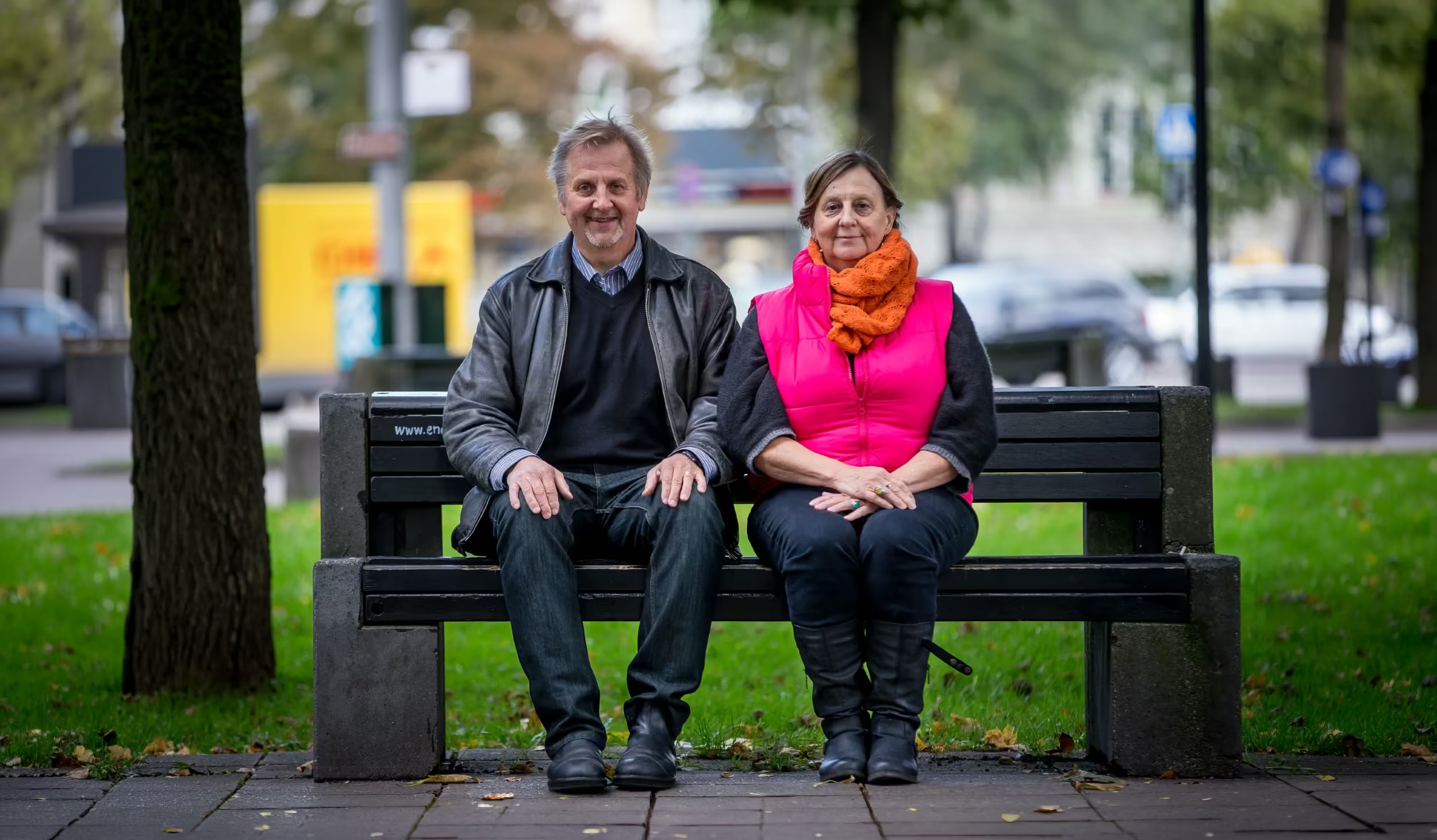
The Maes’ connection to that history is not academic distance but inheritance. Their parents fled to Sweden during the 1944 Great Escape, with, as the Vabamu event notes, only half an hour to decide whether to leave or stay. Reet and their sister Mari were born in Sweden; Toomas was born in Canada. For more than a decade, Reet and Toomas have worked to gather the stories of Estonian diaspora elders in Canada and on the U.S. East Coast so those voices are not lost. That long practice of listening gives their films a rare moral texture: they are not mining history for drama, but preserving it before time closes over it.
That is the first thing worth saying about their career as a whole: Reet and Toomas Mae are not simply documentary filmmakers. They are memory workers. Their films sit at the intersection of oral history, cultural preservation, visual art, and technological experiment. Over time, they have built a body of work concerned less with spectacle than with transmission: how stories survive displacement, how culture survives terror, and how descendants of exile might translate inherited memory into contemporary form. Their recognition reflects that broader contribution. In 2015, Patterns of Freedom / Vabaduse mustrid earned Estonia’s Cultural Endowment annual award in folk culture, and in 2017 the Estonian Foreign Ministry recognized Reet and Tom Mae with a People’s Diplomacy commendation for documenting Estonian cultural traditions on film.
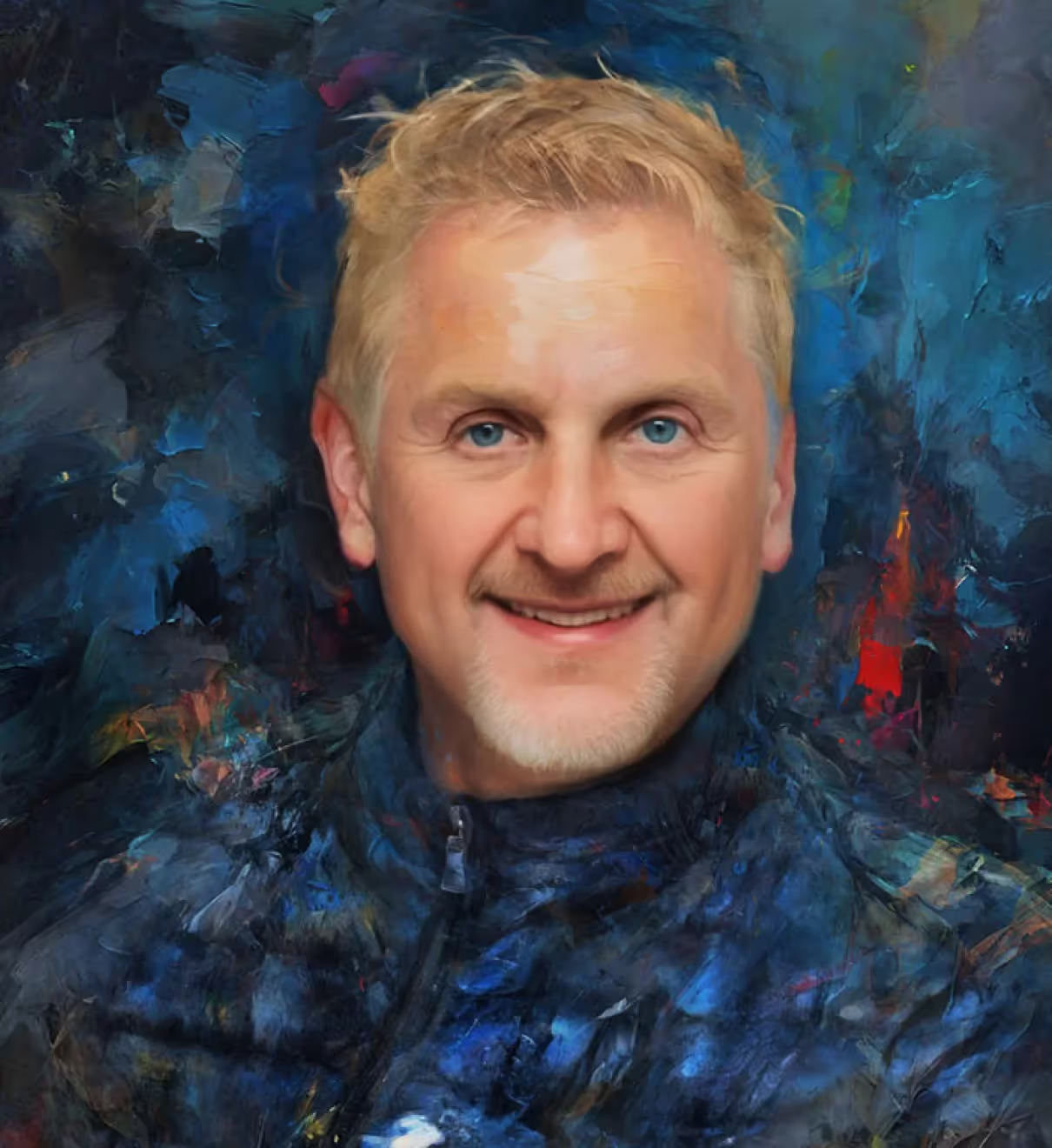
Toomas Mae’s professional path helps explain why the films look and move the way they do. His career spans decades in digital media, visual effects, design, advertising, film, and interactive development. On his professional site, he describes more than 20 years in digital media and visual VFX, while his awards record reaches back to late-1980s commercial work, including honors connected to a VISA Summer Olympics campaign and other advertising projects. He has also worked with corporate clients including Ford Canada. That breadth matters because in the documentary work with Reet, Toomas brings not only editing and cinematography, but a fluency in image-making across mediums—branding, animation, special effects, apps, and digital environments. In the Maes’ hands, technology is not decoration; it is a bridge between testimony and feeling.
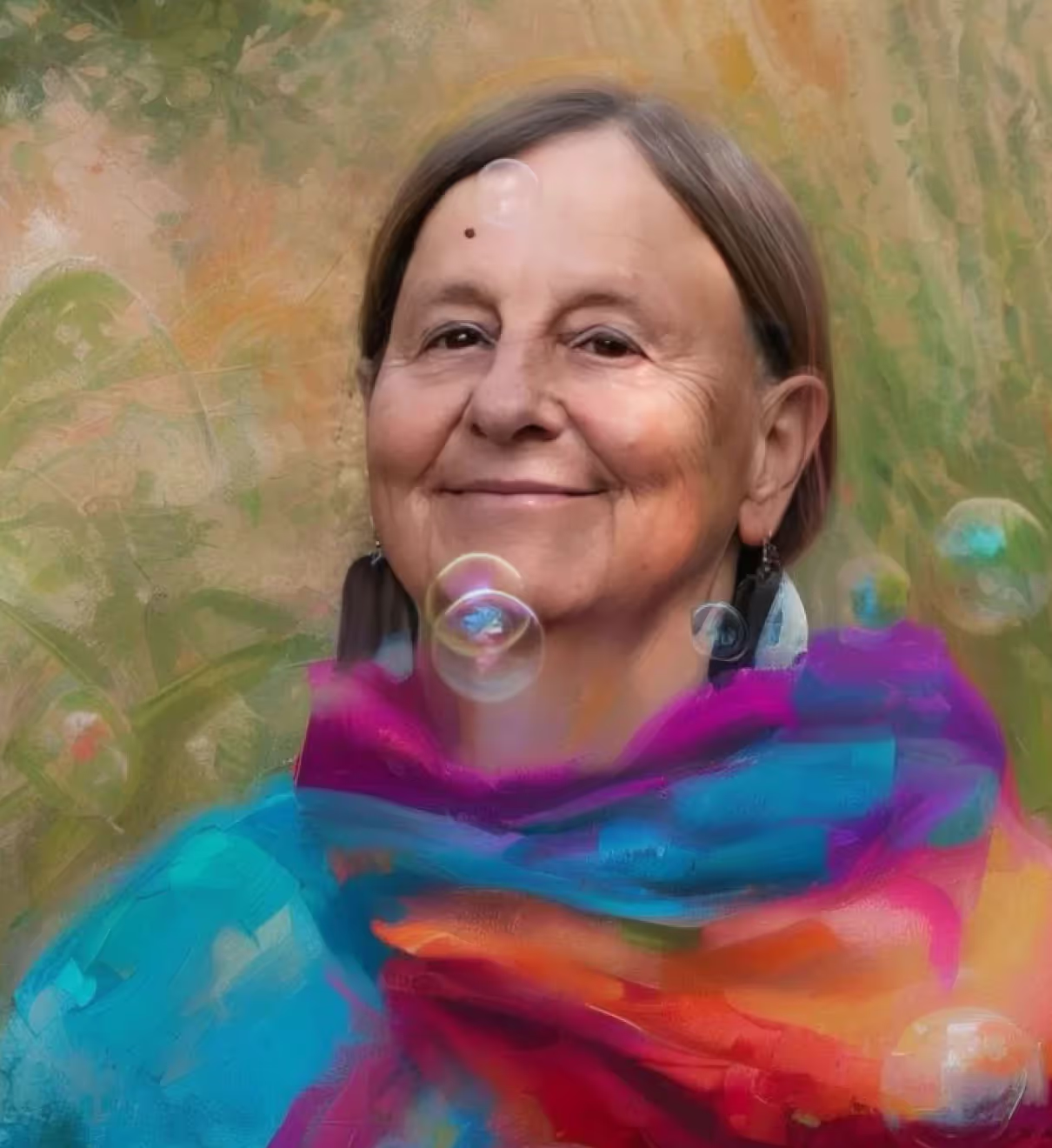
Reet Mae’s career, by contrast, broadens the work inward. She is described by both Vabamu and Baltic Stories as a documentary filmmaker, artist, researcher, and interfaith or metaphysical minister whose work includes award-winning training tools for mental-health workers and animation- and video-based apps for children’s mental health. Her art has been shown in Canada, the United States, and Estonia, and her research and curriculum work has extended into Estonia as well. That combination—pastoral, artistic, scholarly, therapeutic—helps clarify why the Maes’ films so often feel attentive to emotional aftermath rather than just historical event. Reet’s stated interest in intergenerational trauma and exile identity is not incidental to the films; it is one of their central engines.
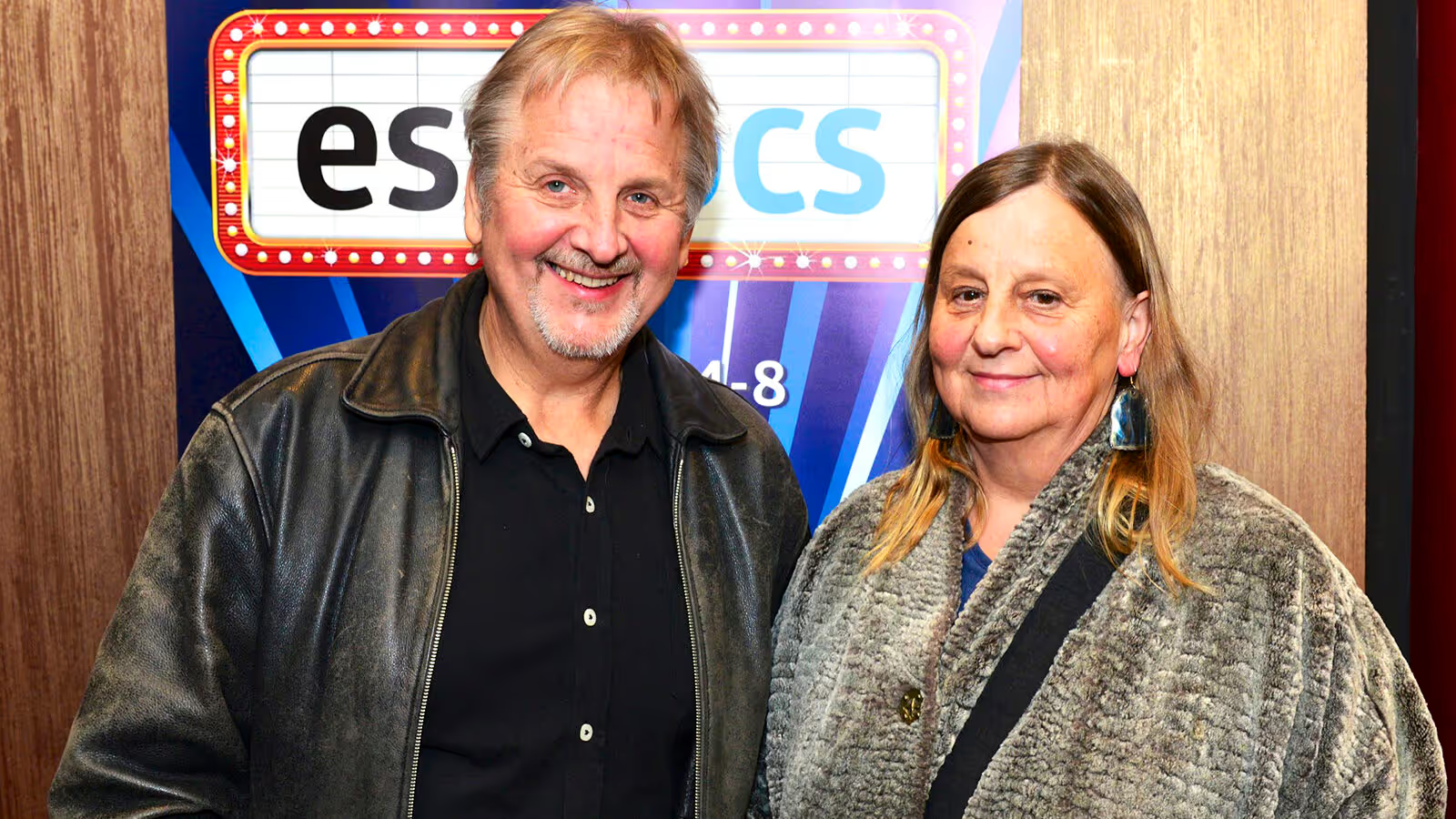
Their best-known earlier feature, Patterns of Freedom, remains a key to the whole project. The film, originally developed under the working title Keepers of the Loom, grew out of stories around Estonian folk costume and women’s cultural labor in exile. As the project evolved, its scope widened from local makers in Toronto to a more expansive meditation on heritage, symbolism, and the ways women who fled in 1944 carried culture forward through weaving, craft, and traditional dress. The film opened EstDocs in 2014, won a Bronze Remi at WorldFest-Houston, and later received the Cultural Endowment of Estonia’s annual award in folk culture. It was, in effect, a film about pattern as survival: the idea that heritage can be held not only in archives and institutions, but in hands, fabric, ritual, and repetition.
Raising the Flag / Lipu heiskamine sharpened the pair’s historical focus in a different register. That short documentary tells the story of Fred Ise and a group of patriotic youths who, in the chaotic hours of 28 August 1941, raised the Estonian flag on Pikk Hermann in Tallinn during the clash of retreating Soviet and advancing German forces. The film went on to collect a Canada Shorts Award of Distinction, a Silver Remi at WorldFest-Houston, and later festival selections including the Parliament of the World’s Religions Film Festival. What is compelling about the film in the context of the Maes’ larger career is that it compresses their method into one symbolic act: oral testimony, national memory, cinematic reconstruction, and the insistence that even brief moments of freedom matter.
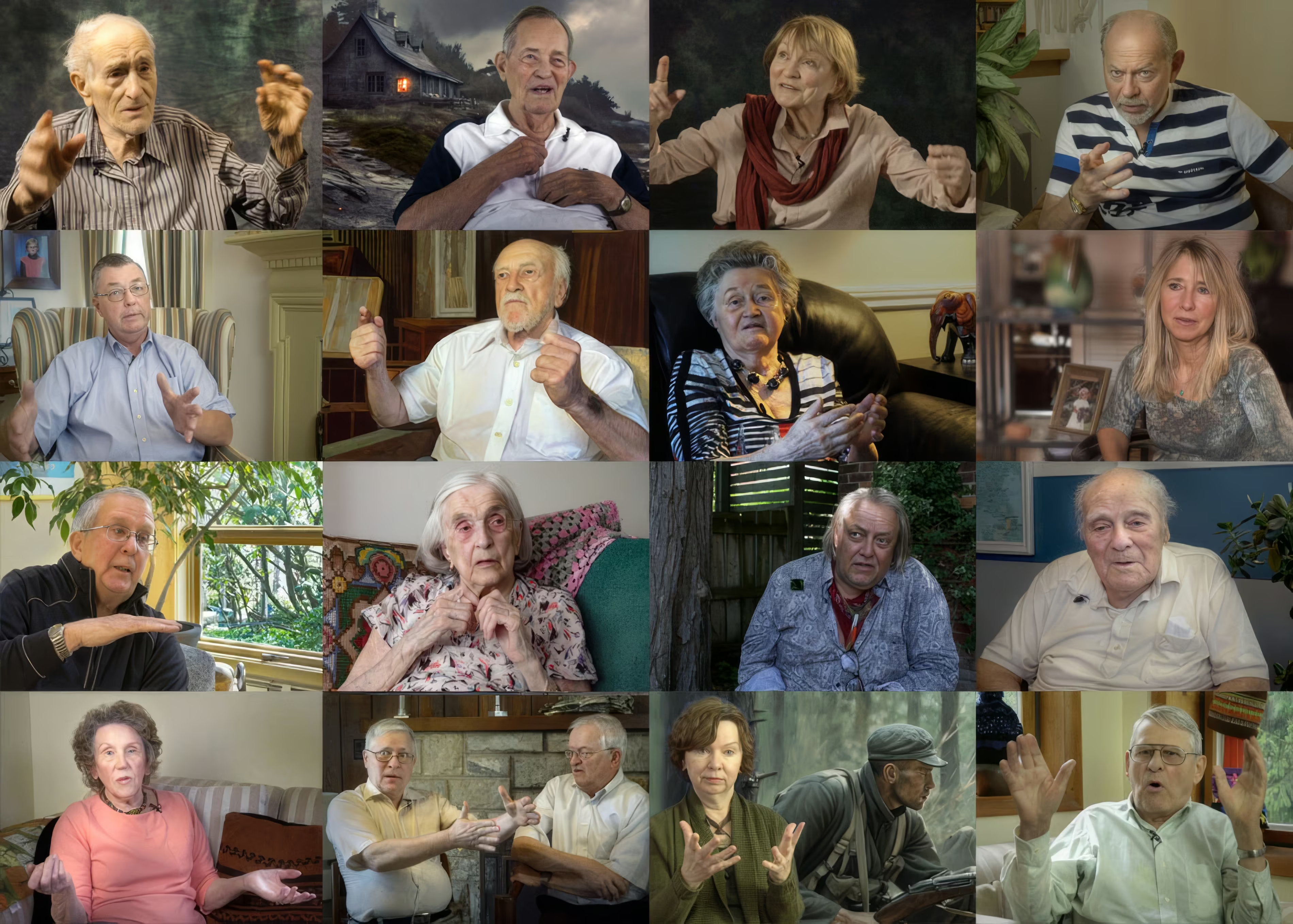
From there, the work widened again. Their long-running project In Search of Our Fathers / Meie isade otsingul broadened the lens from women’s cultural preservation to men’s wartime experiences, the Great Escape, and the generational legacy of flight, survival, and rebuilding. According to Baltic Stories and Eesti Elu, the project’s trajectory shifted further after Russia’s occupation of Crimea in 2014 and, later, the full-scale war in Ukraine, prompting the filmmakers to draw more explicit connections between Baltic historical memory and present-day Russian aggression. That evolution feels essential rather than opportunistic. The Maes’ films do not collapse past and present into easy analogy; they ask what it means when histories once treated as regional or “finished” suddenly speak again with new urgency.
That is precisely what made the February screening in Tallinn so timely. The Vabamu program brought together four films: Deportations and Disappearances: Memories of Soviet Occupation in the Baltic States, which serves as a prequel to the Great Baltic Escape 1944 triptych, and the three shorts Exodus (or Kodust põgenemine), Extending Compassion (Kaastunne), and Examining the Context (Kontekst). Taken together, the films move from first-person testimony about arrests, deportations, and disappearances under the first Soviet occupation, to the mechanics and emotional cost of the 1944 escape, to present-day parallels in the stories of Estonian and Ukrainian displacement, and finally to historical analysis from scholars including Andres Kasekamp, Lubomyr Luciuk, and Rein Taagepera. The architecture of the program itself reveals the Maes’ mature method: witness, memory, comparison, context.
Just as notable is the way they build those films. Vabamu’s event description and the Baltic Stories materials emphasize the use of digital art and AI-enhanced imagery—not to sensationalize trauma, but to render emotional and psychological histories with care. In less thoughtful hands, that language might raise concerns. In the Maes’ case, it seems to emerge from a much longer practice of experimentation across documentary, animation, digital design, and installation. Their 2023 artwork Bound by Struggle / Ühises võitluses, for example, incorporated QR-linked moving-image fragments into a Baltic unity exhibit in Toronto. The throughline is consistent: old stories are not embalmed; they are reactivated.
What the Tallinn screening finally underscored is that Reet and Toomas Mae have built a career around an unusually difficult artistic task: honoring pain without reducing people to pain. Their films are about occupation, flight, exile, and loss, but they are also about agency—about what people carried, remade, protected, and passed on. At Vabamu, that work returned to Estonia not as nostalgia, but as a living conversation about freedom, memory, and responsibility. In an age of shortened attention spans and flattened historical understanding, that is more than admirable. It is necessary.

)%20(1).avif)