The Superfan Economy Is Rewriting the Rules of Fame
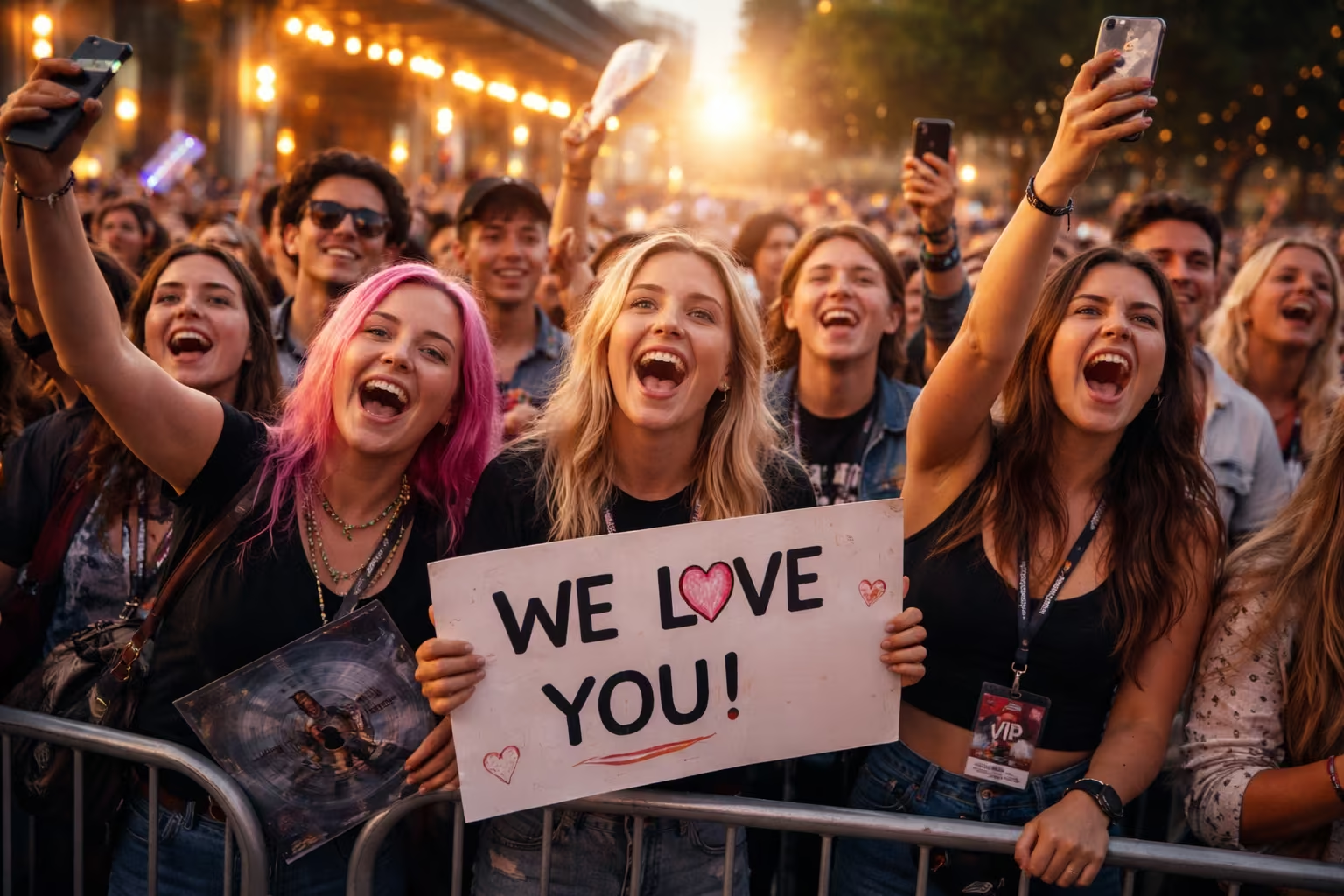
Superfans are changing the economics of music, media, fashion, and digital culture because they are not just consumers; they are communities, amplifiers, archivists, and believers. As Vogue recently argued, superfandom is booming because it offers something deeper than entertainment: identity, belonging, and meaningful connection.
That shift matters because it changes the question artists should be asking. The old question was: how do I reach more people? The new one is: how do I matter more to the right people? Patreon’s 2025 State of Create, developed with NewtonX from responses from more than 1,000 creators and 2,000 fans, found that creators are moving beyond follower count as a success metric and prioritizing direct audience relationships, better discovery, and more stable monetization. Patreon has also reported that 86% of core fans say they are likely to join a dedicated creator community. That is not a minor behavioral tweak. It is a structural change in what audiences want from culture.
The economics back it up. IFPI says global recorded music revenues reached $29.6 billion in 2024, up 4.8%, with streaming accounting for 69% of total revenues and 752 million paid subscription users worldwide by the end of the year. That sounds like abundance, and in some ways it is. But scale in streaming does not automatically equal stability for artists. Patreon’s own reporting has argued that the average annual income per fan can be dramatically higher in spaces built for direct connection than on algorithmic social platforms, and the company says podcasters alone earned $472 million from more than 6.7 million paid memberships on Patreon in 2024. The lesson is simple: passive attention is abundant, but active devotion is where durability begins.
That is why direct-to-fan infrastructure is becoming central rather than peripheral. Weverse describes itself as a “global fandom life platform,” which is telling in itself: fandom is no longer treated as a side effect of popularity, but as a destination and product layer of its own. Universal Music Group’s February 2026 deal with EVEN makes the shift even clearer. UMG said the platform would help labels and artists engage their most dedicated fans through early access to music, exclusive content, community features, artist-led experiences, and direct commerce, all tied into a broader direct-to-consumer strategy. In other words, the industry has not missed the memo. It is reorganizing around the idea that fan relationships are not an accessory to the business. They are the business.
This does not mean artists no longer need teams, strategy, or infrastructure. It means they need a different kind of infrastructure. The gatekeepers have not vanished, but their role is changing. Spotify for Artists now pitches itself not just as a music dashboard but as a place to “develop your fanbase, build your business, and create the world around your music,” with tools for merch, tickets, video, pre-release hype, and direct audience engagement. The most modern artist is no longer simply releasing songs into the void and hoping the algorithm smiles. They are building a world, giving fans a reason to return to it, and making that return measurable, monetizable, and emotionally meaningful.
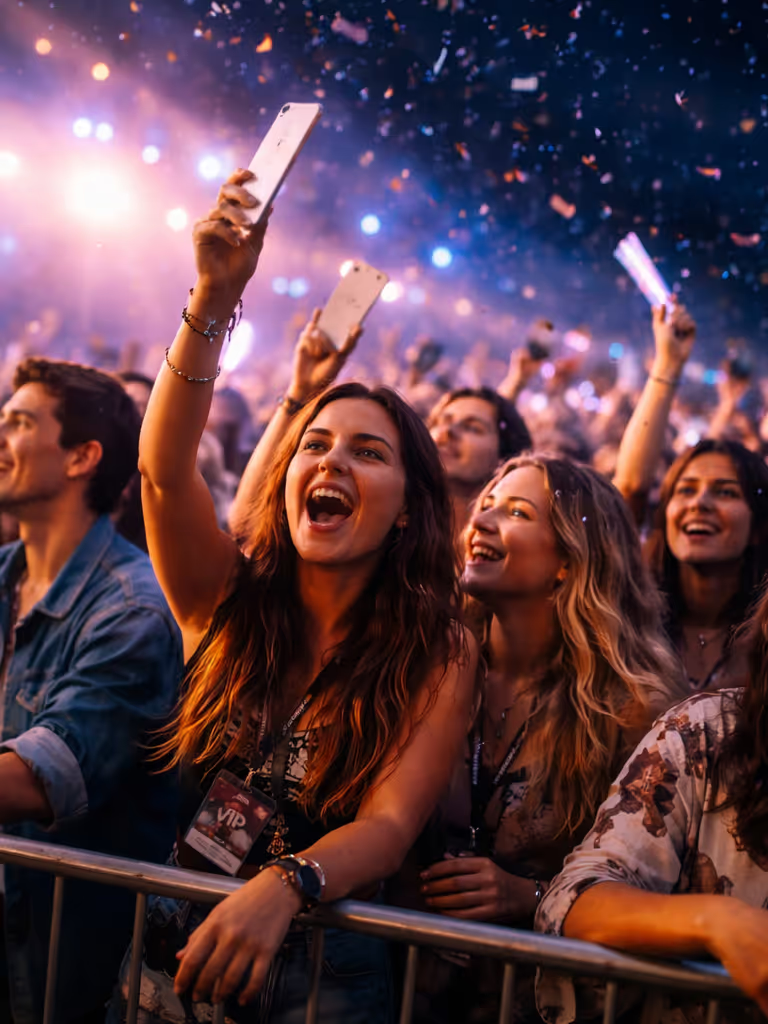
This is also a branding story, and that may be the part many artists still underestimate. Brand in 2026 is not just aesthetic polish. It is social architecture. The strongest artists are not merely recognizable; they are inhabitable. Fans do not just listen to them, they participate in rituals around them. Spotify’s Fan Life campaign explicitly celebrates the “rituals and celebrations” that define fan communities and frames fandom around connection, community, creativity, ticket access, exclusive content, and once-in-a-lifetime experiences. That is what the strongest cultural brands now understand: people do not just want proximity to art. They want entry into a shared emotional language.
And this is where the conversation gets bigger than music. The superfan economy is rising at the exact moment traditional traffic models are weakening. Reuters Institute’s 2026 trends report says publishers expect traffic from search engines to decline by roughly 43% over the next three years as search turns into an AI-driven answer engine. The same report says news organizations are responding by focusing on more distinctive content, a more human face, and more flexible formats. The UK’s Competition and Markets Authority has already proposed measures that would require Google to give publishers meaningful choice over whether their material is used in AI summaries. The message is unmistakable: in an internet increasingly designed to summarize, flatten, and intermediate, direct relationships are becoming more valuable than rented visibility.
That is why the superfan economy is not just a trend piece for the music business. It is a map of where culture is going. The creators, artists, and media brands that thrive over the next five years will not necessarily be the ones with the widest reach. They will be the ones with the deepest trust. They will understand that community is not a byproduct of content; it is the moat around it. They will stop treating fans like traffic and start treating them like stakeholders in a shared world.
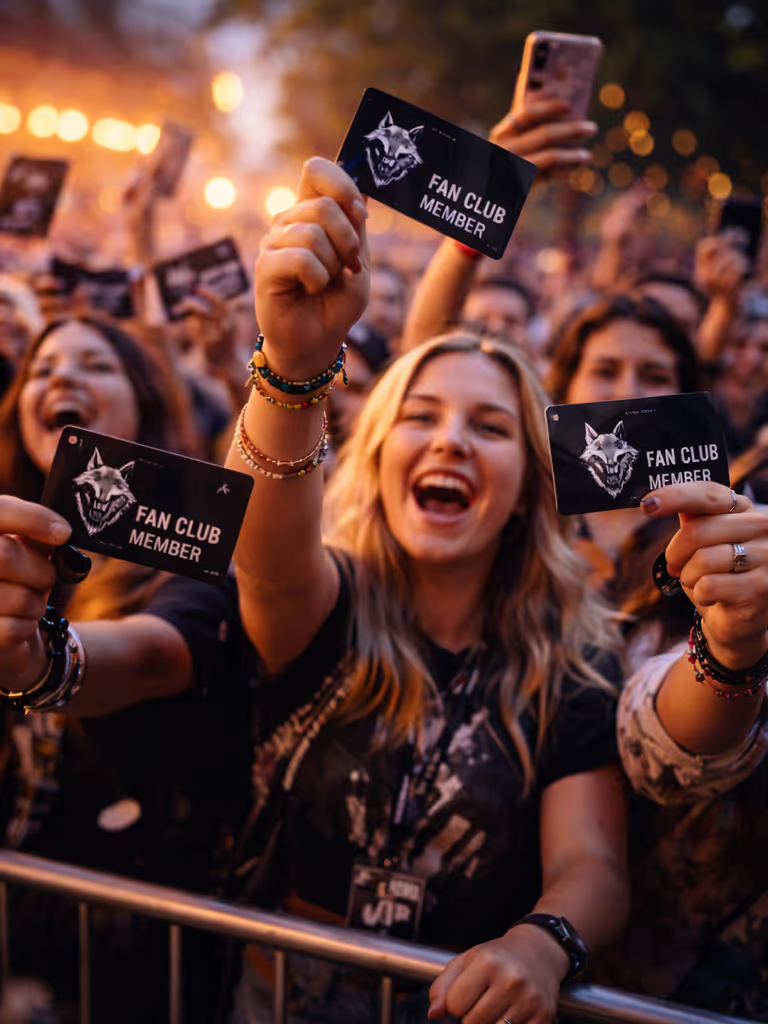
There is, of course, a danger here. The moment every brand begins talking about “community,” audiences become more alert to manipulation. Vogue notes that superfans are quick to reject insincerity and over-commercialization. That is the paradox at the center of this new economy: fandom can be monetized, but it cannot be faked. The artists who win will be the ones who understand that access is not the same thing as intimacy, and that loyalty must be earned over time rather than extracted on demand.
So yes, artists still need the industry. But not in the old way. They no longer need to wait for permission to build meaningful cultural power. They need the tools, the imagination, and the discipline to turn audiences into communities and communities into lasting ecosystems. Virality may still create moments. But in 2026, belonging is what builds careers.
