Why Syttende Mai Still Turns North American Streets Into a Stage
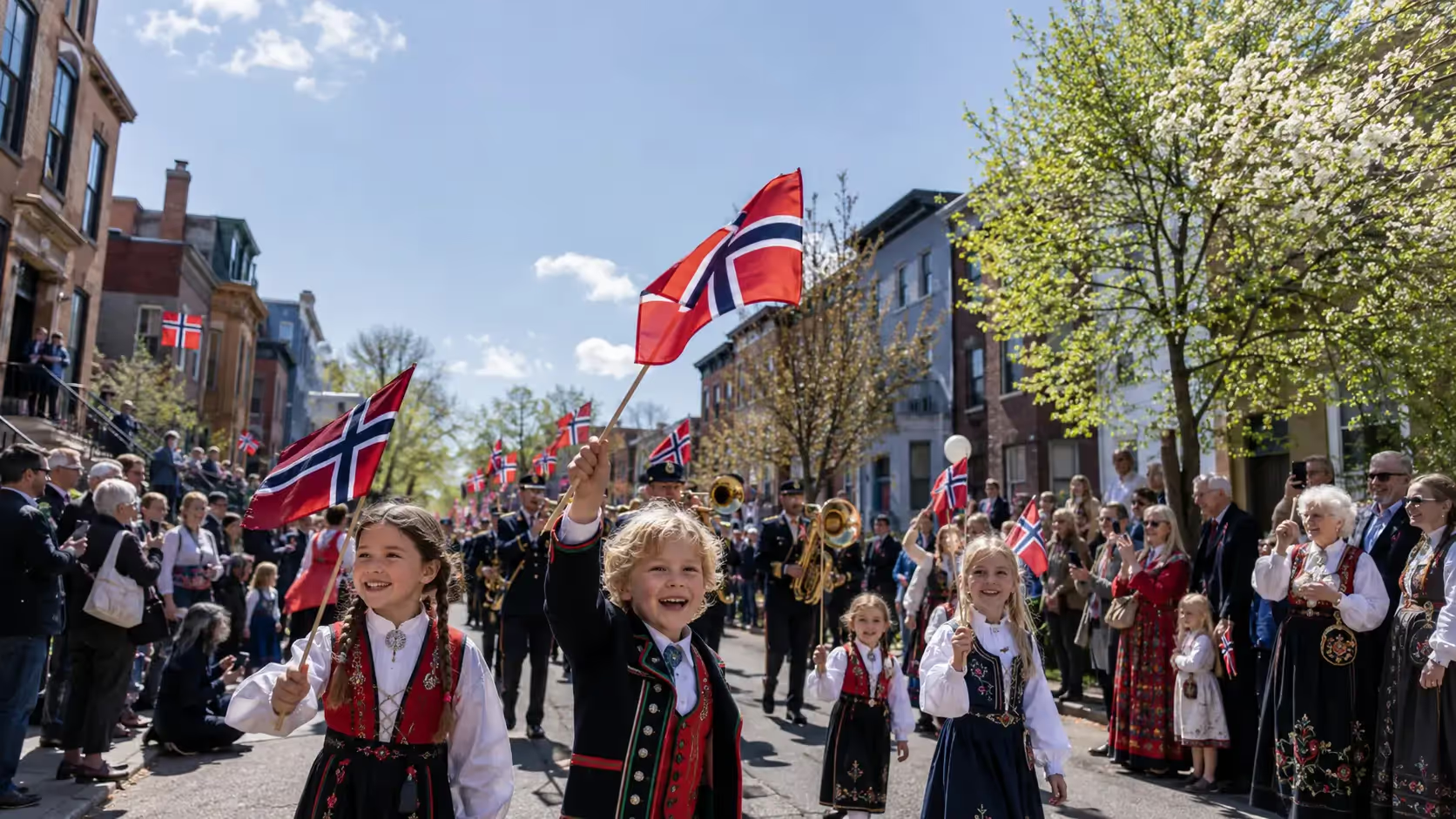
On Sunday, May 17, 2026, Norwegian communities across North America will do something both old-fashioned and urgently contemporary: they will take to the street.
In Bay Ridge, Brooklyn, the Norwegian-American 17th of May Parade Committee is preparing its 73rd annual parade under the theme “Our Legacy Continues,” with a new 1 p.m. start time and a route beginning at 85th Street and Third Avenue before moving through the neighborhood toward 67th Street. In Park Ridge, Illinois, the Norwegian National League is planning its Syttende Mai parade and park festivities at Hodges Park from noon to 3 p.m., with the parade scheduled for 1 p.m. In Calgary, Sons of Norway’s Valhalla Lodge is marking the day at the Scandinavian Centre with a parade, activities, hot dogs, ice cream, and a short program. In Minot, North Dakota, Scandinavian Heritage Park is hosting a walking parade, singing, Norwegian attire, flags, and a post-parade lunch at Sons of Norway Thor Lodge.
Look closely at those details and a larger truth appears. Syttende Mai survives abroad not because people are trying to preserve Norway behind glass, but because the holiday still knows how to make culture public.
That may be the most distinctive thing about Norway’s Constitution Day. The holiday commemorates the signing of the Norwegian Constitution at Eidsvoll on May 17, 1814, yet its emotional language is not primarily solemn or militarized. Visit Norway describes the day as a celebration for everyone, “especially children,” noting that Norway’s national day is not centered on military parade tradition in the way many other national holidays are. The Norwegian Royal Court likewise emphasizes the children’s parade as central to the modern celebration, tracing its origins to the nineteenth century and noting the enduring image of schoolchildren, banners, music, and singing.
This children-first structure matters. The barnetog, or children’s parade, helped turn May 17 from a constitutional anniversary into a civic ritual that ordinary people could enter bodily. Store norske leksikon describes the barnetog as a procession of festively dressed children, usually organized by schools, with banners, bands, large Norwegian flags, handheld flags, practiced songs, and cries of “hurra.” That format explains much of the holiday’s power in diaspora life. A celebration built around children, families, music, flags, and walking together is far easier to carry across an ocean than one built only around speeches, official protocol, or fluency in the old language.
Syttende Mai does not ask every participant to be recently arrived, perfectly Norwegian-speaking, or historically expert. It asks something simpler and, in many ways, more profound: show up. Wear what you can. Wave a flag. Follow the band. Sing if you know the words. Let the children feel that this inheritance belongs to them too.
That is why Syttende Mai in North America often feels less like reenactment than choreography. The route matters. The marching order matters. The school groups, folk dancers, lodge banners, fiddles, accordions, drumlines, strollers, teenagers, grandparents, and neighborhood spectators all matter. Even the food matters. Hot dogs and ice cream may sound too ordinary to carry cultural weight, but in practice they help make the day open, generous, and repeatable. They tell younger generations that tradition is not an exam they can fail. It is a place they can enter.
.avif)
For Nordic and Baltic communities in the United States and Canada, that lesson should sound familiar. Some of the most durable traditions in diaspora life are the ones capable of holding seriousness and ease at the same time. A choir rehearsal can carry grief, memory, exile, and longing, then end in coffee and chatter. A midsummer gathering can carry centuries of seasonal feeling and still make room for folding chairs, paper plates, and children running through the grass. A folk-dance performance can be both archival and social, both disciplined and playful. Syttende Mai belongs to that family of traditions. It is emotionally legible because it does not insist on purity. It asks for participation.
The holiday’s scale is instructive too. In Norway, May 17 is a national celebration, but its most beloved images are intensely local: schoolchildren marching through towns and cities; brass bands playing in streets; flags hanging from balconies; families gathering for festive breakfasts; bunads moving through ordinary public space. The Royal Court notes that the first children’s parade is associated with school headmaster Peter Qvam and the writer Bjørnstjerne Bjørnson in the late 1860s, and that the Royal Family’s tradition of greeting the Oslo children’s parade from the palace balcony began under King Haakon VII in 1906.

There is a democratic beauty in that arrangement. A nation presents itself not through force, but through the sight of children walking together behind school banners and local bands. Abroad, the image becomes even more moving. In Brooklyn, Calgary, suburban Chicago, Minot, Seattle, Stoughton, Ballard, and countless smaller communities, Syttende Mai offers a vivid answer to an old immigrant question: what does heritage look like when it lives in public instead of only at home?
Often, the answer is delightfully ordinary. It looks like folk dancers performing in a park after the parade. It looks like a lodge volunteer handing out food. It looks like a child in a ribbon or bunad learning that clothing can be more than costume. It looks like a neighborhood spectator with no Norwegian ancestry understanding, instinctively, that this is not simply a novelty procession. It looks like a family recipe, a song, a banner, or a flag becoming part of a living social world rather than an heirloom tucked away for safekeeping.
In that sense, Syttende Mai does what the best cultural traditions do: it converts memory into atmosphere, and atmosphere into belonging.
That public quality may be especially important now. Across North America, heritage organizations often worry, with reason, about aging membership, thinning language fluency, shrinking volunteer pools, and the challenge of making inherited culture feel relevant to younger generations. Syttende Mai does not solve those problems by itself. But it does model one answer. Instead of demanding that younger people inherit culture in exactly the same form, the holiday creates a recurring scene in which inheritance is visible, joyful, and communal.
You do not have to persuade a child that culture matters after they have marched in a parade, heard live music in the street, eaten ice cream in a crowd, watched adults treat the day as joyful rather than dutiful, and seen their family’s history become part of the neighborhood’s public life. The argument has already been made.
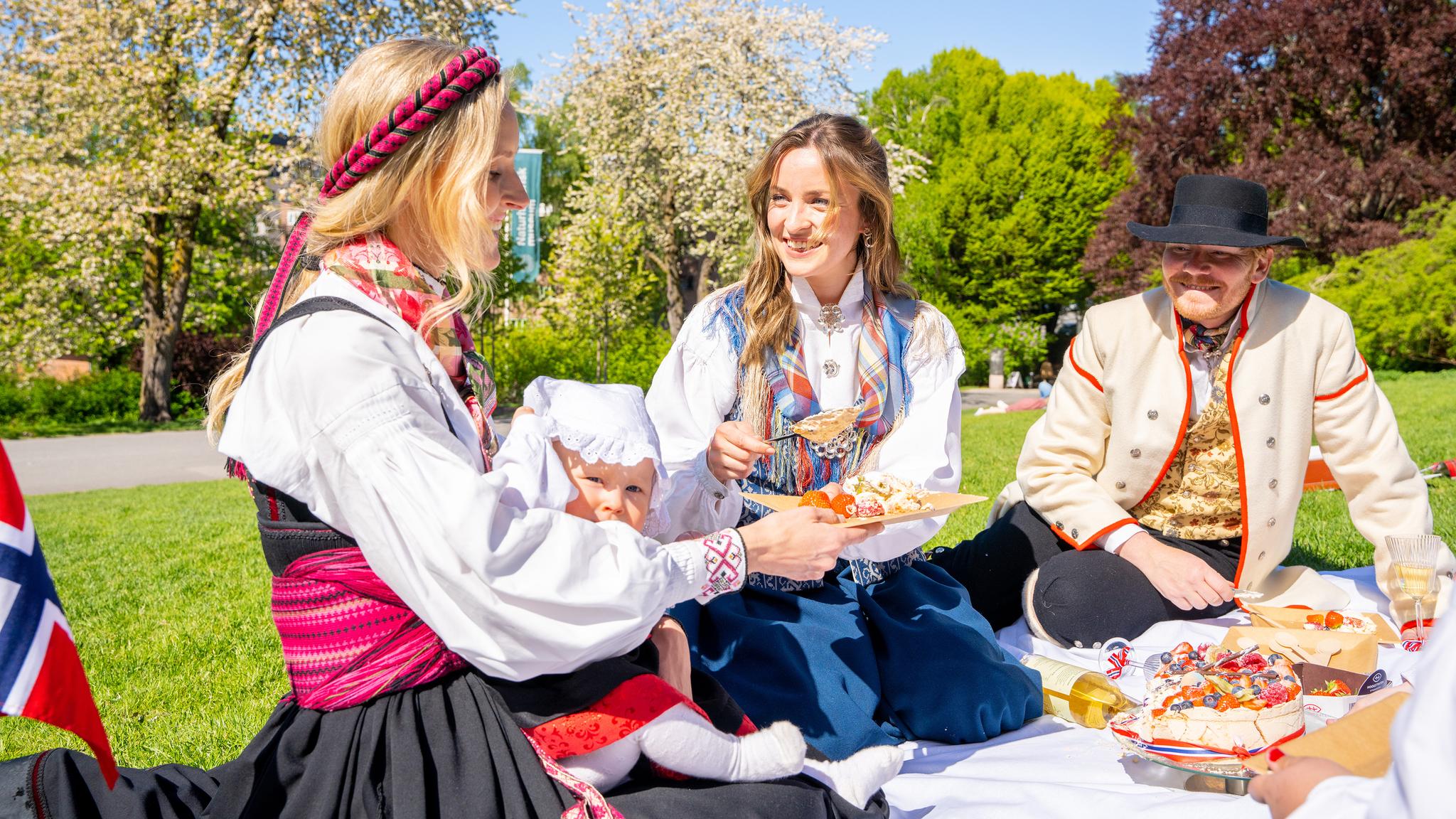
For The Northern Voices readership, that is the larger significance of Syttende Mai in 2026. The holiday remains specifically Norwegian, of course, rooted in the Constitution of 1814 and shaped by Norway’s own national story. But its underlying logic reaches further. It suggests that cultural continuity in North America is strongest when it is embodied, audible, visible, and shared. Not hidden away as private nostalgia. Not flattened into costume. Not reduced to a museum label. Shared. Heard. Seen. Carried forward in motion.
That is why these parades still matter. They are not charming leftovers from an earlier immigration story. They are among the clearest examples of how a diaspora keeps itself legible to its own children.

For one day each May, an ordinary street becomes what every durable tradition eventually needs: a stage where memory can still move.


)%20(1).avif)