Why Heritage Language Still Needs a Room of Its Own
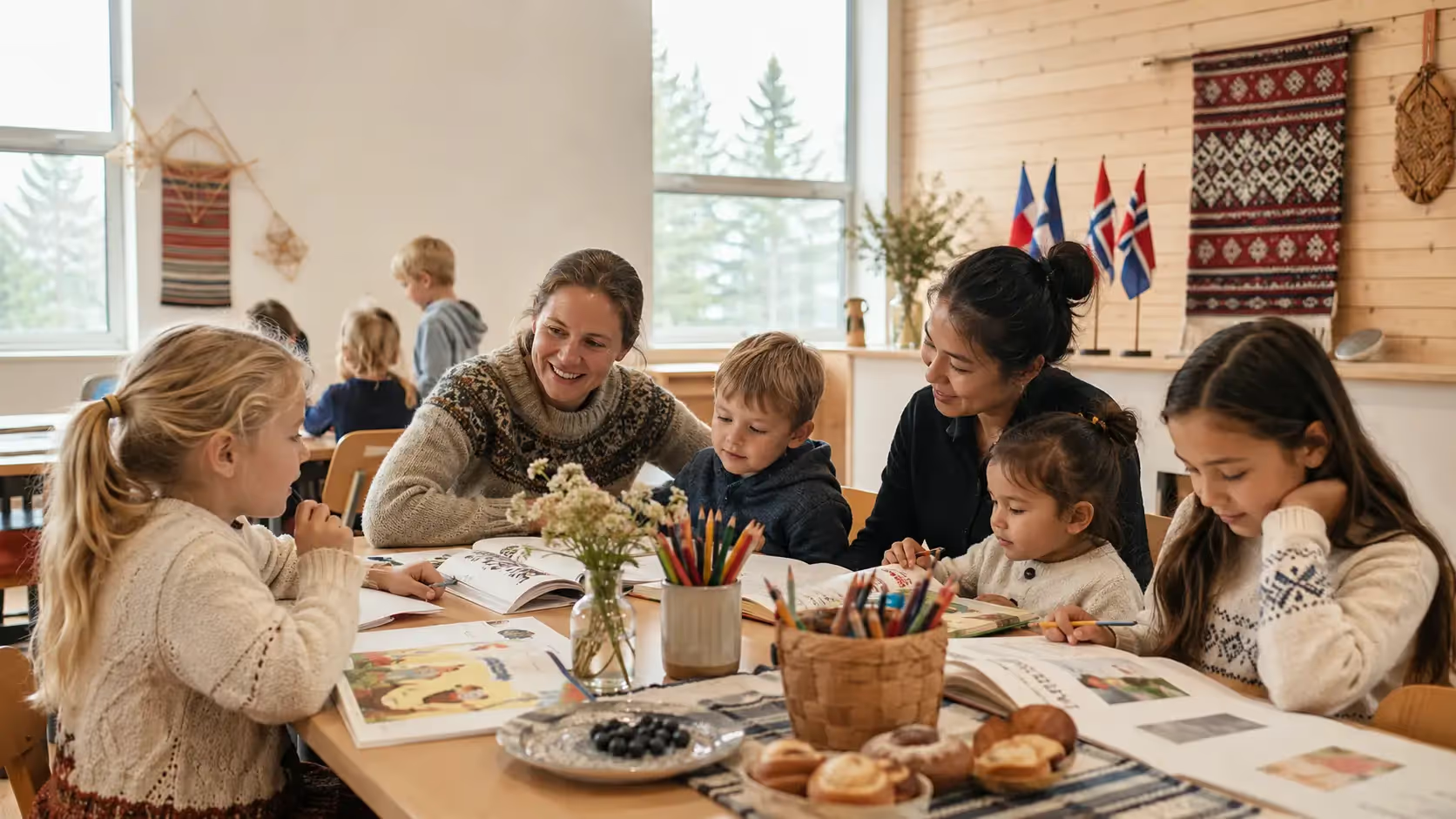
There is a particular kind of Saturday-morning energy that rarely looks impressive from the outside. Parents arrive with snack bags and winter coats. Children slip between English and another language without ceremony. Teachers lay out worksheets beside song sheets, picture books, folk-dance shoes, craft supplies, and sometimes instruments. A hallway sounds half like school and half like a family reunion.
For many Nordic and Baltic communities in North America, that modest scene has done more to keep a language alive than any speech about preservation ever could.
Heritage language rarely survives on seriousness alone. It survives when it has a room of its own.
Across the United States and Canada, those rooms are still very much in use. In Toronto, the Estonian Supplementary Schools trace their roots back more than seven decades and serve children and teens through elementary, middle, and high school programs, with adult classes also offered. Registration information for the 2025–2026 school year notes that classes began September 16, 2025, while the school’s own materials describe students ranging from ages 7 to 17 and instruction at advanced and immersion levels. Nearby, TES Lasteaed introduces children of Estonian heritage, ages one to seven, to language and culture through singing, crafts, dancing, reading, and play.
At the Latvian Centre in Toronto, the Toronto Latvian Society Saturday School offers another long-running model. Founded in 1950, the school describes its purpose as cultivating Latvian identity and culture, learning the Latvian language, and strengthening ties with the Latvian people. Its program includes Latvian language, geography, history, folk dance, singing, and kokle playing. In 2025, the school marked the opening of its 75th anniversary school year—an extraordinary milestone for any volunteer-powered community institution.
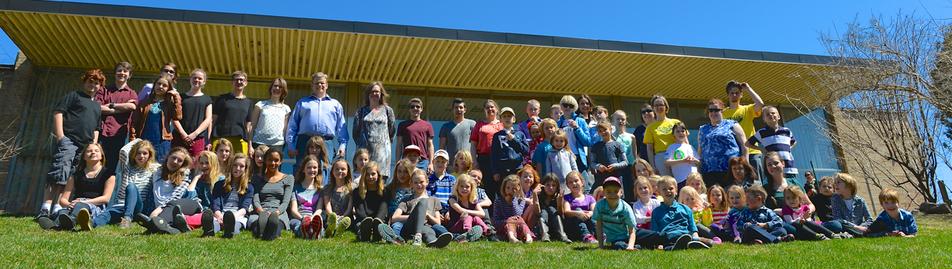
What is striking about these programs is not simply that they exist. It is what kind of language life they make possible. They do not treat Estonian or Latvian as an abstract inheritance, something admired at a distance or mourned after the fact. They place language in the middle of ordinary communal life, where it belongs.
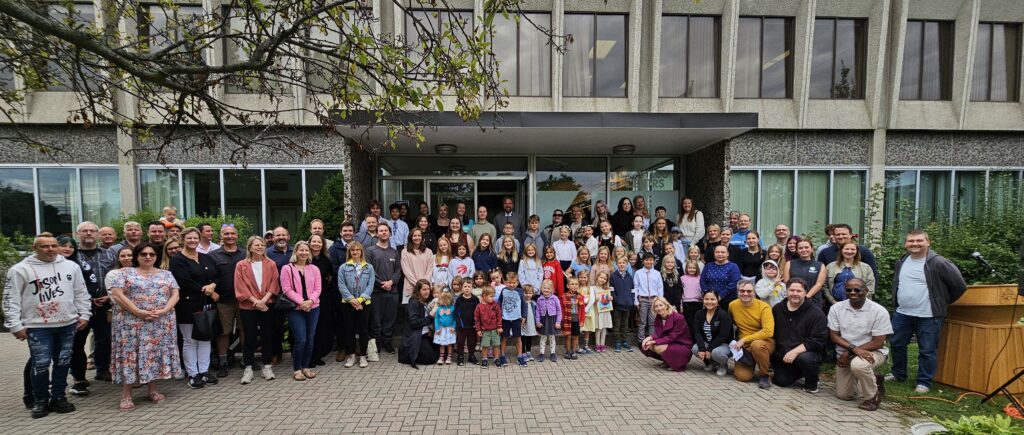
A child learns a greeting, then a song, then the shape of a holiday, then the rhythm of joking with other children who understand why this language matters at all. Fluency may come unevenly. Confidence may come slowly. But the social world arrives first, and that is often the part that keeps people coming back.
That matters because heritage language is never only a technical skill. UNESCO has emphasized that language is central to identity, learning, well-being, and participation in society; its International Mother Language Day work frames multilingual education not as a sentimental add-on, but as part of inclusion and human development. Research on heritage language education has similarly treated identity not as a side effect but as one of the central questions of the field, especially in the United States.
In practical terms, this means a heritage language program is not merely asking, “Can this child conjugate correctly?” It is asking something larger: “Does this child have a place where the language feels useful, warm, funny, musical, and shared?”
The same principle appears across Nordic-American institutions in the United States, where cultural centers often think beyond the conventional classroom. The American Swedish Institute in Minneapolis offers introductory classes in Swedish, Finnish, North Sámi, and Icelandic, along with nine-week Swedish and Finnish courses during the academic year. Its youth programs include Lilla Skolan for Swedish-speaking children ages 3 to 6, built around story time, music, crafts, and free play, and Svenska Skolan for children ages 7 to 14 at different levels of Swedish familiarity.
In Chicago, the Swedish American Museum’s Bullerbyn program invites young children and parents into an environment of Swedish songs, stories, and play. The museum describes Bullerbyn as taking place on the same dates as Svenska Skolan, welcoming children ages six months to five years with parents, and using Swedish during the program. The museum’s 2025–2026 Svenska Skolan year began on August 24, 2025, according to its registration page.
These details are easy to skim past, but they reveal something essential about diaspora life. Language is most durable when it is not asked to carry the entire weight of identity by itself. A child who cannot yet speak in full sentences can still sing. A parent whose grammar is rusty can still read aloud. A family that does not use the heritage language at home every day can still build a weekly rhythm around it.
Museums, Saturday schools, and cultural centers understand this better than almost anyone. They know that language survives not only through mastery, but through repeated, low-stakes return.
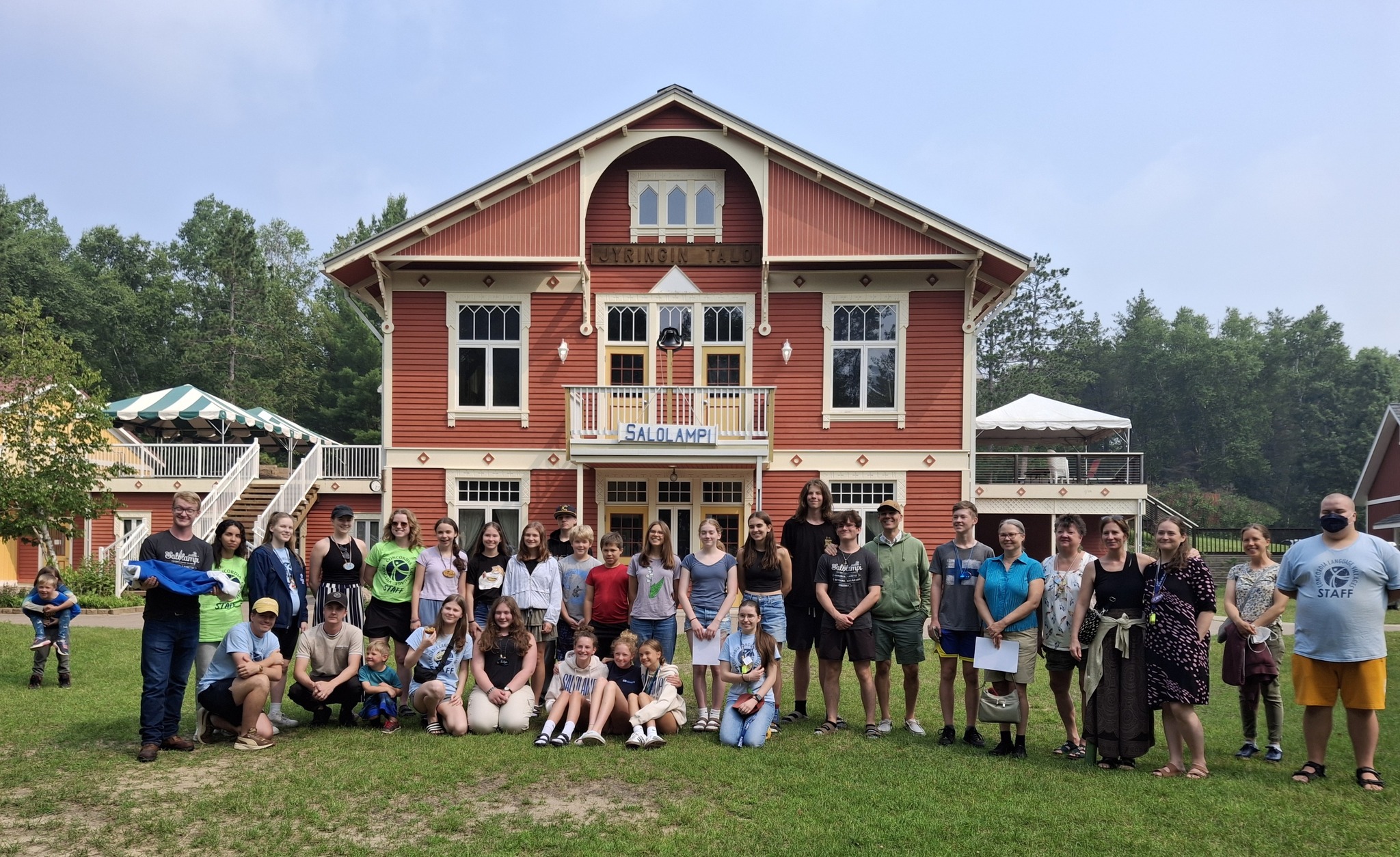
That idea becomes especially clear in immersive summer programs. Salolampi Finnish Language Village, part of Concordia Language Villages, is located near Bemidji, Minnesota, and offers Finnish language and culture programming through youth overnight camps, family programs, adult programs, and high school credit pathways. Concordia describes Finnish as being incorporated into daily activities at Salolampi, from summer camp routines to culturally specific practices such as mölkky, pesäpallo, and sauna. Finlandia Foundation National continues to support youth participation through residential scholarships; its 2026 application period was listed as open with an April 30, 2026 deadline.
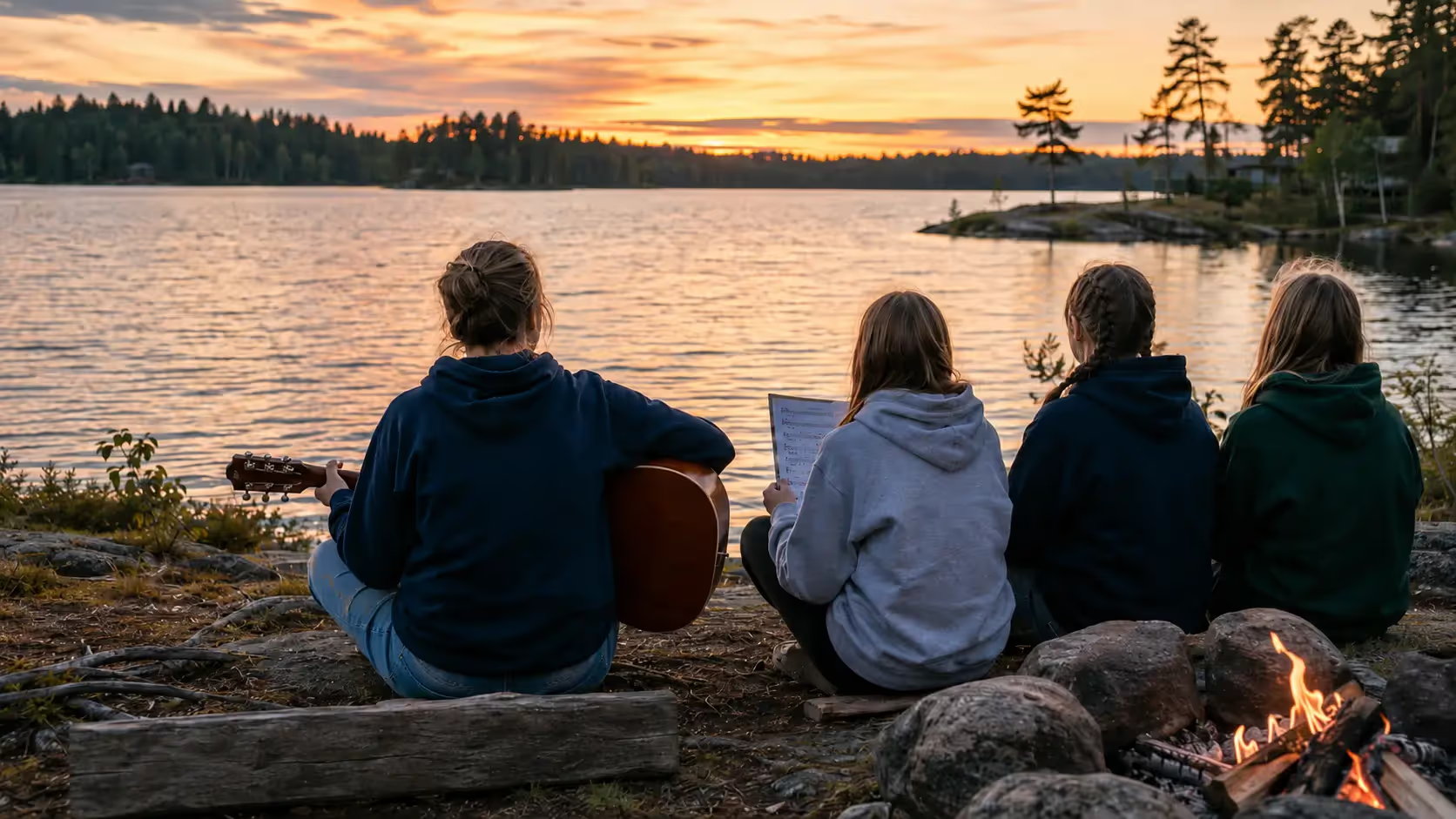
This is not nostalgia in miniature. It is an environment designed to make language feel livable. A camper does not encounter Finnish only as vocabulary on a page. The language attaches itself to meals, games, cabins, lake water, jokes, chores, music, and the daily negotiations of communal life. In that setting, language becomes less like an object to protect behind glass and more like a tool one reaches for because the day invites it.
Heritage language work is also not only for children. In Toronto, VEMU Estonian Museum Canada has hosted recurring Estonian language cafés, including hybrid sessions at Tartu College and on Zoom. VEMU describes the cafés as especially useful for beginners who want to practice everyday topics in a relaxed environment, such as introducing oneself, studying, work, communicating with colleagues, and travel.
That kind of adult programming is important because many people return to heritage language later than expected. Some come back after the death of a grandparent. Some return when they have children of their own. Some grow up hearing the language but not speaking it. Others were once fluent enough to answer at the dinner table, then lost confidence in adolescence, then rediscover the language in adulthood as part of a broader search for belonging.
A language café makes a quietly radical promise: you do not have to be perfect before you are allowed to participate.
For young people, travel programs can serve a similar purpose. The American Latvian Association’s 2026 youth tours show how one organization is designing more than one doorway into Latvian identity. Its “Sveika, Latvija!” trips, scheduled for June 7–18 and August 9–20, require participants to understand conversational Latvian and express themselves in Latvian. Its “Heritage Latvia” trip, scheduled for June 7–18, places less emphasis on Latvian-language use and is designed for participants who are less comfortable understanding or speaking Latvian in everyday communication.
That distinction matters. It recognizes that belonging is not all or nothing. A community becomes healthier when it refuses to make fluency the only entrance. There should be a path for the child who speaks Latvian easily, and another for the teenager who understands fragments but wants to know more. There should be space for the adult beginner, the passive speaker, the parent relearning alongside a child, and the young person who feels both inside and outside the culture at once.
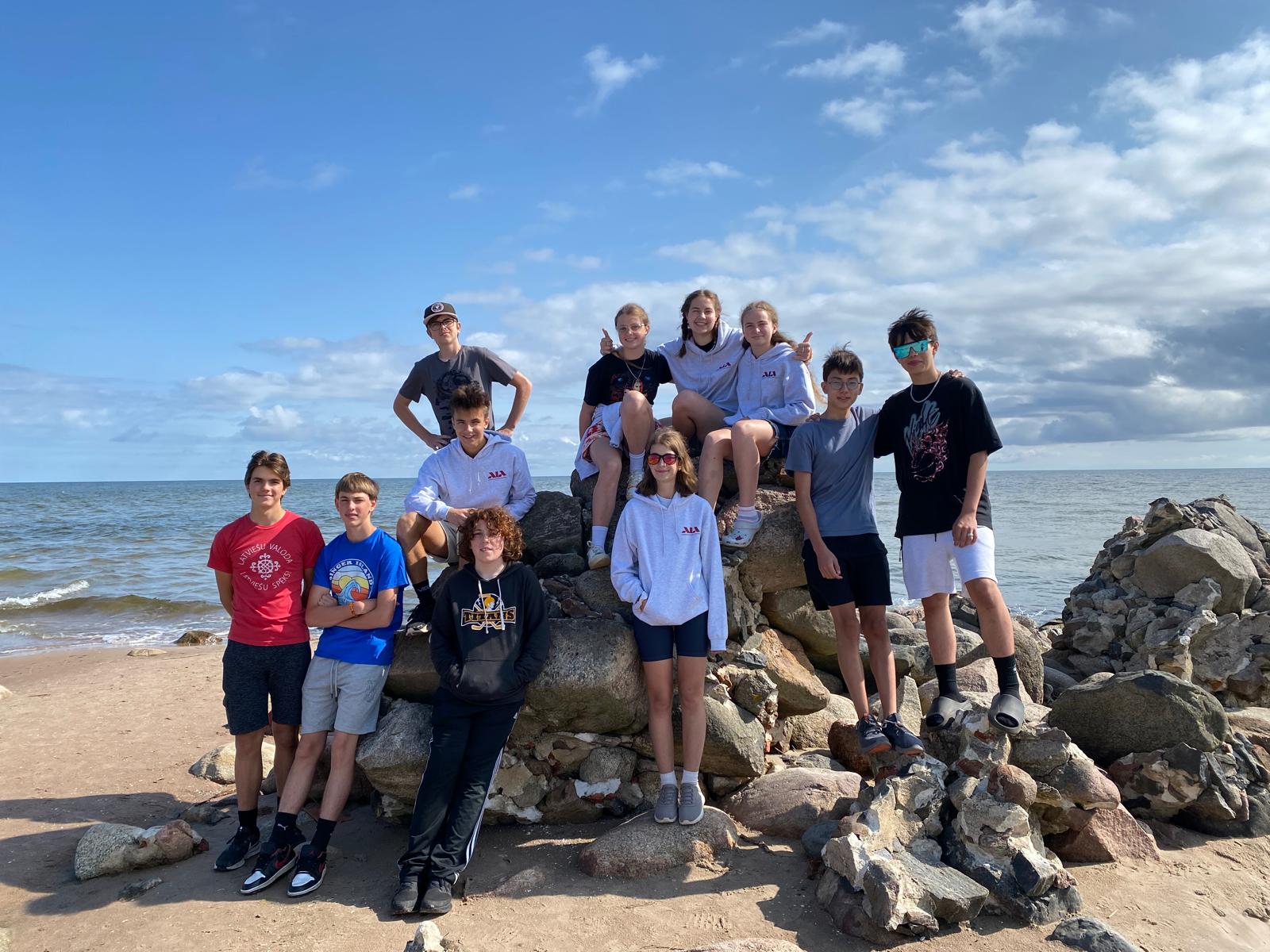
Too often, heritage language is discussed as if it were mainly a story of decline: grandparents fluent, parents partial, children lost to English. There is truth in that pattern, and there is grief in it too. Many families know the ache of a language becoming thinner across generations. They know what it means when a joke no longer lands, when a song becomes phonetic rather than understood, when a family story must be translated and loses some of its texture in the process.
But decline is not the whole story.
Another story runs alongside it, quieter and more hopeful. It is the story of communities that keep building places where imperfect language is still welcome. A Saturday school. A museum classroom. A language café. A summer village by a lake. A youth trip that assumes curiosity counts too. A craft table where a child learns the word for scissors. A song rehearsal where pronunciation matters less than joining in. A Zoom room where adults practice introducing themselves without embarrassment.
These spaces do not solve everything. They rely on volunteers, donations, teachers, parent labor, institutional patience, and a willingness to repeat the same work year after year. They are vulnerable to enrollment shifts, building costs, burnout, weather, and the normal pressures of family life. They are also among the most practical tools diaspora communities have.
A heritage language cannot be sustained by guilt. It cannot be sustained by purity tests. It cannot be sustained by telling young people that they are less Estonian, Latvian, Finnish, Swedish, Icelandic, Sámi, Lithuanian, Norwegian, or Danish because their grammar falters or their accent reveals where they were raised.
It is sustained by use. By invitation. By habit. By joy. By the simple fact of having somewhere to go.
For Nordic and Baltic North America, this is not a small achievement. It means language remains more than an heirloom. It remains a practice.
And practice, more than purity, is what gives a language a future.


)%20(1).avif)