Tom of Finland Is No Longer Just an Icon. He Is an Archive, a House, and a Living Queer Institution.
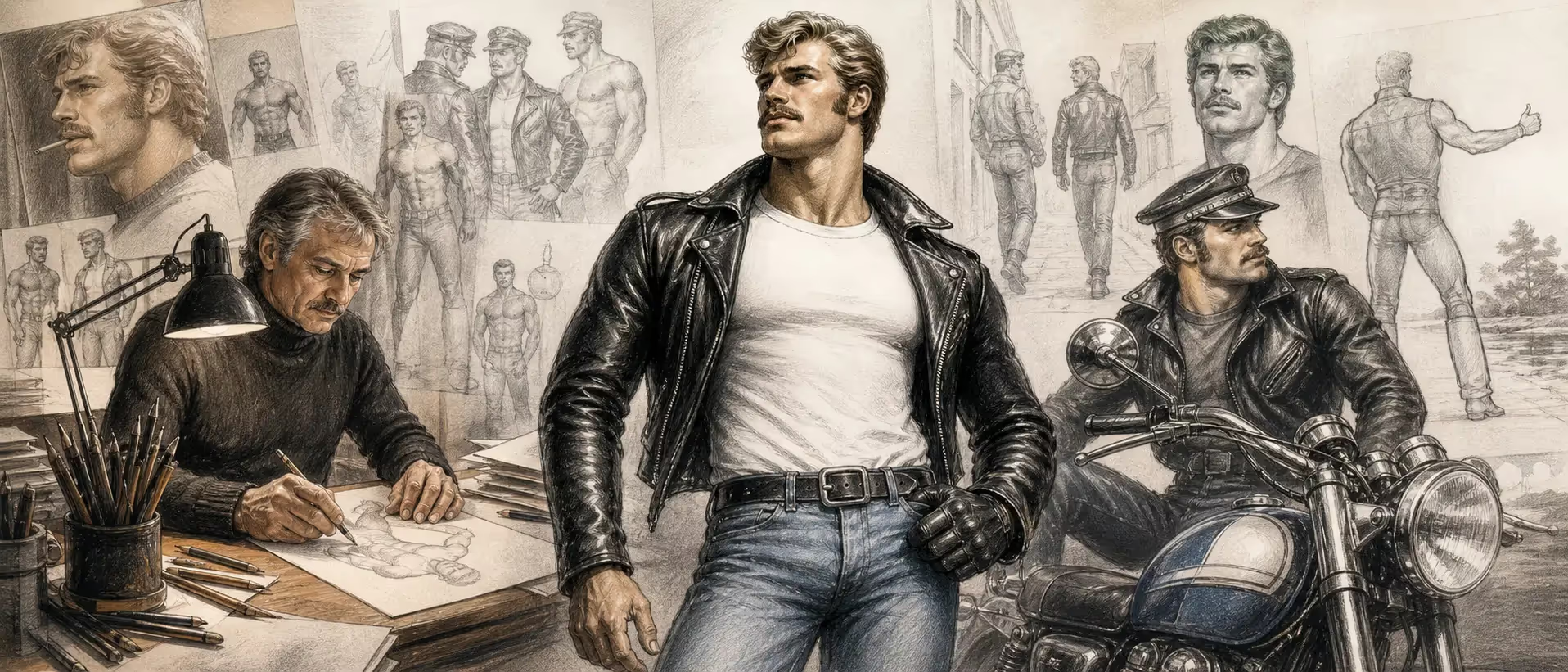
But that shorthand can also flatten him.
A fresher way to look at Tom of Finland today is not simply as a Finnish artist who drew hypermasculine gay men, but as an artist whose work has moved through several cultural lives: from secrecy to circulation, from underground desire to museum recognition, from private fantasy to public archive, and now from personal mythology to a broader conversation about queer memory, erotic art, and who gets preserved.

That shift matters because Tom of Finland is no longer only a historical figure. He has become an institution.
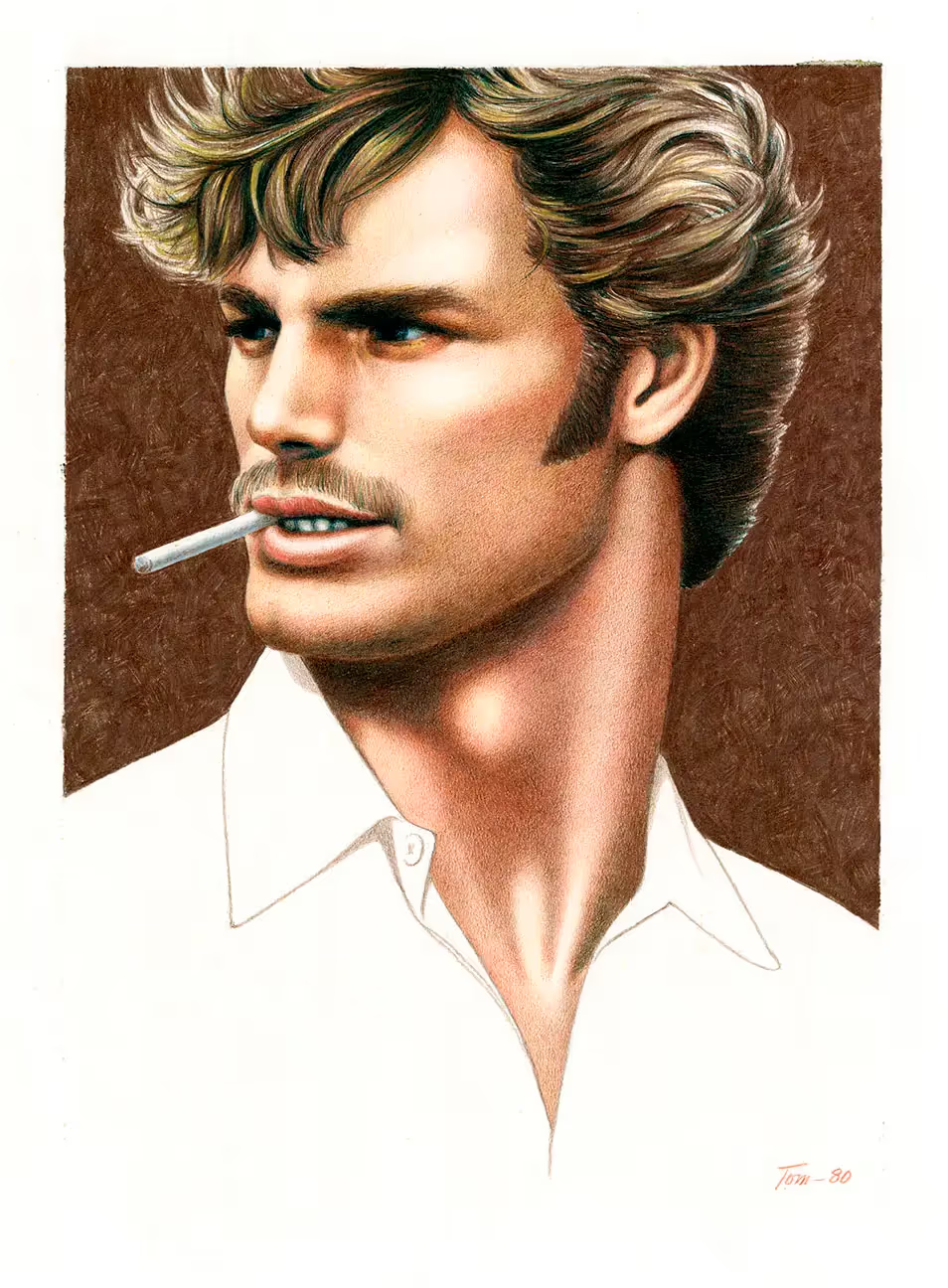
Born Touko Laaksonen in Kaarina, Finland, in 1920, the artist later known as Tom of Finland built one of the most influential visual languages of gay desire in modern culture. The Tom of Finland Foundation notes that he signed his erotic work simply as “Tom,” and that the now-famous name “Tom of Finland” emerged when his drawings were first published in 1957.
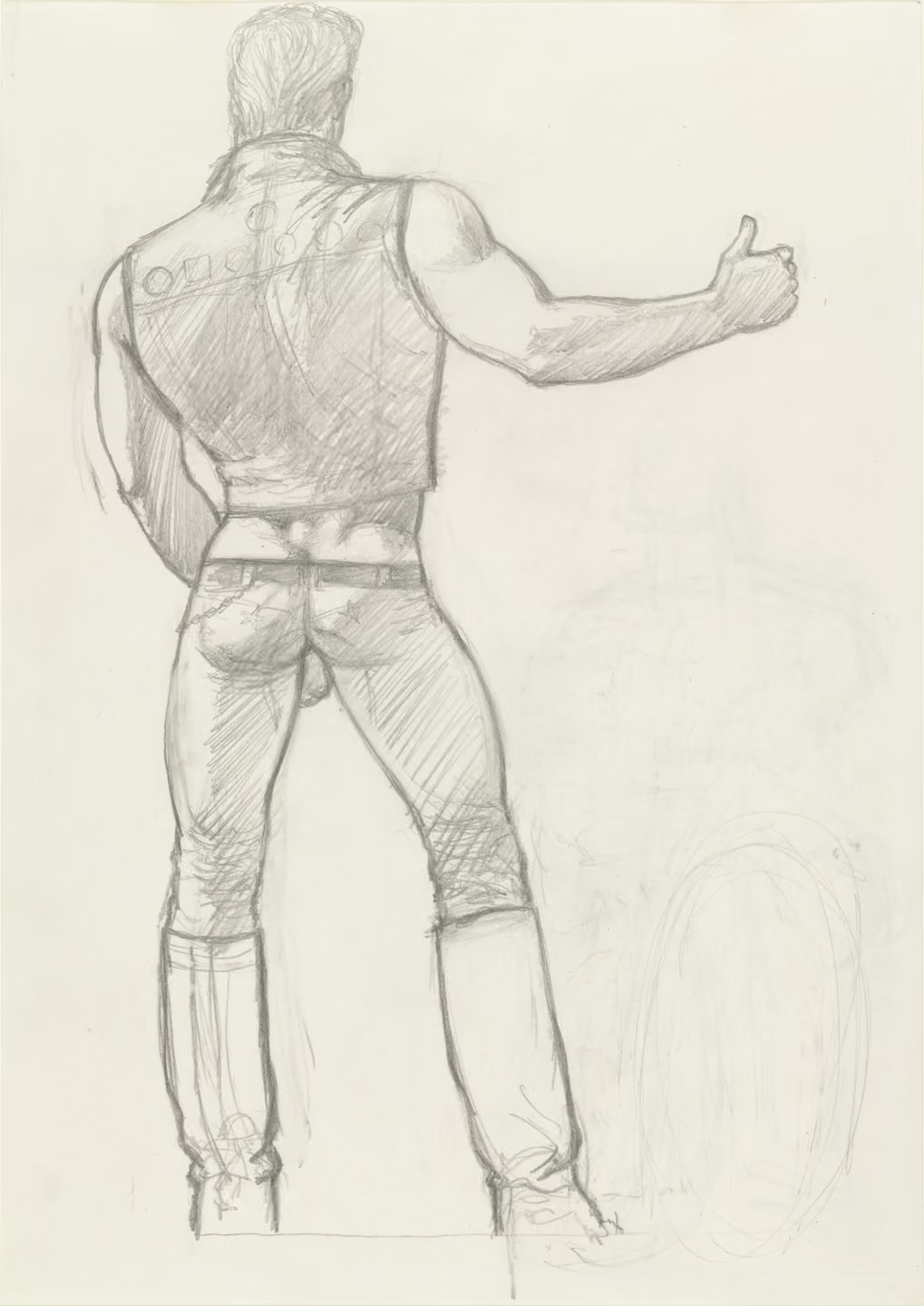
The biography is now familiar: a Finnish artist, trained in the visual discipline of commercial illustration, who developed a private world of men at a time when homosexuality was criminalized or pathologized across much of the West. His drawings were not merely images of desire. They were images of reversal. At a time when gay men were often depicted as tragic, weak, shameful, or invisible, Tom drew them as powerful, joyful, muscular, stylish, sexually confident, and unmistakably alive.
That is one reason his work still feels less like fantasy than cultural intervention.
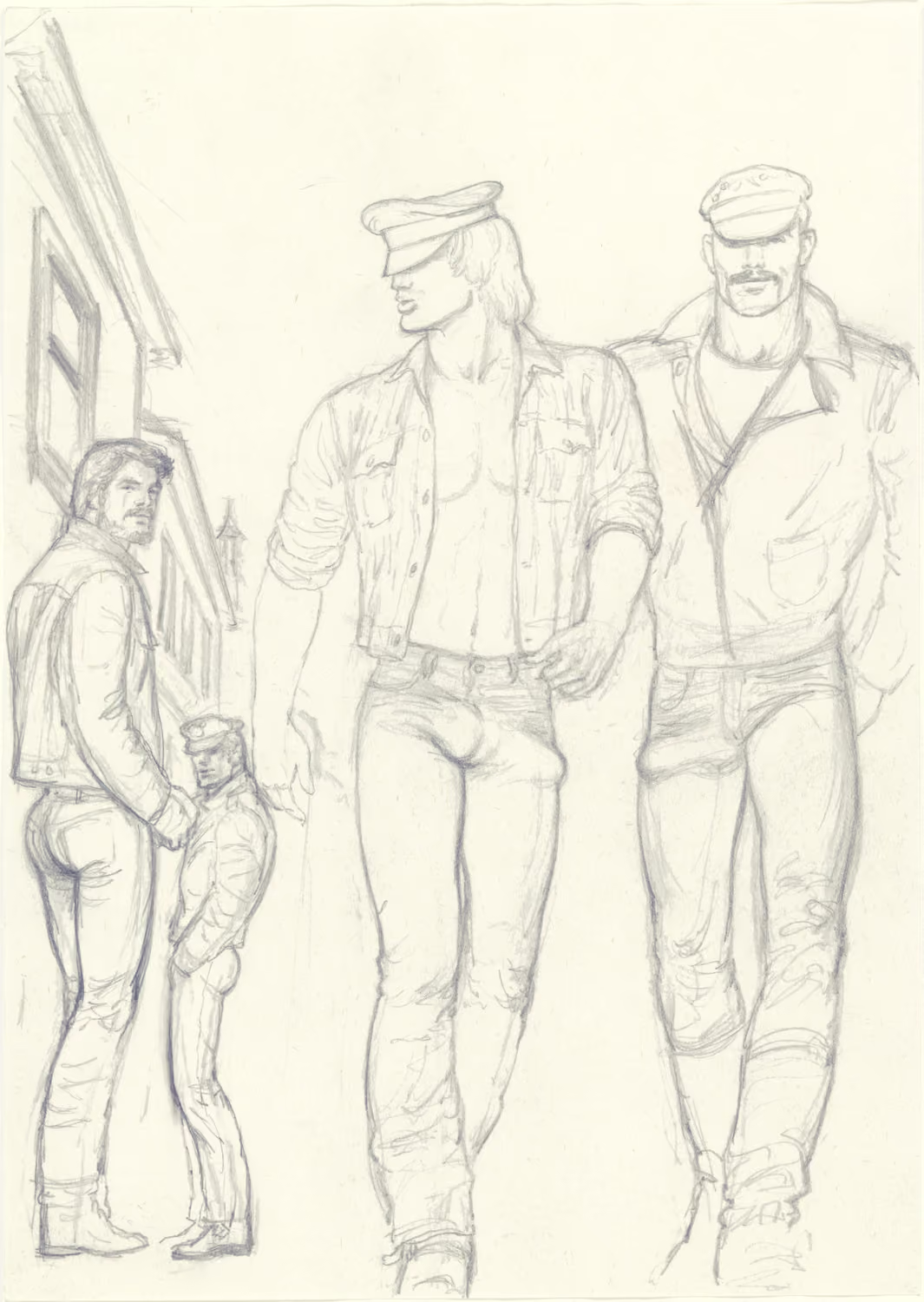
Tom’s figures were not realistic in the narrow sense. Their bodies were exaggerated, their poses theatrical, their clothing symbolic. But emotionally, they answered a very real need. They gave visual form to a kind of gay pride before pride was fully available as a public language. In that sense, Tom’s men were not only erotic. They were aspirational, protective, even political.
Today, however, the most interesting conversation around Tom of Finland is not whether he matters. That question has largely been answered. Major institutions have absorbed him into the history of modern and contemporary art. MoMA lists works by Tom of Finland in its collection, including drawings from the late 1970s and 1980s. SFMOMA also holds multiple works by the artist, dating from the early 1960s through the 1980s. In Helsinki, Kiasma’s 2023 exhibition Tom of Finland: Bold Journey spanned his six-decade career, including early drawings, archival material, and works structured around his biography, characters, and settings.
The more interesting question is what kind of cultural work Tom’s legacy is doing now.
One answer can be found in Los Angeles, far from Finland but central to the story. The Tom of Finland Foundation, established in 1984, is now in its fifth decade. Its public-facing mission remains rooted in protecting, preserving, and promoting erotic art, but the Foundation has also become something more complex: a queer cultural archive, a residence, a gathering place, and a living network for artists working in erotic, experimental, and identity-based traditions. The Foundation’s website describes its current work as including archival projects, public programming, artist support, and the 12th Tom of Finland Emerging Artist Competition, launched in the Foundation’s 41st year.
That evolution is crucial. It moves Tom of Finland away from the narrower category of “legacy artist” and into the larger question of queer preservation.
What gets archived when queer lives have so often been hidden, censored, destroyed, or dismissed? What happens when erotic material, long treated as disposable or obscene, is recognized as cultural memory? And how does an institution built around one powerful visual mythology make room for artists whose bodies, identities, desires, and politics may differ dramatically from Tom’s original universe?
These questions are not theoretical. They are already shaping the Foundation’s current programming. In 2025, the Foundation announced FXLK PLAY: Mythmaking, Devotion, and Mischief, its first group exhibition of work by more than 60 LGBTQ+ artists who had participated in its Artist-in-Residence program at TOM House in Echo Park. The exhibition was framed as a survey of artists from around the world who had passed through that historic residence and archive.
That is where the recent story becomes compelling. Tom of Finland’s art once helped invent a fantasy of queer invincibility. The Foundation’s present-day work asks what happens when that fantasy becomes a platform for many other voices. The center of gravity shifts from one artist’s images to a wider ecology of queer creation.
For North American audiences, this is especially resonant. TOM House is not only a place where Tom lived and worked during the last decade of his life; it has become a symbolic home for erotic art and queer cultural memory. Kiasma’s Bold Journey even included a virtual tour of TOM House as part of the exhibition, connecting Finnish museum audiences back to Los Angeles as a key site in the artist’s late life and afterlife.
That transatlantic movement matters for readers of The Northern Voices. Tom of Finland is Finnish, unmistakably so, but his legacy has never stayed within national borders. His work travelled through magazines, private collections, underground networks, commercial collaborations, museums, and queer communities that often understood him before official culture did. His story belongs to Finland, but it also belongs to Los Angeles, New York, Berlin, London, and countless private rooms where people saw themselves differently because of his drawings.
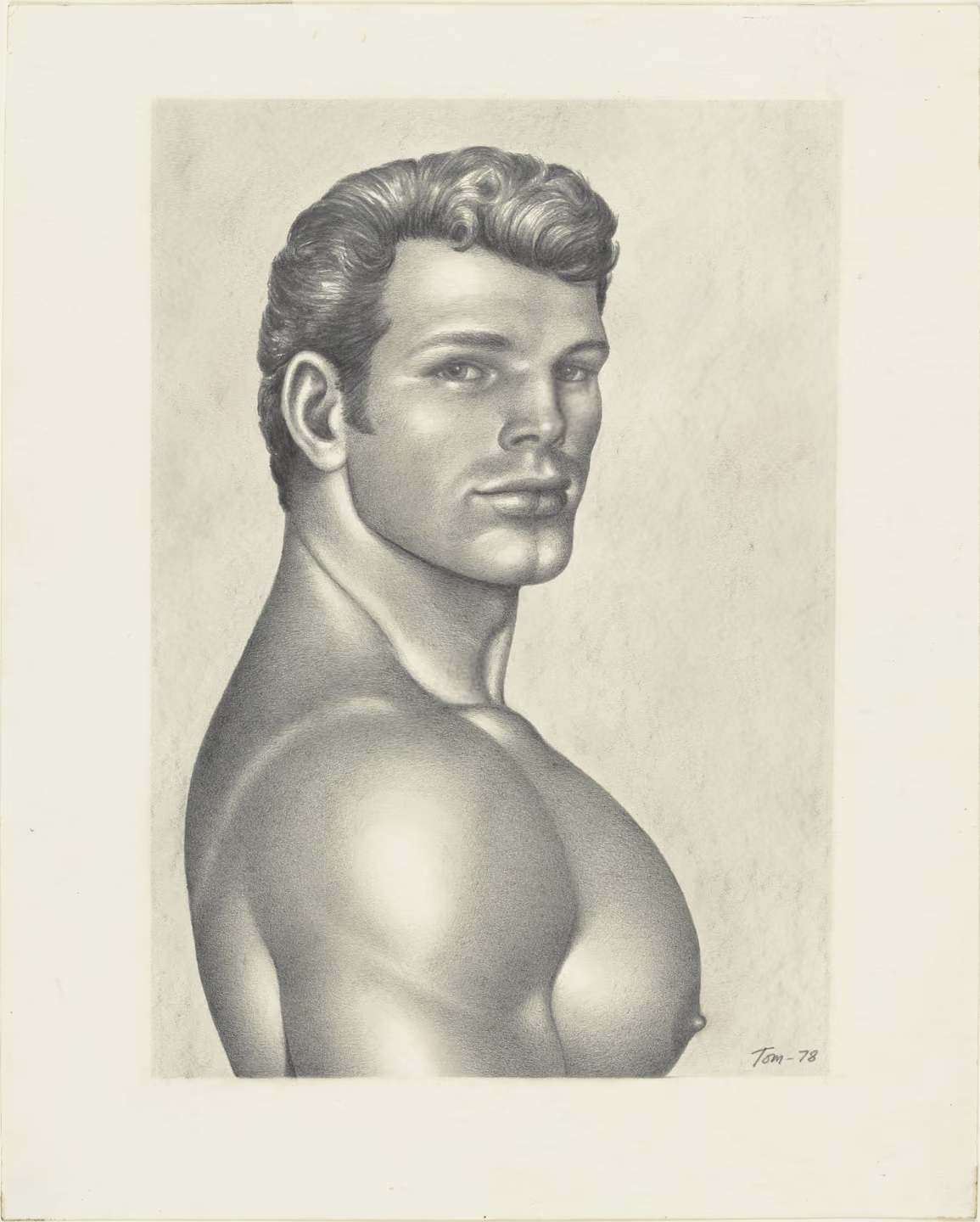
In that way, Tom of Finland offers a particularly vivid example of Nordic culture becoming global not through softness or neutrality, but through provocation.
This complicates the usual North American idea of Nordic art. The Nordic region is often marketed abroad through restraint: clean design, quiet interiors, natural materials, moral seriousness, tasteful minimalism. Tom of Finland explodes that image. His work is excessive, erotic, theatrical, muscular, funny, and deliberately charged. It is not “Nordic” in the exported lifestyle sense. It is Nordic in a stranger and more revealing way: shaped by repression, discipline, visual clarity, and a cold climate of social control against which fantasy became intensely alive.
That is precisely why he still feels fresh.
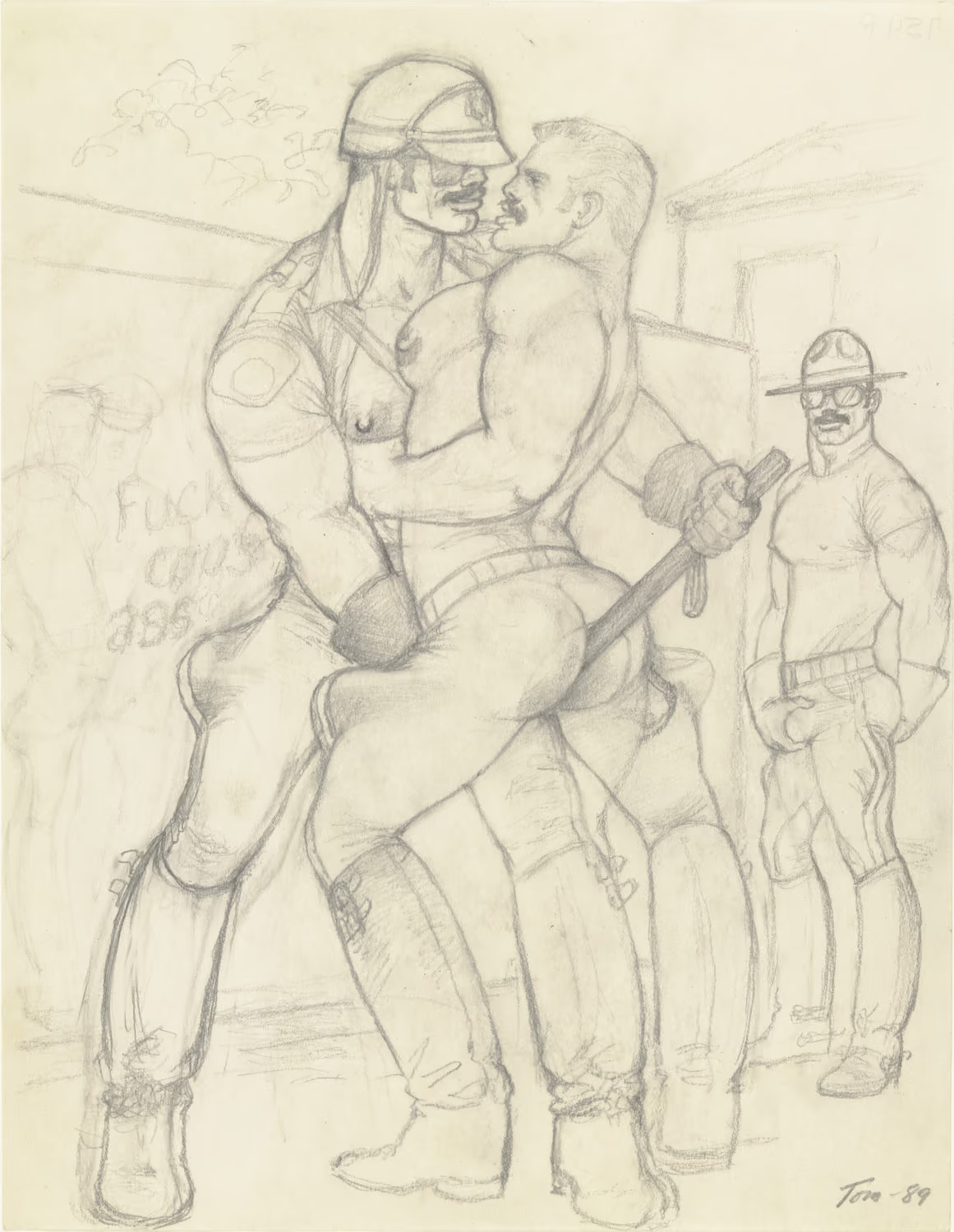
Tom of Finland belongs to a history of censorship, but he is also relevant to the present tense of visibility. Across North America and Europe, queer art, drag, trans expression, sexual education, and LGBTQ+ cultural programming continue to face political pressure. In that context, Tom’s work raises a question that feels newly urgent: who is allowed to appear in public as desiring, powerful, and unashamed?
His art answered that question with force. But a contemporary reading also requires honesty. Tom’s visual world centered a particular fantasy of masculinity: mostly white, muscular, dominant, uniformed, and highly stylized. That fantasy was liberating for many, but it was never the whole of queer life. Some contemporary artists and critics now look at Tom with both admiration and distance, recognizing his radical importance while also asking what forms of queer desire were left outside the frame.
That tension does not weaken his legacy. It makes the legacy more useful.

A mature culture does not need its icons to be simple. It needs them to remain available for argument. Tom of Finland can be celebrated as a liberating artist and examined as a maker of specific masculine codes. He can be understood as a product of wartime Europe, postwar repression, gay underground circulation, commercial illustration, leather culture, and fantasy. He can be viewed as both a Finnish cultural export and a figure whose most powerful afterlife may be in the global queer archive.
Recent institutional recognition helps make that complexity visible. Kiasma’s Bold Journey drew nearly 180,000 visitors during its six-month run, according to the Tom of Finland Foundation, a remarkable figure that speaks to the scale of his public appeal in Finland and beyond. Meanwhile, gallery and museum collections in the United States continue to position his drawings within broader histories of contemporary art, not only queer subculture.
At the same time, his image has entered fashion and design with striking persistence. A 2026 People report on Luke Evans’ Met Gala look, designed by Palomo Spain, described the outfit as inspired by the bold, graphic sensuality of Tom of Finland. Vogue also reported on a 2025 New York event celebrating the Tom of Finland Foundation’s 41st anniversary in collaboration with the design studio Apparatus, where rare artworks and fantasy-driven design elements brought Tom’s visual language into a contemporary social and design context.
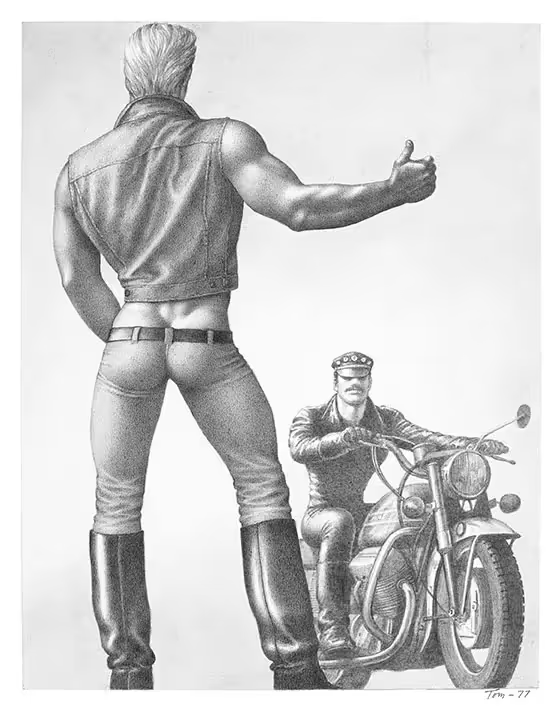
There is a risk, of course, that mainstream visibility can sand down the danger of the work. Once Tom appears on products, fashion mood boards, and museum walls, it becomes easier to admire the surface and forget the stakes. But his drawings resist full domestication. Their erotic charge is not decorative. It is the point. They insist that pleasure itself can be a form of self-recognition.
That may be Tom of Finland’s most enduring lesson.
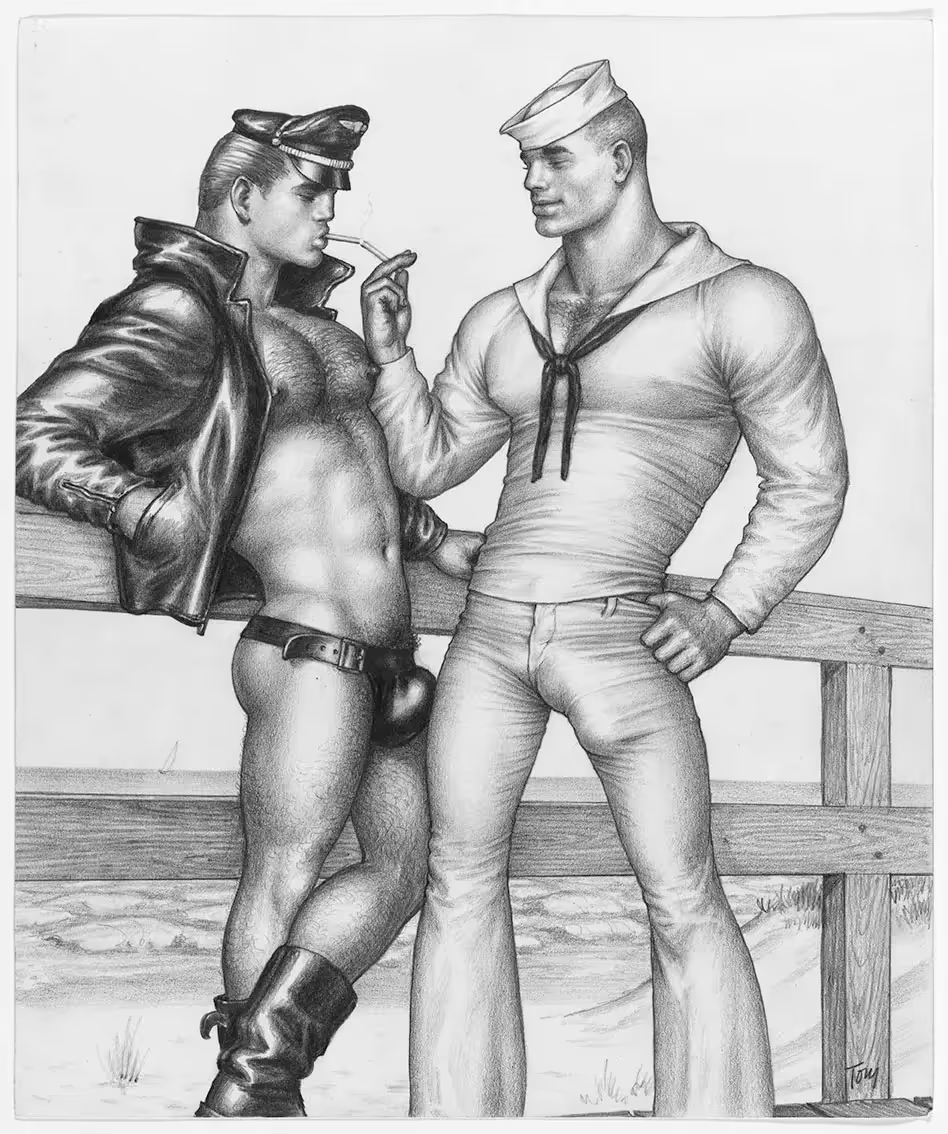
The men in his drawings are not asking to be tolerated. They are not apologizing. They are not explaining themselves to a hostile world. They are enjoying themselves. That joy, exaggerated and stylized as it may be, remains politically potent.
For Nordic and Baltic audiences in North America, Tom’s story also opens a larger reflection on how culture travels. Immigrant and diaspora communities often preserve heritage through food, language, music, literature, folk traditions, and national commemorations. Tom of Finland reminds us that cultural inheritance also includes desire, taboo, nightlife, coded images, private archives, and forms of self-fashioning that once had to move quietly.
He also reminds us that the Nordic world has never been as orderly as its branding suggests.
Finland gave the world Sibelius, Marimekko, Alvar Aalto, sauna culture, and welfare-state modernity. It also gave the world Tom of Finland: an artist whose polished graphite fantasies helped reshape how gay masculinity could be imagined. That combination is not a contradiction. It is part of the truth. National cultures are not only made of what they officially celebrate. They are also made of what they once suppressed and later had to recognize as central.
This is why the current phase of Tom’s legacy feels so significant. The story is no longer only about one artist’s rise from underground circulation to museum legitimacy. It is about what comes after canonization. Once an artist becomes iconic, the task shifts. Preservation must become expansion. Tribute must become dialogue. The archive must remain alive enough to make space for new bodies, new fantasies, new critiques, and new forms of erotic imagination.

The Tom of Finland Foundation’s contemporary work points in that direction. Its artist competitions, residency network, archival projects, and public programs suggest that the future of Tom’s legacy may depend less on repeating his imagery than on protecting the conditions that allowed such imagery to matter in the first place: freedom, audacity, privacy, visibility, and the right to imagine oneself without shame.
That is a fresh way to think about Tom of Finland now. Not only as the man who drew leather gods. Not only as Finland’s most famous queer artist. Not only as a visual architect of gay masculinity.
But as a reminder that archives can be erotic. That fantasy can become cultural history. That images once treated as dangerous can become evidence of survival. And that the most powerful icons are not the ones we freeze in place, but the ones that keep forcing us to ask better questions.
Tom of Finland still matters because his work made shame look small.
His legacy matters now because the fight over visibility, pleasure, and preservation is not over.


)%20(1).avif)