When the North Welcomes Spring: Why Vappu and Valborg Still Matter Across the Atlantic
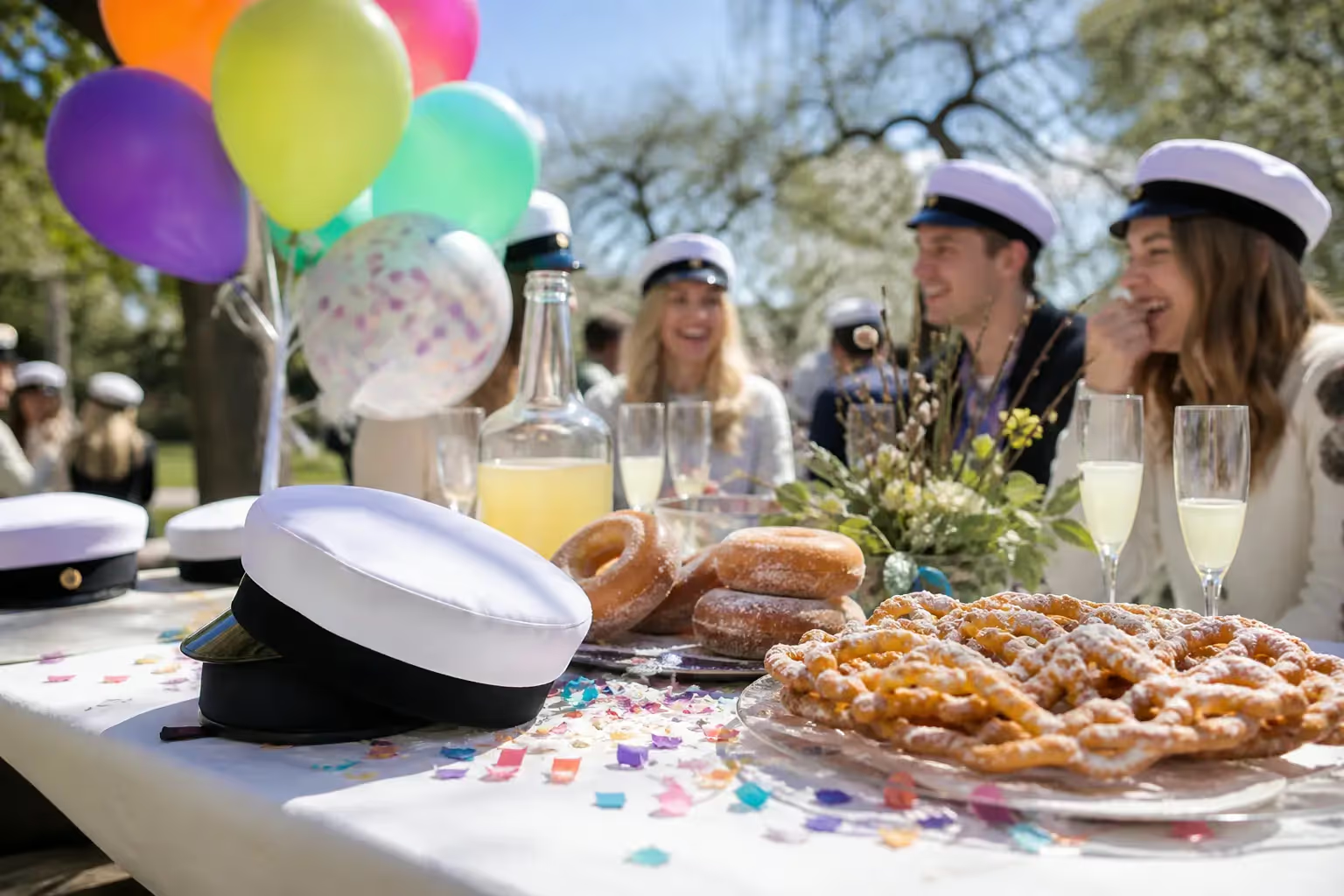
On the evening of April 30, something shifts across the Nordic and Baltic world. Winter does not vanish all at once, especially in the North, but it begins to lose its authority. Fires are lit. Student caps reappear. Choirs sing into the chill. Parks fill. Bottles are opened. Tables are set for the kind of food that belongs to one season only. Spring is no longer a rumor. It is here, and it must be greeted properly.
In Finland, that threshold is called Vappu. In Sweden, it is Valborg. In Estonia, Walpurgis Night and May Day carry their own layered meanings, from older folk customs to more modern public celebration. The details vary by country, city, language, and generation, but the emotional logic is remarkably consistent: after a long dark season, spring is not treated as a private feeling. It is made public.
That may be one reason the holiday continues to resonate so strongly for Nordic and Baltic communities in the United States and Canada. It is not only a date on the calendar. It is a style of gathering. It is a way of marking time together.
For North Americans with roots in Finland, Sweden, or Estonia, Vappu and Valborg can feel instantly recognizable even when they are only partially recreated abroad. The weather is still unpredictable. Someone is underdressed. Someone insists it is warm enough to be outside. There may be balloons, doughnuts, sparkling wine, coffee in paper cups, a picnic that requires more optimism than comfort, and at least one conversation about how this is not quite like it is “back home,” though it still counts.
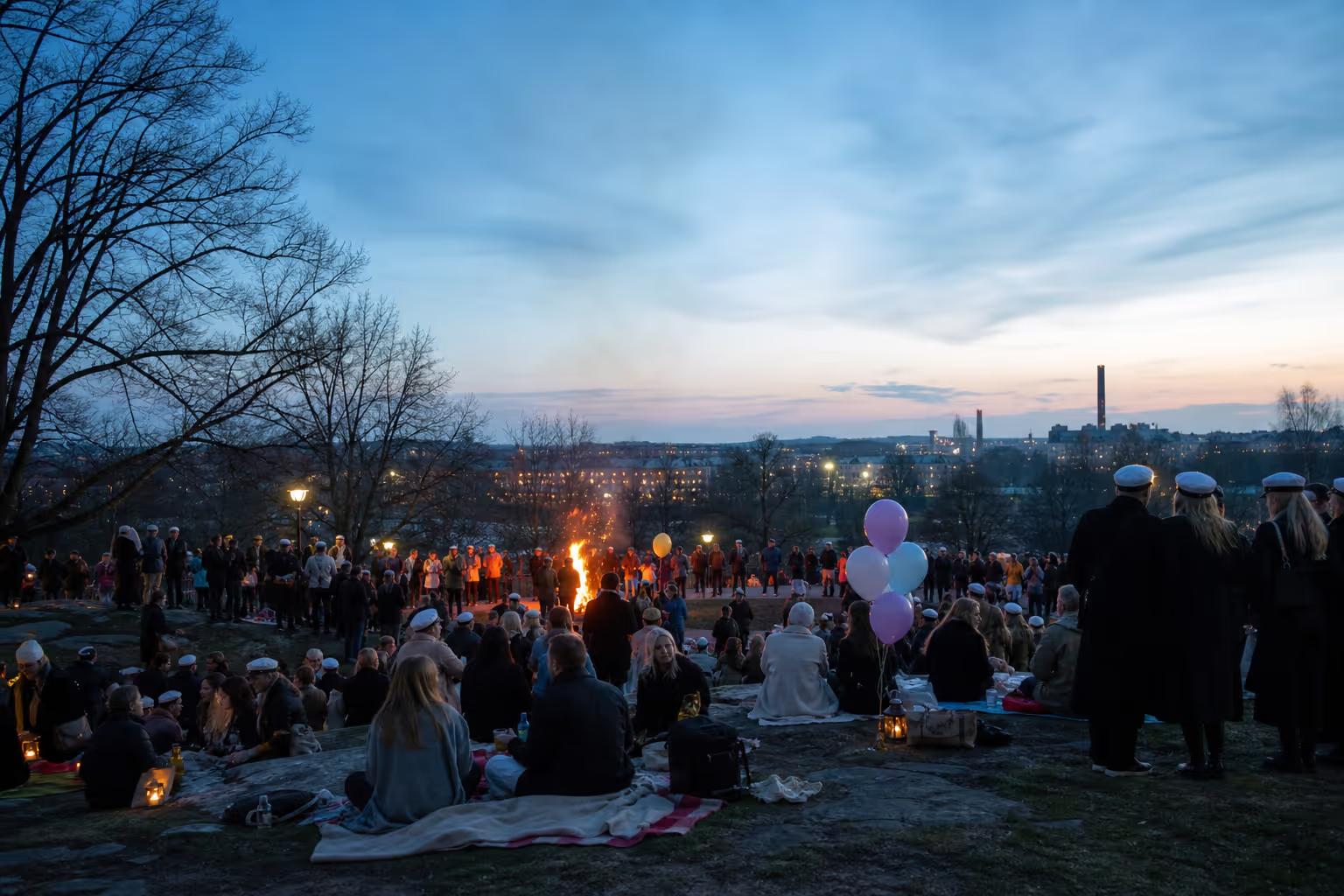
That last part matters. Diaspora traditions rarely survive by exact replication. They survive by atmosphere, repetition, and adaptation. A community in Toronto or Minneapolis may not have the same massive public crowd as Helsinki on May 1, or the same bonfire setting as a Swedish university town, but it can still recognize the holiday’s central promise: winter is ending, and joy should not be postponed.
Vappu is especially revealing in this regard because it brings together several strands of meaning that diaspora communities often know well. It is festive, but not polished. It is historical, but not solemn. It is associated with labor and public life, but also with students, humor, and a kind of collective permission to be louder and brighter than usual. In Finland, the white student cap is one of the holiday’s most visible symbols. In Sweden, spring songs and bonfires remain central to Valborg. In Estonia, the night has its own folk and seasonal textures, shaped by different regional traditions and modern reinventions. None of these versions is identical, yet all of them are built around the same elemental transition: darkness loosens, people emerge, and community becomes visible again.
That visibility is part of what gives the holiday its power abroad.
Diaspora culture is often easiest to notice in winter. It appears in Christmas tables, candlelight, Lucia processions, Advent concerts, and indoor rituals that protect warmth against cold. But spring culture can be harder to carry, because it depends so much on timing, landscape, and collective mood. You need enough people willing to stand outside and declare that the season has changed, even if the air still disagrees. You need a little theater. You need public optimism.
Nordic and Baltic communities have long understood that the year is not only measured by weather, but by shared customs that teach people how to feel the weather. Vappu and Valborg do exactly that. They turn a seasonal edge into a social event.
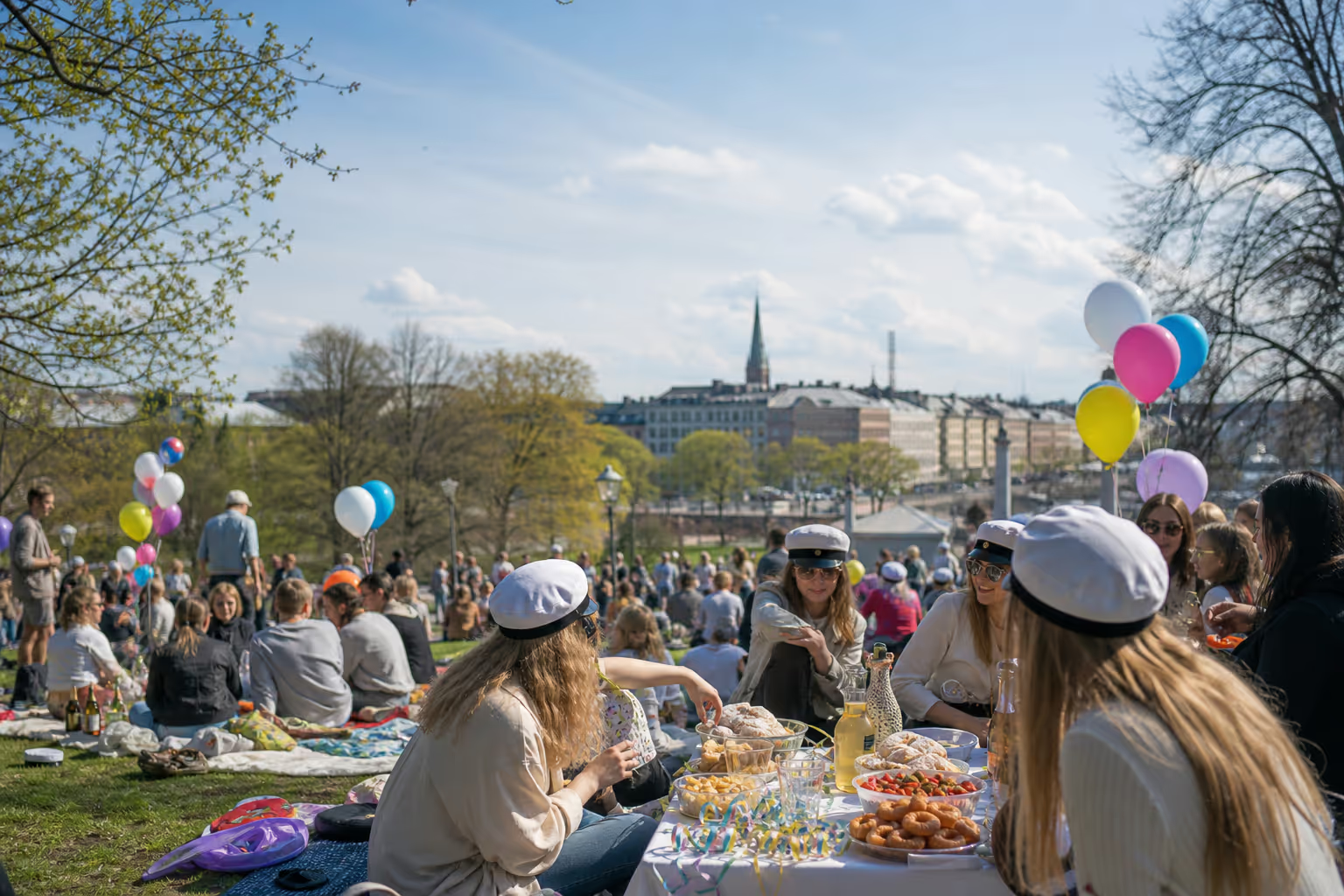
For first-generation immigrants, these holidays can preserve muscle memory: what was eaten, what was sung, what was worn, where everyone went after the formal part ended. For their children and grandchildren, the holiday can work differently. It may be less about exact recall than about recognition. A person may not know every historical layer of Walpurgis Night or every student tradition in Helsinki or Uppsala, but still understand what it means when adults who are usually restrained become slightly more playful, when familiar foods appear for one brief window, or when spring is greeted with ceremony rather than casual relief.
That is the deeper appeal of these traditions in North America. They offer not just heritage, but tempo. They remind people that a year should have texture.
This is especially meaningful in a diaspora context where identity is often carried through scattered fragments: a surname, a summer cottage habit, a family recipe, a school song, a few phrases in Finnish or Swedish or Estonian, a memory of grandparents who insisted on marking certain dates. A holiday like Vappu can gather those fragments into a single scene. Even a modest community event, a campus gathering, a Nordic club picnic, a choir performance, a spring dinner with friends, can briefly make a dispersed inheritance feel coherent.
It also helps that the holiday resists over-curation. Vappu and Valborg are not pristine traditions. They are messy, social, funny, public-facing, and full of affectionate contradiction. They can be nostalgic, but they are not delicate. They make room for old songs and cheap balloons, folklore and student silliness, civic ritual and picnic food. In a time when many cultural events are packaged too neatly for display, there is something refreshing about a tradition that still feels lived-in.
These holidays show Nordic and Baltic culture not as an artifact, but as behavior. As gathering. As a willingness to show up for a season together.
And perhaps that is why April 30 still carries such emotional charge, even thousands of miles from the Nordic and Baltic region. It is not only about bonfires or caps or sima or spring songs, though all of those matter. It is about the annual chance to step outside and join a familiar northern instinct: when the light returns, you do not keep the feeling to yourself.
You meet it in public.


)%20(1).avif)