The New Nordic Handcraft Revival Is Happening in Plain Sight
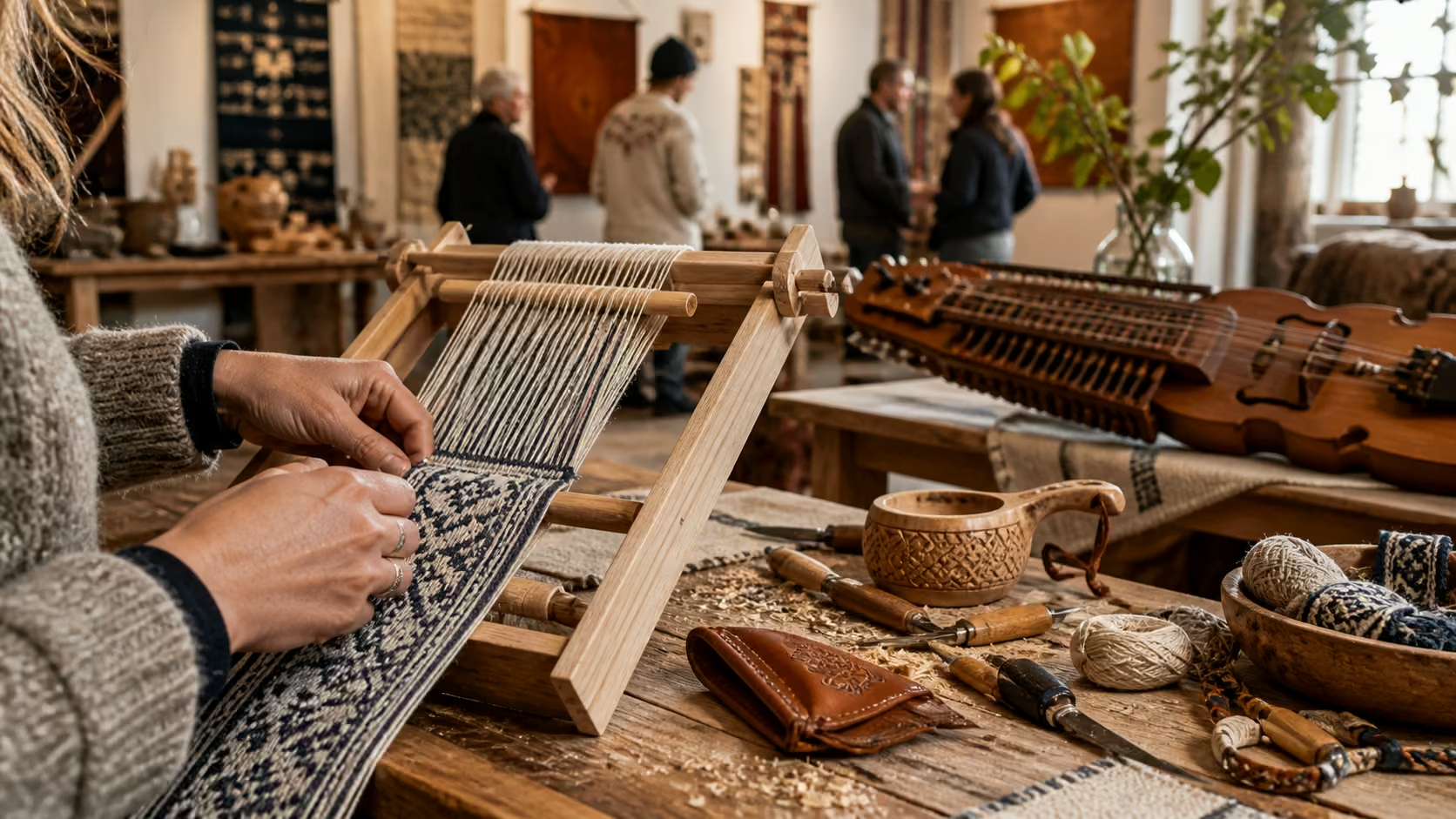
It comes through the rhythm of weaving, the patience of carving, the repetition of a tune learned by ear, the feel of linen, wood, wool, leather, or iron worked into usefulness and beauty. Across Nordic communities in North America, that inheritance has never entirely disappeared. But in 2026, it has become easier to see that it is not merely surviving. It is being made public again.
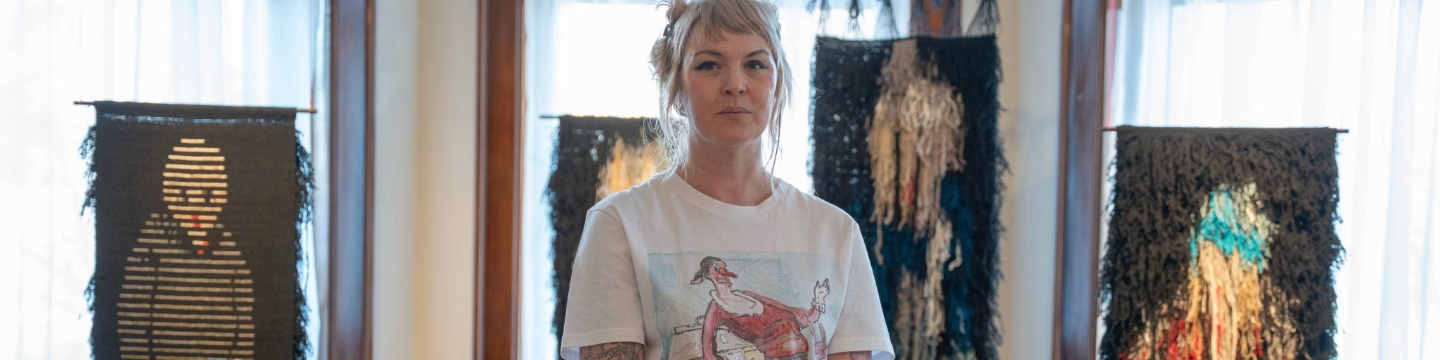
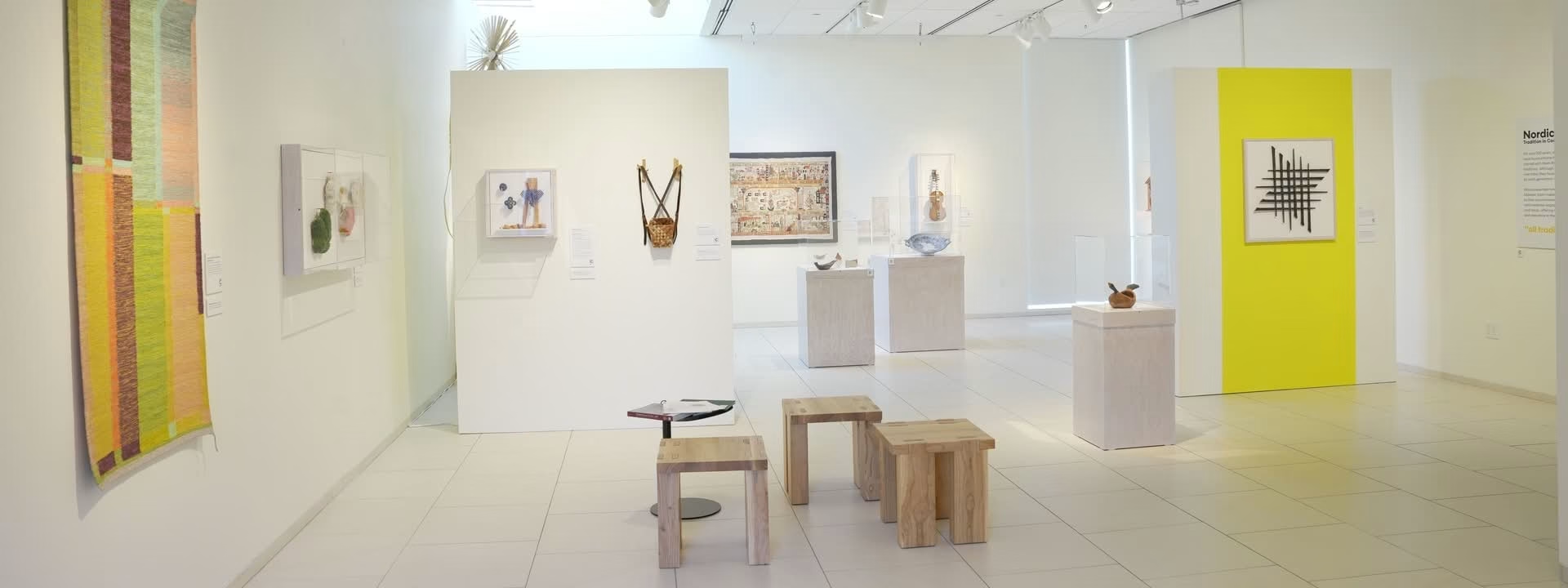
This spring in Minneapolis, the American Swedish Institute has been hosting two exhibitions that quietly make the case. Handwoven: Between Chaos and Order — featuring Swedish artist Emelie Röndahl’s contemporary textile work rooted in the Scandinavian rya tradition — is on view at ASI from February 14 through June 7, 2026. Nordic Echoes: Tradition in Contemporary Art, a traveling exhibition curated by the American-Scandinavian Foundation and featuring 24 contemporary artists from the Upper Midwest, is also on view at ASI from February 14 through June 7, 2026. Readers interested in visiting, public programs, or future tour dates can find more details through the American Swedish Institute and the American-Scandinavian Foundation. ASI describes Röndahl’s practice as one that “challenge[s] and expand[s] the possibilities of rya,” with works that address the body, identity, and self-perception.
On view alongside it is Nordic Echoes: Tradition in Contemporary Art, a traveling exhibition curated by the American-Scandinavian Foundation. The exhibition gathers work by 24 contemporary artists from the Upper Midwest in media including wood, textiles, clay, metal, paper, glass, and mixed media. Its central argument is explicit: tradition is not a static object rooted in an imagined past, but a living and changeable form.
That refusal to freeze heritage in place may be the most interesting part of the moment.
For many readers in the United States and Canada, especially those shaped by Nordic family histories, “tradition” can still sound like a museum word. It suggests preservation, display, and careful protection from change. But in actual community life, tradition has always been more restless than that. It survives because someone keeps practicing it, teaching it, adapting it, and finding a reason to bring it into the present.
That is what makes the current Nordic handcraft revival worth paying attention to. It is not only about admiration for old forms. It is about use, transmission, and belonging.
The most revealing detail is that this revival is not confined to galleries. It is happening in workshops, festivals, folk schools, community halls, and local cultural programs across the Upper Midwest, one of North America’s deepest reservoirs of Nordic diaspora life. The American-Scandinavian Foundation’s Folk Arts and Cultural Traditions program supports living Nordic traditions in North Dakota, South Dakota, Iowa, Minnesota, Wisconsin, and Michigan’s Upper Peninsula, with awards designed to deepen artists’ skills, foster master-apprentice relationships, bring visibility to living Nordic arts, and support public programs.
The foundation’s 2025–2026 grantees make the point vividly. ASF announced 15 individual artist fellowships and 10 organizational awards, spanning Scandinavian bandweaving, Norwegian shoemaking, slöjd, kolrosing, Finnish kantele and runolaulu, Swedish folk music, leather tanning, willow basketry, nyckelharpa, Swedish folk dance, Scandinavian wooden drinking vessels, choir traditions, woodcarving, rosemaling, folk foodways, weaving, and community festivals.
In other words, this is not a single aesthetic trend. It is an ecosystem.
Some of the work is intensely tactile. Kathleen Almelien of Washington, Iowa, will travel to Norway to deepen her knowledge of Scandinavian bandweaving before sharing that work through exhibitions and workshops in the Upper Midwest. Johannes Carlsen of Minneapolis will study at Sätergläntan Institute for Handicraft in Sweden, expanding his work in slöjd, the Scandinavian handcraft tradition that connects skill, creativity, and nature. Liesl Chatman will study kolrosing, a decorative woodcarving technique involving fine incisions filled with pigment, and return to teach through lectures and demonstrations.
Other projects move through music and performance. Sheila Coughlin and Diane Jarvi will study Finnish kantele and runolaulu, or rune singing, in Finland, with particular attention to women’s song traditions and Finnish-American communities. Oliver Hunter will study Swedish folk-style saxophone ensemble playing and bring free tune workshops and concerts to communities in Minnesota, South Dakota, and Michigan. Mikey Marget will study the role of cello in Swedish traditional music and return with performances, jams, instruction, and workshops. Renee Vaughan will deepen her work with the nyckelharpa and Swedish folk dance before sharing that knowledge through schools, libraries, and rural communities.
The organizational grants point in the same direction. The Beaumier U.P. Heritage Center at Northern Michigan University will host a three-day Upper Peninsula Folklife Festival with workshops, demonstrations, performances, and traditional Scandinavian skills ranging from rosemaling and weaving to woodcarving, folk music, dance, and culinary arts. The Center for People & Craft and Free Forest School will bring Scandinavian rural traditions into an urban setting through multi-day workshops and public events. Three Rivers Fibershed and the Weavers Guild of Minnesota will support fiber artists creating new linen work, with public workshops, demonstrations, live weaving, panels, and an exhibition.
That matters because diaspora culture rarely endures through sentiment alone. It endures through habits. Through places where people gather. Through forms that can be learned with the body, not only admired from a distance.
A woven band, a carved cup, a folk melody, a hand-built instrument: these things do more than symbolize continuity. They create it.
They also widen the doorway into culture for people who may not have inherited it in a seamless way. Not every younger Nordic North American grows up with fluency in a heritage language, close knowledge of regional distinctions, or an intact chain of family tradition. But many inherit curiosity. They inherit names, fragments, textures, family objects, remembered foods, bits of song, a grandmother’s loom, a hardanger fiddle in a closet, a shelf of unfamiliar patterns, or a sense that something meaningful exists just beyond full recognition.
Handcraft can meet people there.
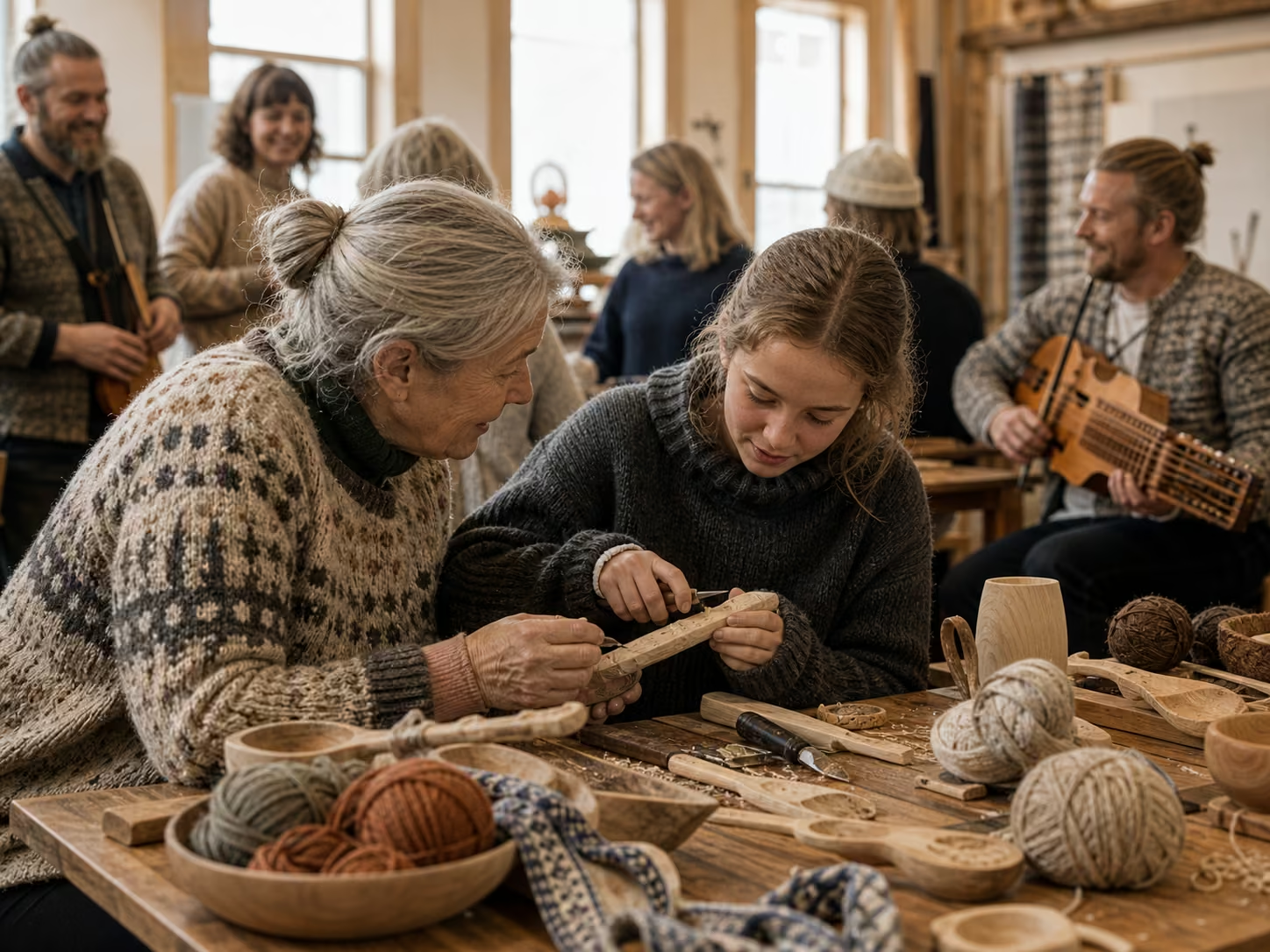
It offers a way back in that does not begin with mastery. A beginner can take a weaving class, join a folk music jam, learn a carving technique, or attend a demonstration and come away with more than information. They come away with a physical understanding that culture is not only a story told about the past. It is a method of attention. A discipline of making. A way of learning how a community has shaped usefulness, beauty, and memory over time.
That same participatory spirit is visible beyond the Upper Midwest. In Canada, the Scandinavian Cultural Centre of Winnipeg describes itself as “the home of Scandinavian culture in Winnipeg” and hosts dance groups, language classes, craft groups, and social events through clubs representing the five Nordic countries. In Metro Vancouver, the Scandinavian Community Centre Society frames its work as preserving and promoting Nordic culture, community, and spirit, with current programming that includes Midsummer festivities, vendor marketplaces, cultural events, and Nordic arts activity.
The North American map is broader than any one museum, grant program, or festival. Vesterheim, the Norwegian-American museum in Decorah, Iowa, continues to operate a Folk Art School with online and in-person classes open through September 2026. ASI itself promotes Nordic handcraft workshops as hands-on programs where makers of different backgrounds build community through woodcarving, basketry, textiles, and other forms inspired by slöjd.
This is one reason craft often carries more emotional weight in diaspora communities than outsiders might expect. A handwoven textile or carved object is not only decorative. It can feel like proof that a certain way of seeing the world still has living custodians. It says that the culture did not flatten into branding, costume, or seasonal nostalgia. Someone still knows how to do this. Someone is still willing to teach it. Someone younger is still willing to learn.
Importantly, the newer generation of artists and tradition-bearers does not seem interested in choosing between preservation and originality. They are doing both.
Röndahl’s textiles are a powerful example. Her work draws from rya, but it does not treat the technique as an obligation to reproduce the past. ASI notes that she lets excess threads hang rather than trimming them, creating works that ask viewers to slow down, look closely, and encounter the tension between clarity and disorder. Her materials carry tradition, but her subjects range from the intimate to the contemporary: the body, family, pets, internet imagery, world events, and self-perception.
The artists of Nordic Echoes are making a related argument in another register. The exhibition, which opened at Scandinavia House in New York in 2025 before traveling through the Upper Midwest, presents contemporary Nordic folk art as shaped by U.S.-based environments, local materials, identity, belonging, and new generations. Its artists are not merely reproducing inherited forms. They are asking what those forms can still do.
That is a more honest picture of diaspora culture anyway.
No tradition reaches North America unchanged. It arrives through migration, settlement, translation, marriage, loss, revival, reinvention, and long stretches of ordinary life. It becomes local without ceasing to remember elsewhere. In that sense, the most faithful cultural practice may not be exact replication, but sustained relationship.
For Nordic communities in the United States and Canada, that relationship has often been strongest where culture is made together rather than merely consumed. Choirs have long done this. So have camps, festivals, language schools, folk-dance groups, and holiday gatherings. Handcraft belongs in the same category. It turns inheritance into participation.
The result is not quaint. It is not backward-looking in the shallow sense. It is a way of insisting that beauty, memory, and skill remain part of public life even now, even here, even in an era that rewards speed and disposability. In a culture where so much arrives instantly and vanishes just as fast, practices that require patience can feel almost radical.
That may be part of their appeal. But the deeper appeal is simpler.
To make something with methods handed down across generations is to feel, however briefly, that history is not abstract. It is present tense. It lives in the pressure of the hand, in the repetition of form, in the recognition that what seemed old may still be unfinished.
The new Nordic handcraft revival in North America is not really new, and it is not only about craft. It is about whether a cultural tradition can still function as a lived practice rather than a memory display.
Right now, in galleries, classrooms, folk schools, community halls, cultural centers, and festival spaces, the answer appears to be yes.


)%20(1).avif)