Why the Moomins Keep Finding Their Way Back to North America
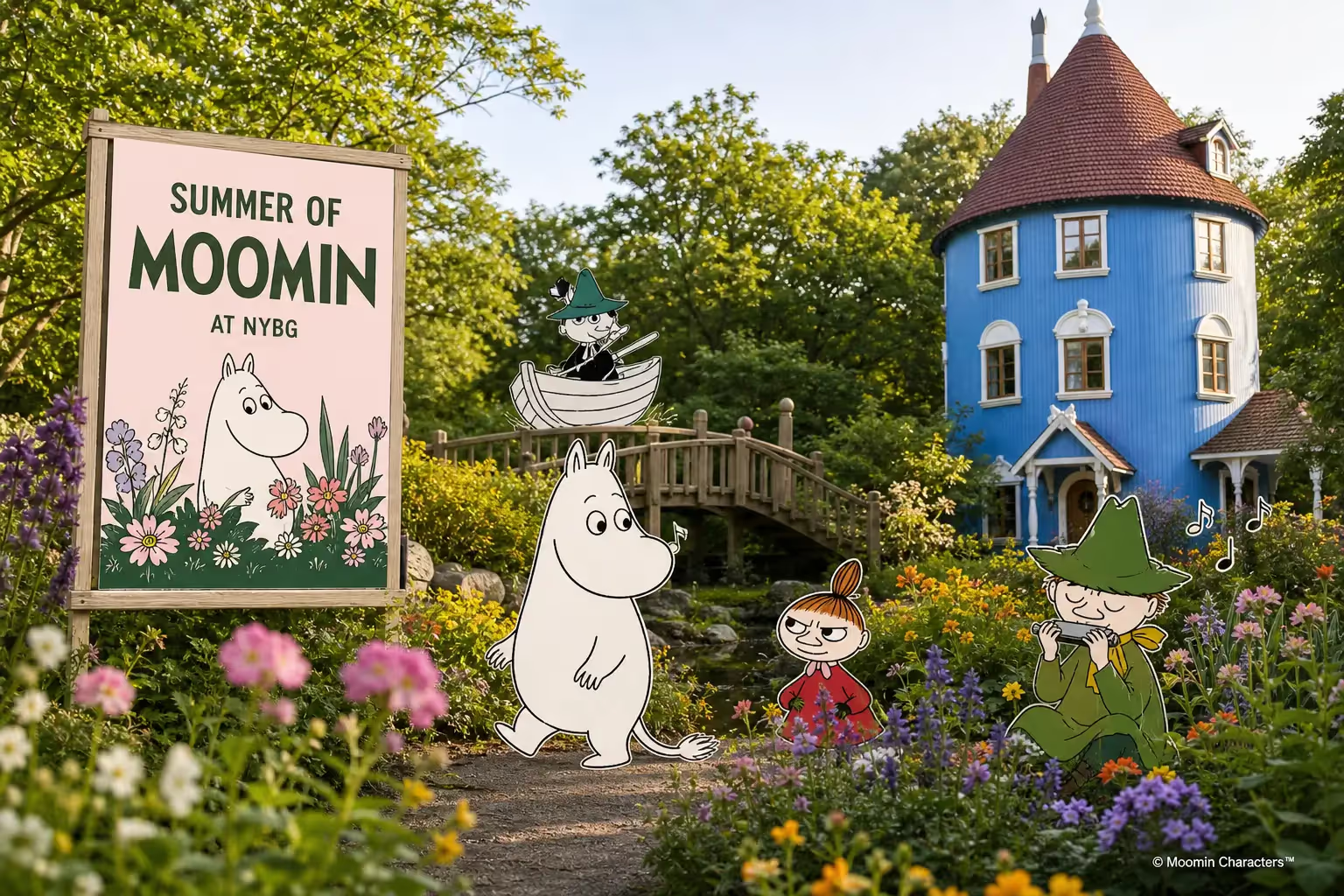
This summer, Moominvalley is arriving in New York again.
Beginning May 23, the New York Botanical Garden will open Summer of Moomin, a season-long program in the Everett Children’s Adventure Garden that invites visitors into the imaginative world created by Finnish artist and author Tove Jansson. The program runs through September 13, 2026, and is designed around outdoor adventure, nature, family programming, and the spirit of Moominvalley itself.
On one level, the pairing feels obvious. The Moomins belong among gardens, flowers, curious children, winding paths, and the quiet drama of the natural world. Their universe is full of rainstorms, islands, forests, floods, comets, winter light, summer rituals, and small domestic acts that take on almost mythic importance. But the deeper reason the New York Botanical Garden setting makes sense is that the Moomins have always belonged outdoors. They belong to wind, water, weather, restlessness, hospitality, and the strange emotional climate of family life.

That may also be why they continue to travel so well.
For many Nordic families, the Moomins are not simply children’s characters, and not quite nostalgia either. They are part of the atmosphere of growing up: books that sit low on a shelf for years, illustrations remembered before plot, a household language of particular faces, moods, and silences. For many North American readers outside that tradition, meanwhile, the Moomins can feel like a discovery that arrives with unusual force. The books are charming, yes, but they are also funny, melancholy, anti-bossy, aesthetically distinct, and emotionally far more intelligent than much of what passes for children’s culture.
That combination helps explain why Jansson’s work keeps finding new life so far from Finland.
The current New York moment did not appear out of nowhere. In summer 2025, Brooklyn Public Library presented Tove Jansson and the Moomins: The Door Is Always Open, which the library described as the first-ever U.S. exhibition dedicated to Jansson and the Moomins. The exhibition ran from June 28 to September 30 at Central Library and introduced American audiences not only to Moominvalley, but to Jansson’s wider creative life as an artist, writer, illustrator, and cultural figure.
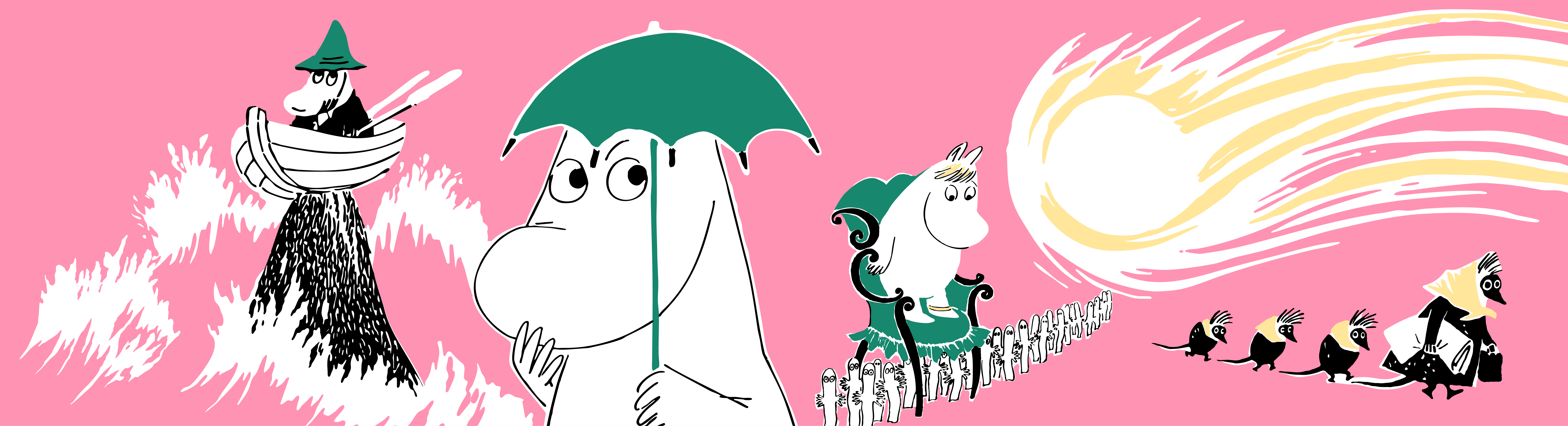
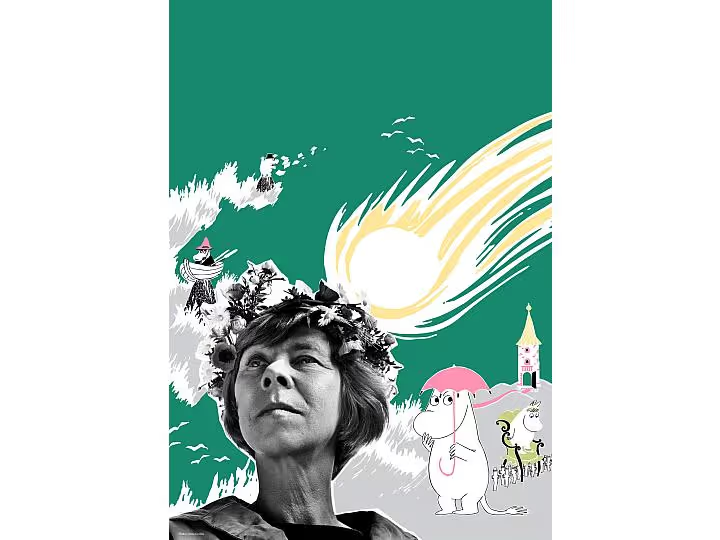
That exhibition coincided with a larger milestone: the 80th anniversary of the Moomins. Jansson’s first Moomin book, The Moomins and the Great Flood, was originally published in Swedish in 1945, during the aftermath of war. The nine Moomin novels that followed between 1945 and 1970 form one of the most distinctive bodies of children’s literature of the twentieth century, combining philosophical depth, gentle humor, and a distinctly Nordic atmosphere.
That origin still matters.
The Moomin stories do not deny fear, instability, loneliness, displacement, or loss. They simply refuse to let those things have the last word. Their characters wander, argue, hide, overthink, dream, leave, return, panic, and start over. They crave freedom and safety in almost equal measure. Home matters in these books, but home is not presented as control. It is presented as welcome.
That is a deeply recognizable idea in immigrant and diaspora life.
Across Nordic and Baltic communities in the United States and Canada, culture often survives not only through major public rituals, but through quieter inheritances of taste, tone, and emotional structure. A family may not pass down every word of a heritage language, but it may still pass down a way of understanding silence, weather, solitude, humor, mutual care, or the right to be left alone. The Moomin books sit naturally inside that kind of inheritance. They offer a northern moral imagination without turning it into a slogan.
They are full of things many readers from the region recognize instinctively: respect for privacy, closeness to landscape, tolerance for eccentricity, seasonal intensity, and the idea that people need room to be themselves without being pushed into cheerful conformity. Even the Moomin household, so warm and inviting on the surface, is not built around sameness. It is built around accommodation. The odd, the anxious, the drifting, the difficult, and the tender all get to belong.
That vision feels especially relevant now.
North American children’s culture is often noisy, overexplained, and relentlessly optimized. Parents are sold lessons. Children are sold brands. Everyone is sold stimulation. The Moomins offer something else: a slower emotional tempo, a trust in ambiguity, and a sense that imagination is not merely decorative but necessary. Jansson understood that children can hold strangeness, sadness, fear, and beauty all at once. She wrote accordingly.
Adults, of course, are one reason the books endure too.
Many readers come back to the Moomins later and realize that what felt magical as children now feels philosophical. Snufkin’s freedom reads differently at forty than it did at ten. Moominmamma’s generosity can begin to look less like softness than a disciplined ethic of care. Winter, loneliness, social performance, creative frustration, and the wish to disappear for a while all have their place in this world. Jansson’s gift was to write books that become larger as readers do.
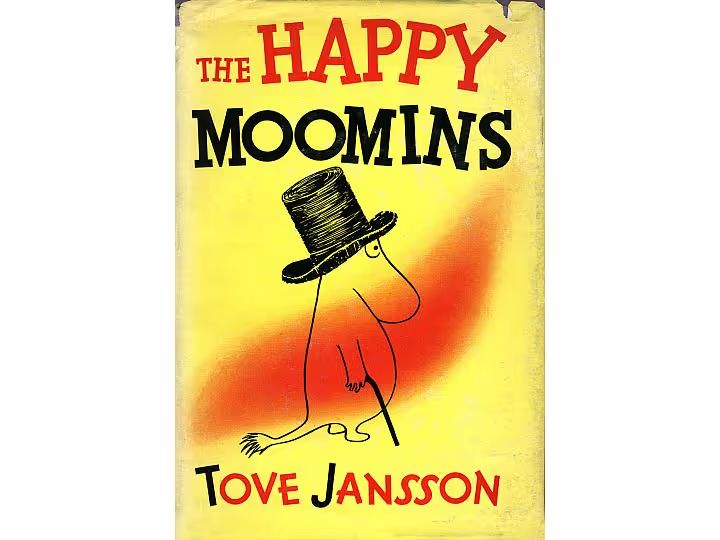
That adult resonance has become increasingly visible in North America. The Brooklyn Public Library exhibition placed Jansson’s work in a civic space rather than a commercial one. It connected children’s literature to art, identity, emotional learning, and public culture. Related programming emphasized not only Moomin stories, but Jansson’s broader literary and artistic legacy, including her adult fiction and visual work.
The wider 80th anniversary year also clarified how much the Moomins now belong to a global conversation about home, refuge, and belonging. The anniversary theme, The Door Is Always Open, referred to the Moominhouse as a place of shelter, comfort, and welcome. Around the world, Moomin80 programming included exhibitions, books, public artworks, charitable collaborations, and events that returned attention to the wartime origins of the first Moomin story.
That context matters for North American readers, especially those whose own family stories involve migration, exile, adaptation, or cultural distance. The Moomins are not sentimental about belonging. They know that homes can be lost, remade, flooded, abandoned, and found again. They know that people sometimes need to leave in order to remain themselves. They also know that a house with an open door is not a passive thing. It is an ethic.
This may be why Moomin culture in North America has extended beyond the nursery. It lives in museum shops and independent bookstores, in comics shelves and design culture, in queer literary conversations, in family homes that know these characters intimately, and increasingly in public cultural spaces where new readers can encounter them for the first time. The New York Botanical Garden program is significant not only because it is visually appealing, but because it places the Moomins where they belong: in a shared landscape, among families, among flowers, in a setting where nature is not backdrop but companion.
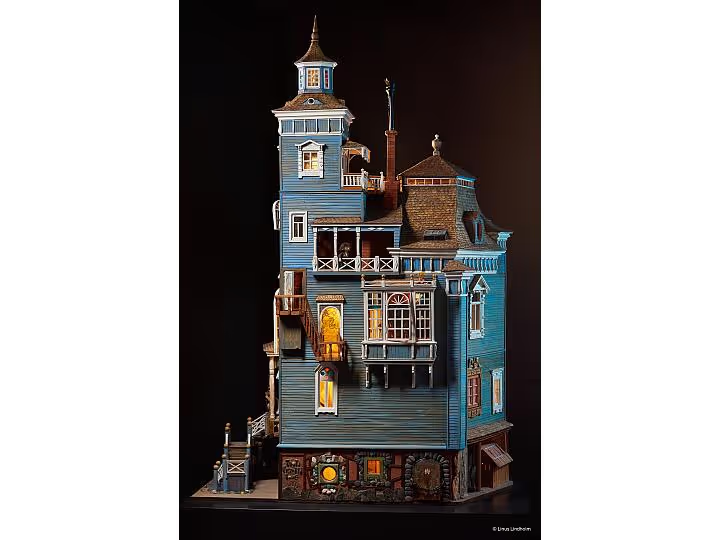
There is also something quietly moving about the timing. At a moment when so much public life feels harsh, accelerated, and suspicious, the Moomins continue to propose a different model of community. Not a perfect one. Not a frictionless one. But one grounded in curiosity, patience, and the possibility that people do not need to become less peculiar in order to live together well.
For Nordic and Baltic readers in North America, that may be part of the special pleasure. The Moomins can feel like both export and homecoming: a Finnish creation that traveled widely, yet still carries a distinctly northern texture into every new setting. For readers without family ties to the region, the appeal can be just as strong. Jansson’s world is culturally specific, but never closed. It invites people in.
That openness may be the real reason the Moomins keep returning here.
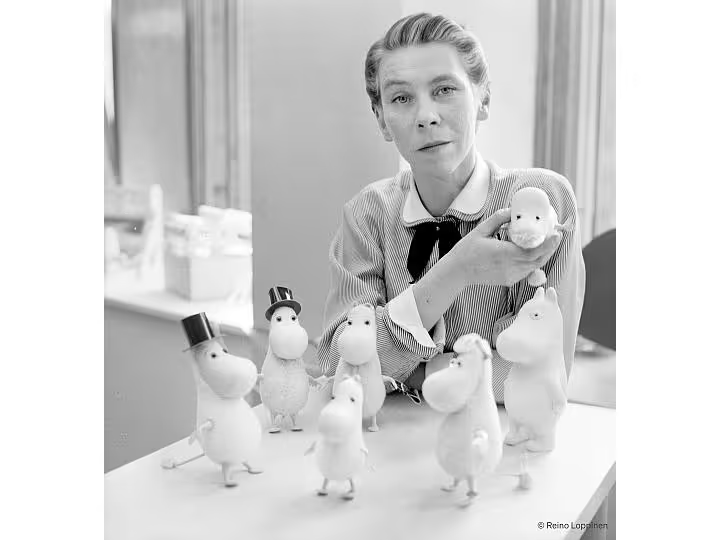
They are not surviving because they are cute, though they are. They are surviving because Tove Jansson made something rarer than charm. She made a world capacious enough to hold fear without cruelty, difference without exile, and family without suffocation. She made books in which nature is alive, solitude is not failure, and kindness is never simple-minded.
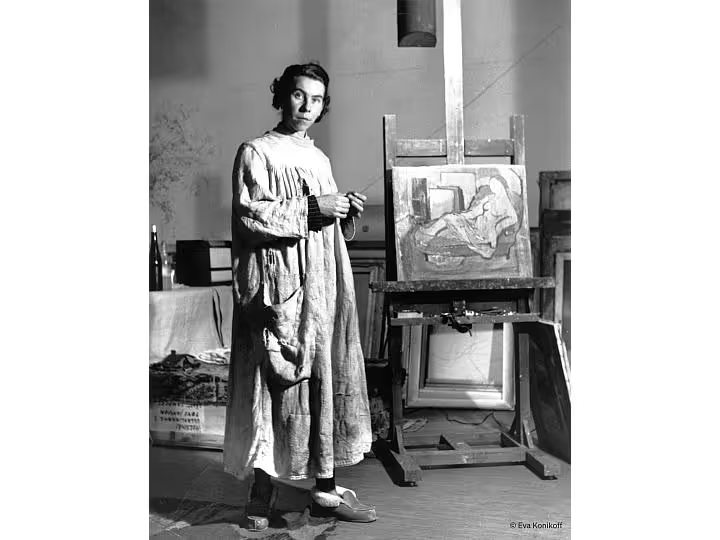
That is not only good children’s literature. It is a durable way of imagining how to live.
And in North America, where so many families are still piecing together what it means to inherit culture across distance, that vision remains more than attractive. It feels useful.
This summer in New York, plenty of visitors will arrive for flowers, family activities, and a glimpse of familiar white figures in a garden. Many will leave with something more durable: a reminder that the gentlest cultural inheritances are often the ones that last.


)%20(1).avif)