Why "Folktales" Makes the Nordic Idea of Growing Up Feel Radical Again
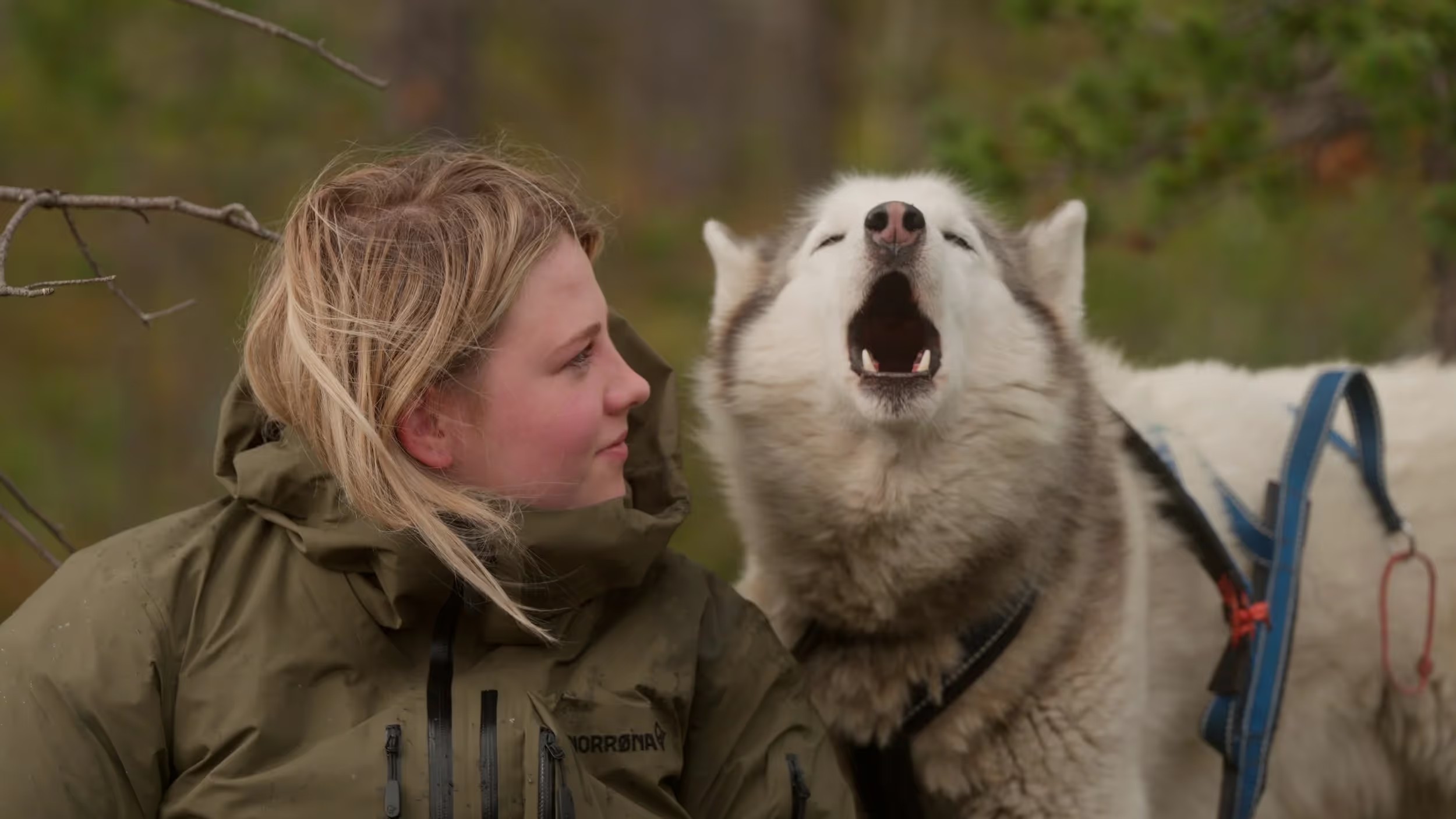
Folk high schools are not a central part of life in the United States or Canada. Yet the values the film brings into focus will ring true across many Nordic and Baltic families in North America: the belief that young people need room to become themselves; that practical skill matters; that culture is something lived, not merely displayed; and that adulthood is shaped not only by independence, but by responsibility to a community.
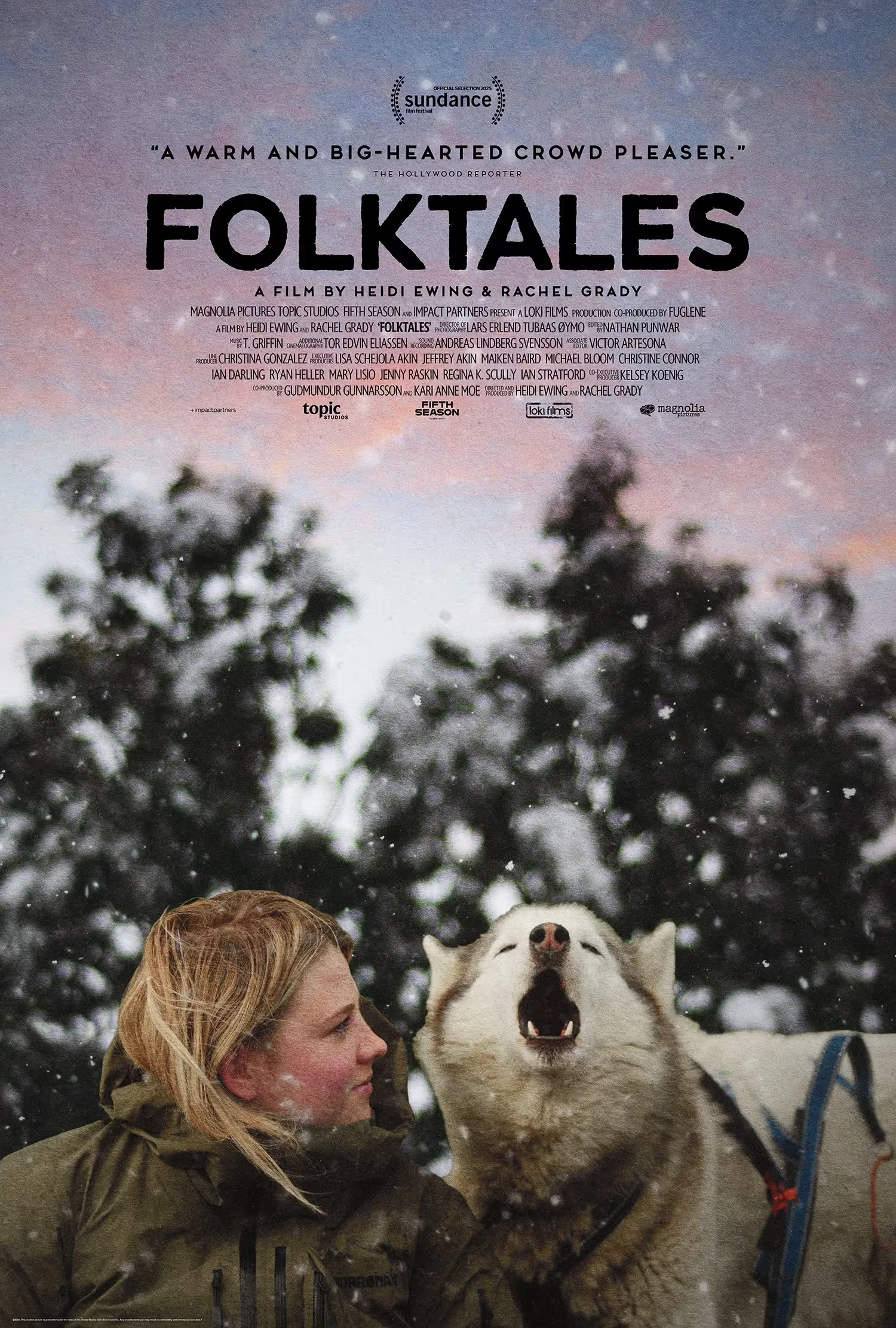
Folktales had its world premiere at the 2025 Sundance Film Festival and was released in the United States by Magnolia Pictures in July 2025. It is now available digitally through Magnolia’s watch-at-home platforms. But the film’s importance lies less in its release calendar than in the question it quietly presses on viewers: what would it mean to educate young people for life, rather than merely for performance?
That question has deep Nordic roots.
Norway’s folk high schools are part of a broader Scandinavian educational tradition shaped by nineteenth-century ideas about popular education, civic life, and formation outside the narrow logic of exams. Today, Norwegian folk high schools remain residential, often year-long environments where students live together, pursue subjects ranging from outdoor life to music and arts, and learn without grades or exams. The official Norwegian folk high school portal explains that the schools emphasize student motivation rather than formal assessment, and that students live together around the clock as part of the pedagogical model.
To many North American readers, this may sound almost utopian. A school without grades? A year of learning without the immediate pressure of credentials? A place where eighteen- and nineteen-year-olds are asked not to accelerate, but to deepen?
Yet for many Nordic families, the idea is not utopian at all. It reflects an older cultural understanding of education as formation: the shaping of judgment, stamina, humility, and social responsibility. The folk high school tradition grew out of the belief that education should belong to ordinary people and prepare them for participation in society, not only advancement within institutions. Danish folk high school history traces this movement to N.F.S. Grundtvig’s argument for public education beyond elite academic structures, centered on human relationship, society, and life itself.
That inheritance matters because Folktales does not present Arctic Norway as a lifestyle fantasy. The landscape is beautiful, but beauty is not the point. The teenagers Ewing and Grady follow are not picturesque symbols of Nordic resilience. They are lonely, anxious, uncertain, and often painfully self-conscious. They arrive carrying burdens familiar to contemporary youth across borders: social pressure, isolation, grief, self-doubt, and the sense that identity must be performed before it has had time to settle.
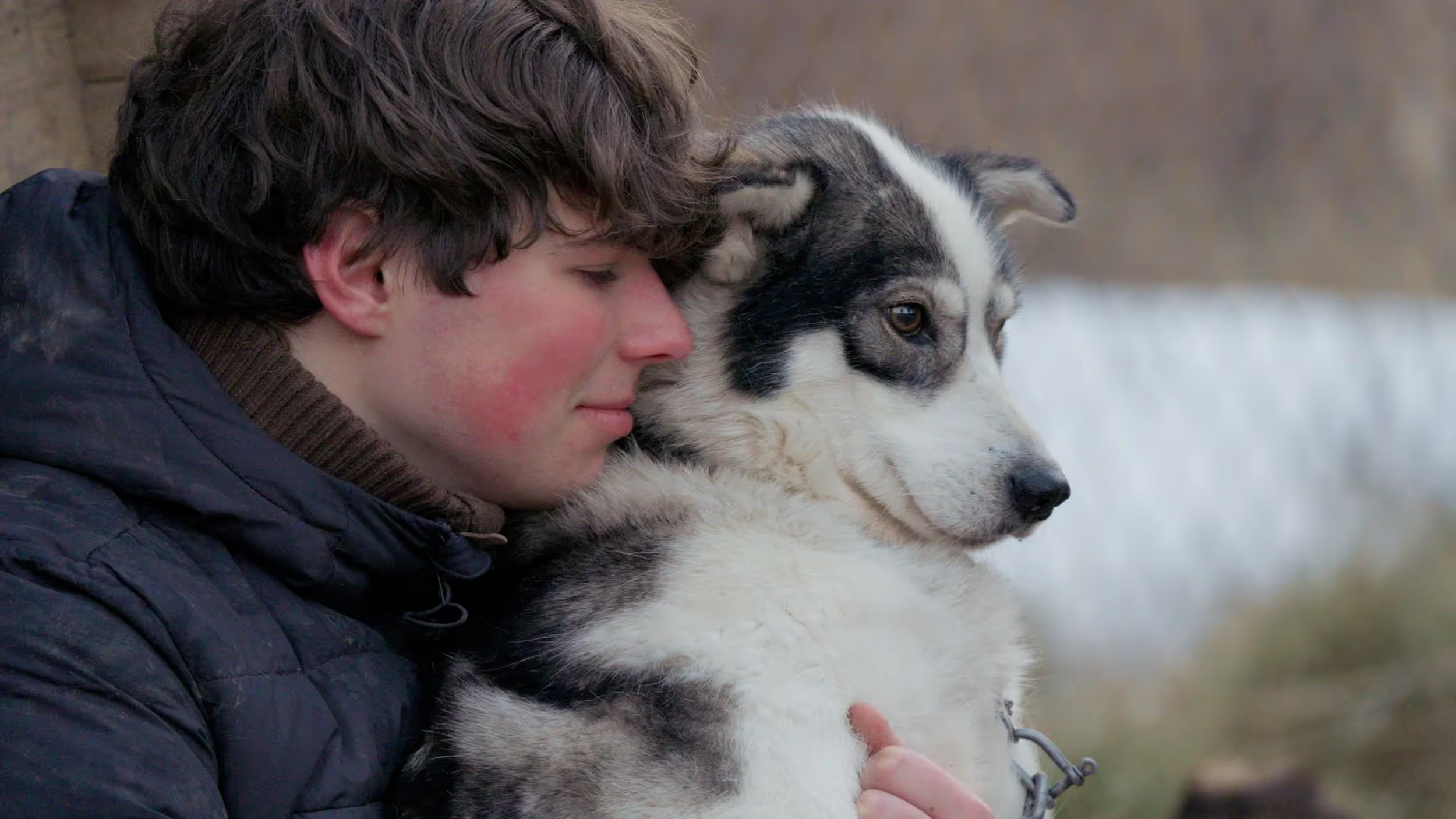
The school offers no miracle cure. What it offers is a different setting for becoming a person.
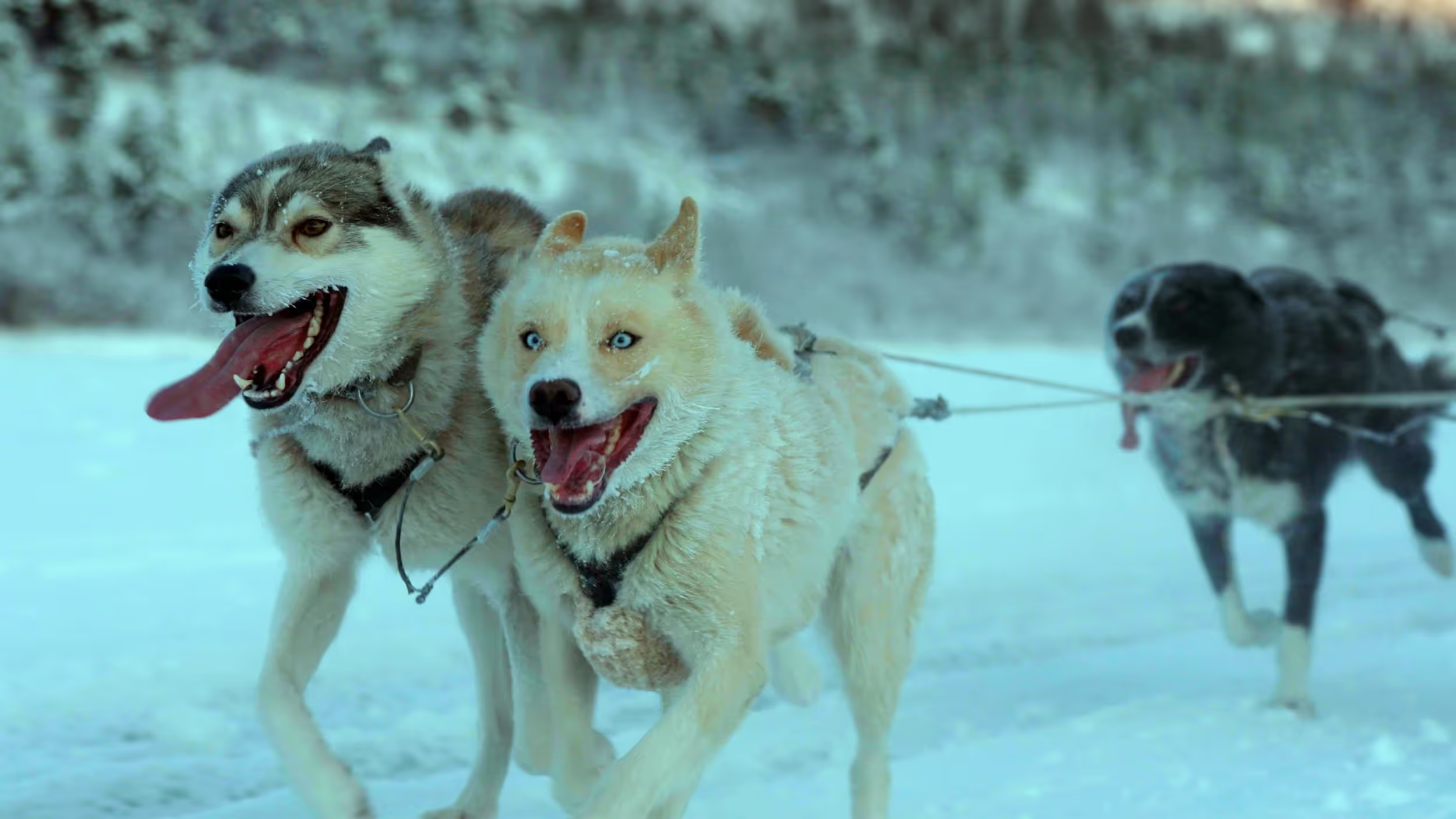
At Pasvik, that setting is unusually demanding. The school is located in northern Norway, near the Arctic wilderness and the taiga, and its own description emphasizes outdoor life, northern lights, wilderness living, and dog sledding as central to its environment. Its mushing and outdoor life program asks students to learn care, teamwork, dog psychology, training philosophy, sledding, and practical responsibility with animals in winter conditions. In Folktales, these elements are not decorative. They become the structure through which the students encounter themselves.
A sled dog does not care how impressive a teenager appears online. A frozen landscape does not reward irony. A communal kitchen, a shared dormitory, a long winter, and an animal depending on your consistency all ask a different set of questions: Can you show up? Can you listen? Can you endure discomfort without making it the center of the world? Can you be useful to someone else?
That is where the film becomes especially interesting for diaspora audiences.
.avif)
Many Nordic and Baltic communities in the United States and Canada already build smaller versions of this world, even if they do not call them folk high schools. They do it through summer camps, language schools, choir rehearsals, youth dance groups, ski clubs, craft workshops, church halls, cultural houses, scouting, seasonal festivals, and weekend gatherings where young people learn how to belong by doing something together.
In those spaces, culture is not simply content to be consumed or heritage to be displayed once a year. It is a structure of time, attention, and relationship. A child learns a song, a dance step, a prayer, a recipe, a craft, a phrase in a grandparent’s language. A teenager learns how to arrive on time, stand in formation, tune their voice to others, help set up chairs, serve food, carry a flag, speak to elders, care for younger children, and be part of something that existed before them and will continue after them.
Baltic readers may recognize this immediately. The Baltic song and dance celebration tradition, inscribed by UNESCO, brings together amateur choirs and dance groups in Estonia, Latvia, and Lithuania, with major festivals held every five years in Estonia and Latvia and every four years in Lithuania. UNESCO describes the celebrations as both a repository and showcase of performing folk art, gathering as many as 40,000 singers and dancers. That tradition is not merely performance. It is civic memory, intergenerational discipline, and collective identity carried through the body and voice.
For diaspora communities, the stakes are even more intimate. Away from the homeland, culture can easily become symbolic: a costume, a holiday meal, a flag at a parade, a song performed for an audience that may not understand the words. Those symbols matter. But Folktales reminds us that culture is strongest when it remains practical — when it teaches young people not only where they come from, but how to live.
This is why the documentary feels larger than its Norwegian setting. It captures a broader northern conviction that adulthood is not simply an individual achievement. It is something rehearsed in common. It requires guidance, ritual, physical work, humor, embarrassment, silence, and an environment sturdy enough to hold uncertainty.
North American culture, by contrast, often describes adulthood through the language of departure. To grow up is to move out, stand alone, compete, specialize, self-market, and become legible to institutions. Even well-meaning educational conversations tend to swing between alarm and optimization. We worry, often rightly, about loneliness, screen dependence, anxiety, and the pressure young people feel to curate themselves. But our solutions frequently return to the same vocabulary that helped create the problem: more achievement, better metrics, stronger résumés, sharper self-management.
Folktales suggests another possibility. It does not argue that every young person should be sent to the Arctic with sled dogs. It does not romanticize hardship for its own sake. Instead, it proposes that young people may need environments where they are not constantly evaluated, where usefulness matters more than polish, and where they can experience themselves as part of a living social world.
That idea feels radical only because so many spaces for unmeasured growth have disappeared.
A folk high school year is not idle time. In some ways, it is the opposite. It asks students to inhabit time more seriously. Without the constant logic of grades, they must develop motivation from within. Without the escape hatch of constant digital performance, they must confront boredom, discomfort, conflict, and longing. Without the familiar structures of home, they must learn to live with others. That kind of freedom can be frightening because it is not freedom from responsibility. It is freedom for formation.

For Nordic and Baltic North Americans, this may be the film’s deepest resonance. Diaspora life is often described as a project of preservation, as if the central task were to protect old forms from erosion. But the stronger question is what those forms are still capable of doing now.
Can a song festival steady a young person? Can a folk dance rehearsal teach confidence without vanity? Can a summer camp create friendships that outlast geography? Can a language school make room for both awkwardness and pride? Can a cultural community connect independence to responsibility rather than isolation?
Folktales suggests that the answer is yes, but only when culture is lived as practice rather than performance.
The film’s teenagers do not become adults because someone explains Nordic values to them. They grow because they are placed inside a world where those values have consequences. Care becomes physical. Community becomes daily. Nature becomes teacher rather than scenery. Difficulty becomes shared rather than private. The dogs, perhaps most beautifully, become companions in a form of education that is older than any curriculum: the slow discovery that another living being depends on your steadiness.
That lesson may be especially valuable in a media culture that often mistakes visibility for maturity. Young people are seen constantly, but not necessarily known. They are asked to express themselves before they have been given much space to understand themselves. They are encouraged to build identities in public, often before they have experienced the quieter dignity of being useful in private.

Against that backdrop, Folktales feels gentle but demanding. It insists that growing up still requires old-fashioned things: time, difficulty, shared life, practical skill, and a place where a young person can discover that they are not the only person in the world.
For North American audiences, the film may look like a journey to the edge of the map. For Nordic and Baltic diaspora viewers, it may feel more like a return — not to a place, exactly, but to an idea of adulthood that many families have carried quietly across oceans. An adulthood less brittle, less theatrical, more capable of weather, silence, work, and mutual reliance.
That is what makes Folktales more than a beautiful documentary about a Norwegian school. It is a reminder that culture, at its best, does not simply tell young people who they are. It gives them something to do, someone to care for, and a community strong enough to let them become.


)%20(1).avif)