The Quiet Continuity of Finnish Tatars: What the Oldest Muslim Community in Finland Reveals About the North
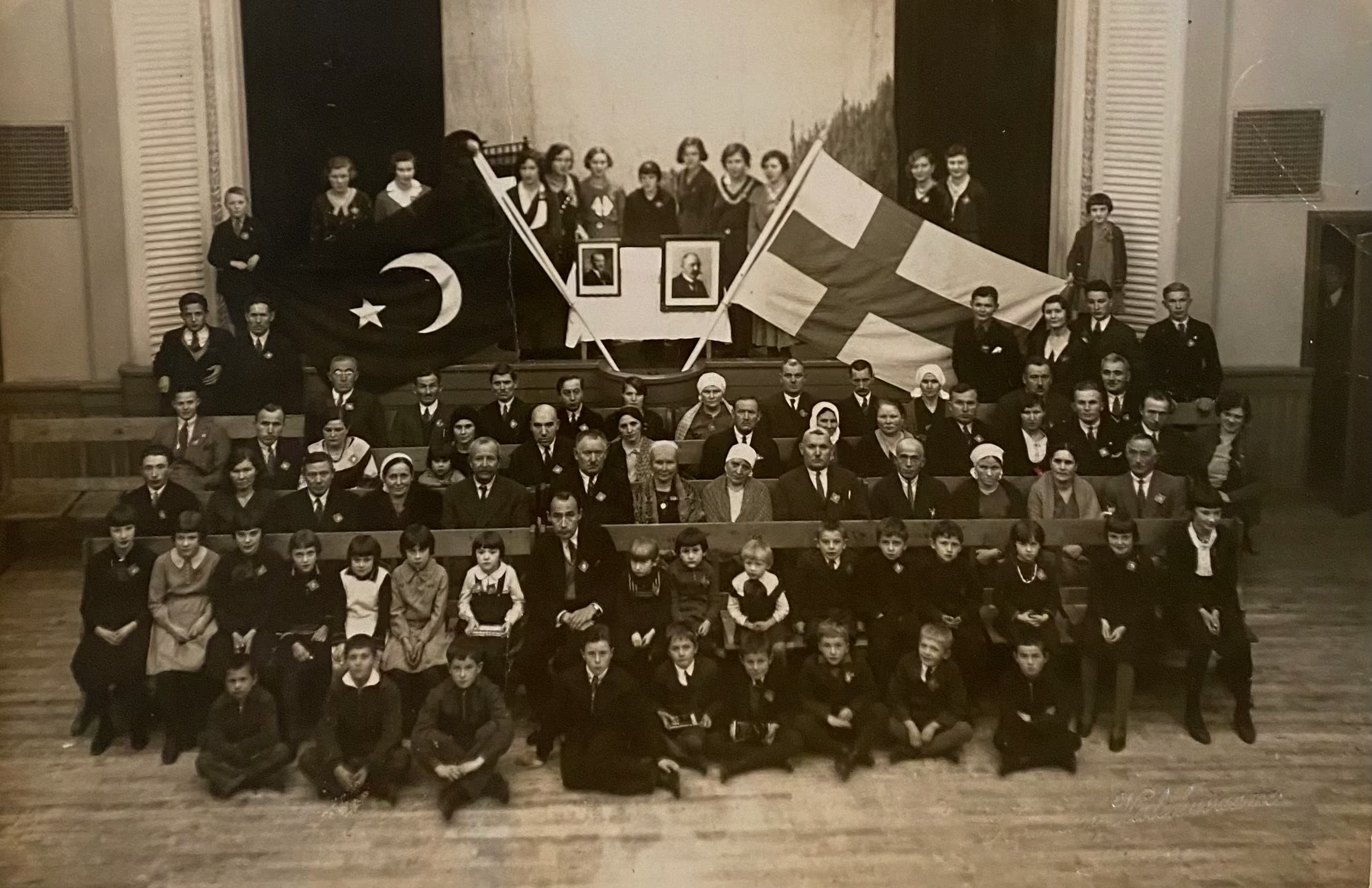
Those settlers became the Finnish Tatars, still the country’s oldest Muslim minority. Most came from villages in the Nizhny Novgorod region and built trading networks that gradually turned into rooted communities in Helsinki, Tampere, Järvenpää, Turku, and other towns. Their story matters not only because it is old, but because it unsettles a familiar Northern European myth: that Islam and Nordic identity belong to separate histories.
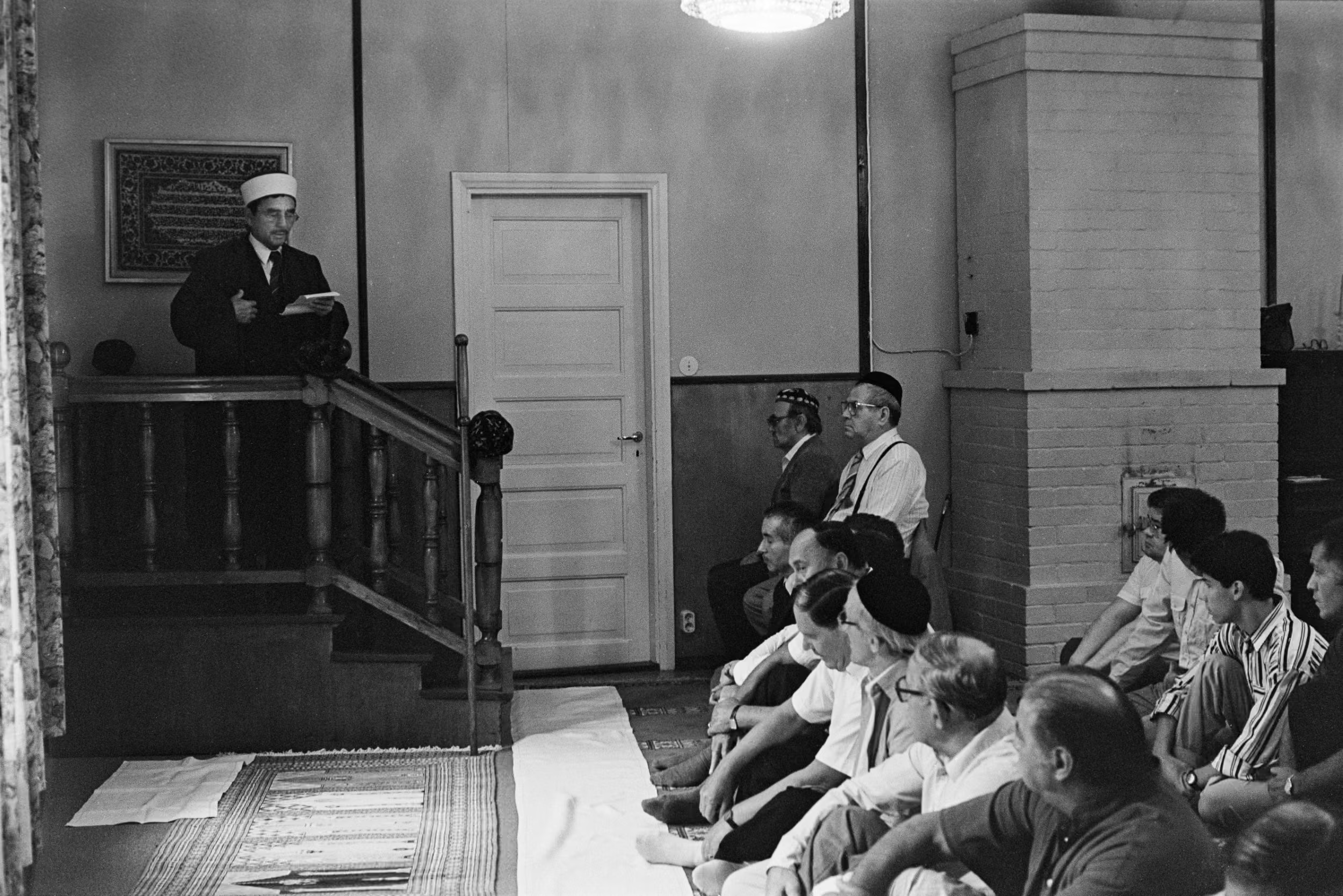
But the Finnish Tatar story should not be romanticized into a seamless tale of acceptance. Research by historian Ainur Elmgren shows that the first Tatar merchants who appeared in Finnish marketplaces in the 1880s encountered prejudice, suspicion, and recurring stereotypes in the press. The later image of the community as a “success story” was shaped partly under pressure. In 1932, about a third of the community remained stateless on Nansen passports, and fears of deportation lingered in the tense political atmosphere after Finland’s civil war.
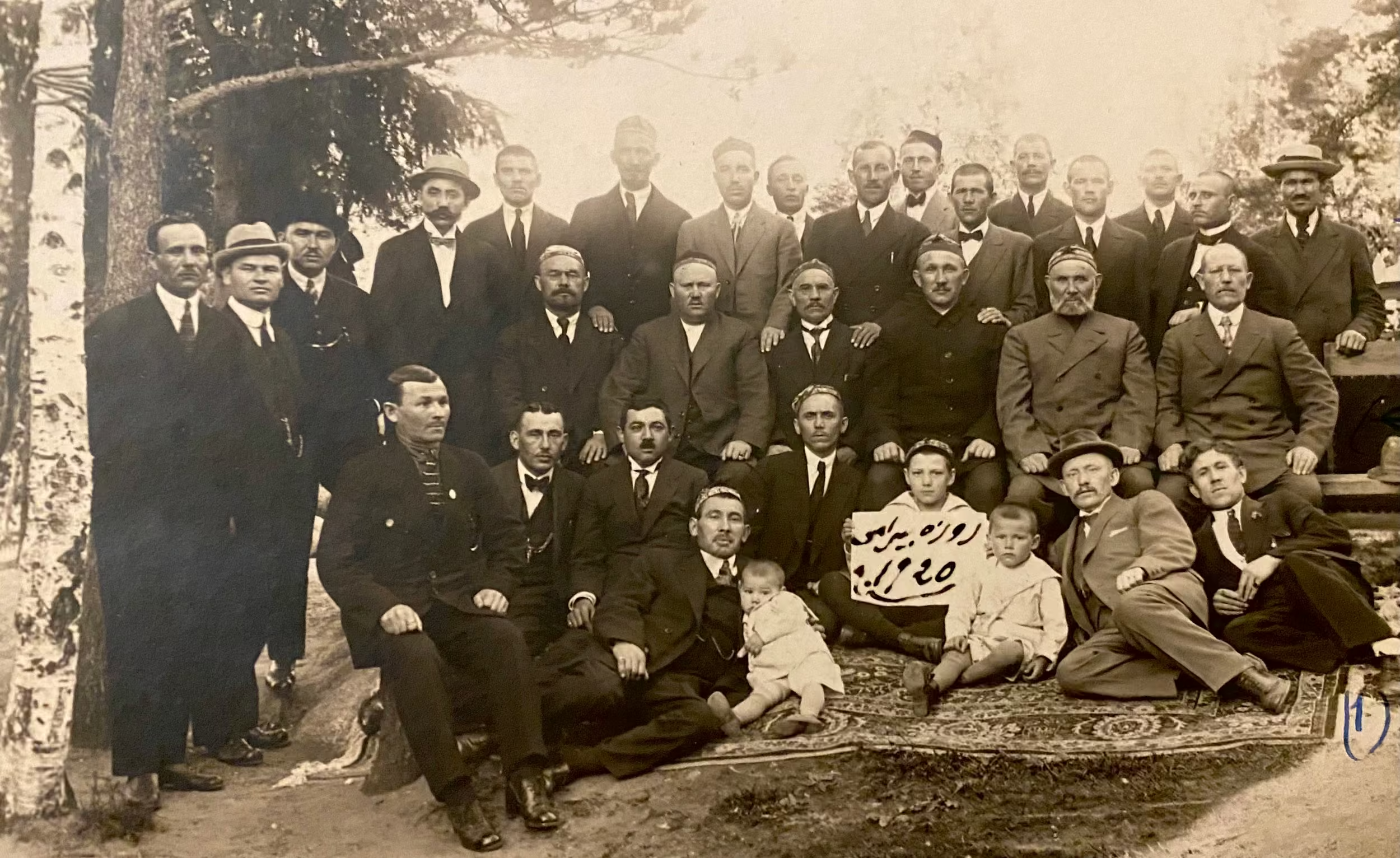
That is what makes the institutional history so important. The community organized early: a Muslim charity association in Helsinki was confirmed in 1915, and after Finland’s freedom-of-religion legislation, the Finnish Mohammedan Congregation was officially registered in April 1925 as the first Islamic congregation in the country. For decades, Tatars remained the only organized Muslim community in Finland, creating the earliest durable framework through which Islam became part of Finnish civic life rather than merely a passing presence.
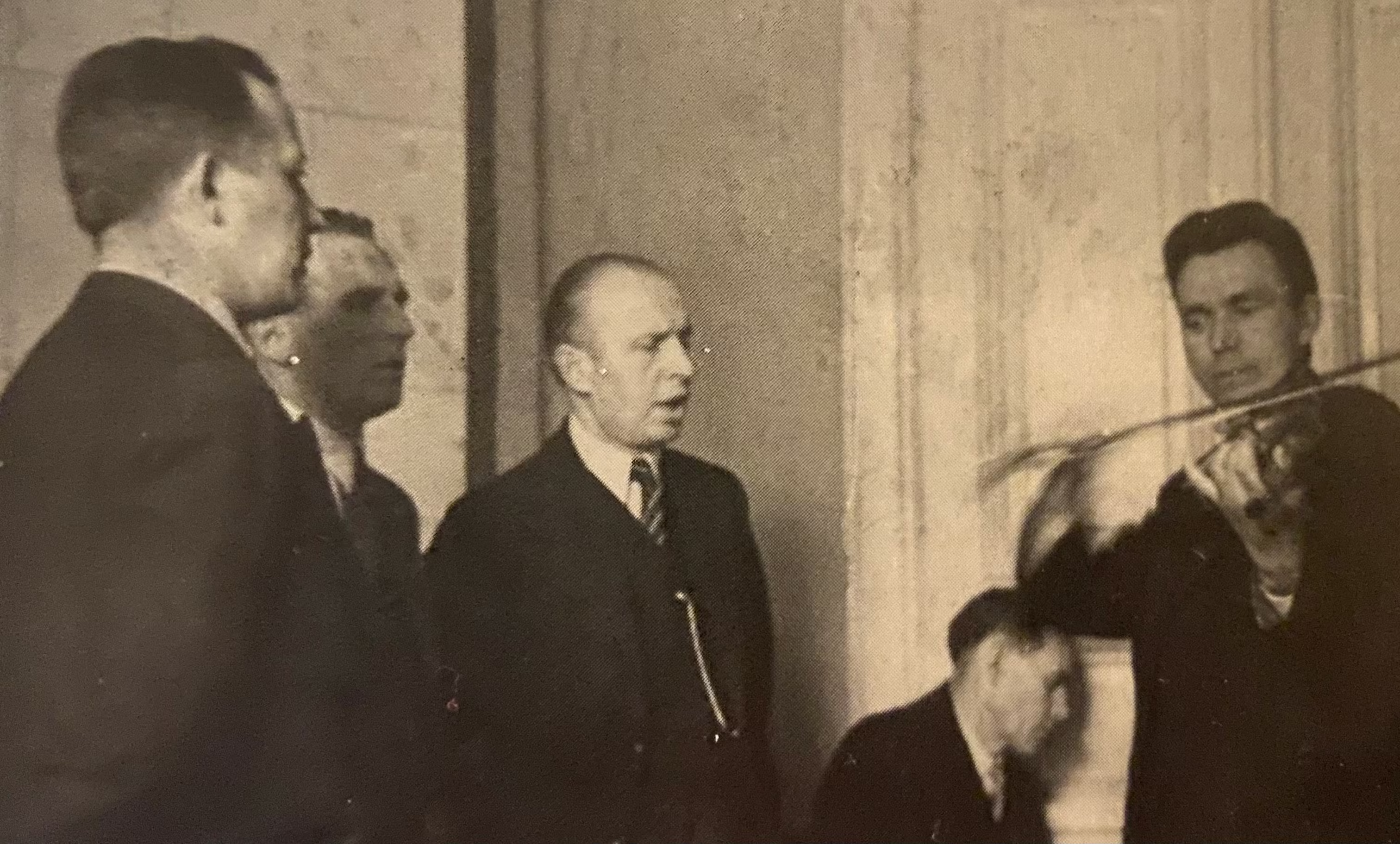
What is most remarkable, however, is not simply endurance but method. The Finnish Tatars preserved religion, language, and custom through institutions rather than sentiment alone: congregations, cultural associations, publications, schools, and family life. The City of Helsinki’s history archive notes that after unsuccessful efforts in the 1930s, the Tatars established a bilingual Tatar-Finnish elementary school in 1948, and that language and religious teaching continues through courses and weekend instruction. Finland’s own minority-language reporting classifies Tatar as a non-territorial language and notes that the community has preserved its distinct cultural features into the fifth generation.

This is why Finnish Tatars are more than an interesting minority case study. They show that integration and continuity do not have to be opposites. Long before today’s debates about multiculturalism, they were already living a dual inheritance: fully at home in Finnish civic life while maintaining Tatar language, family memory, and Sunni Muslim practice. That balance did not happen automatically; it was built deliberately, over generations.
The broader history of Islam in Finland only sharpens the point. Tatars were the main Muslim group in the country until the 1980s. Since the 1990s, Muslim immigration has made Finland’s Islamic landscape far more diverse, and academic estimates place the Muslim-background population in the early 2020s at roughly 120,000 to 130,000. Yet scholar Tuomas Martikainen argues that the historical Tatar minority still matters for more recent Muslim communities and for how Islam is understood in north-western Europe. They did not simply arrive early; they helped make later Muslim belonging more imaginable.
For The Northern Voices, the deeper lesson is cultural as much as historical. Small northern nations often like to tell themselves stories of continuity, cohesion, and inheritance. The Finnish Tatar experience suggests that continuity is not preserved by excluding difference, but by building social forms sturdy enough to hold it. Islam in Finland is not only a story of recent arrival. It is also a century-old story of a small community that learned, against real odds, how to belong without disappearing.

)%20(1).avif)