Norway Buried Its King. Washington Sent an Under Secretary.

About 48,000 people lined the streets of Oslo on Wednesday 9 September as the coffin of King Harald V travelled from the Royal Palace to Oslo Cathedral. At one o'clock the whole country stopped for a minute, church bells tolling three times at the start and three at the end. Four F-35s went over, one peeling away from the formation.
Royalty came from twelve countries. Prince William came for Britain. King Frederik X and Queen Mary came from Denmark, Carl XVI Gustaf from Sweden, Felipe VI from Spain, Willem-Alexander and Máxima from the Netherlands, Abdullah II from Jordan. Volodymyr Zelenskyy walked in the procession. The presidents of Estonia and Latvia were there. Leaders from more than twenty countries in all.
The United States sent Allison M. Hooker, Under Secretary of State for Political Affairs.
The president was in Dallas that day, giving a keynote at a Republican convention.
In brief
- Harald V died on 28 August, aged 89, after 35 years on the throne. He was the first Norwegian-born king in roughly six centuries.
- He spent the war as a small boy in Maryland, a guest of Franklin Roosevelt, and spoke English with a faint American accent for the rest of his life.
- His son is King Haakon VIII, who took the oath before the Storting on 1 September while his father was still lying in state.
- Crown Princess Ingrid Alexandra, 22, is now heir apparent — and is in line to be Norway's first queen regnant in some six hundred years.
- Princess Astrid died on 11 September, two days after her brother's funeral, aged 94. With her, the last of the children who fled to America in 1940 is gone.
- The level of US representation became a story in Norway. Aftenposten called the delegation's rank “strikingly low.”
The boy at Pook's Hill
The reason this death lands differently in Minnesota and Iowa than in most of Europe is a house outside Bethesda, Maryland.
Germany invaded Norway on 9 April 1940. King Haakon VII and Crown Prince Olav stayed with the government. Crown Princess Märtha took the three children — Ragnhild, ten; Astrid, eight; and Harald, three — toward the Swedish border, where they were refused entry for want of passports. Märtha told her driver to go through the gate anyway.
Her presence in neutral Sweden became politically awkward. Roosevelt issued a personal invitation and sent the US Army transport American Legion to the Arctic port of Petsamo to collect them. They sailed on 17 August 1940.
They stayed first at the White House, then at Pook's Hill, a Tudor-style house on an estate about ten miles away. Harald went to school in Maryland from 1943. Eleanor Roosevelt said the family would be cared for “as if they were members of our own family,” and the photographs of the small prince playing with the president's terrier are the kind that survive eighty years.
At Roosevelt's fourth inauguration in January 1945, held on the South Portico of the White House, the seven-year-old Prince Harald stood behind the president.
And on 16 September 1942 — at the Washington Navy Yard, handing over a newly built submarine chaser named for Haakon VII, with Märtha accepting it on Norway's behalf — Roosevelt delivered the line that Norwegian America has been repeating ever since:
“If there is anyone who still wonders why this war is being fought, let him look to Norway.”
The family went home on 7 June 1945, five years to the day after Haakon VII had left.
The king who kept coming back
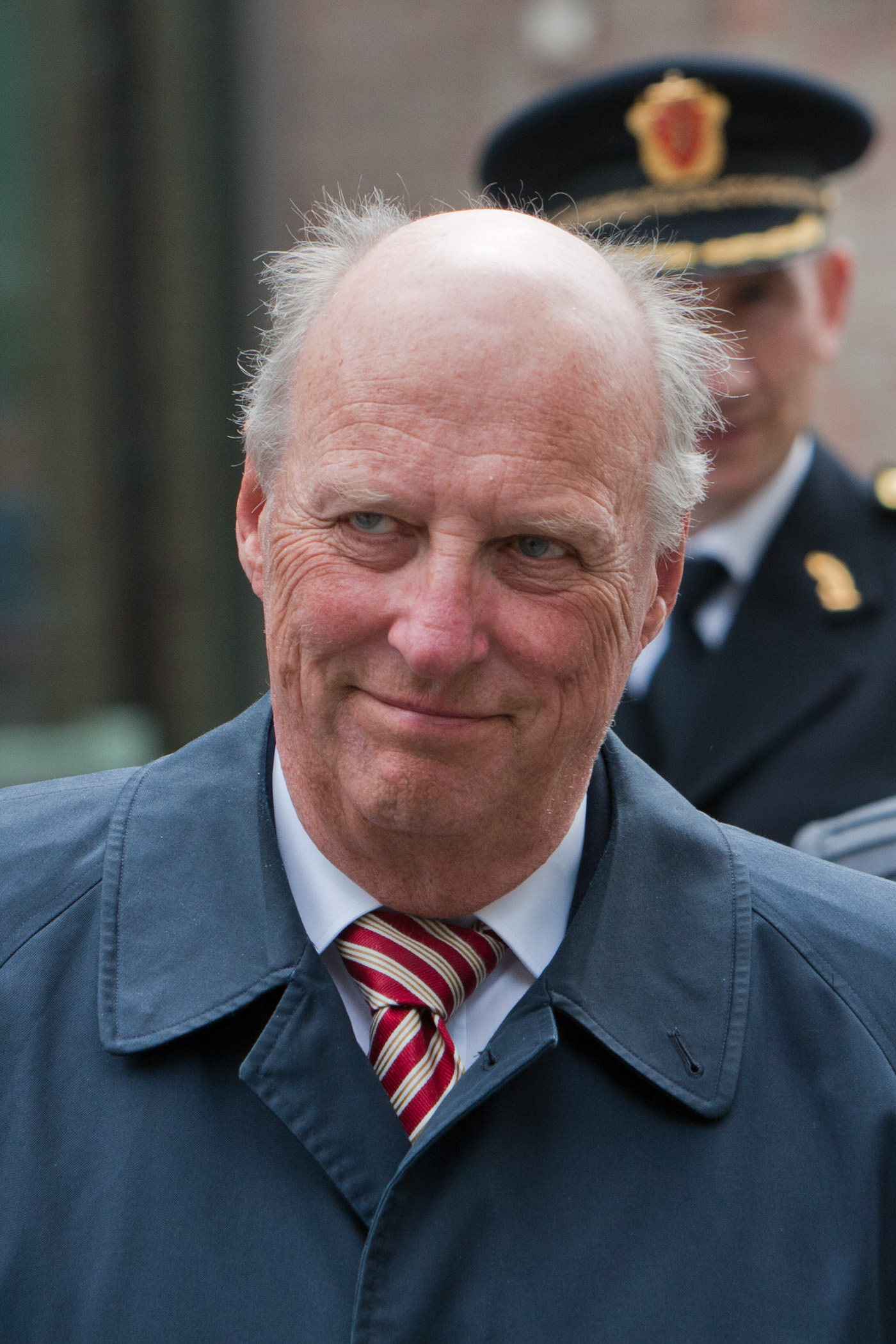
Harald visited Norwegian America more often, and more attentively, than any Norwegian monarch before him.
He was in Decorah, Iowa in October 1965, as Crown Prince, at Vesterheim and Luther College, which gave him an honorary degree. He went back in 1995, in the 170th year after the Restauration, on a tour that took in Decorah, then four days in the Pacific Northwest — dedicating a Scandinavian heritage mural in Ballard, where he observed that Seattle's 17 May parade “is the largest outside Norway” — then Poulsbo, then Pacific Lutheran University in Tacoma, then Washington and the Clintons.
And he went back again in October 2011: Luther College's sesquicentennial in Decorah, St. Olaf in Northfield for the third time, Augsburg in Minneapolis, and Duluth, where he rededicated the tower built by the Norwegian immigrant Bert Enger above Lake Superior.
What he said in Duluth on 17 October 2011 is the best short statement of what the relationship meant to him:
“Many towns, buildings and individuals have Norwegian names. Many of you cherish Norwegian food and traditions. Lutefisk and lefse is still being served. And the Norwegian language is still being preserved.”
He closed with tusen takk.
He was Royal Patron of Norway House in Minneapolis and a patron of the Sons of Norway Foundation. In Canada he made a state visit in May 2002 — only the second by a Norwegian monarch, after his father in 1987 — stopping at Pier 21 in Halifax, through which about 1.5 million immigrants entered Canada, and at Camp Norway in Lunenburg, where some 1,400 Royal Norwegian Navy sailors trained during the war.
A note on a number. Harald liked to say there were “between five and six million” Norwegian Americans. Self-reported ancestry in recent census data runs closer to four million. Both figures are worth having; they are not the same claim.
The anniversary he saw, and did not finish
On 4 July 2025, in Stavanger, Harald and Sonja watched a replica of the sloop Restauration leave harbour to retrace the 1825 crossing, escorted out by the royal ship Norge. The whole family was there. It was Queen Sonja's 88th birthday.
Three months later, on 9 October 2025 — two hundred years to the day after the original landfall — it was Crown Prince Haakon who stood at Pier 16 in New York to meet the ship. He had spent the week before in Decorah, where Vesterheim gave him Den Høyeste Ære and Luther gave him an honorary doctorate, then Minneapolis, then St. Olaf.
So the bicentennial was shared between them: the father saw the ship off, the son received it. (We wrote about that handover here, before either of us knew how soon it would matter.)
Harald died ten months after the ship reached New York.
About that delegation
It is worth being careful here, because the temptation is to over-read it.
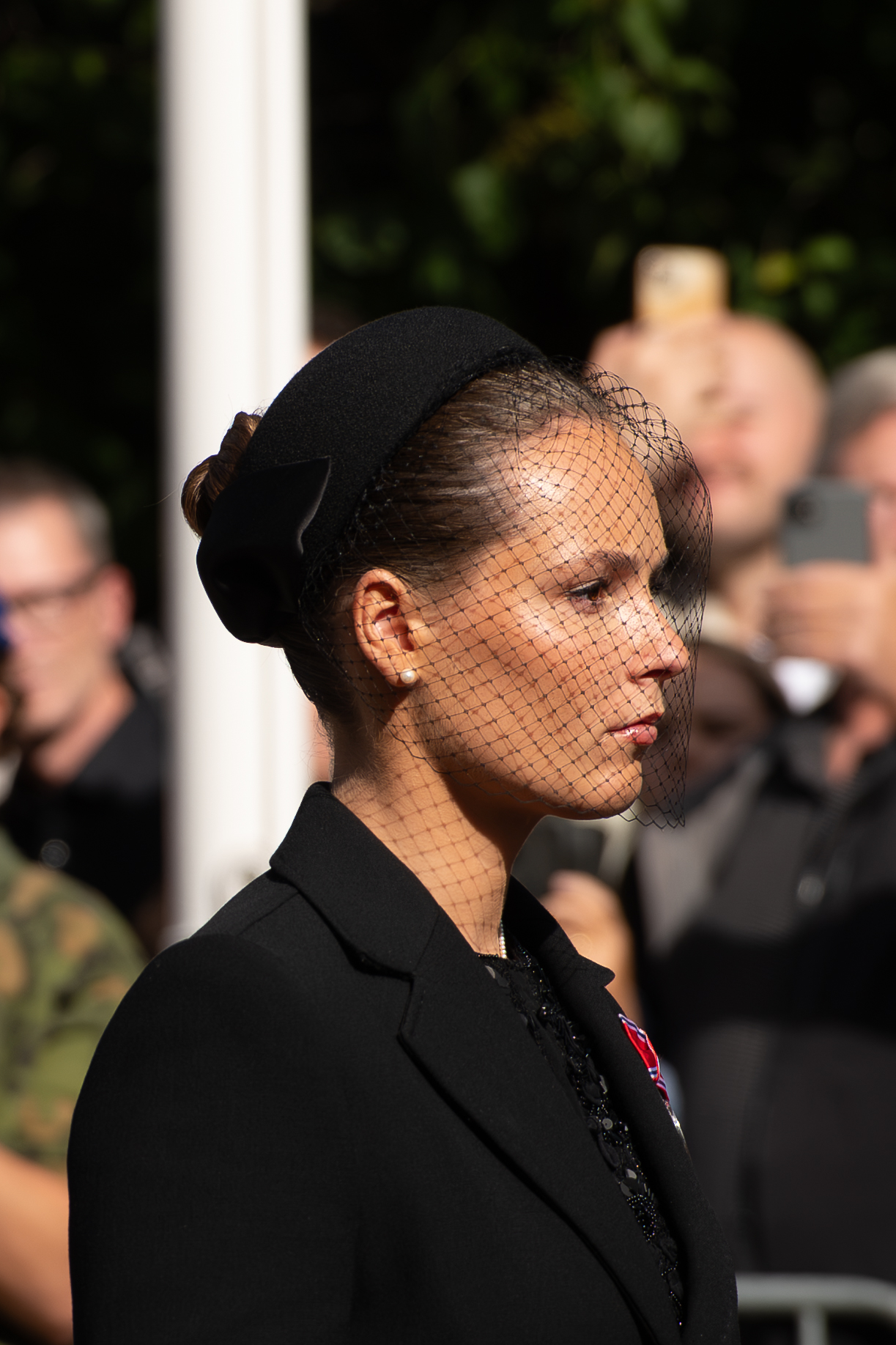
The facts: the United States was represented by an under secretary. The president, vice-president and secretary of state all did not attend. Trump posted a tribute on Truth Social calling Harald “a strong, proud, and greatly respected man,” and the State Department's condolences were conveyed by a spokesperson.
Aftenposten described the rank of the delegation as strikingly low. The commentator Eirik Løkke told Dagbladet: “Sending an under secretary to attend shows that this funeral is not a high priority for Trump.” A Democratic member of Congress criticised the level of representation publicly. Norwegian broadcasters covered it as a story in its own right.
The counter-argument was made in Norway too. The diplomacy scholar Iver B. Neumann cautioned against reading it as a targeted slight, suggesting it reflected the administration's general disregard for diplomatic protocol rather than anything aimed at Norway.
Both readings sit inside a wider frame: US tariffs of 10 to 12.5 per cent on Norwegian goods were imposed in July, and Norway has been openly critical of American pressure on Greenland.
Canada did not send a delegation either, so far as we can establish. But Prime Minister Mark Carney issued a personal statement the day Harald died, and it did something the American one did not — it knew the story: “Forced into exile as a young child during the Second World War, he returned to Norway in 1945…” It mentioned the wartime visit to Toronto, the 2002 state visit, and Carney's own meeting with the King in Oslo in March.
The most American monarch Norway has had
King Haakon VIII is 53. He took a BA in political science at Berkeley in 1999, breaking with the Oxford path his father and grandfather had followed, and later a master's at the London School of Economics.
He has been to Norwegian America repeatedly: Decorah in June 1999 for the city's sesquicentennial, San Francisco and Seattle in April 2024, and the bicentennial tour of October 2025.
Anniken Huitfeldt, Norway's ambassador to the United States, put the transition plainly on 1 September: “People here, and particularly in the Midwest, felt that Harald was their king.” Of the new one, she said he “knows the United States very well; he has lived and studied here.”
In his first address to the nation, on 29 August, Haakon said: “Yesterday morning at 6:35, His Majesty King Harald V, my father, whom I loved so dearly, died. I'm going to miss him. I'll miss his laughter.” And then: “Now it's my turn.”
He has kept the motto every Norwegian king has used since 1905 — Alt for Norge.
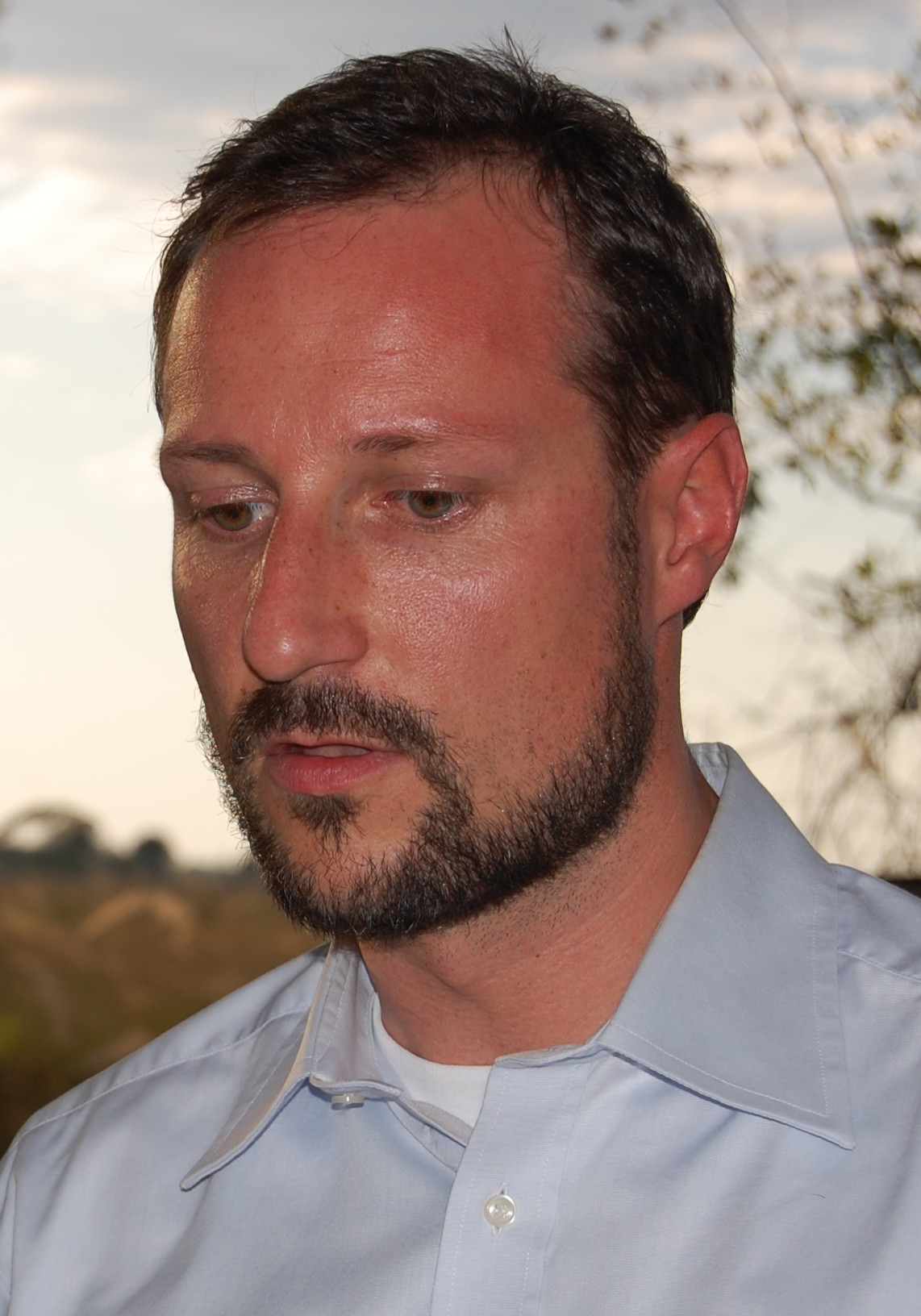
There will be no coronation, and that is not a decision he made. Norway struck coronation from its constitution in 1908; Haakon VII and Maud in 1906 were the last Norwegian monarchs crowned. What Olav V revived in 1958, and Harald and Sonja repeated on 23 June 1991, is a signing — a blessing at Nidaros Cathedral in Trondheim. No date has been announced for Haakon VIII. Norwegian commentators expect June, on the precedent, but that is a guess and should be read as one.
One other matter belongs in the record, stated carefully. Marius Borg Høiby, Queen Mette-Marit's son from a previous relationship, was convicted in Oslo District Court in June on 34 counts and sentenced to four years. The convictions are under appeal and are therefore not final. He holds no title, has no royal duties, and is not in the line of succession — a point worth stating plainly, because international coverage has repeatedly blurred it. He was permitted to leave house arrest to attend his grandfather-in-law's funeral, and his presence there drew criticism in Norway.
What actually changes for Norwegian America
Less than you might think, and more than nothing.
The Norwegian monarch's role is ceremonial. What the diaspora loses is a person, not a power: the man who turned up at Luther College three times across forty-six years, who was patron of Norway House, who could be relied on to know what lefse was.
Two open questions are worth a phone call if you are close to these institutions. Does the Norway House patronage pass to Haakon VIII? The Norway House website still listed Harald as Royal Patron at the time of writing — nobody has had the heart to change it. And does the Sons of Norway Foundation patronage pass with it?
There is a coincidence in the calendar that reads almost too neatly. On 1 August 2026, twenty-seven days before the King died, Sons of Norway completed a partnership with BetterLife. Lodges keep their names and their Nordic focus; the 131-year-old fraternal order becomes a brand within a larger organisation with 68,000 members and $695 million in assets. The institution the emigrants built restructured in the same month the emigrants' king died, in the year after the bicentennial.
And then Astrid
On 11 September, two days after her brother's funeral, Princess Astrid, Mrs. Ferner, died aged 94.
She was eight years old when her mother drove through the Swedish border gate in 1940. She was at the White House, and at Pook's Hill, and at school in Maryland, and on the ship home in June 1945.
Harald was the last Norwegian king who had been an American schoolchild. Astrid was the last living person who had been there with him.
The Northern Voices will follow whether the royal patronages of Norwegian-American institutions pass to the new King, and will report the date of the Nidaros signing when it is announced.


)%20(1).avif)