Greenland Is Not for Sale. It Is Also Not Yet Free
Analysis · Nordic Stories
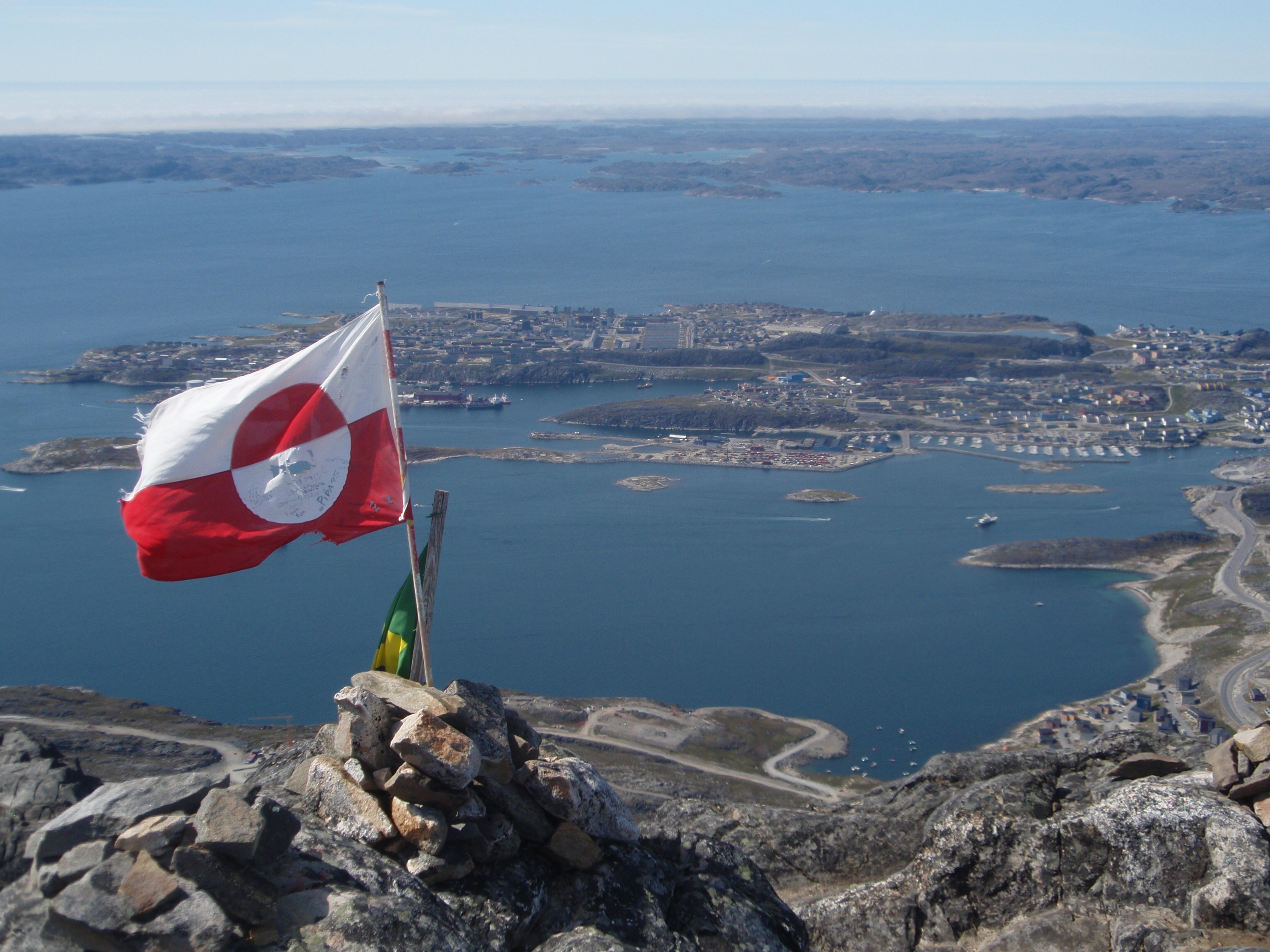
This week the President of the European Commission is in Nuuk. Ursula von der Leyen arrives on 8 September to sign a joint declaration with Greenland, meeting the Naalakkersuisut leader Jens-Frederik Nielsen, the Danish prime minister and the Faroese leader. Brussels has proposed roughly doubling its direct support to Greenland for the 2028–34 period.
Two years ago that would have been a technical story about Arctic funding. It is not one now.
For a publication read largely in the United States and Canada, this is an awkward story to cover well, because the pressure being applied to a Nordic territory of 57,000 people is coming from the country most of our readers live in. What follows is an attempt to set out what is actually established, what is contested, and what is simply being asserted.
What Greenland's status actually is
Greenland is a self-governing territory within the Kingdom of Denmark. That phrase carries more weight than it looks.
Home rule arrived in 1979, after a referendum in which 73.1 per cent voted in favour. Self-government followed thirty years later: the Self-Government Act, Act No. 473 of 12 June 2009, approved by 75.5 per cent in a referendum the previous November.
The 2009 Act is worth reading rather than summarising, because its preamble does something unusual. It records that the Danish state recognises the people of Greenland as a people pursuant to international law with the right of self-determination. That is a sovereign state acknowledging, in statute, that the population of its territory holds a right that in principle belongs to nations rather than provinces.
The Act transferred policing and the judiciary to Greenland and made Greenlandic the official language. It gave Greenland the revenue from mineral resources. Denmark kept foreign affairs, defence and security policy, the constitution, citizenship, the Supreme Court and monetary policy.
Chapter 8, Section 21 sets out how Greenland becomes independent, and it has four steps. The decision is taken by the people of Greenland. Denmark and the Greenlandic government then negotiate. The resulting agreement requires the consent of the Inatsisartut, endorsement by a Greenlandic referendum — and the consent of the Folketing in Copenhagen.
That last clause is the one nobody mentions. Under the Act as written, Greenland cannot lawfully leave without a Danish parliamentary vote.
Whether the right of self-determination recognised in the preamble could override the veto in the operative text is a genuinely open legal question. It has never been tested, and there is no authoritative ruling either way.
The money
The Danish block grant was set in the 2009 Act at DKK 3,439.6 million at 2009 prices, index-linked. It now runs at roughly DKK 4.1 billion, on the order of 600 to 630 million US dollars a year.
For 57,000 people that is around ten thousand dollars a head.
More usefully: it is roughly a fifth of Greenland's GDP and about half of government revenue. The public sector employs more than 40 per cent of the workforce. Fish products are over 90 per cent of exports.
The Act also contains the mechanism that was supposed to end this. If mineral revenue exceeds DKK 75 million in a year, the block grant is cut by half the excess; if the grant ever reaches zero, the two governments must renegotiate the entire economic relationship.
Both sides of the independence argument cite the same number. To one, it measures a dependency that has to be broken. To the other, it measures what would have to be replaced, in a single-industry economy, before independence became survivable.
The American record, in order
The current campaign is not the first American attempt, and knowing the earlier ones changes how the present reads.
1941. With Denmark under German occupation, the Danish ambassador in Washington, Henrik Kauffmann, signed an agreement allowing the United States to build airfields and station forces in Greenland. He had no authority from Copenhagen to do it. By 1944 American forces were roughly a quarter of Greenland's population.
1946. The United States proposed buying Greenland outright for 100 million dollars in gold. The documents were declassified in the early 1970s and sat unnoticed in the National Archives until the Danish newspaper Jyllands-Posten found and reported them in 1991. An alternative floated at the time was a land swap involving oil-bearing ground at Point Barrow, Alaska.
1951. The Defense of Greenland Agreement, signed on 27 April under NATO auspices, replaced the wartime arrangement. It let the United States build and operate installations with near-total immunity inside designated defence areas, while formally affirming Danish sovereignty. It was amended in 2004 to recognise Greenland's home rule government.
2019. President Trump confirmed he was looking at buying Greenland. Prime Minister Mette Frederiksen called the idea absurd. He cancelled a state visit to Denmark and called her nasty.
2024–25. In December 2024 he called American ownership and control of Greenland an absolute necessity. In January 2025 he threatened tariffs on Denmark and declined to rule out military force. On 4 March 2025, addressing a joint session of Congress, he said the United States would get Greenland one way or the other.
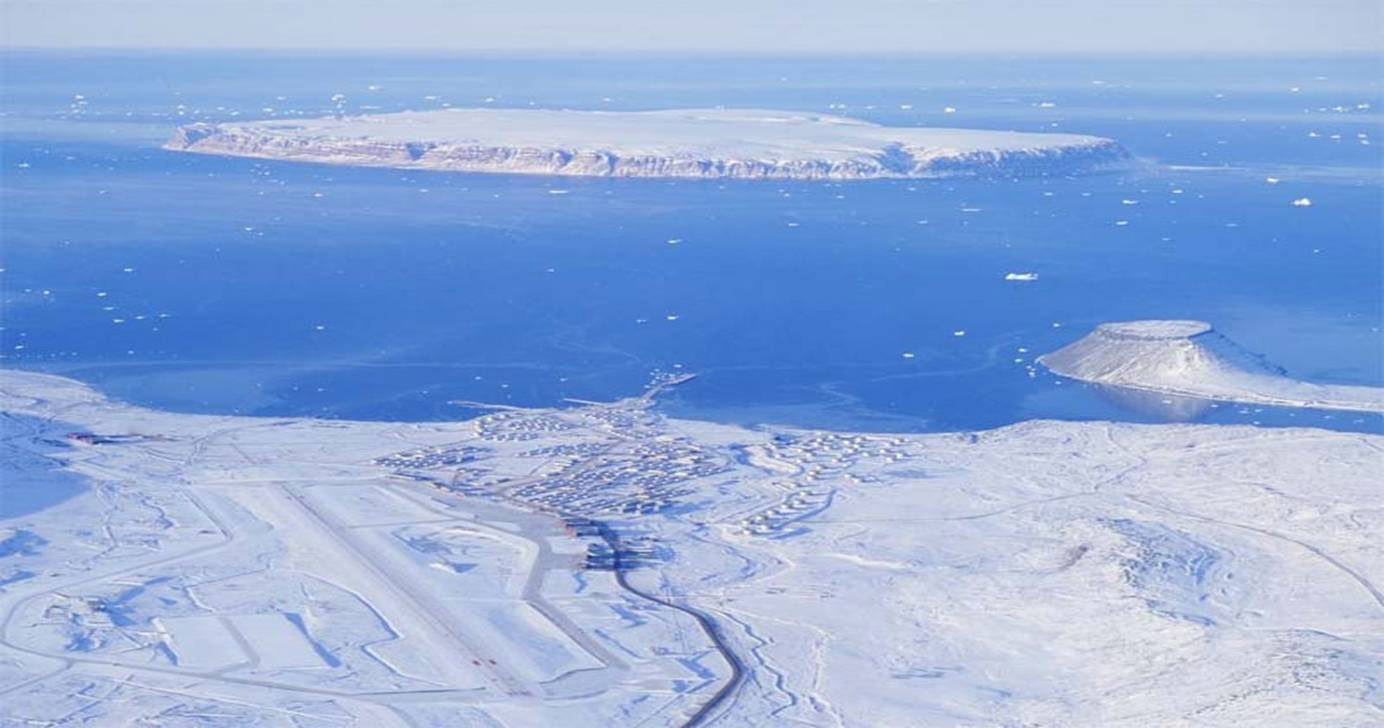
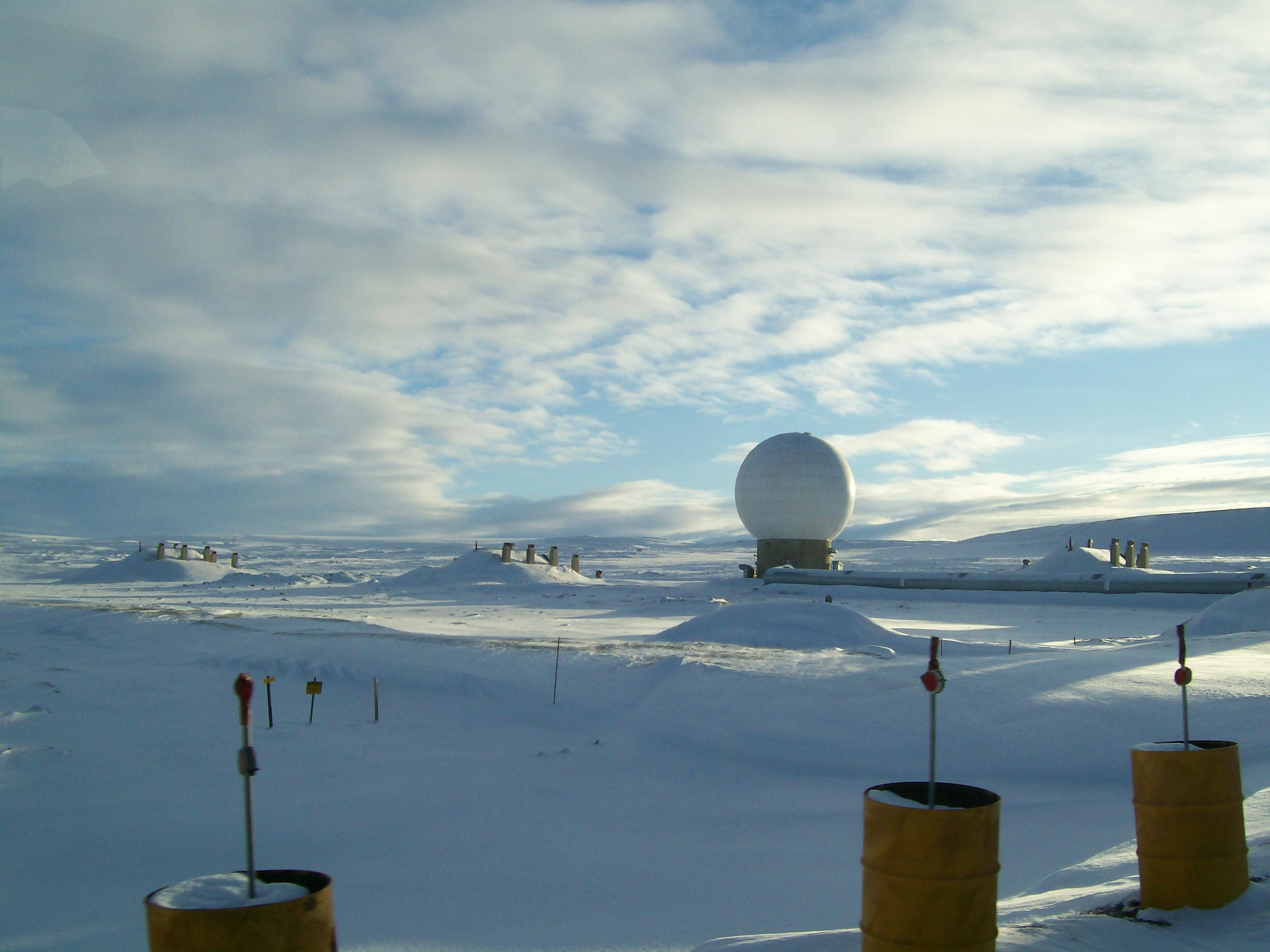
28 March 2025. Vice-President JD Vance visited Pituffik. The visit was not invited, and the itinerary was cut back to the base after Greenlandic objections. He said Denmark had not kept pace or devoted the resources needed to keep the base safe, and that Greenland would ultimately partner with the United States. Frederiksen replied that the description of Denmark was not a fair one. The following month the base commander, Colonel Susannah Meyers, was removed after distancing Pituffik from the vice-president's remarks.
August 2025. Danish public broadcaster DR reported that at least three American nationals with connections to the administration were running influence operations in Greenland, including compiling lists of Greenlanders considered friendly or hostile to the United States. The Danish foreign minister, Lars Løkke Rasmussen, summoned the US deputy chief of mission in Copenhagen and said interference in the Kingdom's internal affairs would be unacceptable. The State Department said the US government does not direct the actions of private citizens.
10 December 2025. The Danish Defence Intelligence Service named the United States as a potential security concern for the first time in its history, warning that it uses economic pressure and no longer rules out force even against allies.
January 2026. The peak. On 17 January the administration announced tariffs on eight NATO allies — Denmark, the United Kingdom, Finland, France, Germany, the Netherlands, Norway and Sweden — explicitly to run until a deal was reached for the complete purchase of Greenland. Four days earlier Danish and Greenlandic officials had met Vance and Rubio in Washington; Denmark described the meeting as exploring a common way forward, the White House described it as technical talks on acquisition.
On 21 January at Davos, Trump said he did not want to use force and would not use it, announced that a framework for a future deal on Greenland had been formed, and withdrew the tariff threat.
No other party has confirmed that framework exists. Not Denmark, not Greenland, not NATO. No text has been published. The Danish defence minister said Denmark would not cede sovereignty over parts of the kingdom. The Greenlandic MP Aaja Chemnitz said NATO had no right to negotiate anything without Greenland present.
What does verifiably exist is a trilateral working group. In June 2026 Løkke Rasmussen said talks on Arctic security and cooperation might conclude with an agreement before the end of the year, with several more rounds needed first. In July, at the NATO summit in Ankara, Trump again said the United States should control Greenland and that anything less was unacceptable.
Greenland's legal status has not changed. No transfer of sovereignty has occurred. The 1951 agreement stands as amended.
What Greenlanders say
This is the part most often skipped, and the part that matters most.
Two questions are constantly conflated in coverage: whether Greenland should be independent of Denmark, and whether Greenland should join the United States. Greenlanders answer them very differently.
On the second, the answer has been consistent and lopsided. A Verian poll for Berlingske and Sermitsiaq in January 2025, with 497 respondents, asked directly whether Greenland should leave Denmark and become part of the United States: 6 per cent said yes, 85 per cent said no. A year later, in January 2026, a poll by Opinion for The Copenhagen Post with 610 respondents found 8 per cent saw an advantage in joining the United States and 76 per cent a disadvantage. Asked what the best path forward was, 65 per cent said stronger cooperation with the European Union and 5 per cent said closer ties with the United States.
On independence from Denmark the picture is less clear, and honesty requires saying so. The 2025 Verian poll found 56 per cent would vote yes in a referendum held then. The 2026 Opinion poll found 62 per cent said Greenland should not become independent now, against 25 per cent who said it should.
Those numbers look contradictory and may not be. The questions differ — how you would vote is a softer test than whether it should happen now — the pollsters differ, and a year of extraordinary external pressure separates them. It is possible attitudes hardened against upheaval; it is possible the wording explains most of it. No study reconciles them and there is no more recent Greenlandic polling. Anyone quoting a single figure as the level of support for independence is overstating what is known.
What both polls agree on is that support for independence falls sharply when it is paired with a lower standard of living.
In the Inatsisartut, every significant party favours independence eventually and they differ on speed. No party in the parliament advocates becoming part of the United States. Naleraq, the most independence-forward, has floated a free-association arrangement on the Micronesian or Palauan model — which is a sovereignty-first position involving a treaty between states, not annexation. Conflating the two is the commonest error in international coverage.
Nielsen, the Naalakkersuisut leader, has put it about as plainly as it can be put: Greenlanders do not want to be Americans, do not want to be Danes, and want to be Greenlanders.
The politics on both sides
Greenland went to the polls on 11 March 2025 with turnout of 70.9 per cent. Demokraatit took 10 of 31 seats, Naleraq 8, Inuit Ataqatigiit 7, Siumut 4 and Atassut 2. A four-party coalition formed under Nielsen at the end of March, excluding Naleraq. In March 2026 Siumut left it; the remaining three parties hold 19 of 31 seats and Nielsen continues.
Denmark held a general election on 24 March 2026 with 84 per cent turnout. Greenland dominated the early campaign, but cost of living, immigration and the economy decided it. After sixty-nine days of negotiation — a Danish record — Mette Frederiksen returned at the start of June with a four-party minority coalition holding 82 of 179 seats, with Løkke Rasmussen continuing as foreign minister. The Social Democrats' 21.8 per cent was a historically weak result, which argues against reading the election as a mandate on Greenland.
One detail deserves more attention than it got. Greenland's two Folketing seats went to Inuit Ataqatigiit and, for the first time, Naleraq.
Denmark has meanwhile committed roughly DKK 42 billion to Arctic defence across two agreements in January and October 2025 — maritime patrol aircraft, ice-capable vessels, drones, radar, a subsea cable between Greenland and Denmark — and raised overall defence spending to 3 per cent of GDP. A Danish-led exercise, Arctic Endurance, has run through 2026 with French, German, Swedish, Norwegian, Finnish, Dutch, Icelandic and Belgian participation. In February NATO launched Arctic Sentry, bringing alliance Arctic activity under a single command, framed around Russian and Chinese activity rather than American claims.
In March 2026 DR reported that Denmark had positioned personnel and explosives in Greenland with contingency plans to destroy runways at Nuuk and Kangerlussuaq to prevent American aircraft landing troops. The Danish government has neither confirmed nor denied it, and the account rests on that single broadcaster's reporting. We note it because it was widely repeated; we do not treat it as established.
Why Greenlanders distrust Copenhagen too
It would be a mistake to read Greenlandic resistance to Washington as contentment with Denmark. Three documented cases explain a good deal, and all three have been formally acknowledged by the Danish state.
The 1953 relocation. To clear ground for the American air base, Denmark forcibly moved the Inughuit population of Thule, giving the community days to leave, and resettled it at Qaanaaq. Danish courts found partly for the Inughuit in 1999, awarding limited collective compensation, and a Danish prime minister apologised. The Supreme Court rejected the appeal in 2003 and the European Court of Human Rights declared the case inadmissible in 2006. The right of return was never granted. The base the United States now calls indispensable exists on ground cleared this way.
The 1951 experiment children. Danish authorities, with Save the Children Denmark and the Red Cross, took twenty-two Greenlandic children to Denmark to be raised by Danish families and returned as a Danish-speaking elite. Only six were the orphans the scheme specified. Six were adopted and stayed; sixteen returned to Greenland and were placed in an orphanage where only Danish was permitted, which prevented them rejoining their families. Roughly half died in young adulthood. Denmark apologised in December 2020 and paid DKK 250,000 to each of the six then living in March 2022.
The spiral case. Danish health authorities fitted intrauterine devices in Greenlandic women and girls — some as young as twelve — frequently without their knowledge or consent, to reduce the birth rate. Sources differ on the period, giving ranges from 1966–1975 to 1960–1991, and on the scale; at least 4,000 are thought to have been affected. Denmark and Greenland issued a joint apology on 27 August 2025, and in December Denmark announced compensation of DKK 300,000 each, with applications open from April 2026 to June 2028 and around 4,500 women thought eligible.
That case is still moving. On 28 August 2026 — nine days ago — an expert commission appointed by Greenland's government confirmed that women's rights had been violated, but split on whether the campaign constituted genocide: one report concluded it did not, the other that the extent could not be established. Greenland's justice minister said the government could not say. A Truth and Reconciliation Commission is being established.
These are matters of record, acknowledged and in part compensated. Whether they explain particular polling positions today is an inference, and one we leave to the reader.
Where this leaves things
Nothing has been decided. There is a talks process, a working group, an unconfirmed framework, and a European Commission president in Nuuk this week with a cheque.
The one clear signal in two years of noise is the one that has barely moved: asked whether they want to join the United States, Greenlanders have answered no by margins of roughly ten to one, twice, a year apart, under sustained pressure.
Fifty-seven thousand people hold a statutory right of self-determination, a veto sitting at the end of it in a parliament they send two members to, an economy that depends on a grant from the country holding the veto, and a superpower publicly interested in acquiring the ground under them.
Whatever is decided about Greenland should be decided by Greenlanders. That is not a sentiment. It is the first line of Section 21.
Sources
Act on Greenland Self-Government, Act No. 473 of 12 June 2009 (official English text, Danish Prime Minister's Office).
Congressional Research Service, January 2026; House of Commons Library briefings CBP-10234 and CBP-10847.
Verian for Berlingske and Sermitsiaq, January 2025 (n=497); Opinion for The Copenhagen Post, January 2026 (n=610).
Danish Ministry of Defence on Arctic Endurance; NATO on Arctic Sentry; Danish Defence Intelligence Service annual assessment, December 2025.
Contemporaneous reporting from DR, NPR, CNN, Al Jazeera, High North News and ArcticToday.
A note on method: where governments, investigators or pollsters disagree, we have reported the disagreement rather than choosing between them. Claims made by one party and unconfirmed by others are identified as such.
