Latvia Votes on 3 October. Here Is What Is Actually at Stake.
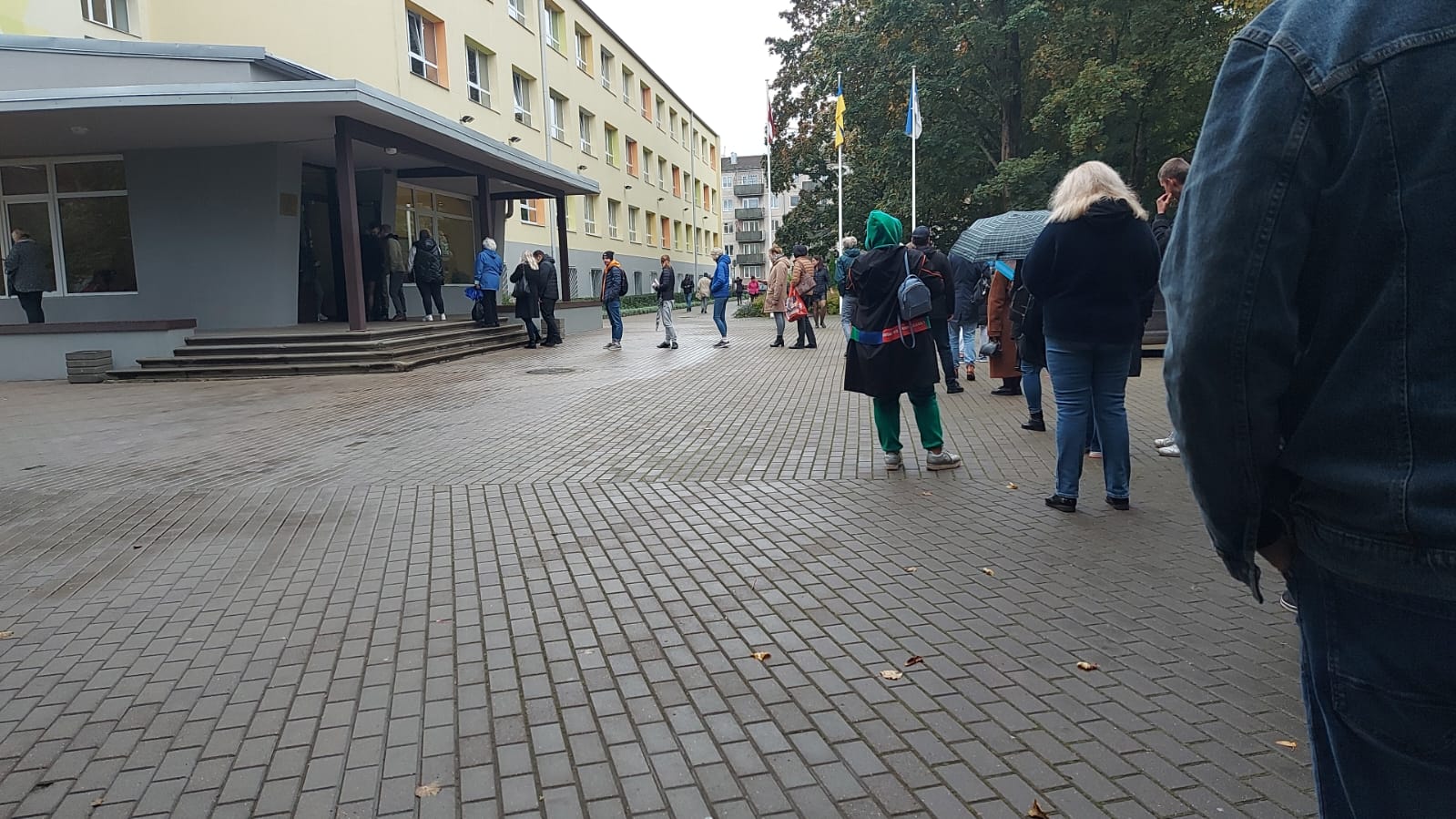
Latvians go to the polls on Saturday 3 October to elect the 15th Saeima. Polls open at eight in the morning and close at eight at night; preliminary results are expected the following day; the new parliament first sits on 3 November.
It is worth stating plainly what happened in the spring, because most English-language coverage has not caught up. Evika Siliņa is no longer prime minister. She resigned on 14 May. The prime minister is Andris Kulbergs of Apvienotais saraksts, confirmed by the Saeima on 28 May by 66 votes to 25, heading what is effectively a four-month caretaker administration — and, on current polling, the front-runner to lead the next one.
How a government fell in a fortnight
Two things happened in May, and they compounded.
First, Latvian air defences were breached by drones that had strayed from Ukraine. Ukraine's foreign minister subsequently attributed the diversions to Russian electronic warfare deliberately pushing the drones off course. Siliņa demanded the resignation of Defence Minister Andris Sprūds of the Progressives over the security failure. The Progressives walked out of the coalition.
Second, on 14 May, the Prosecutor's Office and the anti-corruption bureau KNAB detained Armands Krauze — agriculture minister and chairman of the Union of Greens and Farmers — along with the director of the State Chancellery. The allegations concern unlawful state support to timber companies through price corrections applied to long-term supply contracts with the state forestry company Latvijas Valsts meži, a decision that cut the company's quarterly profit by €7.54 million. Krauze was dismissed and returned to his Saeima seat. The Prosecutor General later accused him publicly of “spreading blatant lies” about his involvement.
Siliņa resigned the same day, citing “political envy and narrow party interests.”
The coalition that replaced hers is the same one minus the Progressives: Apvienotais saraksts, Jaunā Vienotība, Nacionālā apvienība and the Union of Greens and Farmers, the last of which reportedly refused to enter talks without Krauze. Of fifteen ministers, two are women — a detail Latvian public broadcasting noted “somewhat undermines Latvia's aspirations to be seen as a modern Nordic-type democracy.”
The ballot
One hundred seats, open-list proportional representation by the Sainte-Laguë method, a 5% national threshold, five constituencies. Voters choose one list and may then mark individual candidates for or against — this year on a redesigned ballot with green boxes for and red against.
The seat allocation shifted. Rīga rises to 38 seats, up two; Vidzeme holds 26; Zemgale 13; Latgale falls to 12 and Kurzeme to 11, each losing one. Total registered voters: 1,553,583.
Fourteen lists are running, with 1,428 candidates between them. About a third are returning 2022 candidates; 34.1% are women; ages run from 21 to 88.
A 2026-specific mechanic worth knowing: votes will be counted by hand. The ballot-scanning system failed at the June 2025 municipal elections and results had to be counted manually; the Central Election Commission is not risking a repeat.
The polls, and why they disagree
Two houses are publishing, they agree on the leader, and they disagree about almost everything else.
SKDS (fieldwork 13–19 August, n=1,205) has Apvienotais saraksts on 15.2%, Suverēnā vara/Jaunlatvieši on 11.8, the Progressives 8.8, Latvija pirmajā vietā 8.5, Nacionālā apvienība 4.5, Jaunā Vienotība 4.2 and the Union of Greens and Farmers on 2.8.
Latvijas Fakti (fieldwork 21–31 August, n=1,058, published 3 September) has Apvienotais saraksts on 15.6, Latvija pirmajā vietā 8.3, Nacionālā apvienība 7.3, the Progressives 7.1, the Union of Greens and Farmers on 6.9, Suverēnā vara on 6.3 and Jaunā Vienotība 5.9.
The two gaps that matter: 4.1 points on the Union of Greens and Farmers — in or out of parliament — and 5.5 points on Suverēnā vara, which is either the second-largest party in Latvia or the sixth. Latvian public broadcasting attributes the divergence to method: SKDS uses an internet panel plus in-home interviews, Latvijas Fakti uses face-to-face and telephone interviews with randomly generated numbers. Internet panels reach people who follow politics more closely.
Both houses put undecided voters plus those saying they will not vote at about 34%. A month out, seat projections are worth very little, and anyone offering one should say so.
The narrative, though, is clear enough. Through late 2025 and into spring, Latvija pirmajā vietā — Ainārs Šlesers's explicitly Trump-aligned party — was leading. Since the change of government in May, Kulbergs's party has gone from fourth to first, and it appears to be taking votes from Šlesers and from the National Alliance rather than from the centre-left.
What the campaign is about
Defence, and how to pay for it. On 26 March the Saeima legislated a minimum 5% of GDP on defence annually from 2027, replacing a 3% floor. Spending was projected at 4.9% for 2026; a decade ago it was 1%.
Set that against the European Commission's spring forecast, published on 21 May: GDP growth slowing to 1.4% in 2026, inflation 3.6%, and the government deficit going to −3.3% of GDP in 2026 and −4.3% in 2027 — breaching the EU's 3% limit precisely as the defence floor takes effect. That collision is the most consequential thing in this election and almost nobody is campaigning on it. Party platforms are near-uniformly expansionary.
Conscription, which is going better than expected. The State Defence Service, reintroduced in 2023, is a hybrid: volunteers first, with a computerised lottery from a database of men aged 18–27 used only to fill the gap. Roughly a quarter of recruits have come through the lottery. But the July 2026 intake was the first ever oversubscribed — 1,560 applications against a target of 1,470, roughly double the previous year's volunteers. Since about a third fail medical screening, a lottery may not be needed at all.
Rail Baltica. The original 2017 estimate for the whole project was €5.8 billion. Latvia's portion alone is now put at €14.3 billion. An EU audit in January concluded phase one will not be finished by 2030. A parliamentary investigation found the Transport Ministry concealed the scale of the overruns, and prosecutors opened a criminal investigation in 2024. Latvija pirmajā vietā and Suverēnā vara want the project abandoned; Apvienotais saraksts, the party leading the polls and holding the premiership, wants its scope minimised. The likely largest party in the next parliament wants to shrink NATO's flagship logistics corridor.
Schooling. The transition to Latvian-only instruction is complete: 2025/26 is the first academic year in which all pupils study exclusively in Latvian. It has not been painless. Teachers must hold C1 Latvian or face suspension; of 2,734 tested in 2025, 98 failed. One Rīga secondary school fell from 414 pupils to 280 with near-total staff turnover. The government's line is that 94% of schools report positive transitions. Three parties campaign to restore minority-language education.
Landmines. This is settled rather than pending, and often misreported as ongoing. The Saeima voted to leave the Ottawa Convention on 16 April 2025 by 66 to 14; the instrument was deposited with the UN on 27 June 2025; withdrawal took effect on 27 December 2025. Estonia and Lithuania completed the same move at the same time, with Finland and Poland following in early 2026.
Where the Russian-speaking vote went
In 2018, Harmony was the largest party in Latvia with 23 seats and had led three consecutive elections. In 2022, after condemning Russia's invasion of Ukraine — a position its base rejected — it took 4.86% and vanished from parliament.
That electorate did not consolidate behind a successor. It fragmented. Stabilitātei! took 6.88% in 2022 and the Latvian Russian Union 3.67%; together they polled fewer votes than Harmony alone had in 2018, with the balance going to abstention. Nearly 29% of all votes cast in 2022 went to lists that failed to clear the threshold.
Four vehicles now compete for that vote: Stabilitātei!, the revived alliance Saskaņas Centrs, Suverēnā vara/Jaunlatvieši — Christian-right, Latvian-fronted, and campaigning to restore minority-language schooling — and Latvija pirmajā vietā, which put a Rēzekne councillor at the head of its Latgale list. The 2025 Rīga municipal elections, where Suverēnā vara took 12.22%, prefigured its national surge.
And then there is the candidate who is not in the country. Aleksejs Roslīkovs was ejected from a Saeima sitting on 5 June 2025 for declaring, in Russian, “our numbers are greater, our language is Russian.” The State Security Service detained him eleven days later on allegations of assisting an aggressor state and inciting national hatred. He has since fled to Belarus, saying he feared for his safety; a Rīga court has ordered his detention and declared him wanted, and proceedings are suspended pending his apprehension. He resigned as party chair. On 29 June, Stabilitātei! registered him as number two on its Rīga list.
The diaspora holds a third of Rīga — on paper
This is the part that matters most to readers here, and the arithmetic is striking.
196,385 voters are registered abroad, out of a national electorate of 1,553,583. That is 12.6% of all Latvian voters and 33% of the Rīga constituency, because votes cast abroad are counted in Rīga regardless of where the voter lives. It is why Rīga gained two seats this year while Latgale and Kurzeme each lost one.
Saeima Speaker Daiga Mieriņa has argued that Rīga picks up roughly eight extra mandates this way and has proposed redistributing overseas votes by last declared residence. The Central Election Commission opposes it on cost and complexity grounds; a similar bill was rejected in 2021; nothing changes for this election.
Then the reality. In 2022, 26,146 Latvian citizens voted abroad — about 13% of those registered, against a national turnout of 59.41%. Diaspora participation runs at roughly a fifth of the domestic rate. Whatever its nominal weight, the overseas vote was under 3% of ballots actually cast. The busiest countries were the United Kingdom (5,559), Germany (3,108) and Norway (1,939) — recent economic emigration, not the older North American community, which does not appear in the top five.
How to vote from the United States or Canada
There are 88 polling stations in 39 countries this year, of which 40 are at Latvian diplomatic missions. Sixteen are in the United States — Washington, New York, Boston (Brookline), Philadelphia, Chicago, Kalamazoo, Indianapolis, Minneapolis, Lakewood, Atlanta, Houston, Mesa, Los Angeles, San Francisco, San Diego and Seattle — and six in Canada: Ottawa, Toronto, Hamilton, Montreal, Edmonton and Vancouver.
Most are Latvian community halls and Lutheran churches rather than consulates. The diaspora's own institutional infrastructure is doing the work.
In-person voting requires no advance registration. Bring a valid Latvian passport or eID card to any overseas station.
Postal voting does. Registration runs from 29 August to 25 September, electronically through Latvija.gov.lv using an eID card. And the deadline that catches North Americans every cycle: the completed ballot must ARRIVE by election day, 3 October. It is a receipt deadline, not a postmark deadline. Transatlantic post being what it is, registering in the final week of September is effectively registering not to vote.
Check the Central Election Commission's station finder for exact addresses and hours before travelling; four of the US venues are flagged as not wheelchair accessible.
Who is organising here
The World Federation of Free Latvians runs the global diaspora voter campaign Jābalso!, and its 2026 site carries the dates, the station count and the crucial explainer that overseas voters can only choose among the Rīga lists.
The American Latvian Association is functioning, as it usually does, as host and channel rather than advocate: it is running the Los Angeles polling station and promoting the federation's pre-election debates for the diaspora on 13 September. The Latvian National Federation in Canada has a dedicated election page.
Roughly 85,700 people in the United States reported full or partial Latvian descent in the 2019 American Community Survey, and about 27,400 in Canada at the 2011 census — both figures now due an update. Around 9,000 Latvian Americans hold dual citizenship, and therefore a vote.
One more thing at stake
Edgars Rinkēvičs became President in July 2023. The Latvian president is elected by the Saeima to a four-year term. The parliament chosen on 3 October will elect the next head of state in 2027 — which is the quietest and least-discussed consequence of this vote.
The Northern Voices will report the result and its aftermath. Our practical guide to voting from North America is published separately.

)%20(1).avif)