The Balts Didn't Beat the Three-Generation Rule. They Bought One Extra Generation.
There is a rule of thumb in the study of migration so durable that it has become a kind of folk wisdom: the first generation speaks the language, the second understands it, the third studies it at university. It is usually attributed to the Norwegian-American historian Marcus Lee Hansen, who in 1938 argued something subtler — that what the son wishes to forget, the grandson wishes to remember. Hansen was writing about memory, not grammar. But the coarser version stuck, because it keeps being right.
Run the numbers on the eight Nordic and Baltic languages in North America and the rule looks less like a tendency and more like a law with one apparent exception. Using American Community Survey figures for people who speak a language at home, set against the number of people claiming that ancestry, you get a ratio — speakers per thousand ancestry claimants — that spans an order of magnitude and a half.
Estonian: about 207 per 1,000. Latvian: 187. Icelandic: 98. Lithuanian: 56. Finnish: 40. Danish: 19. Swedish: 13. Norwegian: 9.
An Estonian-American is roughly twenty-three times more likely to speak the ancestral language at home than a Norwegian-American. That is not a rounding difference. That is two different worlds.
The obvious reading is flattering to the Balts and unflattering to the Nordics: the exile communities held the line, the economic migrants let it go. It is a story with heroes in it, and the heroes are the Saturday schools, the summer camps, the community halls built by people who arrived with nothing in 1949 and assumed they were going home.
It is also, mostly, wrong — or at least it is a different story than it looks.
The dates do the work
The single most important variable here is not devotion. It is arrival time.
Mass Nordic emigration to North America effectively ended around 1930. A Norwegian who emigrated as a five-year-old in 1929 would be 102 today. There are, in practical terms, no living first-generation immigrants from the great Nordic migration. Whatever Norwegian-America is now, it is at minimum a fourth-generation community, and among fourth-generation white European-origin Americans the research finds roughly one percent still speaking the ancestral language. Norwegian's nine-per-thousand is not a failure. It is almost exactly what the model predicts.
The Baltic communities are three generations younger. Under the Displaced Persons Act, 393,542 people were admitted to the United States by mid-1952 — more than any of the 113 resettlement countries took. Latvians made up 9.3 percent of them, Lithuanians 6.4, Estonians 2.6: on those proportions, roughly 72,000 Baltic arrivals, about 18 percent of the whole. They came in 1949, not 1889. Their grandchildren are the people the ratio is measuring.
Which means the comparison is not between two cultural strategies. It is between two clocks, started sixty years apart, and read at the same moment.
What the extra generation cost
There is a second reason to be careful with the ratio, and it is the one a sharp reader will raise first. A person born in Riga who emigrated in 1998 counts as a Latvian speaker at home and as a Latvian ancestry claimant. So does their child. The ratio cannot, on its own, distinguish transmission from immigration — separating the two requires foreign-born-by-country-of-birth figures we were unable to obtain for this piece, and until somebody pulls them, every version of this statistic, including ours, is doing some work it has not earned.
But the Baltic school systems have published their own numbers for seventy years, and those numbers are not ambiguous.
In 1956, eight years after arriving with nothing, roughly 40,000 Latvian refugees in the United States were running 67 schools with about 2,200 students. By 2014–15 that network was 17 schools and about 600 students. In Canada it went from 15 schools and around 900 students in the 1960s to 5 schools and 140 students. One survey of the whole continent put the number of children of ethnic Latvian descent still attending at around 700.
That is a three-quarters collapse in a system built by people who genuinely believed they were maintaining a nation in waiting. The Balts did not beat the three-generation rule. They bought one extra generation, at extraordinary cost, and the bill is arriving now.
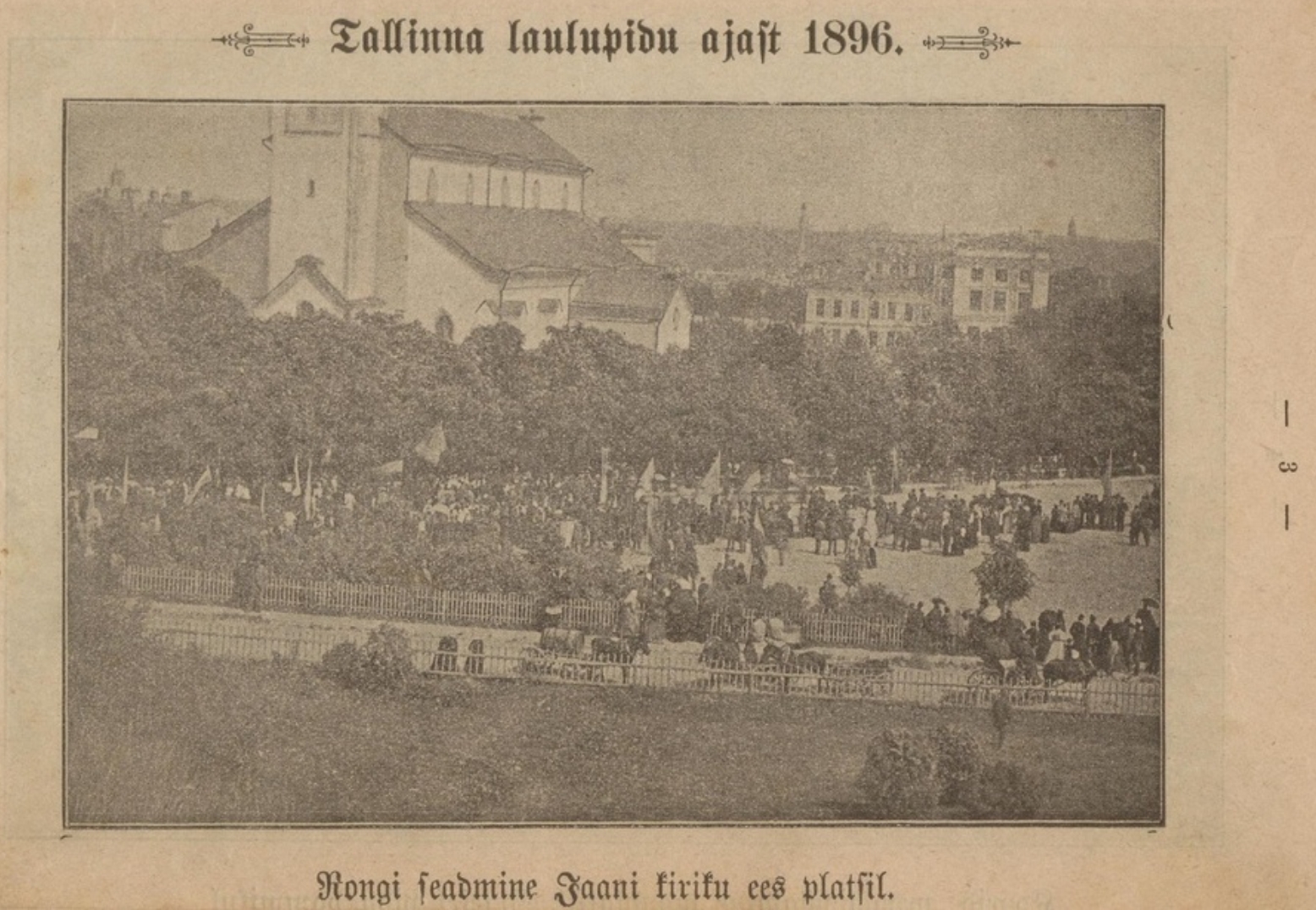
The New York Estonian School tells the same story with more dignity and better record-keeping: 85 students in 1952, a peak of 126 in 1959, 81 by 1971, a floor of 33 in 1988, 47 in 1990, 40 in 2005. Three hundred and thirty-seven graduates between 1952 and 1998. It still meets, biweekly on Saturdays, with eleven dates on the calendar for 2026 — down two-thirds from its peak and open after seventy-six years. Both things are true.
The school that grew, and why that is the least romantic fact here
There is one genuine growth curve in the whole dataset, and it is worth sitting with.
Maironis Lithuanian School in Lemont, Illinois began with ten children in a living room in October 1959. It had 140 students by 1969, 400 by 1999, 508 in 2008–09, and 750 in 2018–19 — by its own account the largest Lithuanian school in history.
It did not grow because the exiles held the line. It grew because Lithuania's post-1990 emigration refilled Chicago with native-speaking parents. And the Chicago-area Lithuanian population is now declining, partly because EU accession in 2004 redirected Lithuanian emigration toward Britain and Ireland instead.
The most reliable engine of heritage-language survival, in other words, is not devotion, not curriculum, not camp. It is a fresh supply of native-speaking parents. When the supply stops, the curve turns — however good the school is.
A peer-reviewed observation study published this year watched four Latvian diaspora schools at work. In the American school, seventh-graders spent 45 to 50 minutes of every 60-minute lesson speaking English. One student asked the question that gave the paper its title: why can't we speak in Latvian sometimes?
The institutions are going first
Language loss is slow and private. Institutional loss is fast and public, and it is happening now.
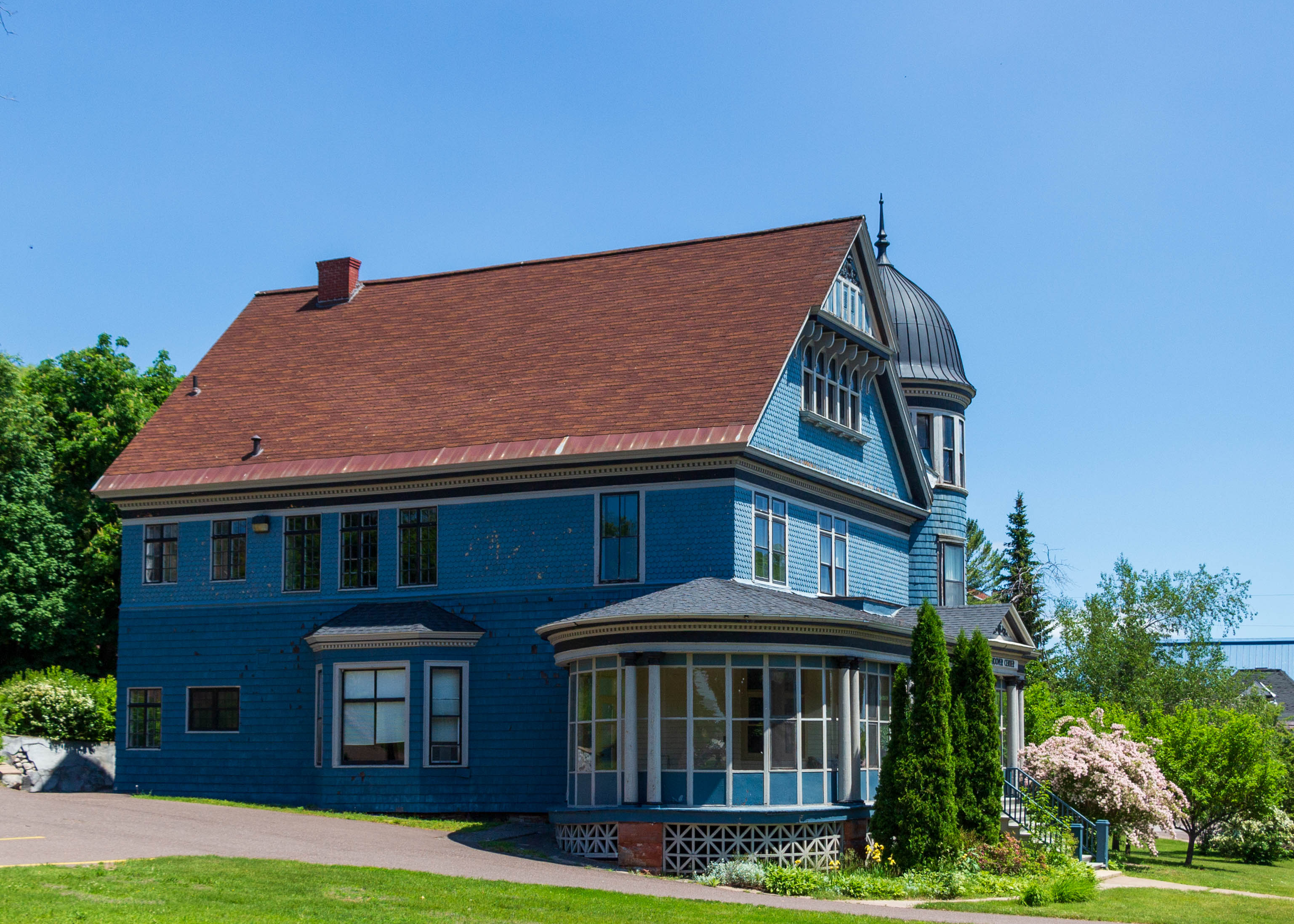
Finlandia University in Hancock, Michigan was founded in 1896 as Suomi Opisto — the Finnish College — and became Finlandia in 2000. It had 430 students in autumn 2021. On 2 March 2023 it announced it would close; the board voted to dissolve on 14 March; the doors shut on 7 May. One hundred and twenty-seven years, ended in nine weeks, over enrolment and debt.
Meanwhile the largest Scandinavian Studies programme in North America — at the University of Washington, a department created by act of the Washington state legislature in 1909 — had 30 undergraduate majors in autumn 2025 and awarded ten BAs in 2024–25. That is the top of the field, serving a national population of roughly ten million people of Nordic descent.
And in the same decade Finlandia closed, Canada's roughly 23,000 Estonians privately raised more than €14 million — over €600 a head — toward the $41 million KESKUS International Estonian Centre in Toronto, having sold the old Estonian House for $15.6 million in 2020. There are classrooms in the new building.
Two communities, one decade, opposite directions. The difference is not enthusiasm. It is, again, the clock: the Estonian-Canadian community still contains people for whom this is not heritage but biography.
The map is not where you think it is
One more finding that should unsettle anyone who pictures heritage language as a rural Midwestern phenomenon. The top state for Norwegian, Swedish, Danish, Finnish and Icelandic speakers at home is California. Not Minnesota.
There are thirteen Finnish schools in the United States — Silicon Valley, Berkeley, Atlanta, Dallas, Seattle — and not one in the Upper Peninsula or on the Iron Range. Canada's seven still include Sudbury, Thunder Bay and Sault Ste Marie, which is the older pattern hanging on.
The heritage-language map has detached almost completely from the heritage map. Where the ancestry is, the language is gone; where the language is, it arrived last week, in a tech worker's suitcase. What looks like continuity is mostly recent immigration wearing continuity's clothes.
What it was never about
It is worth saying plainly that language is not the only measure of a culture, and possibly not the best one. The Estonian song festival tradition crossed the Atlantic intact. So did Sankta Lucia, rosemaling, the Midsummer pole, the sauna, the julbord. Communities that lost the language entirely kept a great deal else, and they did not experience that as failure.
It is also worth remembering that the loss was not always voluntary. Under Iowa Governor William Harding's Babel Proclamation of 23 May 1918, every language but English was banned in public — including in church. A Lutheran pastor who had preached in Norwegian for forty years wrote that half his congregation would not understand the service. Telephone operators listened in on party lines. Around 18,000 people across the Midwest were eventually charged. The proclamation was rescinded that December, but the lesson landed, and a generation of parents drew the obvious conclusion about what it cost to be heard speaking the wrong language in America.
In 1928 the president of the Finnish Suomi Synod was removed from office largely for advocating the use of English at the college. Today some Laestadian congregations still preach entirely in Finnish — the only fully functioning Finnish-speaking community in the United States, preserved not by heritage enthusiasm but by religious separatism. The language survived where the community had a reason other than nostalgia to keep it.
That is the uncomfortable finding underneath all of this. Heritage languages do not survive on affection. They survive on necessity — a church that will not switch, a border that keeps sending new speakers, a grandmother who genuinely cannot manage in English. Remove the necessity and the affection is not load-bearing, no matter how many Saturdays you give it.
The Baltic communities in North America have spent seventy-five years proving that you can hold the line longer than the model says, if you are willing to organise your entire social life around it. They have also, without meaning to, proved what it costs and where it ends.
A note on the figures: the speakers-per-thousand ratios combine American Community Survey language data from 2009–13 with ancestry data from 2019–21, and cannot separate second-generation transmission from recent immigration. We have flagged this where it matters. Ancestry counts themselves are unstable — Norwegian ancestry claims fell about 16 percent and Swedish about 24 percent in five years, largely for coding reasons — so the ratios should be read as orders of magnitude, not precise measurements.
