A Finnish Drama About Nokia Explains How a Country Rebuilt Itself. Good Luck Watching It Here.
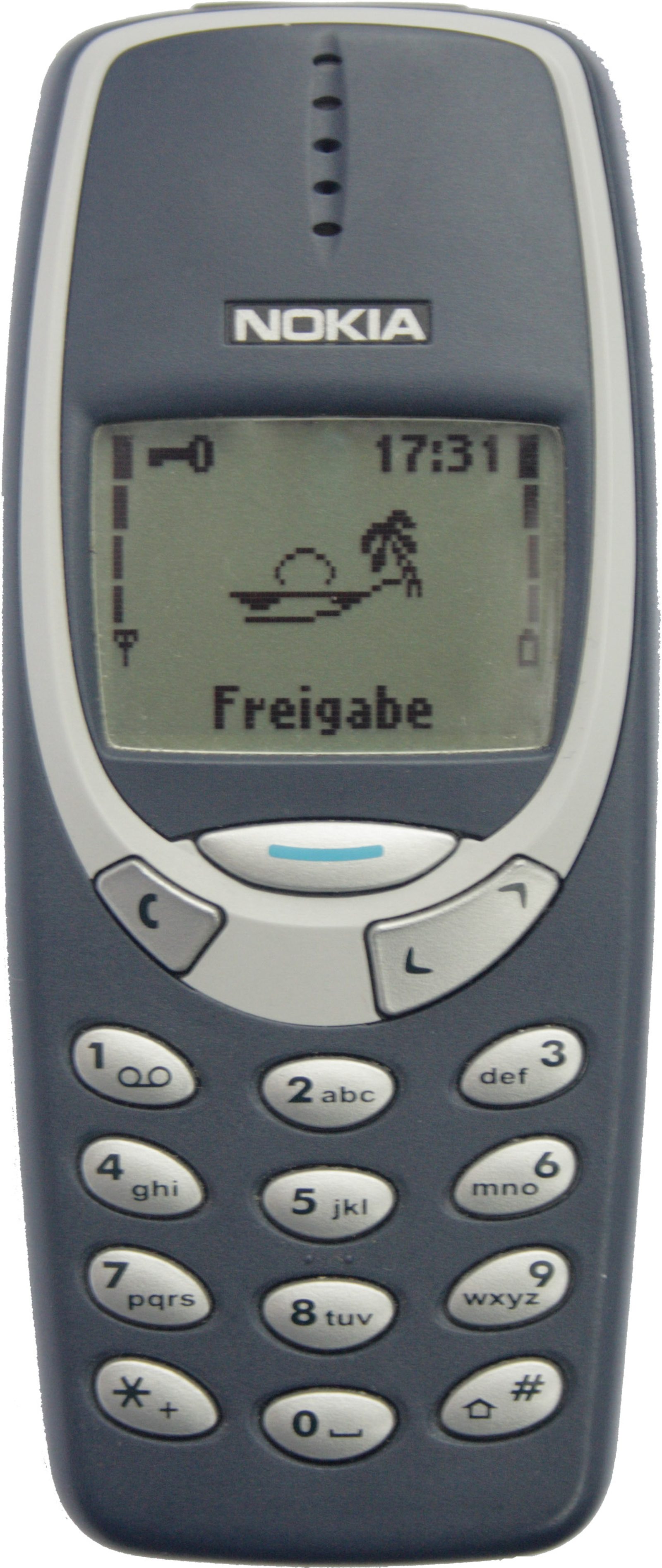
In December 1988, Nokia was a company that made rubber boots, cable, car tires, televisions and paper, and it was not especially good at most of it. Its television division was bleeding money. Its chairman and chief executive, Kari Kairamo — a vuorineuvos, the honorary title Finland grants its senior industrialists — had spent a decade buying companies across Europe in the belief that a small country could acquire its way into relevance. He died that month by suicide. The company tried at first to keep the news quiet. Somewhere inside the same building, a division almost nobody took seriously was building telephones you could carry, if you were strong and did not have far to go.
That is where Made in Finland begins. Six episodes, released on C More in spring 2022, created and directed by Maarit Lalli, and sold abroad under the flatter title Mobile 101, a Nokia Story. It is a drama about a failing electronics business in a country of five and a half million people, and it is far more gripping than that sentence suggests.
It is also, for anyone in North America who grew up Finnish, a strange experience: a prestige drama about the one moment when the answer to "where are your people from?" stopped requiring a follow-up explanation.
Six episodes, mostly invented people
Lalli's series opens in 1988 with two blows landing at once — Motorola suing Nokia over patents, and the loss of a respected chief executive — and then braids three strands: the executive politics of a conglomerate deciding what it wants to be, a pair of lawyers trying to survive an American patent fight, and an engineer convinced he can build a phone that is cheap and nearly unbreakable.
Readers should know going in that most of the characters are invented. The senior leaders are the exception, drawn from real people; everyone else, including the lawyer Katarina Tammi whom Satu Tuuli Karhu plays so well, is a composite built to carry real events. The Motorola plot is best watched as dramatized rather than documented. This is a drama based on a true story, not a docudrama, and it is more honest about that than most series in the genre.
The Finnish critic Helinä Laajalahti caught both its strengths and its tics: a well-built blend of thriller, office drama and humor, with period design that is sometimes too pleased with itself, and a habit of captioning characters on screen immediately before someone says their name out loud. She is right on all counts. She is also right that Karhu's lawyer — shy graduate at the start, formidable by the end — is the reason the series works as television rather than as a corporate history lesson with better lighting.
The Nordic part nobody outside the Nordics learned
What the series assumes, and what North American viewers mostly do not know, is that Nokia did not invent the conditions it exploited. It inherited them, and it inherited them from a regional project.
NMT — Nordic Mobile Telephony — was specified not by a company but by the postal and telecommunications administrations of Sweden, Norway, Denmark and Finland, working together. It opened in Sweden on October 1, 1981, in Norway that November, in Denmark in January 1982 and in Finland that March. What made it matter was not that it was first; Ericsson had a commercial NMT service running in Saudi Arabia a month before the Nordic launches. What made it matter was the design. Automatic switching, handover between cells, and roaming across national borders were in the standard from the beginning, because four governments that expected their citizens to drive across each other's borders had written it that way.
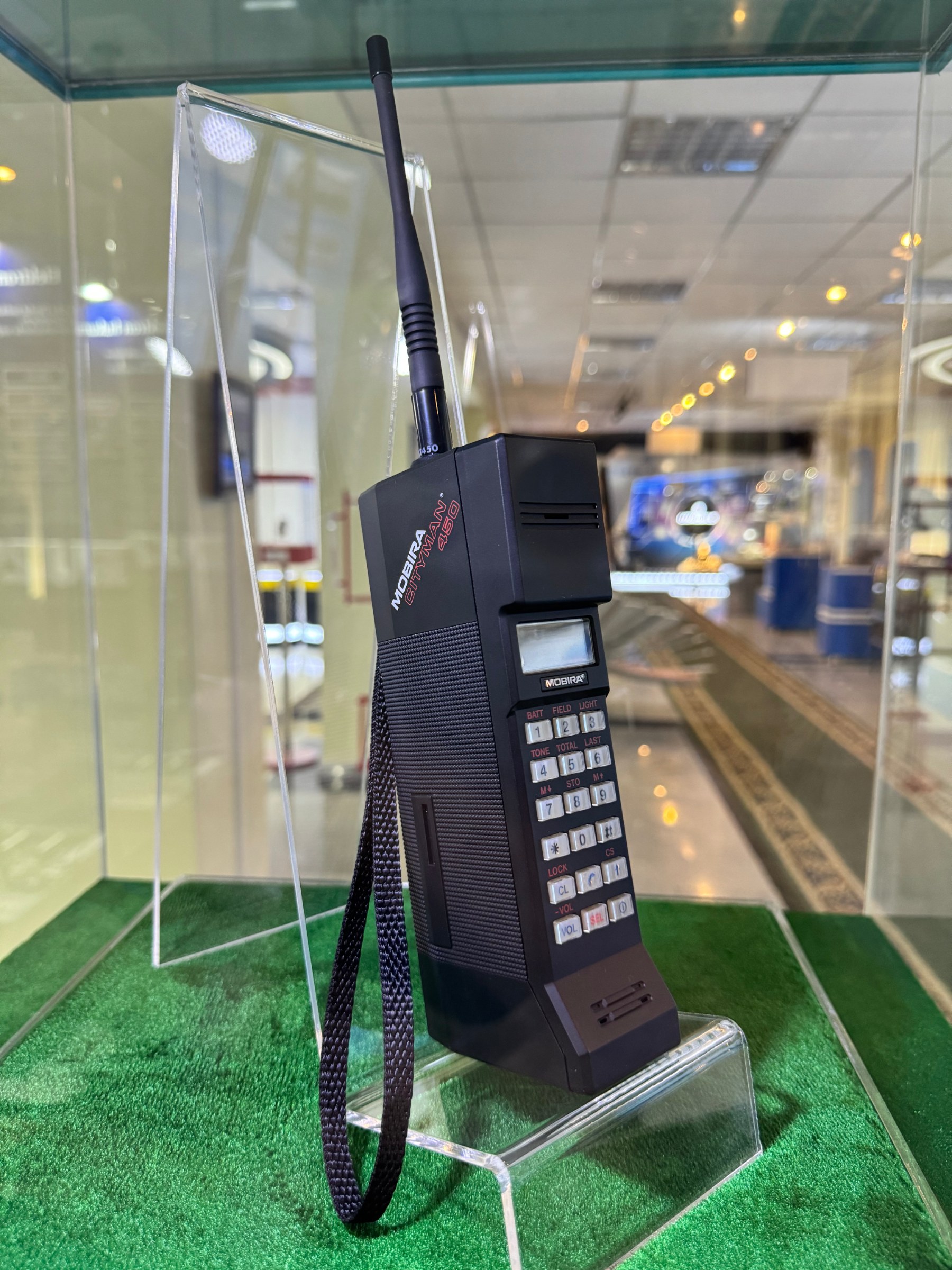
In other words: the first mass market for a phone you used in more than one country was built by Nordic bureaucrats, deliberately, as infrastructure. Nokia's advantage was being a competent manufacturer standing in exactly the right place when that market opened. The Mobira Senator car phone arrived in 1982. The Mobira Cityman, 760 grams of it, arrived in 1987 and acquired the nickname "Gorba" after Mikhail Gorbachev was seen using a Cityman in Helsinki in October 1989 to call Moscow.
There is a lesson in that sequence which the series lets you find on your own, and which is worth stating plainly: the famous private-sector miracle rested on a public-sector standard that four small states agreed to share.
The years the series only glances at
Made in Finland ends before the part that actually explains modern Finland, and it is a shame, because the early 1990s are the hinge.
The Soviet Union had accounted for somewhere between 15 and 20 percent of Finnish foreign trade. When it dissolved, that did not shrink; it disappeared. Finnish gross national product fell 13 percent between 1991 and 1993. Unemployment went from 3.5 percent to 18.9 percent and stayed above 12 percent every year from 1992 to 1997; in construction it touched 36.7 percent in 1994. The markka was devalued in 1991 and again in 1992, which had the vicious side effect of inflating the debts of every Finnish company that had borrowed in foreign currency. Banks failed. The state set up a vehicle, OHY Arsenal, to carry the wreckage. Finland's sovereign credit rating was cut.
This is the context in which Nokia's board did something that looks obvious in hindsight and looked reckless at the time. Simo Vuorilehto, who took over after Kairamo, sold the televisions and the personal computers. Nokian Tyres had been separated in 1988, the paper business sold in 1989, the rubber boots spun out in 1990. Then in January 1992 the board handed the company to Jorma Ollila, and Ollila decided that Nokia would be a telecommunications company and nothing else.
A country with a fifth of its workforce out of work bet its recovery on one firm selling one product category it had not yet proven it could dominate. On July 1, 1991, the Finnish prime minister Harri Holkeri had made the world's first GSM call on Nokia equipment. In November 1992 the Nokia 1011 became the first commercially available GSM phone. The bet came in.
A quarter of a decade's growth
The scale of what followed is difficult to convey to anyone who did not live through it, so here are the numbers.
Nokia's revenue went from 6.5 billion euros in 1996 to 31 billion in 2001. It was the largest handset manufacturer in the world every year from 1998 to 2012. The Nokia 1100 and the Nokia 1110 sold roughly 250 million units each; the 3210 sold 160 million, the 3310 another 126 million. For comparison, the original iPhone sold six million. In the fourth quarter of 2007 Nokia held 40.4 percent of the global handset market and 51 percent of smartphones.
And at home: the research institute ETLA calculated that Nokia contributed a quarter of all Finnish economic growth between 1998 and 2007. At its peak the company accounted for roughly a fifth of Finnish exports and pushed the current account surplus to nearly 7 percent of GDP. Between 2004 and 2020 it was responsible for 77.6 percent of research spending among Finland's research-intensive firms.
Few developed economies have ever been that dependent on a single company. Economists now use the phrase "Nokia risk" as a general term, and they did not coin it kindly.
The fall, and what Oulu did about it
The collapse is the better-known half of the story and needs less retelling. Stephen Elop, the first non-Finn to run Nokia, wrote his "burning platform" memo to staff in February 2011. In September 2013 Microsoft agreed to buy the devices business and license the patents for 5.44 billion euros — 3.79 billion for the business, 1.65 billion for the license — and the deal closed in April 2014. Steve Ballmer called it "a win-win for employees, shareholders and consumers of both companies." Microsoft cut 18,000 jobs, 12,500 of them former Nokia staff, and 7,800 more the following year.
Finland took the blow in the body. Exports fell by half after 2007. The current account went into deficit. Real income per head declined from 2008 to 2019.
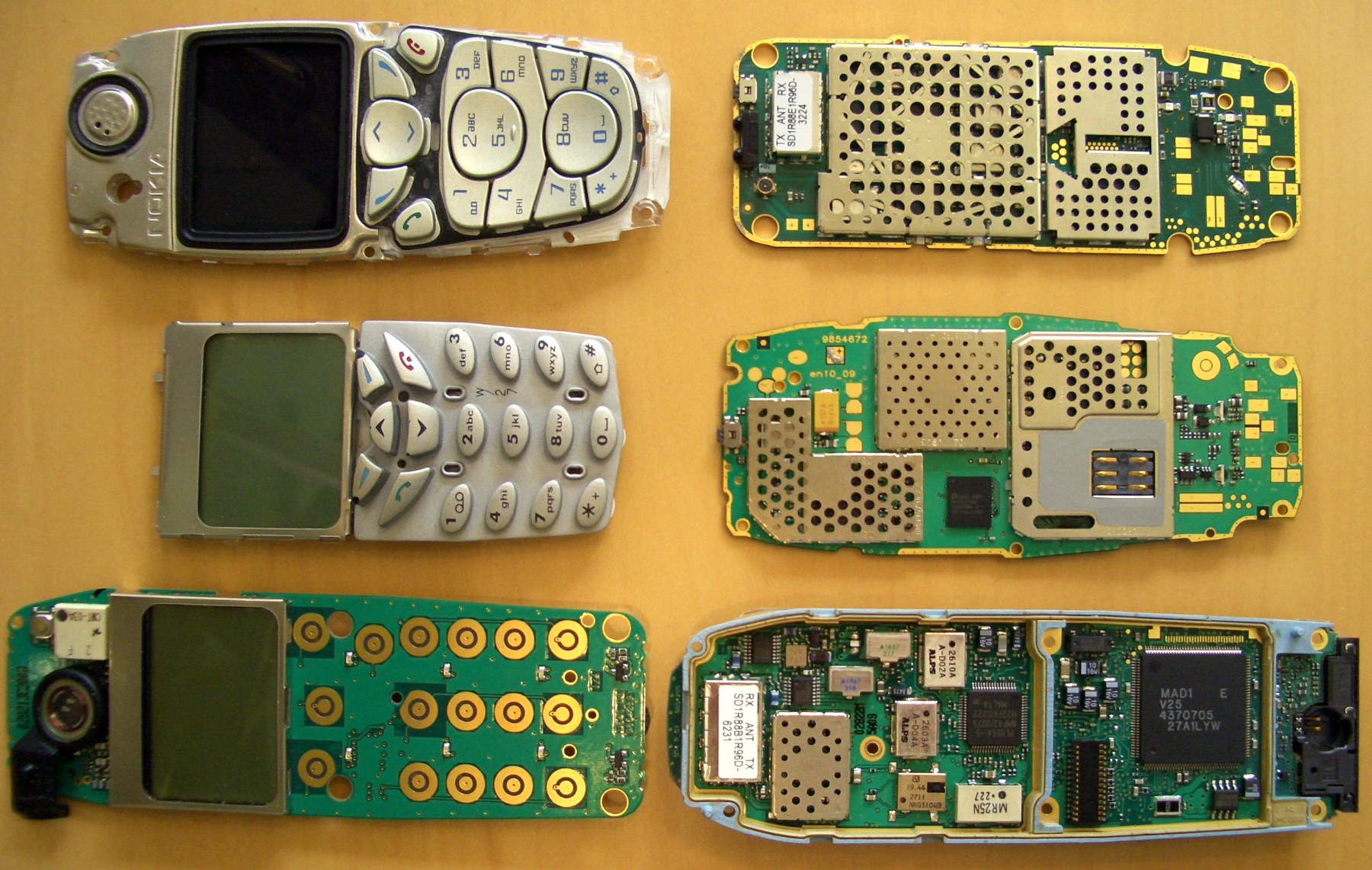
What is less often told is what happened in Oulu, the northern city where Nokia employed around 4,800 people in 2004 and anchored some two thousand subcontractors. Nokia's exit program, Bridge, paid severance by length of service and added roughly 28,000 dollars to anyone who wanted to start a company. Thousands did. Oulu converted old Nokia buildings into startup space, leaned on the radio engineering talent it already had, and is now a serious center for wireless research and digital health. Juha Ala-Mursula, who ran the city's business arm, put it with the kind of bluntness the language permits: "Nokia's problems were the best thing that could have happened to us."
He is overstating it. But only somewhat, and only because he is describing the second time in twenty years that a Finnish region took a structural shock and rebuilt on the skills the shock left behind.
Why this one lands differently in Hancock and Thunder Bay
For most of the twentieth century, being Finnish in North America meant explaining yourself. It meant a hall, a cooperative, a sauna behind the house, a grandmother's accent in a mining town in the Upper Peninsula or northern Minnesota or on the north shore of Lake Superior, and a heritage that outsiders filed under quaint if they filed it at all.
Then for about fifteen years, everyone's phone said Nokia on it.
That is a small thing and it is not a small thing. Diaspora identity is built out of moments when the home country becomes legible to the people around you, and Finland has had very few of them, before or since. Made in Finland is, among other things, a series about how that moment got manufactured — by engineers, by lawyers, by a government standard, and by a company that was one bad year from being sold for parts.
It is also a quiet argument about what small countries can do, which is the argument this publication keeps finding at the bottom of Nordic and Baltic stories. The Finland of 1991 had lost its largest trading partner overnight, had a fifth of its people out of work, and chose to concentrate rather than diversify. That worked spectacularly and then it nearly ruined them. Both halves are the lesson.
Where to watch it, if you can
Here is the frustrating part. Mobile 101 has sold well across Europe — Disney+ took it in Italy, the Netherlands and Belgium, Walter Presents took the United Kingdom and Ireland, RUV took Iceland. Rabbit Films, which produced it and handles international sales, has said the obvious thing about why: "We all grew up with a Nokia mobile phone, so this unique series has really resonated with buyers."
It has no North American home. As of this writing there is no legal way to stream it in the United States, and we could not find a Canadian window either. A six-part drama about the most consequential Nordic company of the last fifty years, with several hundred thousand people of Finnish descent on this continent who have a personal reason to watch it, is sitting unsold in the one market where that audience lives.
If you have access to a European service, it is worth the six hours. If you do not, it is worth asking the streamers why. The Nordic crime dramas all found their way here. The story of how a pulp mill on a Finnish river ended up in every pocket in the world apparently has not.

)%20(1).avif)