Fifty Thousand People Came to Rebild in 1948. About a Thousand Came This Year.

In 1912 a group of Danish-Americans bought two hundred acres of heather-covered hills in the Rold Forest in northern Jutland and gave them to the Danish state.
The gift came with conditions. The land was to remain in its natural state. It was to stay open to the public year-round. And every Fourth of July, Denmark was to host a celebration on it.
The first festival, delayed by the death of King Frederik VIII, was held on 5 August 1912 in front of between ten and fifteen thousand people, about a thousand of whom had crossed the Atlantic to be there. Attendance peaked at around fifty thousand in 1948. Walt Disney spoke in 1961. Richard Nixon and King Frederik IX in 1962. Walter Cronkite in 1967. Queen Margrethe in 1976.
This year, amid the tensions over the American administration's designs on Greenland, the celebration went ahead with no US officials on the programme and organisers expecting about a thousand people.
Fifty thousand, then a thousand. On land that Americans bought and gave away.
And here is the detail that turns the story from an anecdote into a thesis. The man who conceived Rebild, Max Henius, was a Danish immigrant to America. He also founded the Danish Emigration Archives in Aalborg, in 1932. One Danish-American built both of Denmark's institutions of emigration memory. Denmark built neither.
2,296
That is the number of people who visited Norway's national emigration museum in 2024. Eight hundred and one of them were there for venue hire or the café.
The year before it was 4,118. A forty-four percent fall, in the period the country was preparing to commemorate the bicentenary of the first organised emigration to America.
The museum has three permanent staff and no director of its own — it shares a department director with another museum in the same trust, whose staff moved into the emigrant museum's building to save on heating. Its operating instruction is that activities must run at a profit.
Norway's other emigration museum, at Sletta on Radøy, was started by a village schoolteacher after a trip to America. Its buildings were donated by the Sargent County Farm Bureau in North Dakota and the town council of Elizabeth, Minnesota.
Both of Norway's emigration museums are, in substantial part, gifts from the people who left.
The institute that asked to be liquidated
Sweden's story is worse, and it is usually told too gently.
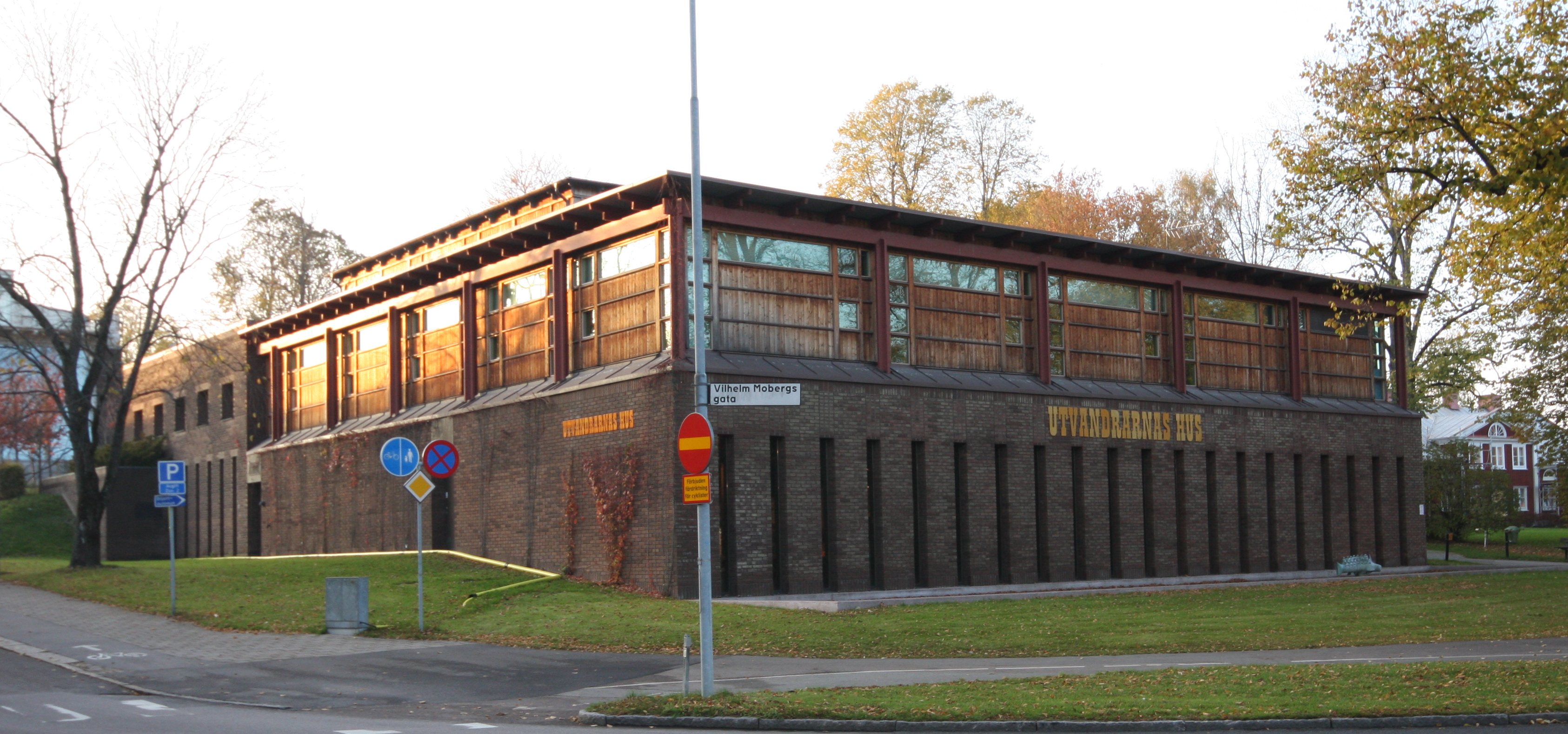
The Swedish Emigrant Institute was founded in Växjö on 11 September 1965; Utvandrarnas Hus, the House of Emigrants, opened in August 1968. It became the largest institution of its kind in the Nordic region, holding the letters, photographs and records of the 1.3 million Swedes who went to North America.
In 2008 it refused to be absorbed into a regional museum consortium. Its grants were cut. It dismissed all its staff. It put its building up for sale. In July 2010 the municipality bought the building and the operation was folded into Kulturparken Småland anyway. And on 14 November 2013 the institute's board applied to liquidate the foundation — with, in the reporting of the time, nobody certain which organisation would take over its collections.
The House of Emigrants is open today. Its research room operates by appointment. The institute's own website announces that it is no longer active.
Now set that against a single line item from 2023, eight hundred kilometres east. Estonia's foreign ministry and National Archives put €118,000 on the table specifically to go abroad and collect the Estonian diaspora's archives — to find other people's papers in other people's countries and bring them home.
Sweden did not know who would take its own. Estonia went looking for somebody else's.
Where the obvious thesis breaks
At this point the argument seems to write itself: the Baltic states, forged by exile, take their diasporas seriously; the Nordic states, whose people left for farmland, do not.
It is about sixty percent right, and the forty percent that is wrong is the interesting part.
Finland breaks it. Finland has had a formal, named Government Strategy on Expatriate Finns since 2017, the current edition running 2022–2026 and drawing on seven ministries. It has had an Expatriate Parliament since 1997, covering 531 communities in 39 countries. It publishes its funding per pupil for Finnish schools abroad — around €112 a year — alongside grants of €235,000 to €275,000 a year to Suomi-Seura and €165,000 for the distance school. That is not a country ignoring its diaspora. It is the most systematic policy of the eight.
And Latvia complicates it from the other side. Latvia passed the region's showpiece Diaspora Law, and in 2018 its own state-commissioned researchers reported that there was no permanent financing for even the basic matters relating to the diaspora — and that only eleven percent of the diaspora participates in diaspora organisations at all.
So the fault line is not Nordic against Baltic. It runs between current citizens abroad and descendants. Finland has an excellent policy for Finns who live abroad. It has very little for the great-grandchildren of Finns who left the Iron Range. Estonia and Lithuania, whose emigrations are recent enough that the two categories still overlap, do not have to choose.
Norway spends more than anybody, through a church
Here is the fact that most complicates the easy version.
Norway has no diaspora policy, no diaspora minister and no diaspora strategy. Norway is also, of the eight, the largest single spender: the 2026 state budget carries NOK 129,197,000 for Sjømannskirken, the Norwegian Church Abroad — roughly forty-eight percent of that organisation's income.
The Nordic states did not neglect their emigrants so much as outsource them. Norway's instrument is a church, on the state's money. Sweden's Church Abroad runs on church money — Sweden separated church and state in 2000 — which is a real and often-missed distinction.
The Baltic instrument is the state itself. Lithuania has funded 254 Lithuanian educational institutions abroad, with around 11,500 pupils, permanently since 1 January 2023 — paying rent, teachers' salaries and materials. Under that scheme the Lithuanian school “Klevas” in Edmonton reopened in 2025 after twelve years closed.
Compare the Swedish rule. Swedish regulation SFS 1994:519 funds schooling abroad for the children of Swedes posted overseas for Swedish employment, Swedish state service, Swedish-funded study or cultural work. A Swedish-American family in Seattle is not merely unfunded; they are legally outside the category.
And the emigration barely appears in the teaching at home. Denmark's mandatory folkeskole history canon contains no emigration point — and it was revised as recently as June 2023, when the Commonwealth of the Realm and the Holocaust were added to it.
The mechanism is the ballot
Why does the attention run one way? The cleanest structural answer is not sentiment. It is arithmetic.
Lithuania created a single-member “World Lithuanian” parliamentary constituency, approved by the Seimas 61 votes to 2 with 10 abstentions on 24 July 2019, triggered once overseas registration passes a threshold. Latvia ran 81 polling stations in 42 countries at its last parliamentary election.
Now the Nordic rules. A Swedish citizen abroad falls off the electoral roll after ten years unless they re-register. A Norwegian, likewise after ten. An Icelander after sixteen, and then only on application.
Diaspora voters can swing a Baltic election. They cannot swing a Nordic one. Everything else follows.
There is a second mechanism, and it is biographical. Three Baltic presidents came out of the North American diaspora — Toomas Hendrik Ilves from New Jersey, Valdas Adamkus from Chicago, Vaira Vīķe-Freiberga from Canada. No Nordic head of state or government ever has.
And a third, which is about the story a country tells itself. Between 1907 and 1913 Sweden ran a royal commission on emigration: six years, twenty-one volumes, one of the most thorough investigations any European state has made of its own people leaving. Every recommendation it produced was about reforming Sweden — land reform, housing, wages, suffrage — so that people would stop going. None of it was about the Swedes who had already gone.
That is the difference in one sentence. For the Nordic countries, emigration is a domestic policy failure that was successfully fixed. For the Baltic countries, the departures were an injury inflicted from outside, and the people who left are the part of the nation that got away.
What the homelands do send
The counter-evidence is real and should not be waved away.
The Norwegian royal family has visited one small college in Iowa nine times since 1939, most recently the Crown Prince on 6 October 2025 for the emigration bicentenary. Sjømannskirken maintains a genuine presence across North America. Homeland foundations have paid for the largest diaspora digitisation projects in existence — Swedish money digitised 348 Swedish-American newspaper titles, and the National Library of Norway maintains the Norwegian-American bibliography that no American institution does.
But look at the shape of it. What the Nordic states reliably send is ceremonial and cultural. What the Baltic states send is budget lines, polling stations and parliamentary seats.
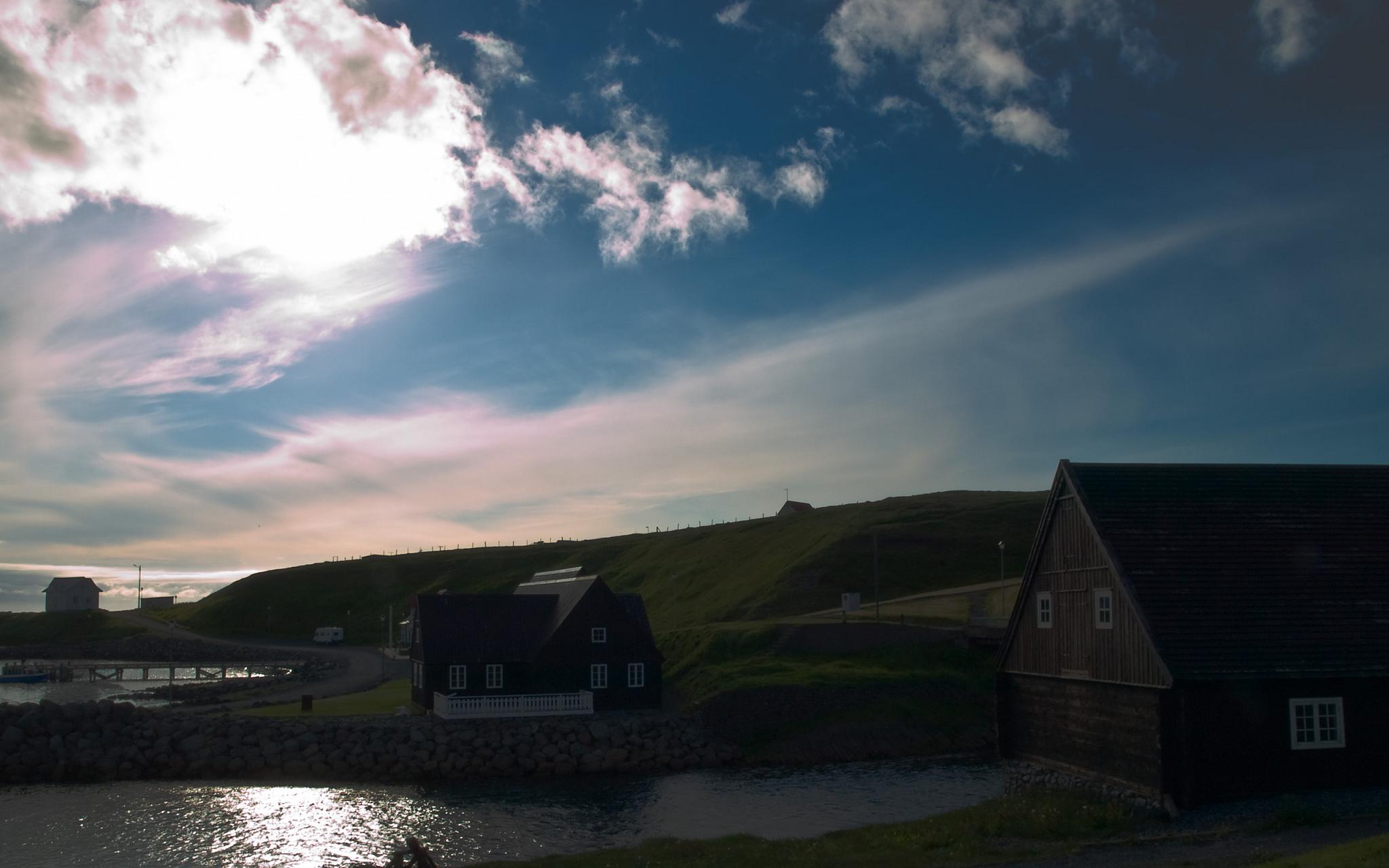
And in one place the flow reverses entirely. The Icelandic Emigration Center at Hofsós — in a country that lost, by the centre's own reckoning, twenty to twenty-five percent of its population to North America between 1870 and 1914 — is partly funded and staffed from this side of the Atlantic. Icelandic Roots, an American organisation, makes annual contributions. This summer's staffing was covered by an American volunteer genealogist and two interns.
The benchmark nobody in the region meets
Ireland spent €16.4 million on diaspora projects in 2025, across more than 530 projects in 51 countries, on top of €265 million since 2004. It has a Minister of State for the Diaspora and a published Diaspora Strategy running to 2030.
None of the eight Nordic and Baltic countries has a diaspora minister.
This is not a complaint, exactly. States allocate attention according to interest, and a Norwegian government answering to Norwegian voters is behaving rationally when it spends its cultural budget on Norwegians in Norway. The 4.5 million Americans who claim Norwegian ancestry are not, in any operative sense, Norway's problem.
But it does mean something for the institutions on this side. If you run a Nordic-American heritage organisation and you have been waiting for the homeland to arrive with a rescue, the evidence of the last fifty years is that it will send a crown prince and a church, and that the letters and the ledgers are yours to keep or lose.
The Danish-Americans who bought those two hundred acres in 1912 understood the direction of the relationship perfectly. They did not ask Denmark for a memorial. They bought one and gave it away, with instructions attached.
Figures are drawn from museum annual reports, national budget documents, ministry publications and state-commissioned research, as cited in the reporting. Several institutions in this piece have merged or been renamed and the older names still circulate; where the popular account and the documentary record differ, we have followed the record.

