Chicago Was Once the Largest Lithuanian City Outside Lithuania. What Happened Next
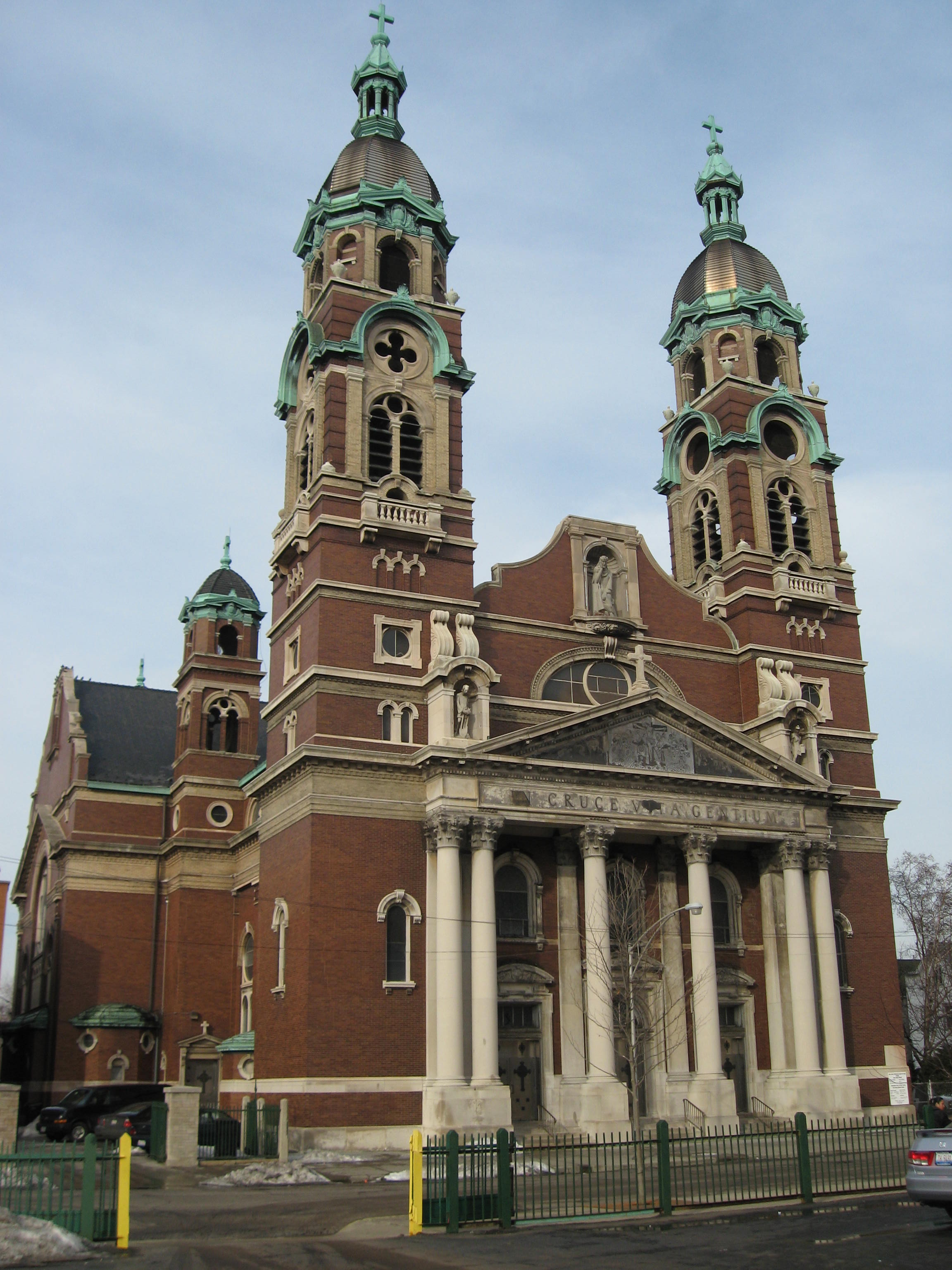
Start with the claim, because it is the one everybody repeats and almost nobody examines.
Chicago is routinely described as the largest Lithuanian city outside Lithuania. The Encyclopedia of Chicago puts it precisely and carefully: Lithuanians usually claim that the city held about 50,000 of their compatriots by 1914, which would have made it the largest urban settlement of Lithuanians in the world.
For the early twentieth century that is almost certainly right.
For today it depends entirely on what you are counting. American Community Survey figures put people of Lithuanian ancestry in the Chicago metropolitan area at somewhere around 57,000 to 60,000, and in Illinois at roughly 70,000. Meanwhile the 2021–22 United Kingdom census recorded more than 182,000 Lithuanian-born residents.
Those are different measurements. Ancestry is not birthplace, and a community four generations deep is not the same object as a recent labour migration. But the elision between them is where the slogan quietly stops being true, and it is worth saying plainly: Chicago is very likely the largest concentration of people of Lithuanian descent outside Lithuania. It is not the largest concentration of Lithuanians.
What Chicago unambiguously has is the deepest institutional layer. That is the more interesting story.
Three migrations
The first wave ran from roughly the 1860s to 1914 and it was economic. Serfdom was abolished in the Russian Empire in 1861; famine followed in 1867–68; Tsarist authorities suppressed Lithuanian-language printing and Catholic practice. By 1899 there were around 50,000 Lithuanians in the United States, and between 1899 and 1914 more than 252,000 arrived.
The true early figure is unknowable, because before 1899 Lithuanians entering the United States were registered as Russian subjects. A great many people who thought of themselves as Lithuanian appear in the American record as Russians or Poles.
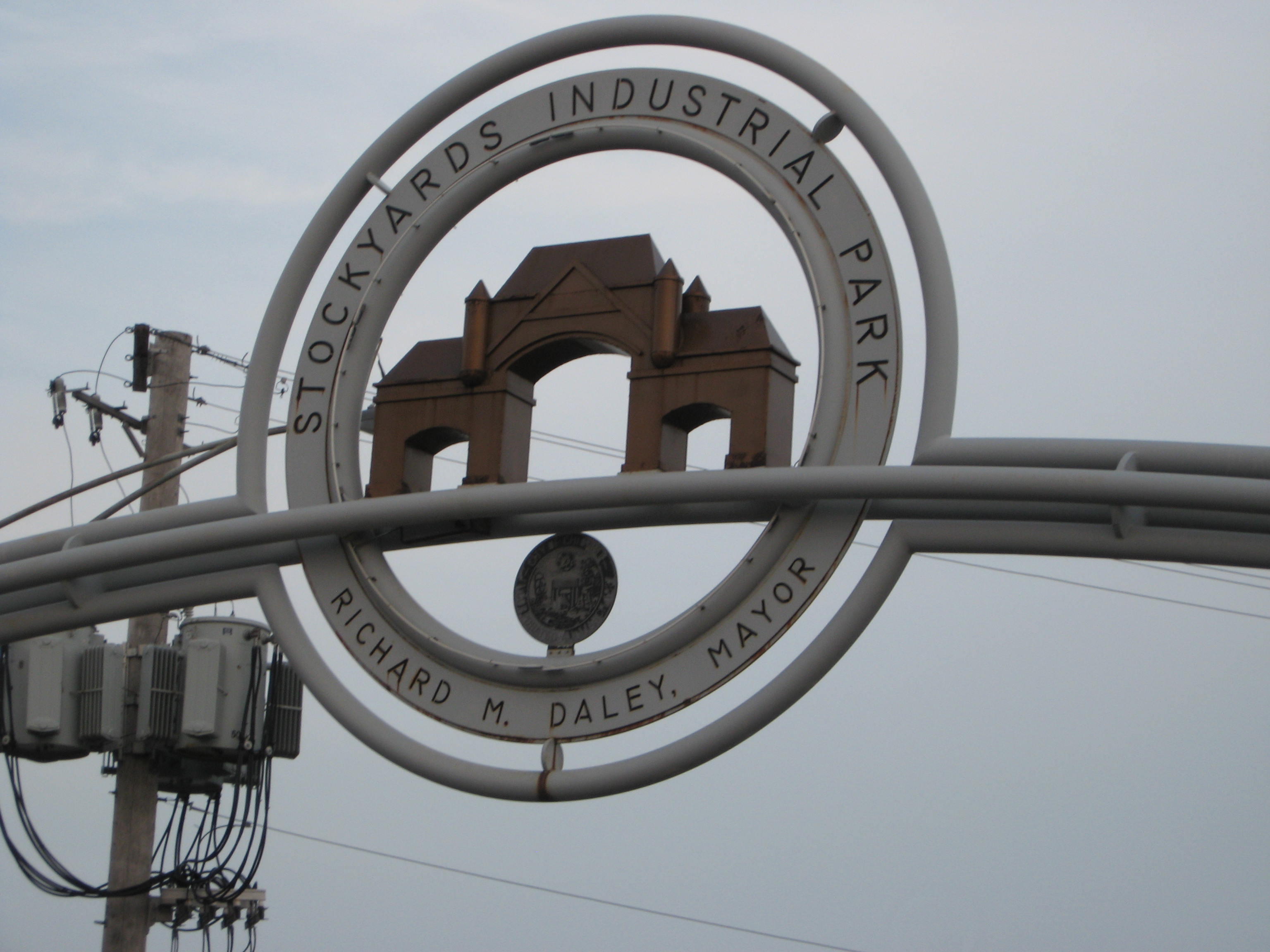
They came to Chicago for one reason: the Union Stock Yards. The work was brutal, the housing was crowded, and the wages were better than nothing at home.
This is the world Upton Sinclair wrote about. The Jungle, serialised in 1905 and published as a book in 1906, opens on a Lithuanian wedding feast and follows a Lithuanian family through the packinghouses. The novel produced the Pure Food and Drug Act and the Meat Inspection Act the same year — Sinclair famously aimed at the public's heart and hit its stomach — and it remains the most widely read American book about Lithuanian immigrants, written by someone who was not one.
Then it stopped. The First World War and the American quota acts of 1921 and 1924 cut the flow to roughly 20,000 arrivals across the whole of 1915 to 1948.
The second wave was political, and it changed the community's character permanently.
At the end of 1946 there were more than 60,000 Lithuanians in displaced-persons camps in Germany, Austria and Italy — people who had fled the Soviet reoccupation of the Baltic states and could not go home. The Displaced Persons Act, signed on 25 June 1948 and amended in 1950, admitted 393,542 displaced people to the United States before it expired in 1952. Six and a half per cent of them had been born in Lithuania.
Estimates of the Lithuanian total run from about 25,000 to about 30,000. Robertas Vitas of the Lithuanian Research and Studies Center puts the figure near 30,000 and reckons roughly a third settled in Chicago.
These were not the same people as the first wave. The DPs included a large professional and intellectual class — teachers, lawyers, priests, musicians, army officers — who arrived believing their exile was temporary and who organised accordingly. They founded schools, opera companies, archives, scout troops and political committees, on the working assumption that the whole apparatus would eventually be shipped home.
It took forty-two years, and by the time Lithuania restored its independence in 1990, most of them had died in Illinois.
The third wave came after 1990. The Lithuanian national encyclopaedia estimates around 250,000 arrivals in the United States between 1990 and 2002, though it flags the number as an estimate and it very likely counts temporary and undocumented arrivals rather than permanent settlement. What is not in doubt is where they went. Not to Bridgeport or Marquette Park, but to Lemont, Darien, Homer Glen and the south-western suburbs. Lemont is now about ten per cent Lithuanian by ancestry — the highest concentration of any municipality in Cook County.
Four neighbourhoods, in order
Bridgeport, next to the stockyards, came first. St George's parish was founded there in 1892 — the first Lithuanian parish in Chicago.
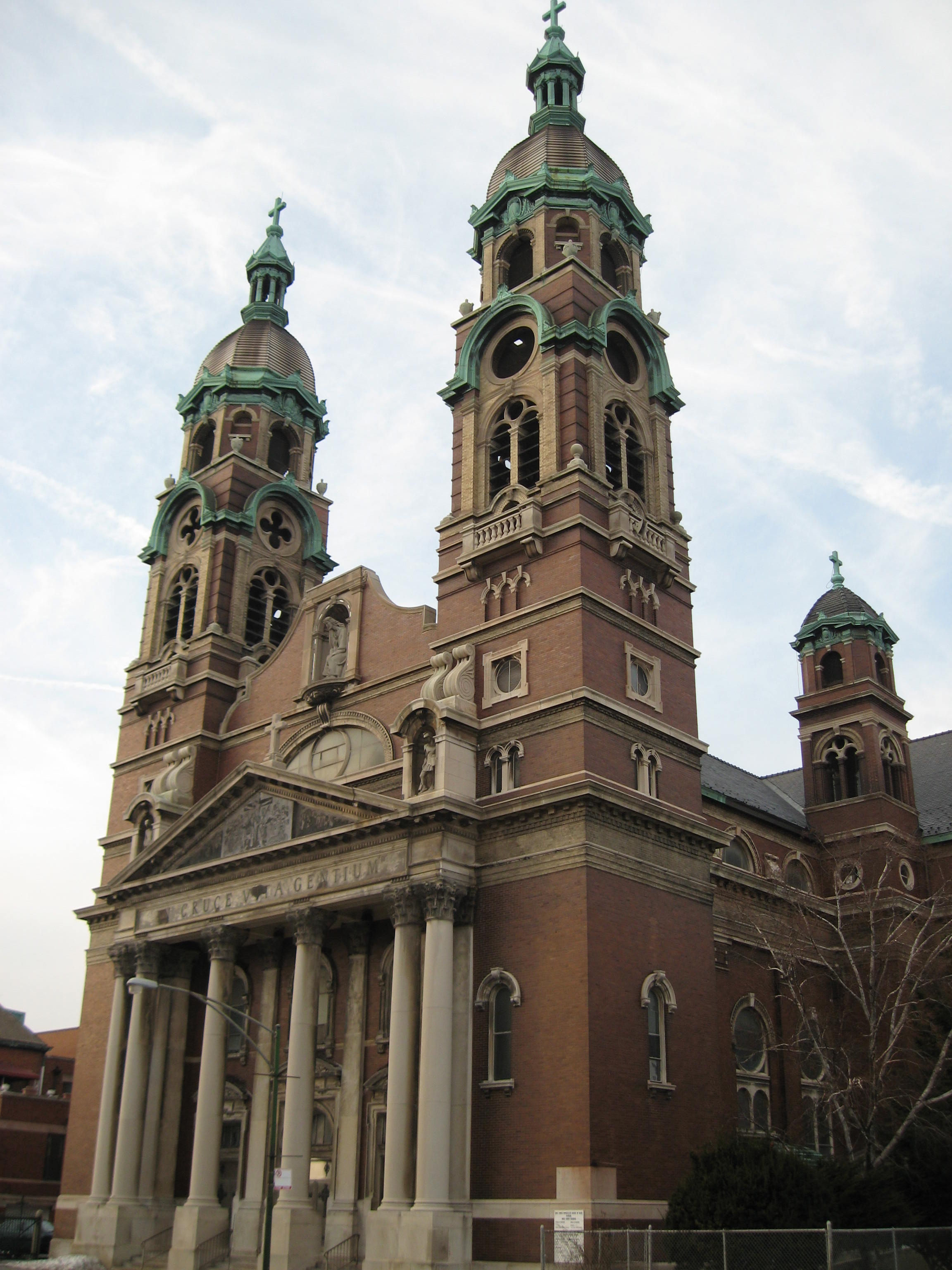
Back of the Yards followed. Holy Cross bought its land in February 1904 and laid the cornerstone of the church in October 1913.
Brighton Park next, where Immaculate Conception's present church, built in 1964, was the last Lithuanian-built church in the city.
And then Marquette Park, in the Chicago Lawn community area, where Lithuanians arrived in the 1920s and 30s and built what was called the Lithuanian Gold Coast: Nativity of the Blessed Virgin Mary parish in 1927, Holy Cross Hospital in 1928, Maria High School in 1952, savings and loan associations, shops, halls. In 1970 a stretch of West 69th Street was renamed Lithuanian Plaza Court.
What happened to Marquette Park
The neighbourhood does not have a Lithuanian population today, and the reasons are documented well enough that there is no excuse for vagueness.
In 1960 the Chicago Lawn community area had 51,347 residents and was 99.9 per cent white — a mix of Lithuanian, Polish, German and Irish Americans, with Lithuanians the most institutionally prominent group. By 1980 the white share was 77 per cent. By 1990 the area was 43 per cent white, 26 per cent Black and 28 per cent Hispanic. By 2000, Black residents were 53 per cent and non-Hispanic white residents 10 per cent.
Two things drove that, and they are not the same thing.
One was real-estate practice. Federal housing research documents more than sixty firms working adjacent West Englewood in the late 1960s and early 1970s, and a local realtor fined a record amount for racial steering as late as April 1991. Blockbusting was a business model, and it worked by manufacturing panic among exactly these homeowners.
The other was resistance, and Marquette Park is where it became national news. On 5 August 1966, during the Chicago Freedom Movement's open-housing campaign, around 500 marchers entered the neighbourhood and met a counter-crowd in the thousands. Martin Luther King Jr was struck by a thrown rock and went down on one knee. He said afterwards that he had not seen mobs this hostile anywhere in the South — a judgement that has followed the neighbourhood ever since. The incident is frequently and wrongly placed in Gage Park; it happened in Marquette Park.
Afterwards the neighbourhood attracted organised far-right activity. Frank Collin sited the National Socialist Party of America's headquarters near where King had been hit, and the party operated from there through the 1970s, including the period of the Skokie litigation, before collapsing in the early 1980s.
Two things need saying carefully here.
The first is that nothing in the documentary record attributes that violence specifically or disproportionately to Lithuanians as against the Polish, German and Irish residents of the same blocks. It was a white ethnic neighbourhood defending itself as a white neighbourhood, and the sources do not sort it by nationality.
The second is that this period cannot be edited out of a Lithuanian-American history of Chicago simply because it is unflattering. Marquette Park was the community's centre. What happened there happened around its churches and its shops. A permanent memorial to the 1966 march — three ten-foot stelae by John Pitman Weber and Sonja Henderson — was dedicated in the park in August 2016.
The parishes now
St George's, the first, closed in 1990 and was demolished the same year.
Holy Cross was merged into Holy Cross / Immaculate Heart of Mary and now serves a predominantly Mexican-American congregation. Immaculate Conception in Brighton Park was united with Five Holy Martyrs in July 2019 under the Archdiocese of Chicago's Renew My Church restructuring, with both church buildings retained as worship sites.
Nativity of the Blessed Virgin Mary in Marquette Park is still open, and still Lithuanian: daily Mass in Lithuanian, a Lithuanian Mass on Saturday evening, and on Sunday one Mass in English and one in Lithuanian. It also carries the title Our Lady of Šiluva Lithuanian Mission. Nearly a century after its founding, in a neighbourhood whose Lithuanian population has gone, it is still saying Mass in the language.
What is still running
Draugas, the newspaper, is the one that ought to be better known. Founded on 12 July 1909 in Wilkes-Barre, Pennsylvania and moved to Chicago in 1912, it claims to be the oldest continuously published Lithuanian newspaper anywhere in the world, and the claim appears to hold: it was weekly to 1916, daily from 1916 to 2011, three times a week to 2020, and twice weekly since 2021.
Circulation is now around 900 mailed copies. In 2003 it was 8,000. Its editor-in-chief, Ramunė Lapas, described the problem to Lithuanian public broadcasting in blunt terms: the loyal readers are dying, one by one.
In 2025 the paper moved. The Lithuanian Marian Fathers, who no longer have a presence in the United States, put the Lithuanian Catholic Press Center on West 63rd Street up for sale, and Draugas relocated to the Chicago Lithuanian Center at 56th and Claremont. It held an open house there on 12 July 2025 — its 116th anniversary. An English-language monthly, Draugas News, has run since 2013.
The Chicago Lithuanian Center itself, built in 1956–57 by Lithuanian Jesuits as the Jaunimo Centras, went through a quiet but significant change in May 2023, when the Jesuits transferred ownership of the buildings and land to Lithuanian Center, Inc., the lay body that had already been running the place since 1979. A religious order that could no longer sustain a building handed it to the community rather than to a developer.
The Lithuanian Research and Studies Center, founded in 1982 and now headquartered in Lemont, holds what may be the most significant Lithuanian archive outside Lithuania: some 300,000 pages of displaced-persons material from more than 130 camps, over 2,500 periodical titles going back to 1850, and around 100,000 books.
That collection exists because the DP generation understood that a record of the camps would otherwise not exist anywhere. They were right.
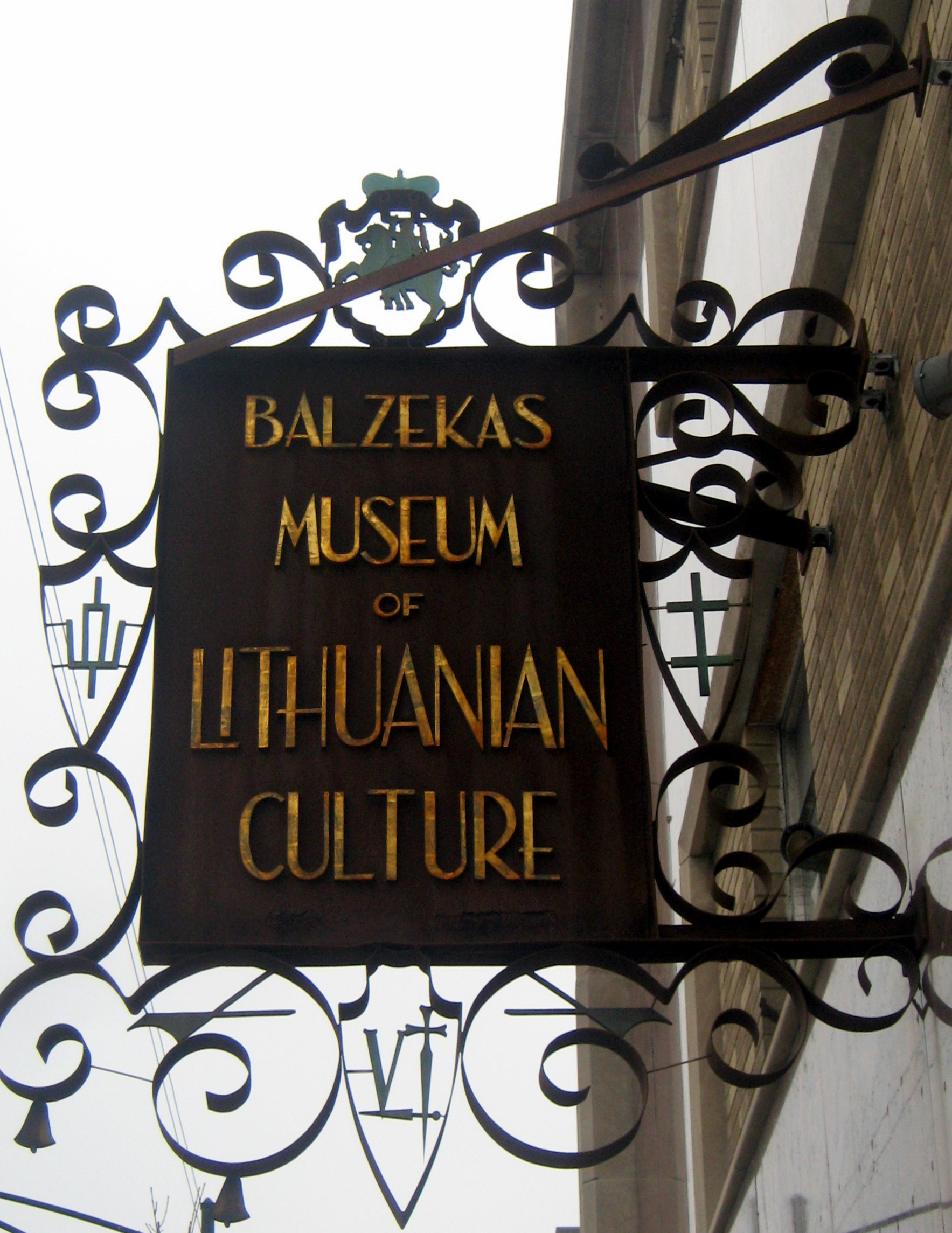
The Balzekas Museum of Lithuanian Culture, founded in 1966, is open six days a week and free to Illinois residents on the first Friday of the month. Its online exhibition on Baltic displaced persons from 1944 to 1952 is a good entry point to the second wave.
The Lithuanian World Center in Lemont, opened at the end of the 1980s, is the community's current centre of gravity: an umbrella for more than fifty organisations, including a Lithuanian-language Mass, the Lithuanian Museum of Art and the Maironis school.
Two Saturday schools are running — Maironis in Lemont, and the Čikagos lituanistinė mokykla at the Chicago Lithuanian Center, which opens its 2026–27 year this month.
And the Lithuanian Opera of Chicago, founded in 1956 with its first production in 1957, turns seventy this year. It is entirely volunteer-run and describes itself as the only national opera company operating in the diaspora. Its anniversary programme includes a gala in October at the Lithuanian Center on Claremont.
The pattern
What Chicago's Lithuanians did is the pattern this publication keeps running into, executed at unusual scale.
The first wave built parishes, because that was the available technology for holding a community together. The second wave built archives, schools and an opera, because it believed it was safeguarding a country that had been temporarily removed from the map. The third wave arrived after that country came back, needed none of it, and moved to the suburbs.
The institutions are still there. Some — Draugas at 900 copies — are visibly running out of readers. Others, like the Research and Studies Center's camp archives, have quietly become irreplaceable primary sources, more valuable now than when they were assembled.
The neighbourhoods are gone, which is what neighbourhoods do. Somebody else's grandmother goes to Mass at Holy Cross now.
That is not the failure of the story. In American cities it is usually the ending, and the only real question is whether anything was written down before the lights went off.
In Chicago's case, an unusual amount was.
Sources
Encyclopedia of Chicago, “Lithuanians” (Chicago History Museum / Newberry Library).
Visuotinė lietuvių enciklopedija, “Jungtinių Amerikos Valstijų lietuviai”, for the migration figures.
Displaced Persons Act of 1948 (Public Law 80-774) and the Displaced Persons Commission's final report; United States Holocaust Memorial Museum, Experiencing History.
Robertas Vitas, Lithuanian Research and Studies Center, on Lithuanian DPs in the United States (Baltic Heritage Network conference, 2024).
US Department of Housing and Urban Development, Cityscape vol. 4 no. 2, on Chicago Lawn demographic change and real-estate practice.
WBEZ Chicago on the 1966 Marquette Park march and its memorial; the Chicago Freedom Movement project, Middlebury College, on where the rock incident occurred.
Draugas; LRT English service, March 2023, on the paper's circulation; Greater Southwest News-Herald, July 2025, on its move.
Institutional information from Nativity BVM, the Chicago Lithuanian Center, the Lithuanian Research and Studies Center, the Balzekas Museum, the Lithuanian World Center and the Lithuanian Opera of Chicago.

)%20(1).avif)