Where the North Is Kept: A Guide to Nordic and Baltic Museums and Archives in North America
Guide · Nordic and Baltic Stories
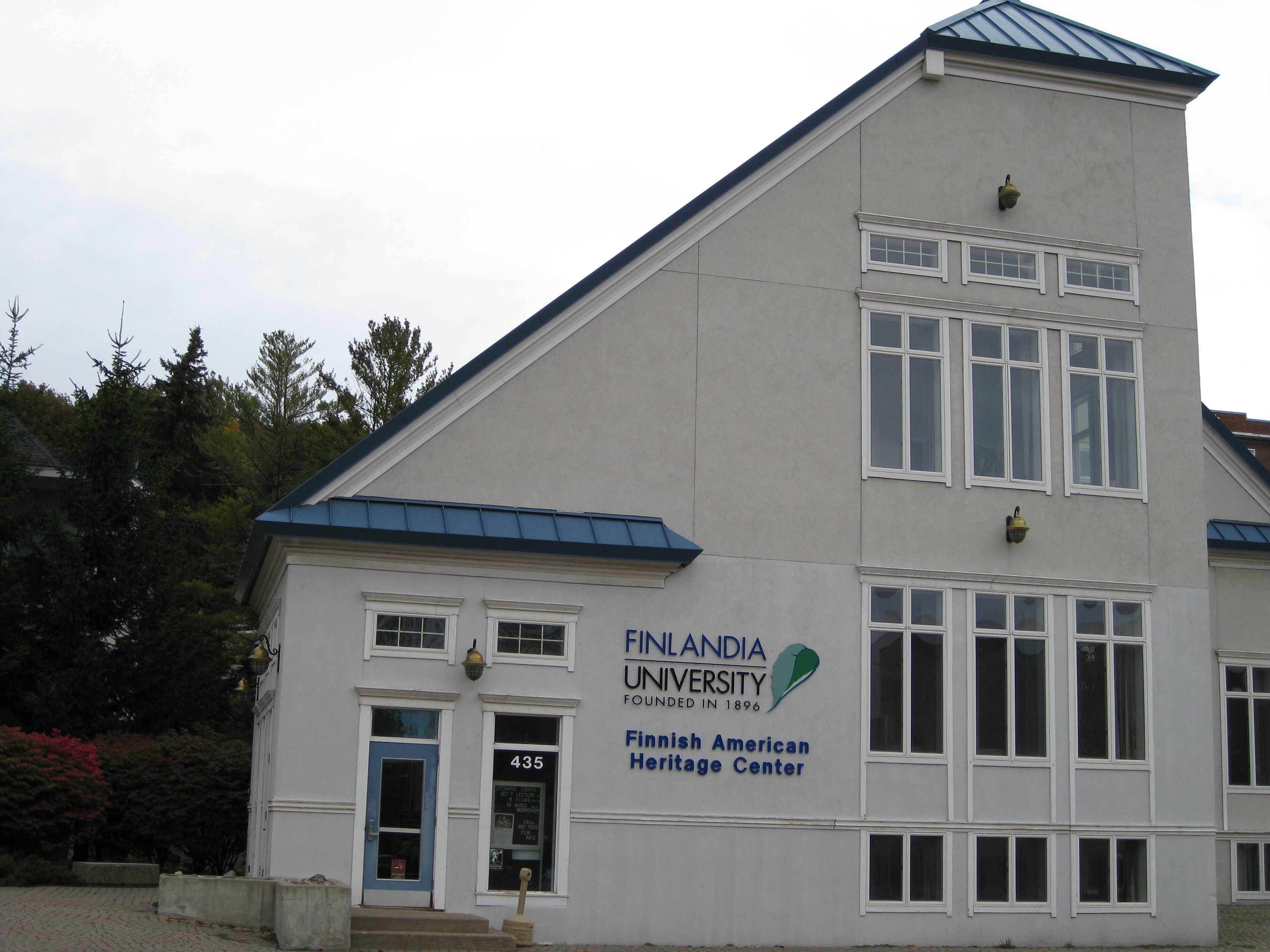
In March 2023, Finlandia University in Hancock, Michigan announced that it would stop enrolling students. It closed that May and went into receivership. It had been founded in 1896 as Suomi College, by Finnish immigrants, and it was the only Finnish-founded university in the United States.
The closure was covered as a small higher-education story. What it very nearly was is a heritage catastrophe.
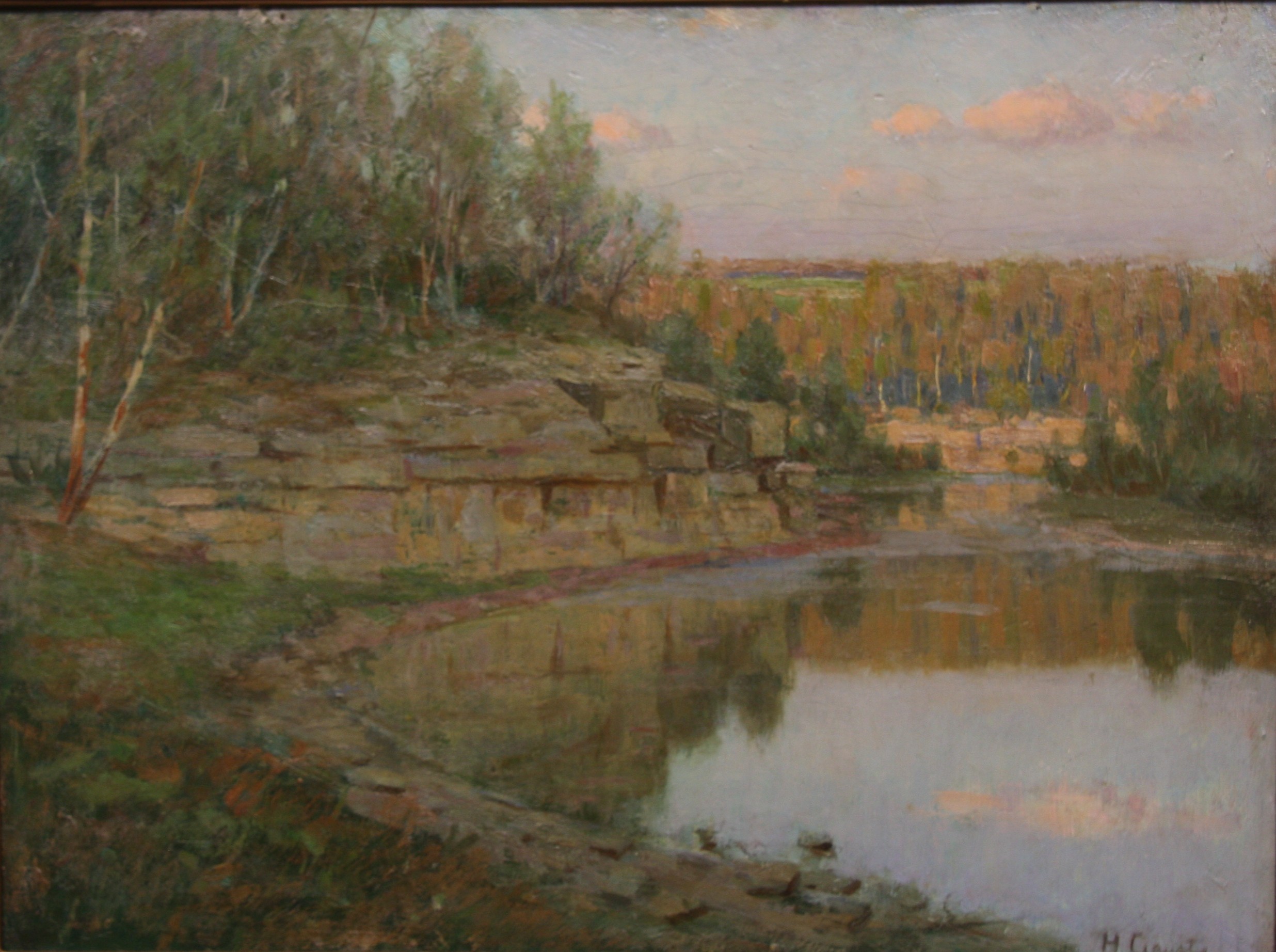
Because the university held the Finnish American Historical Archive — begun in 1932 under Dr Armas Holmio, and now roughly forty thousand items in climate-controlled storage. It is described by the institution as the largest collection of Finnish-North American material anywhere, and the largest collection of Finnish-American artwork in North America. Among its holdings are original works by Akseli Gallen-Kallela and two Bibles printed in 1642 at the commission of Queen Christina of Sweden — the first complete printing of the Bible in Finnish.
When a university enters receivership, its assets are assets.
What happened next is the reason this article exists. Finlandia Foundation National, a separate nonprofit based in California, formally accepted stewardship of the cultural holdings in June 2023, and in early January 2024 completed the purchase of the buildings at 435 and 437 Quincy Street together with the archives, the artwork, the artefacts and the folk school. Six staff positions were preserved. The money came from a campaign called Saving Finland in America, which raised more than $5.5 million from over nine hundred donors.
The Finnish American Heritage Center is open today, weekdays, free of charge.
It is open because roughly nine hundred people wrote cheques inside about eighteen months.
The directory
What follows is a working list of the institutions that hold Nordic and Baltic material in the United States and Canada. Every entry was checked against the institution's own current information in September 2026.
One practical warning before the list. A significant number of these places are volunteer-run, appointment-only, seasonal, or open three or four days a week. Telephone or email before you travel. This is not boilerplate; it is the single most useful sentence in the article.
Nordic — United States
National Nordic Museum — Seattle, Washington (Ballard). Founded 1979 as the Nordic Heritage Museum, renamed on moving into a purpose-built home in 2018, and designated the National Nordic Museum by Congress in 2019. The only museum in the United States covering all five Nordic countries. Holds the Walter Johnson Memorial Library and the Gordon Ekvall Tracie music collection.
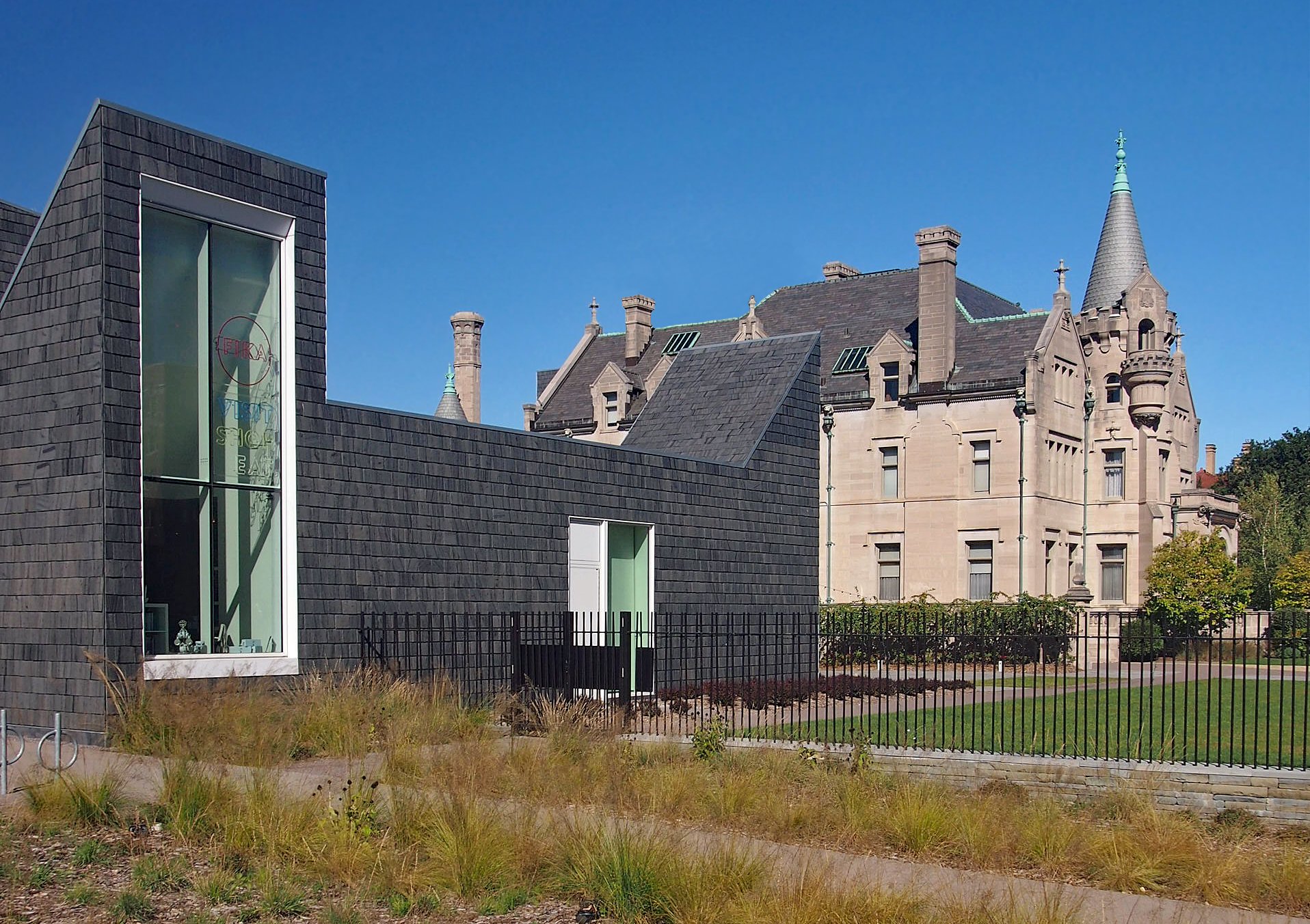
American Swedish Institute — Minneapolis, Minnesota. Founded 1929, housed in the Turnblad Mansion, built between 1903 and 1910 by a Swedish-language newspaper publisher. Museum, cultural centre, café and shop. Opening days are limited and there is an annual winter closure of the mansion and galleries; check before visiting.
American Swedish Historical Museum — Philadelphia, Pennsylvania. Collections covering New Sweden and Swedish-American life; holdings include Queen Christina's official seal, material on John Ericsson, and Anders Zorn etchings. Open Tuesday to Sunday.
Vesterheim, the National Norwegian-American Museum and Folk Art School — Decorah, Iowa. Roughly 33,000 artefacts, the largest Norwegian-American collection in the country, with roots going back to collecting at Luther College in 1877. Includes a twelve-building heritage park and a working folk art school teaching rosemaling, woodworking, weaving and knifemaking. Seasonal hours.
Museum of Danish America — Elk Horn, Iowa. The national Danish-American museum, with a genealogy and education centre, a digital library, the historic Bedstemor's House (by appointment) and a prairie landscape park designed in the spirit of Jens Jensen. A new prairie interpretive space opened in August 2026.
Finnish American Heritage Center — Hancock, Michigan. Described above. Weekdays, free; archive research by appointment with the archivist. Also home to the Finnish American Folk School, the Finlandia Art Gallery, North Wind Books and The Finnish American Reporter.
Norwegian-American Historical Association — Northfield, Minnesota, on the St. Olaf College campus. Founded 1925. An archive and scholarly publisher rather than a museum, holding more than 1,700 collections. Appointments strongly encouraged.
Swedish American Museum — Chicago, Illinois (Andersonville). Includes the Brunk Children's Museum of Immigration, genealogy services and Swedish language classes. Closed Mondays.
Danish American Archive and Library — Blair, Nebraska. Holds the archives of Dana College, the Danish-American college that closed in 2010, along with Danish-language newspapers and church records. Weekdays.
Norwegian American Genealogical Center & Naeseth Library — Madison, Wisconsin. A specialist genealogical library of more than 10,000 titles. Open weekdays and second Saturdays.
Scandinavian Cultural Center — Pacific Lutheran University, Tacoma, Washington. Galleries and programming; Sundays year-round plus limited weekday hours in term.
Nordic Northwest / Nordia House — Portland, Oregon. Cultural centre, open daily, including the Fogelbo historic log home.
Scandinavian Heritage Association — Minot, North Dakota. Operates Scandinavian Heritage Park, with a Gol stave church replica and a twenty-five-foot Dala horse.
Nordic — Canada
New Iceland Heritage Museum — Gimli, Manitoba. The museum of New Iceland, the Icelandic settlement on Lake Winnipeg. Two sites, daily in summer and reduced hours the rest of the year.
Icelandic Collection, University of Manitoba — Winnipeg. More than 34,000 items in the Icelandic Reading Room at the Elizabeth Dafoe Library, including rare books from the sixteenth century onward and vellum manuscripts of the sagas. Access by appointment with the Icelandic librarian.
Scandinavian Community Centre — Burnaby, British Columbia. Not a museum but worth knowing: a community centre with a library, run jointly by five Scandinavian societies — Danish, Finnish, Norwegian, Swedish and Icelandic — which it says makes it the only such centre collectively operated by all five.
Baltic — United States and Canada
VEMU Estonian Museum Canada — Toronto, Ontario, at 310 Bloor Street West. Founded 2009, built on the Tartu Institute's Dr. Endel Aruja Archive, itself begun in 1971. Archive, library and gallery. Holdings run to more than 10,000 book titles, 56 newspaper and 275 magazine titles, over sixty organised document archives, some 21,000 catalogued and digitised photographs — with an estimated 150,000 more not yet processed — and around 550 artworks, including Konrad Mägi's Landscape of Saaremaa.
Estonian Archives in the United States — Lakewood, New Jersey. Founded in June 1969 and run by volunteers; more than 350 registered collections and around 35,000 files. From 2003 a substantial part of the holdings was transferred to the Immigration History Research Center at the University of Minnesota, with the remainder staying in Lakewood. Access by arrangement — email first.
Balzekas Museum of Lithuanian Culture — Chicago, Illinois. Museum, library and archive, open six days a week, free to Illinois residents on the first Friday of each month. The museum has announced a downtown satellite space on North Michigan Avenue; confirm before making a trip for it.
Lithuanian Museum-Archives of Canada — Mississauga, Ontario, in the Anapilis complex. Rare books, documents, artwork and artefacts; it describes itself as the only museum-archives in Canada dedicated to Lithuanian-Canadian history. Staffed Tuesdays and Wednesdays.
Lithuanian Research and Studies Center — Chicago, Illinois, at the Chicago Lithuanian Center. Founded 1981; a scholarly archive and publisher.
The Latvian Museum — Rockville, Maryland, in the Washington DC area. Run by the American Latvian Association and operating since 1979, recently renovated. By appointment only, arranged by email.
Latvian Canadian Cultural Centre — Toronto, Ontario. Founded 1977; a cultural centre rather than a museum, holding a library established in 1981 of roughly 17,000 sets of books, recordings and periodicals along with archival material.
Latvian Center Gařezers — Three Rivers, Michigan. Founded 1965. Not a museum: 169 acres and more than a hundred buildings running summer camps, a Latvian high school programme and year-round community events. Its ownership structure is the interesting part — it is held collectively by 143 shareholder organisations, mostly Latvian-American churches and associations.
What happens when they fail
The directory above is a snapshot, and snapshots of this sector do not stay accurate.
Three cases from the last three years are worth setting side by side, because they are the three available outcomes.
Rescue. Finlandia University closed and an outside foundation bought the heritage function, kept the staff, and reopened the doors. This required a specific thing to exist: a well-organised national foundation with fundraising reach, willing to take on buildings. Most communities do not have one.
Handover. In May 2023 the Lithuanian Jesuits transferred ownership of the Lithuanian Youth Center in Chicago's Gage Park to a lay community body, which now operates it as the Chicago Lithuanian Center. It houses the Lithuanian Research Center's library, a Lithuanian school, an art gallery and a hall of fame. A religious order that could no longer sustain a building passed it to the community rather than to a developer. That is a good outcome and it is not the common one.
Closure. In January 2026 the board of the Norsk Høstfest Association announced that the Minot festival — billed as North America's largest Scandinavian festival, run for forty-seven years — would not continue. The 2025 event was the last. The board's stated reasons were rising operational costs against attendance that had not recovered to pre-pandemic levels. The Scandinavian Heritage Association, a separate Minot organisation, publicly reaffirmed its own mission at the end of that month and continues to run the heritage park.
A festival is not an archive, and its ending is not the same order of loss. But it is the clearest available signal about the thing underneath all of this, which is audience.
What this list is actually for
There is a version of a directory like this that functions as a nostalgia exercise — a list of nice places to visit if you are in the area.
That is not the intent.
Every institution above exists because at some point a group of immigrants with limited money decided that the material record of where they came from was worth paying to store. They bought buildings. They hired archivists. They catalogued photographs of people nobody outside the community would ever ask about.
They were right, and the proof is that these collections are now the primary sources. When a scholar writes about Finnish labour organising on the Iron Range, or Estonian displaced persons in Ontario, or Latvian schooling in exile, the evidence is in Hancock and Toronto and Lakewood, because it is nowhere else. Nobody else kept it.
What that infrastructure requires now is not sentiment. It is memberships, small recurring donations, board members under sixty, and — more than anything — people walking through the door often enough that the door stays open.
The Finnish case is the encouraging one, and it should be read carefully rather than warmly. The archive survived because a foundation existed that was capable of buying two buildings at short notice, and because nine hundred people responded quickly to an emergency. It was close. The community got about eighteen months' notice and the money arrived in time.
Most of these institutions do not have a Finlandia Foundation standing behind them.
If your family's material is in one of these buildings — and for a very large number of readers of this publication, it is — the useful response to this article is not to feel something. It is to join one.
Sources and verification note
Every entry was checked in September 2026 against the institution's own published information. Opening hours change frequently in this sector and are given here only in general terms; confirm directly before travelling.
On Finlandia: Finlandia Foundation National's account of the transfer of cultural assets; the Finnish American Heritage Center and Finnish American Historical Archive; contemporaneous reporting in Upper Michigan's Source, January 2024, on the purchase of the Quincy Street properties; and the announcement of the Saving Finland in America campaign total, July 2024.
On Norsk Høstfest: the Norsk Høstfest Association's own announcement and Minot Daily News reporting, January 2026.
On the Chicago Lithuanian Center: the Center's own account of the 2023 transfer, and Draugas News.
Corrections and additions are welcome. If we have an institution's status wrong, or missed one, please write to us.

)%20(1).avif)