Danish-Americans Bought a Piece of Denmark to Celebrate America. This July, the Americans Were Left Off the Programme.
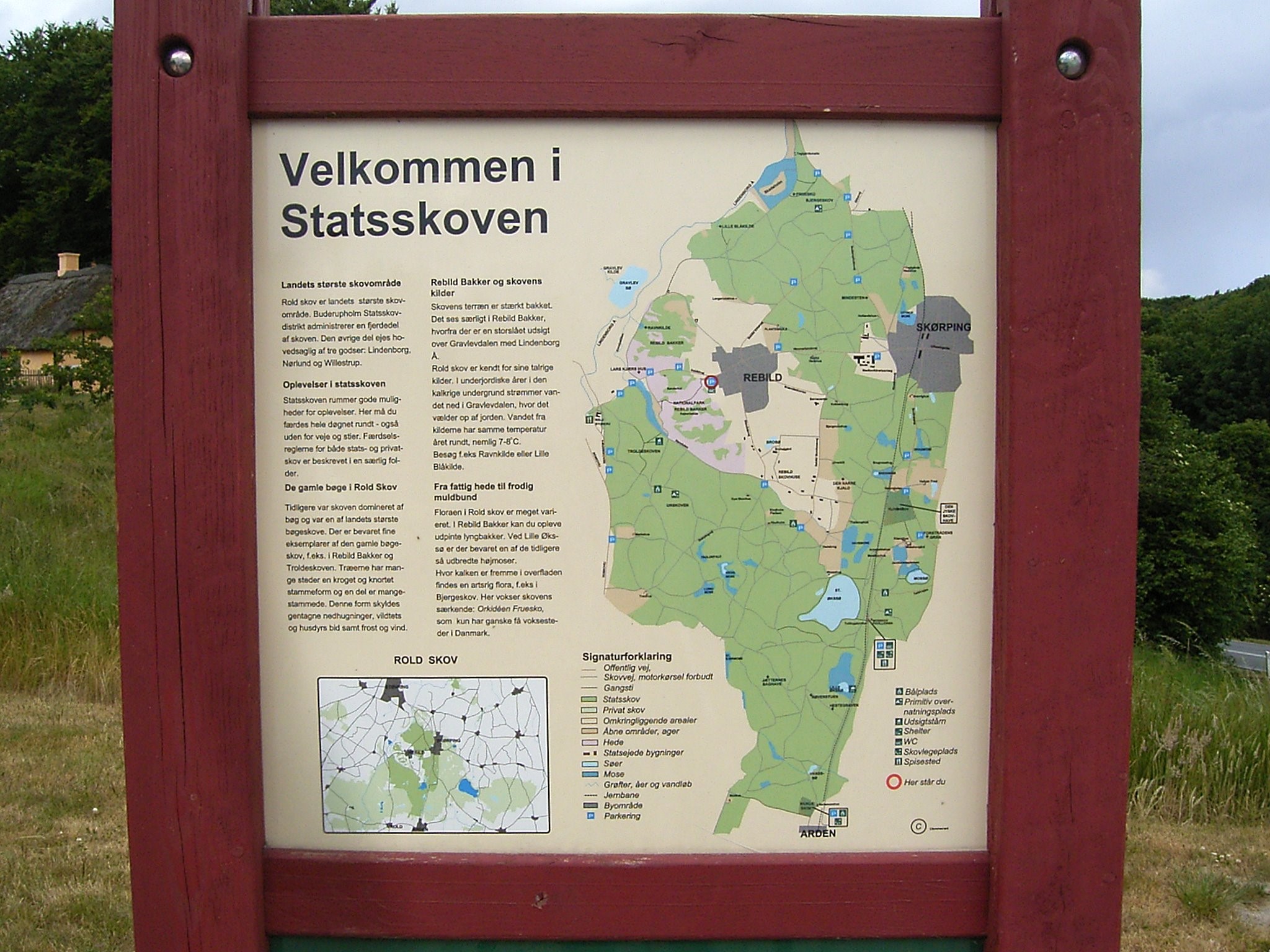
In 1911, a group of Danish-Americans raised the money to buy roughly two hundred acres of heather-covered hills in the Rold Forest in Jutland. They gave the land to the Danish state, on one condition: that Danish-Americans be allowed to celebrate American holidays on it, in perpetuity.
The first Rebild festival was held on 5 August 1912 — postponed from the Fourth of July because the King had died. Ten to fifteen thousand people came, about a thousand of them emigrants who had sailed back for it.
Walt Disney spoke there in 1961. Richard Nixon in 1962, alongside King Frederik IX. Walter Cronkite in 1967. Ronald Reagan in 1972. Queen Margrethe II in 1976. Attendance peaked at around 50,000 in 1948. It is billed, and has never seriously been contested, as the largest Fourth of July celebration anywhere outside the United States.
This year, for the first time in its history, no American officials appeared on the programme.
Organisers expected fewer than a thousand people.
In brief
- Local politicians issued an ultimatum: drop the US officials or lose logistical support and roughly $50,000 in public funding.
- The reason was Greenland. One councillor called the American president “an imperialistic mad man.”
- About 1.2 million Americans claim Danish descent — against roughly 4.0 million Norwegian and 3.4 million Swedish.
- The window to reclaim Danish citizenship closed on 30 June 2026. Nobody has published how many Danish-Americans used it.
- The Danish Cultural Institute has offices in Estonia, Latvia and Lithuania — and none anywhere in North America.
What happened this July
In the spring, local politicians — including a Rebild municipal councillor, Lasse Olsen, and the mayor of Aalborg, Lasse Frimand Jensen — told the organisers that American officials could not be on the programme. The alternative was withdrawal of municipal support and roughly $50,000 in public money. The decision involved consultation up to and including the prime minister's office.
Olsen's reasoning was not diplomatic. He called Donald Trump “an imperialistic mad man” and said the presence of US officials would “disturb and distort” the festival. Some politicians wanted the whole thing paused.
The Rebild National Park Society — which calls itself the first Danish-American friendship association, and which still runs chapters across the United States — was left holding a tradition it had no way to defend.
Bruce Bro, a board member, explained the calculation in nine words: “You don't want people throwing a drink on the ambassador.”
And then: “It's very sad. We want to keep this tradition alive. And we blame Trump.”
The society's president, Jørgen Bech Madsen, held the line as best he could, insisting the event is about “connecting people, not governments.”
Fifty thousand people in 1948. Fewer than a thousand this year. The institution Danish-Americans built as a gift of friendship was broken by the friendship's collapse — and it was broken from the Danish end.
The diaspora nobody counts
This publication has covered Estonia, Finland, Sweden, Norway, Iceland, Latvia, Lithuania, the Faroes, Åland and Greenland. It has never, until now, run a piece about Denmark. That is an editorial failure, and it is also a fairly good illustration of the problem.
The Danes are the Nordic group that assimilated fastest and organised least. The numbers bear it out.
Danish ancestry reporting in the United States peaked at 1,634,648 in the 1990 census and now runs at roughly 1.2 million — a fall of about a quarter over a period when the US population grew by around forty per cent. Norwegian ancestry is about 4.0 million; Swedish about 3.4 million. In Canada the 2021 census recorded 196,945 Danish responses against 466,500 Norwegian and 334,510 Swedish — and 101,990 Icelandic, from a country of 380,000 people.
Why? The standard answer is that Danish emigration was smaller, later, more urban and more individual — not the village-chain migration that moved whole Norwegian valleys to whole Minnesota counties. Roughly 300,000 to 450,000 Danes came, peaking at 11,618 in 1882.
But the historian Kristian Hvidt found the mechanism, and it is a single ratio. Of every 1,000 Danish emigrants over fifteen, only 367 were women.
Danish men married out. That is assimilation, in one number.
There is one striking exception. The most Danish state in America is not Iowa or Minnesota — it is Utah, at 4.18% of the population, and the reason is Mormon missionaries rather than homesteading. Danes were second only to Britons among nineteenth-century LDS convert emigrants. In 1870, 24% of the people in Sanpete County had been born in Denmark.
When Copenhagen had to explain Denmark to Solvang
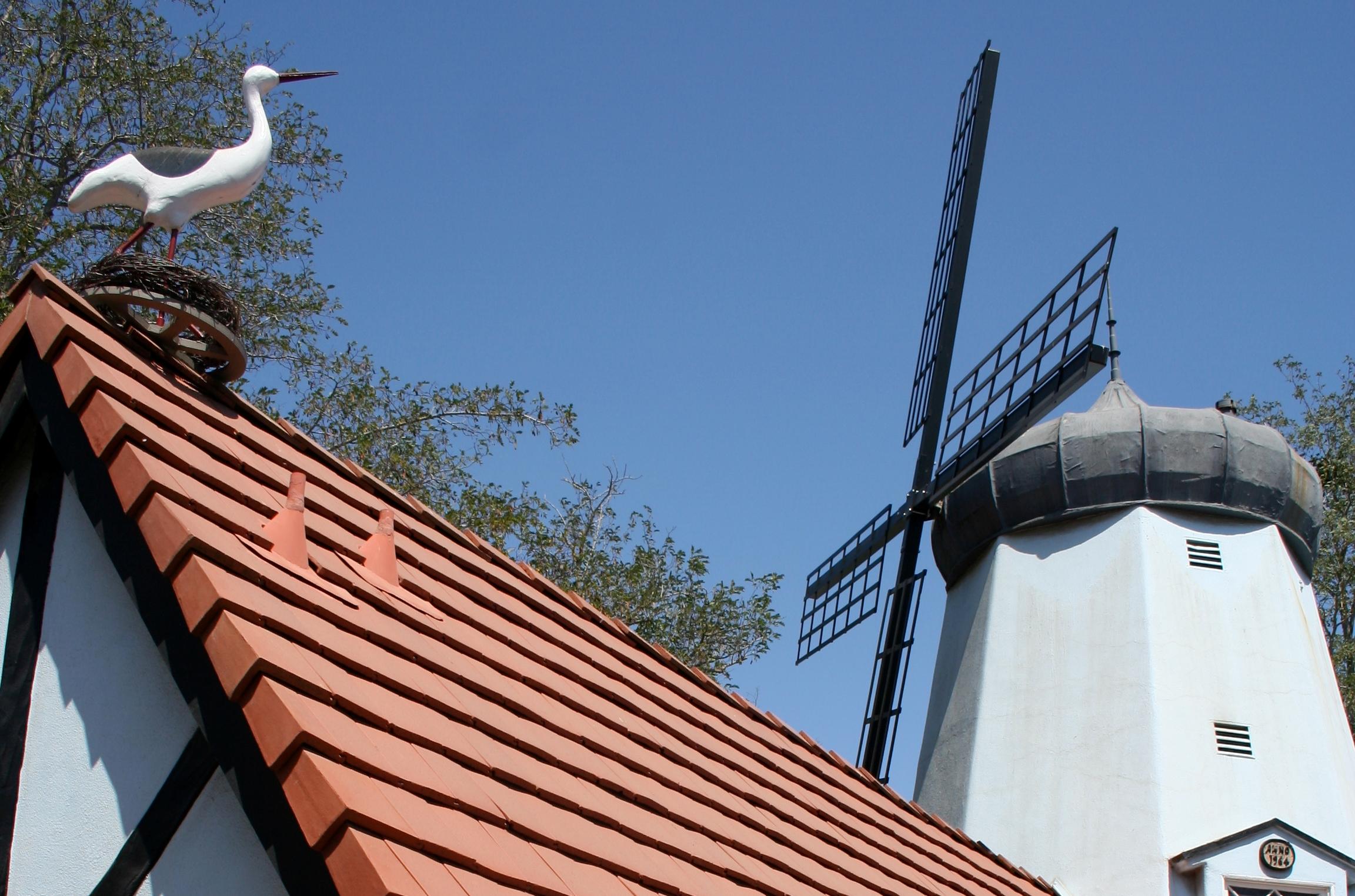
Solvang was founded in 1911 by Danish-American educators out of the folk high school movement. Five million people visit a year. It is, by its own description, the Danish capital of America.
Its Danishness is largely a post-war costume. The half-timbering and thatch went up after a 1947 Saturday Evening Post article christened the place “Little Denmark”; a number of genuinely old buildings were demolished after the city incorporated in 1985. Bethania Lutheran Church, founded there in January 1912, now holds exactly one Danish-language service a year, on Little Christmas Eve.
In March 2023 Solvang's city council voted 3–2 against flying Pride banners downtown, and the opposition was publicly justified by reference to “Danish values and traditions.”
On 18 April 2023 the Lord Mayor of Copenhagen, Sophie Hæstorp Andersen, wrote to Solvang's mayor. Her letter said the city's status as the Danish capital of America was “something that you rightly cherish,” and then, politely, that the vote “does not reflect the genuine warmth and acceptance to Pride that can be seen across Denmark.” She said afterwards it had felt “incredibly important to kindly make aware that these are not values we can answer for in Copenhagen.”
In early May the proposal came back and passed 3–2, the mayor having changed his vote. Among the concerns aired in the debate was whether rainbow crosswalks might frighten horses.
Solvang invented its Danishness roughly a generation after it stopped speaking Danish — and then used the invention to argue with Denmark.
What is still standing, and on what
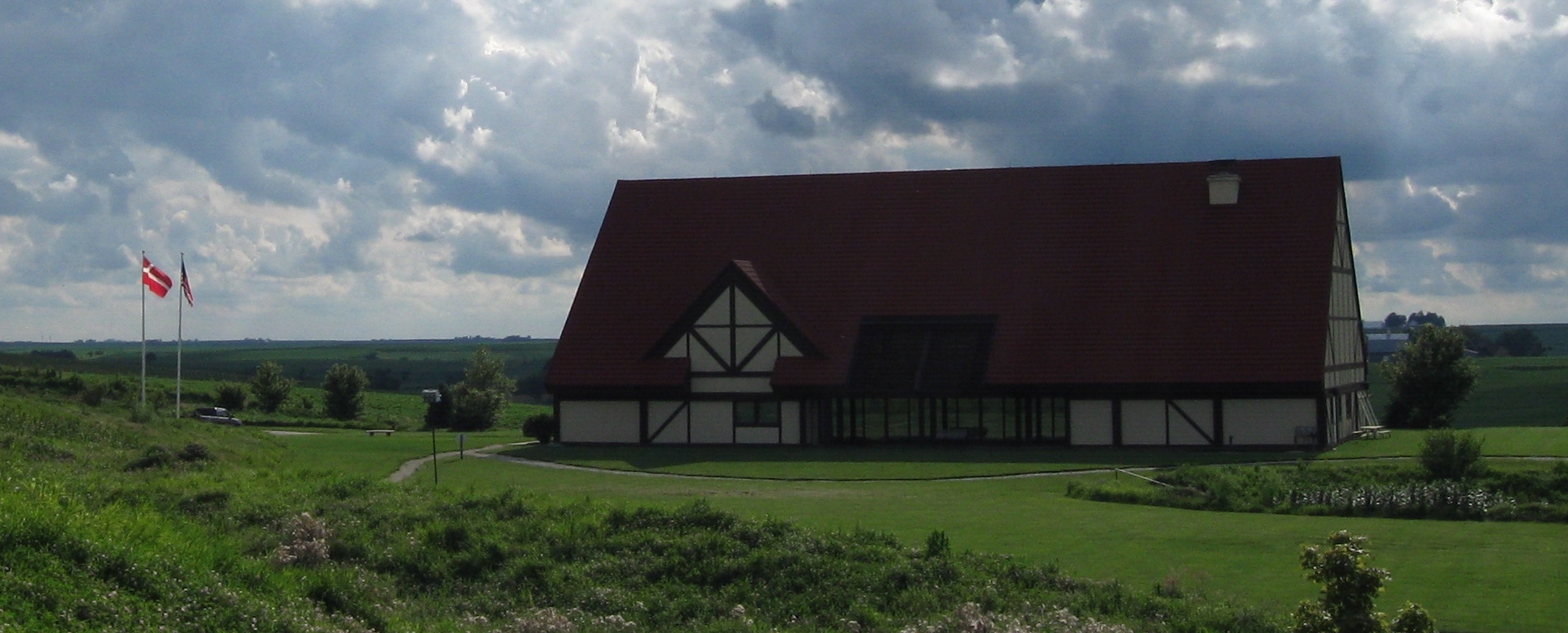
Elk Horn, Iowa has the Museum of Danish America: accredited, 35,000 objects, a $6.9 million endowment, a genealogy centre. It has also had three executive directors in recent years, was still under an interim director in January, reports that almost half its staff joined in the past year, opens the Genealogy Center by appointment on most Fridays only, and has currently suspended staff-completed research requests.
Down the road in Blair, Nebraska is the Danish American Archive and Library — the repository that took in the collections of Dana College when the Danish Lutheran college closed in 2010 after a failed sale. Its FY2025 filings show expenses of $168,000, total assets of $1.1 million, and one compensated employee, at $60,840.
The national archive of Danish America is one person.
The Danish Brotherhood in America, which had 21,000 members and 283 lodges in the mid-1920s and chartered some 350 lodges in all, sold its insurance business in August 1995. Its Kenosha lodge, chartered 1884, now notes on its own website that it is “the sixth oldest lodge in the Brotherhood since several of the lodges chartered earlier are no longer in existence.” There are around six left.
In Canada, New Denmark, New Brunswick — the country's oldest Danish settlement, founded 19 June 1872 — still marks Founders Day with æbleskiver and pølse. All its local schools have closed. Alberta has the Danish Canadian National Museum at Dickson, fourteen acres and 5,000 artefacts, open by donation from mid-May to August.
The deadline almost nobody reported
Until 2015, a Dane who naturalised elsewhere automatically lost Danish citizenship. Denmark allowed dual citizenship from 1 September 2015, and opened a transitional window letting former citizens reclaim what they had lost, by simple declaration.
That window ran from 1 July 2021 to 30 June 2026.
It closed eleven weeks ago. After it, the only route back is ordinary naturalisation, with residence requirements that exclude essentially every Danish-American. Danes Worldwide, the membership body founded in 1919, now states on its own site that the arrangement has expired and that it is “continuing our political work” to have reinstatement reintroduced.
We could not find a published figure for how many Danish-Americans used either window. Not from the ministry, not from the embassy, not from Danes Worldwide. As far as we can establish, nobody has counted.
Offices in Tallinn, Riga and Vilnius. None here.
The Danish Cultural Institute operates in Denmark, China, Brazil, Estonia, Latvia, Lithuania and Turkey, works in partnership across the Caucasus and Eastern Europe, and has further presence in India, Kenya and Mongolia — more than eighteen countries and over a hundred cultural projects a year.
Not one of them is in the United States or Canada.
For a publication that has written about all three Baltic states this month: Denmark's cultural institute is physically present in every one of them, and absent from a continent containing 1.2 million people who say they are Danish.
What Denmark does have in North America is commercial and diplomatic — an embassy in Washington, one in Ottawa, consulates general in New York, Chicago, Houston and Toronto, innovation centres in Palo Alto and Boston, 38 honorary consulates, six chambers of commerce. It signposts the diaspora. It does not fund it.
The most sustained Danish state presence in Danish America at the moment is Prince Joachim, who has been the embassy's defence industry attaché in Washington since September 2023, and Princess Marie, who cut the ribbon on a new wing at the Danish Home of Chicago in September 2025. The residents Esther Sorensen and Karen Frink presented her with flowers.
That is the diaspora policy.
Why this is happening now
None of it can be read apart from Greenland.
Denmark has committed over 88 billion kroner to Arctic defence. Its own Defence Intelligence Service has listed the United States as a national security threat for the first time in its history. In January there were protests in Copenhagen City Hall Square. In February, King Frederik X went to Nuuk in a deliberate show of unity; in two and a half years on the throne he has visited Greenland twice and the United States never. Prime Minister Mette Frederiksen, re-elected in March and heading a four-party minority coalition since June, said yesterday that she hopes for a peaceful way forward with Washington on the Arctic.
Against that, a friendship festival in a Jutland forest is a small casualty. But it is a precise one.
Rebild was not a state project. It was bought by emigrants, with emigrants' money, and given away on the condition that they could keep being both things at once — Danish and American, on the same afternoon, in the same field. That arrangement held for a hundred and fourteen years, through two world wars and a pandemic.
It did not hold through this.
If you know how many Danish-Americans reclaimed their citizenship before 30 June, we would like to hear from you. So, we suspect, would Danes Worldwide.


)%20(1).avif)