Simon Stålenhag Paints Swedish Fields With Machines in Them. Hollywood Keeps Moving Them to America.
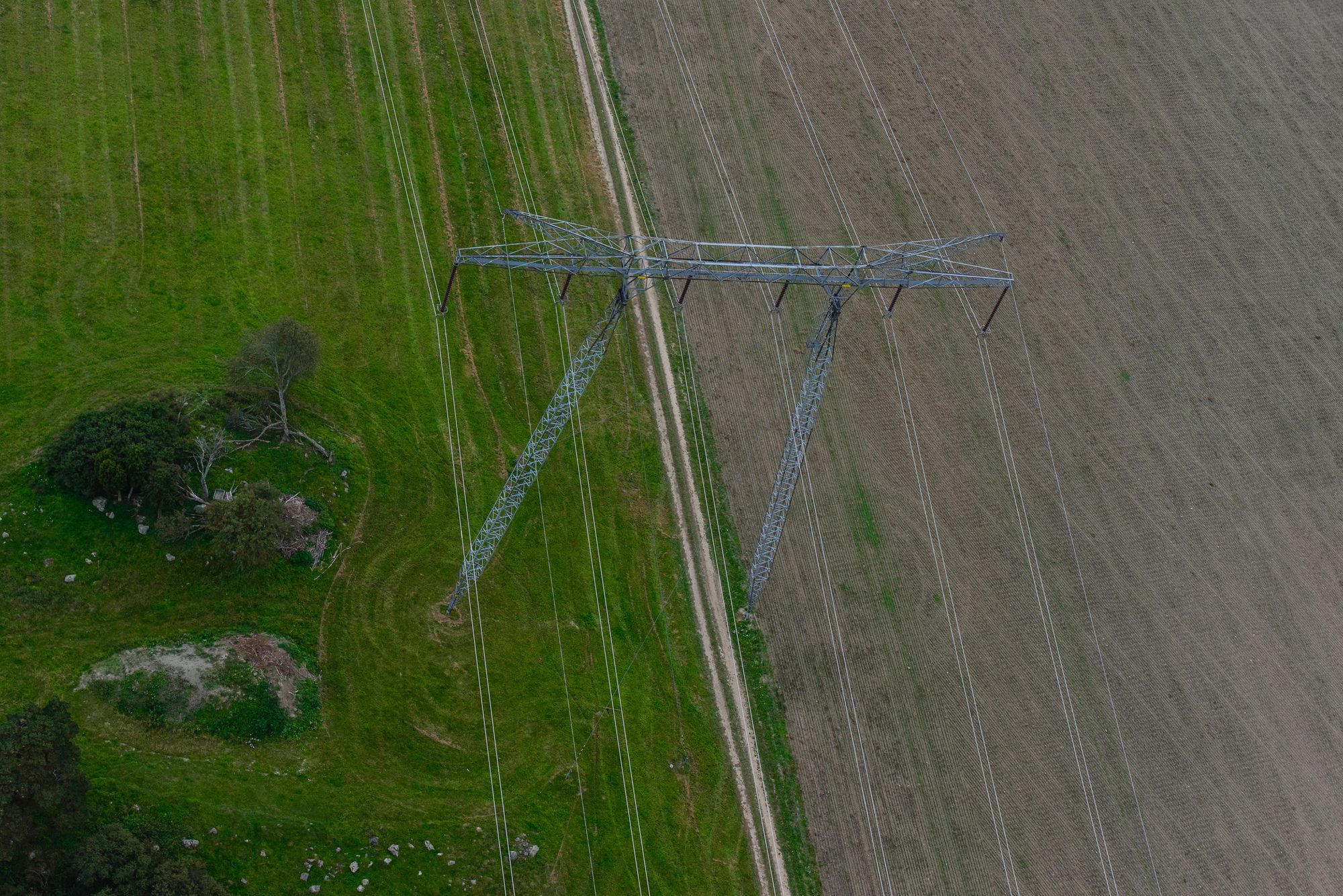
Drive west out of Stockholm, over the bridges onto the Mälaren islands, and the landscape does something peculiar. The city stops. The land goes flat and open. There are fields, a line of pines, a red house with white corners, and strung above all of it on steel pylons, a power line marching off toward somewhere you cannot see.
Simon Stålenhag was born there on January 20, 1984, and he has been painting that view ever since. The only thing he adds is a machine.
If you have watched Tales from the Loop — the eight-episode Amazon series from 2020 that a lot of people started, stopped, and then could not stop thinking about — you have seen his work translated into television. What you may not have realized is how far it traveled to get there, and what survived the trip.
The boy who drew the field he was standing in
Stålenhag is Swedish, lives and works in Sweden, and the American half of this story belongs to the people who bought his books, not to him. He started out copying the local landscape. His first real influence was Lars Jonsson, the Swedish wildlife illustrator whose birds and shorelines are studied with an almost forensic patience. Later he found Ralph McQuarrie and Syd Mead, the concept artists behind Star Wars and Blade Runner, and the science fiction crept in sideways. For a while he treated it as a side project he had not planned on.
The method is worth knowing, because it explains why the pictures feel the way they do. He works on a Wacom tablet, chasing the look of oil paint — he tried physical media first, including gouache, and still puts, in his words, "a lot of effort into making the digital brushes behave naturally." And almost every piece begins as a photograph he took himself. The field is a real field. The bus stop is a real bus stop. The robot is the only lie in the frame.
He has also, along the way, painted 28 dinosaurs for the Swedish Museum of Natural History after writing to them about a rekindled childhood obsession, produced images of a rising Baltic for Stockholm University's Resilience Centre in 2016, made promotional art for No Man's Sky, recorded an ambient album called Music for DOS on vintage keyboards and tracker software, and written an eight-bit score for an episode of Community. It is a strange résumé. It is also, if you think about it, exactly the résumé of the person who would paint these pictures.
Asked in 2013 to describe how his imagined world differs from the real one, he gave an answer that is the whole thesis in a sentence: since the early twentieth century, that society has simply favored science and technology more — in its attitudes, and in its budgets.
That is not a dystopia. It is a policy decision, painted.
Five books, and a particle accelerator under the islands
Ur Varselklotet arrived in 2014 and was published in English as Tales from the Loop. Its premise is a supermassive particle accelerator — the Loop — buried beneath the countryside, and a childhood lived on top of it. Flodskörden followed in 2016 as Things from the Flood. Then The Electric State, crowdfunded and published in Britain by Simon & Schuster in September 2018 and in North America by Skybound that October, about a teenage girl crossing the fictional state of Pacifica with a robot, looking for her brother. The Labyrinth came through Image Comics in North America in November 2021. In August 2024, Free League Publishing launched a Kickstarter for a new one, Swedish Machines.
The books are not graphic novels and they are not art books. They are something in between that barely has a name: a painting, then a paragraph, then another painting, with the story living in the gap. The Electric State was one of six finalists for the 2019 Arthur C. Clarke Award — a prize for novels — and was shortlisted in the Locus Awards' art book category the same year, which tells you how hard the form is to file. In 2021 Tales from the Loop won Germany's Kurd Laßwitz Award.
There is also a tabletop role-playing game, funded on Kickstarter in 2016 and published by Free League, in which you play teenagers in the 1980s — in Sweden or in the United States, your choice — dealing with whatever the Loop has let out this week. Critics reached for Stranger Things. They were not entirely wrong and not at all right.
Here is the artist on his own work, from his publisher's archive:
Mercer, Ohio
When Amazon adapted Tales from the Loop, it moved the Loop four thousand miles. The series is set in the invented town of Mercer, Ohio, under which sits the Mercer Center for Experimental Physics. All eight episodes dropped on April 3, 2020 — which is to say, into the first month of the pandemic, when a slow show about isolated people in a small town landed differently than anyone had planned.
Nathaniel Halpern created, wrote and ran it. He has been candid about why he took it. "It's very hard to have an original aesthetic, especially in the science fiction genre," he told Variety. "And then the idea of adapting paintings into a TV series seemed so wonderfully unique I just leapt at the opportunity." What he found in the paintings was tonal: "There's something about the marriage between the ordinary and the extraordinary."
The production took that seriously. Mark Romanek directed the pilot; the rest went to a startling bench — Andrew Stanton, Jodie Foster, Ti West, So Yong Kim, Dearbhla Walsh, Tim Mielants, Charlie McDowell. Philip Glass and Paul Leonard-Morgan wrote the score. Cinematographer Jeff Cronenweth shot the night scenes at dusk, chasing the particular blue in which Stålenhag's machines tend to sit. Rebecca Hall and Jonathan Pryce anchored a cast that rotates, episode to episode, because — Halpern again — "when too many extraordinary things happen to an ordinary person, they're no longer ordinary."
Critics mostly took to it: 87 percent on Rotten Tomatoes across 68 reviews, 68 on Metacritic. The Verge said it was "so pretty it breaks your heart." Polygon's reviewer admitted to feeling "uneasy and confused," which, having watched it, reads less like a complaint than a description. It picked up Emmy nominations for visual effects and cinematography.
Why the move worked
Transplanting a national mood usually kills it. This one survived, and it is worth asking why.
Part of the answer is in Halpern's reading list. He has said he drew on Sherwood Anderson's Winesburg, Ohio, the 1919 story cycle about people in a small town who cannot quite say what they mean to each other. Swap the accelerator for a thwarted telegraph operator and the emotional architecture is identical: short pieces, rotating narrators, a place that holds everyone slightly apart. Stålenhag's books are built the same way. The adaptation did not translate the Swedish melancholy into American. It found the American version already sitting on a shelf.
The other part of the answer is the land itself. Open fields, long light, isolated farms, pylons running to the horizon, winters that shut everything down — a reader in Minnesota or Michigan's Upper Peninsula or northwestern Ontario does not need the resemblance explained. The Scandinavians and Finns who settled that country in the nineteenth century were, among other things, people who recognized the ground. Whatever the mix of motives in any individual case, the result is a stretch of North America that looks uncannily like the one Stålenhag paints. A Swedish field with a machine in it does not have to be rewritten for Ohio. It only has to be reshot.

Which is the quiet argument this publication keeps running into: the Nordic and the North American are not two subjects but one, separated by an ocean and about four generations.
And then the other adaptation
In March 2025, Netflix released The Electric State, directed by Anthony and Joe Russo from a screenplay by Christopher Markus and Stephen McFeely, with Millie Bobby Brown and Chris Pratt, and a reported budget of $320 million — among the most expensive films ever made.
It did not go well. Fourteen percent on Rotten Tomatoes from 158 reviews. Thirty on Metacritic. The New York Times called it "obvious, garish and just plain dumb." In March 2026 it collected Razzie nominations for worst picture, worst director and worst screenplay.
The honest footnote is that enormous numbers of people watched it anyway — number one on Netflix for two weeks running, 25.2 million views and then 22.5 million, and 74.2 million views across the first half of 2025. A flop in every sense except the one Netflix measures.
What went wrong is instructive, and Anthony Russo said it out loud: the world was underdeveloped in the book, and stretching it to two hours was hard. So they built a new story on top of it — 1990s styling, animatronics acquiring consciousness, a robot civil-rights plot.
Set that beside what Halpern did. Stålenhag never explains his machines. He does not tell you what the spheres are for, who built the gantries, why the thing in the field is lying on its side. The 2020 series kept that discipline and made eight hours out of restraint. The 2025 film treated the ambiguity as a gap in the source material and filled it in. One adaptation understood that the unexplained object was the point. The other hired writers to explain it.
What the paintings are actually about
It is easy to file Stålenhag under nostalgia, and the marketing has not fought the label. But nostalgia is not what the pictures do. A nostalgic image invites you back in. These keep you outside, at the edge of the field, looking at something enormous that nobody is looking at.
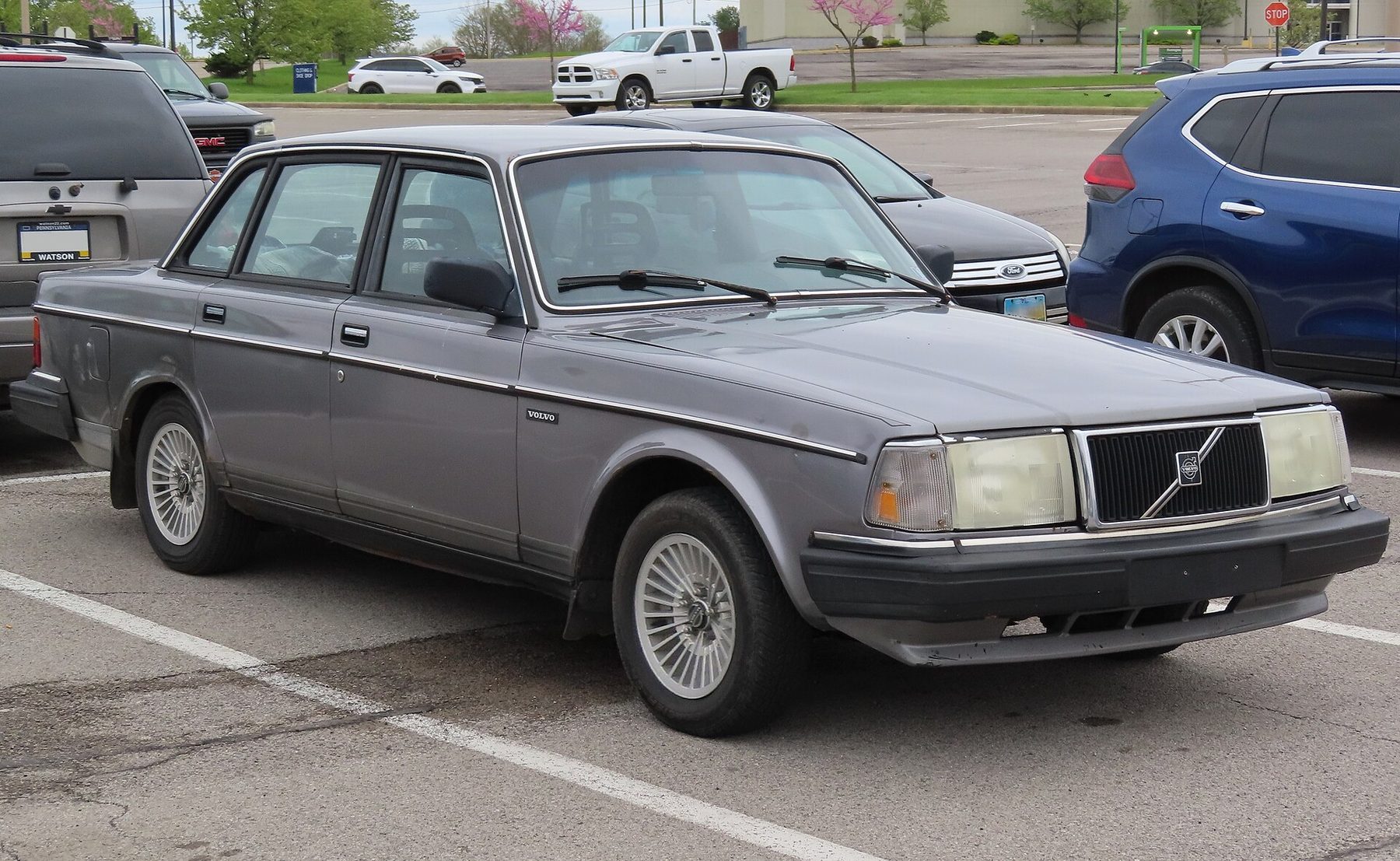
The recurring objects are not spaceships. They are infrastructure: pylons, cooling towers, service doors in hillsides, cables, concrete. The recurring car is a Volvo 240, the most ordinary object in late-twentieth-century Sweden, parked beside something that should be impossible and is being ignored. That is the actual subject — not the future, but the way a society stops noticing the enormous machinery it has decided to build, and the children who grow up treating it as scenery.
Anyone who grew up near a paper mill, a grain elevator, an ore dock or a decommissioned missile site in the American Midwest knows exactly how that feels. So does anyone who grew up in a Swedish municipality with a reactor down the road.
Where to start
The paintings are the primary text and they are not reproduced here; they belong to the artist, and they are best seen at the size he intended, at simonstalenhag.se or in the books, which are objects worth owning.
Start with Tales from the Loop — the book first, then the series, in that order, so the television has something to be haunted by. Take the eight episodes slowly; they are not built to binge. Then read The Electric State and skip the film, or watch the film first so that the book can show you what was there all along.
And if you have ever driven a county road at dusk past a transformer station and felt, for no reason you could name, that something was about to happen — that is the whole body of work. He just paints the thing that was about to happen.
Lead photograph: "Overhead power line at Ekerö" by Arild Vågen, via Wikimedia Commons, used under CC BY-SA 4.0. Video is embedded from the official Prime Video, Netflix and Free League Publishing channels. Simon Stålenhag's paintings are reproduced here by link only; all rights remain with the artist.

)%20(1).avif)