Sweden Just Reversed Its 2022 Election. Exactly.
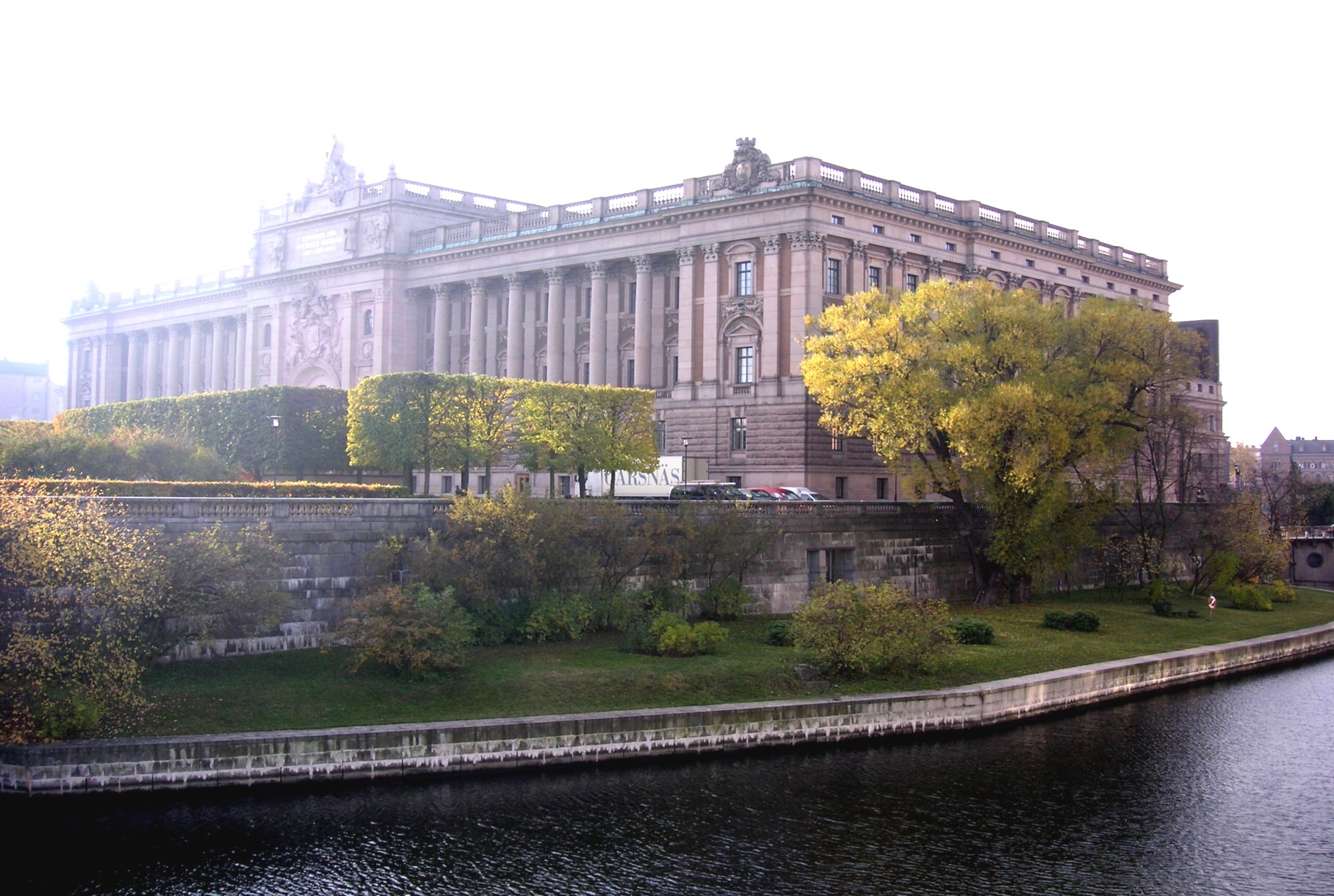
In 2022, Sweden's right-wing bloc won 176 seats to the left's 173, and Ulf Kristersson became prime minister with the Sweden Democrats supporting him from outside the cabinet.
On Sunday, Swedes voted again.
On the preliminary count, the left bloc has 176 seats. The right has 173.
The same three-seat margin. The other way round.
One caution before anything else, and it matters: these figures are not final. Roughly 300,000 late and overseas ballots are counted on Wednesday, the margin has already moved once during counting, and the Election Authority does not expect to finalise the Riksdag result until around the weekend. A single seat would make it 175–174. Everything below should be read with that in mind.
In brief
- The Sweden Democrats fell for the first time ever — from 20.5% to about 17.5%, losing 11 seats, and losing ground in 285 of Sweden's 290 municipalities.
- The Liberals were polling 1.9% two weeks ago. They finished on 5.4% and gained three seats — and in doing so may have cost their own bloc the election.
- Ulf Kristersson has not conceded or resigned. Under Swedish rules he does not have to, and could in theory stay.
- Turnout fell to about 80%, from 84.21% in 2022 — a second consecutive decline.
- 370,271 Swedes abroad were on the electoral roll, a record. Their votes are counted on Wednesday.
- The new Riksdag convenes 28 September. A prime minister cannot be voted on before 29 September.
The result
Preliminary, at roughly 95% counted. Vote share, change on 2022, and seats:
- Socialdemokraterna 28.1% (−2.2) — 100 seats (−7)
- Moderaterna 19.9% (+0.8) — 70 seats (+2)
- Sverigedemokraterna ~17.5% (−3.0) — 62 seats (−11)
- Vänsterpartiet 8.3% (+1.6) — 29 seats (+5)
- Centerpartiet 7.1% (+0.4) — 25 seats (+1)
- Kristdemokraterna 6.2% (+0.9) — 22 seats (+3)
- Miljöpartiet 6.1% (+1.0) — 22 seats (+4)
- Liberalerna 5.4% (+0.8) — 19 seats (+3)
All eight incumbent parties cleared the 4% threshold. No party was eliminated and no new party entered.
Look at the direction of travel and something odd emerges: the Social Democrats lost seven seats and their bloc won anyway. Every other party in the left bloc gained. And on the right, three of the four parties gained — and the bloc still lost, because the fourth lost eleven.
The Sweden Democrats went backwards. That has never happened.
This is the result nobody forecast.
Since entering the Riksdag in 2010, the Sweden Democrats had advanced at every single election. In 2022 they took 20.5% and became the second-largest party in the country. Going into this campaign they were, for the first time, openly seeking cabinet seats rather than influence from outside — and most international coverage was written around the question of whether the European far right was about to take its next capital.
Instead they lost about three points and eleven seats, fell back to third behind the Moderates, and went backwards in 285 of Sweden's 290 municipalities.
The political scientist Andreas Johansson Heinö called it “a surprisingly large setback.” His colleague Anders Sannerstedt offered the explanation that will be argued over for months: that many voters had backed the party simply because they liked its position on asylum, without endorsing the rest of it — and that when asylum numbers fell, so did the vote.
The party's Tobias Andersson called it “clearly a disappointment.” Jimmie Åkesson has said almost nothing, beyond that his party held a “very constructive strategy meeting” and would wait for the final count.
The question the world was asking — will the Sweden Democrats get ministries? — is, for now, moot.
The party that came back from 1.9%
Two weeks before the vote, the Liberals looked finished. They had polled as low as 1.9% during the campaign and had not cleared 4% in a published poll since the Kristersson government was formed in October 2022. Then a Novus poll on 9 September put them at 5.8% — their best figure in four years.
They finished on 5.4% and gained three seats. When SVT's live blog registered the moment they crossed the threshold, the entry read simply: Herrejävlar.
And here is the part that decided the election. Analysts quoted by The Local described the Liberal surge as internal cannibalism — votes taken from the Moderates, the Sweden Democrats and the Christian Democrats rather than from the left. The Liberals saved themselves and took the seats out of their own bloc's pocket to do it.
Why the loser might not have to leave
North American readers reasonably expect a concession speech. There has not been one, and there may not need to be.
Sweden uses negative parliamentarism. A candidate for prime minister is confirmed unless 175 or more of the 349 members vote against. Abstentions help the candidate. A government can be installed without ever commanding positive majority support — and, by the same logic, can survive if its opponents will not unite against it.
Kristersson's position on election night was to wait: “When we have the final result, it's a good idea to look at possible combinations.” He has since argued for exploring a non-socialist majority, which in practice means detaching the Centre Party from the left bloc.
Magdalena Andersson has been careful in the other direction: “If this result holds, we will get a change of government.” Her party secretary was less careful, saying Kristersson should resign of his own accord because “if he doesn't resign he will be removed.”
The left's 176 is not a coalition. It is four parties that add up. The Left Party, up five seats and enjoying it, wants cabinet seats; its leader Nooshi Dadgostar declared “Adieu Tidö” on election night. The Centre Party has historically refused to govern alongside the Left Party at all. Centern is therefore the pivot in both directions, which is exactly why Kristersson is courting it.
The Christian Democrats' Ebba Busch insists the “blue-yellow team is the only government alternative.” The Liberals' Simona Mohamsson has told the Centre Party that “my arms are always open.”
The timetable
Wednesday 16 September — late advance votes and overseas votes counted. Possibly running into Thursday.
Around 19–20 September — the Riksdag result expected to be finalised.
Monday 28 September — the new Riksdag convenes and elects a Speaker.
Tuesday 29 September — the earliest a prime ministerial candidate can be put to a vote.
The Speaker may nominate up to four candidates. If all four are voted down, an extraordinary election is triggered automatically, to be held within three months. Outgoing Speaker Andreas Norlén's own assessment: “It could very well become a complicated government formation.”
For scale: in 2022 it took 33 days from election to installed government. In 2018 it took 134.
The diaspora votes on Wednesday
This is the part that matters most to readers here, and the timing is unusually pointed.
370,271 Swedish citizens abroad were on the electoral roll this year — a record, and 41,146 more than in 2022. Their ballots are among the roughly 300,000 still uncounted, and they are counted on Wednesday.
Here is the mechanism that makes that interesting. Overseas votes are not a separate constituency. Each one is sent to the municipality where the voter was last registered in Sweden and counted there. Scattered across 29 constituencies, they influence the national picture chiefly through the Riksdag's 39 adjustment seats, which are allocated nationally to correct proportionality.
Which is to say: in a parliament decided by three seats, tens of thousands of diaspora ballots arriving on Wednesday are precisely the kind of thing that can move one.
Historically, turnout among Swedes abroad runs at about 30% — well under half the domestic rate. We will not know this year's figure until the count is done.
The practical point we made before the vote stands, and is worth repeating for next time. You cannot vote from abroad on election day. Every North American window had closed by 4 September, nine days before Swedes at home went to the polls.
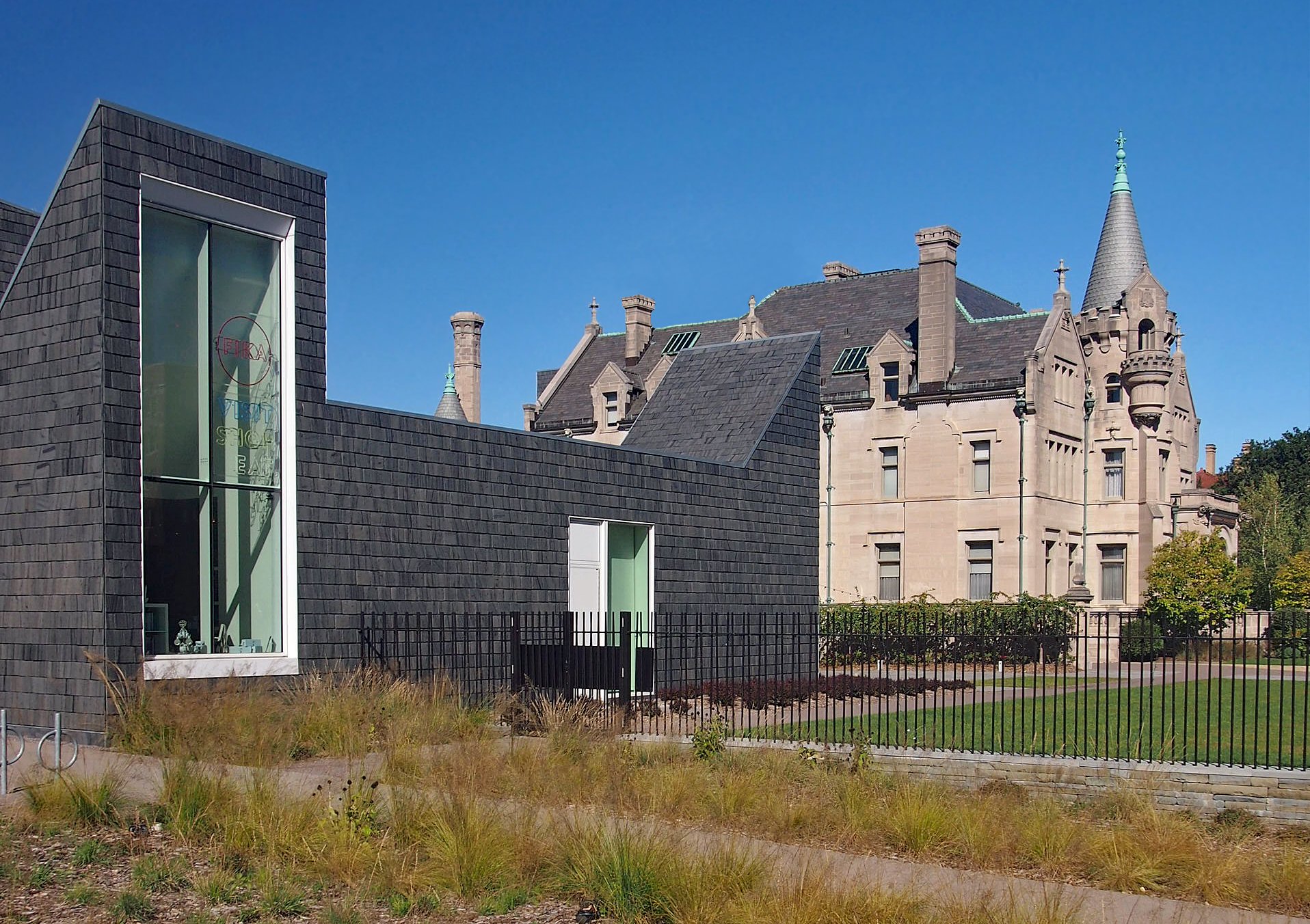
Voting ran at the embassy in Washington and consulates in New York, Chicago, San Francisco, Los Angeles and a dozen other cities from 20 August to 3 September; the embassy in Ottawa closed on 4 September, with Canadian consulates from Halifax to Vancouver taking votes alongside. The American Swedish Institute in Minneapolis, which holds the honorary consulate, was open for two days — 20 and 21 August. Two days, in the state with more Swedish-descended residents than any other.
What to watch
Three things, in order.
Wednesday's count. If the margin holds at 176–173 or widens, the arithmetic is settled and the argument becomes political. If it narrows to 175–174, everything gets harder.
The Centre Party. It is being courted from both sides and it has said no to one of them before. Whichever way it moves decides who governs.
Whether Kristersson resigns. If he goes before 28 September, the Speaker begins consultations immediately. If he stays, there is a vote on or after the 29th — and under negative parliamentarism, a prime minister whose bloc lost the election could in principle survive it.
We will report the final result when the Election Authority confirms it. All figures in this piece are preliminary.


)%20(1).avif)