The Manifesto Turns Twenty-Two. Its Most Famous Restaurant Has No Stars.
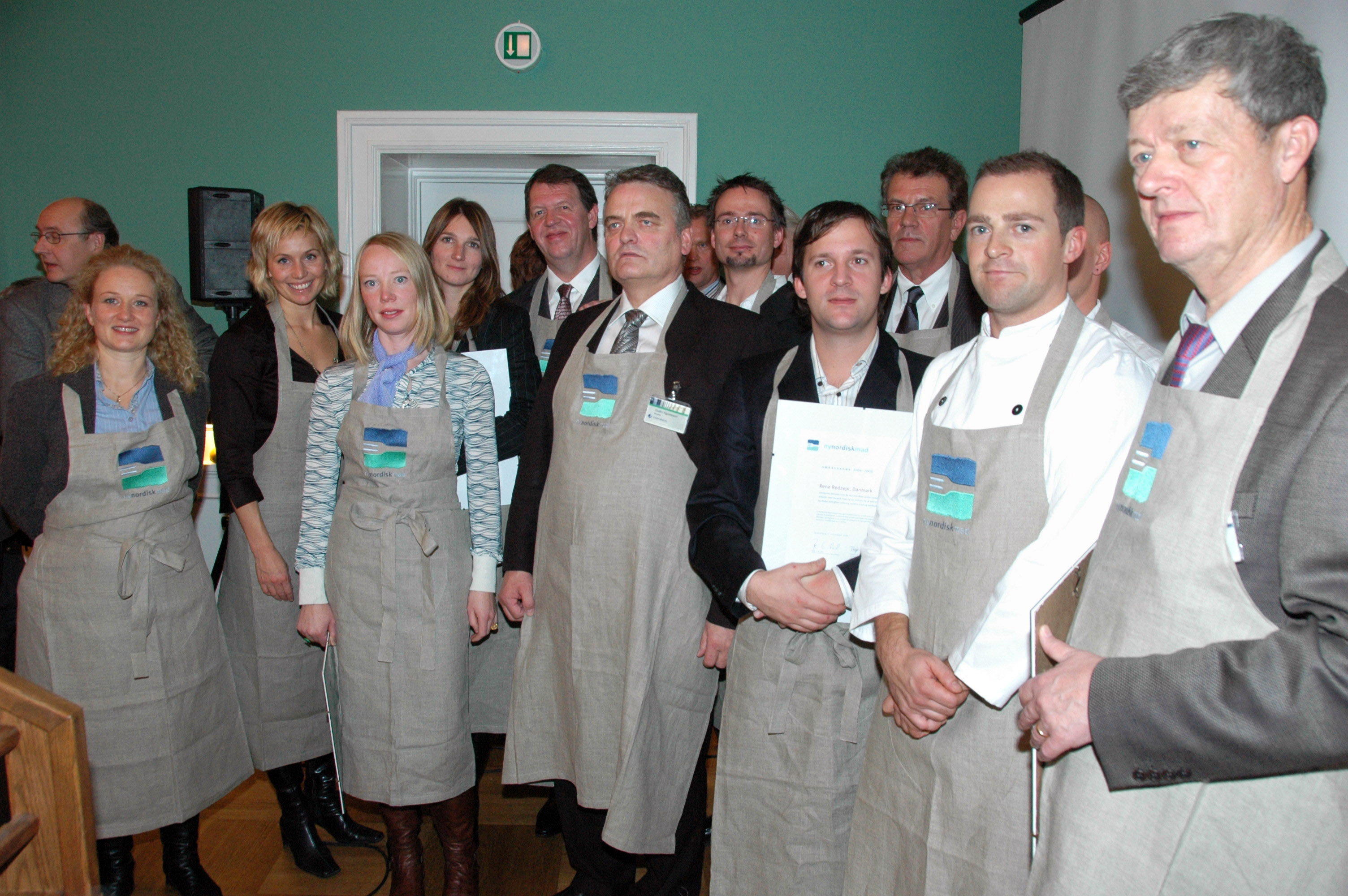
In November 2004, twelve chefs sat down at a symposium in Copenhagen convened with the Nordic Council of Ministers and signed a document of about three hundred words. It had ten clauses. It asked for purity, season, ethics, and an alignment between good taste and the health of the region that produced it. It did not mention foam, tweezers, or foraging, though it would be blamed for all three.
The New Nordic Kitchen Manifesto turns twenty-two this November, and the anniversary arrives at an awkward moment for the restaurant most closely identified with it.
Who actually signed it
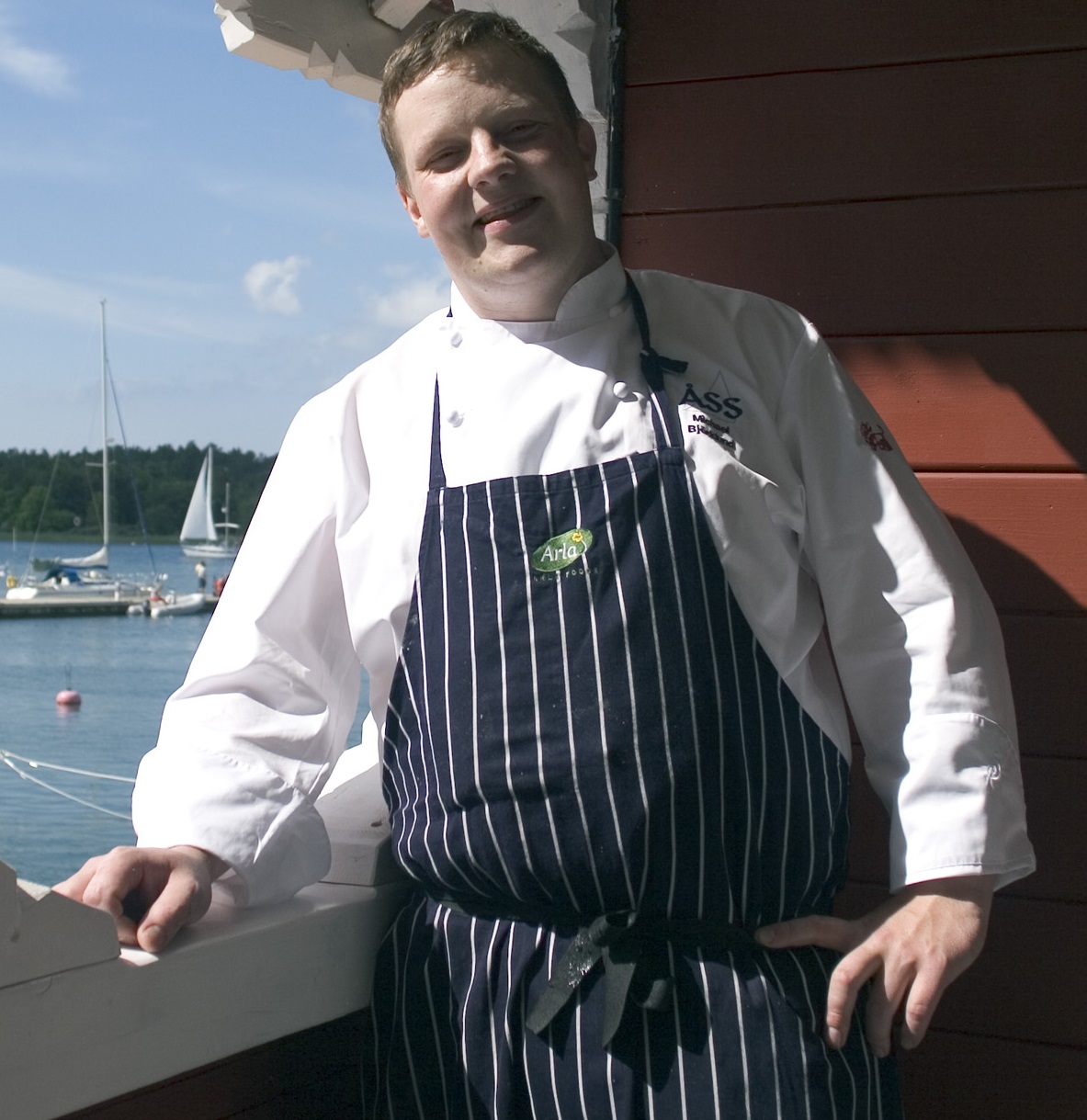
It is worth listing them, because the roll is routinely misremembered. Twelve chefs signed: Lauterbach, Redzepi, Hellstrøm, Malmin, Dahlgren, Välimäki, Björklund, Sigurdsson, Örvarsson, Fossdal, Sørensen and Collin — drawn from Denmark, Sweden, Norway, Finland, Iceland, the Faroe Islands and Åland. René Redzepi of Noma and Michael Björklund of Åland are the two who recur most often in the coverage since.
Claus Meyer, who is very often described as a signatory, was not one. He was something arguably more consequential: the co-founder of Noma, the driving force behind the symposium, and the person who understood earliest that a regional cuisine needed a document before it needed a following.
What happened to Noma
Noma opened in 2003, a year before the manifesto. It took the top place on the World's 50 Best Restaurants list in 2010, 2011, 2012, 2014 and 2021 — a run no other restaurant has matched.
On 9 January 2023 it announced that it would end traditional service. The announcement was reported around the world as a closure; it was not one. What Redzepi described was a conversion into a test kitchen, “Noma 3.0”, with the dining room opening only for periodic seasons and pop-ups. The transition was postponed in March 2024. A residency in Kyoto ran from October to December of that year.
Then, on 12 March 2026, Redzepi resigned as head chef. The resignation followed a New York Times investigation drawing on accounts from thirty-five former employees describing conditions between 2009 and 2017: verbal abuse, at least one physical assault, and the extensive use of unpaid interns. Sponsors withdrew from a planned Los Angeles pop-up.
On 5 August this year Noma reopened in Copenhagen. Redzepi is now creative director. Pablo Soto is executive head chef. The format is a monthly menu built around “twelve seasons” rather than the three that defined the old restaurant, and the tasting menu is priced at DKK 4,500.
It holds no Michelin stars. It has no placing on the World's 50 Best list. A restaurant that reopens is a new restaurant as far as both institutions are concerned, and both will take their time.
Copenhagen did not need Noma to keep its stars
This is the part of the story that gets lost when Noma dominates the frame. In the 2026 Michelin guide, Copenhagen holds thirty-one stars across twenty-one restaurants. Three of them — Geranium, Jordnær and Kadeau — hold three stars each.
Whatever one makes of Michelin as an arbiter, the concentration is remarkable for a city of roughly 650,000 people. And it is a direct inheritance: most of those kitchens are staffed and led by people who came up through the movement the manifesto announced. The document worked. The question of whether its most famous restaurant is currently starred turns out to be almost beside the point.
The Baltics arrived without a manifesto
Estonia was first. Michelin came to Tallinn on 25 May 2022. Today 180° by Matthias Diether holds two stars — promoted in March 2024 — and NOA Chef's Hall holds one.
Latvia followed in 2024, with Max Cekot Kitchen starred at the outset and JOHN Chef's Hall added in 2025. Lithuania's first Michelin selection was announced on 13 June 2024; the country now has five starred restaurants — Demo, Džiaugsmas, Nineteen18, Deep Roots and Red Brick.
That is nine starred restaurants and ten stars across the three countries, achieved in four years. Star counts move with each edition of the guide, so treat those figures as a snapshot rather than a fixed state.
It did not happen by accident, and it was not free. Michelin does not simply arrive; national tourism bodies negotiate and pay for inclusion. Lithuania's contribution has been reported at over €1.5 million. Whether that represents good value depends entirely on what one thinks a guide entry buys — an argument that has run in every country Michelin has expanded into, and that runs particularly hot in small markets where the sum is a visible line in a public budget.
What the Baltics did not do
There is no Baltic equivalent of the 2004 manifesto. There has been at least one proposal for one — from a Danish restaurateur, which tells you something about where the idea of a manifesto still lives — but nothing signed, nothing regional, nothing tied to an intergovernmental body the way the Nordic document was tied to the Nordic Council of Ministers.
The absence may be a missed opportunity. It may equally be the correct read of a changed market. The 2004 manifesto did work that no longer needs doing: it told an international audience that there was such a thing as a Nordic cuisine and that it was worth crossing an ocean for. Baltic kitchens arrived into a world that already accepted the premise. What they needed was inspection, not proclamation — and inspection is what they bought.
The cost of skipping the manifesto is that there is no shared statement of what Baltic cooking is for. Nordic chefs have a text to argue with. Their Baltic counterparts have a guide to be judged by. Those are not the same thing, and over twenty years the difference may show.
For readers here
The practical consequence in North America is that the New Nordic vocabulary — fermentation, foraging, aggressive seasonality, the elevation of the humble local ingredient — long ago stopped being Nordic. It is simply how ambitious restaurants in Portland and Toronto and Brooklyn now talk. That is what a successful manifesto looks like at twenty-two: invisible, absorbed, no longer requiring attribution.
Whether the Baltics get the same absorption without a document of their own is the interesting question of the next decade.

)%20(1).avif)