Valev Laube: What the Forest Knows That It Cannot Tell You
By Valev Laube | Essay · Northern Reflections
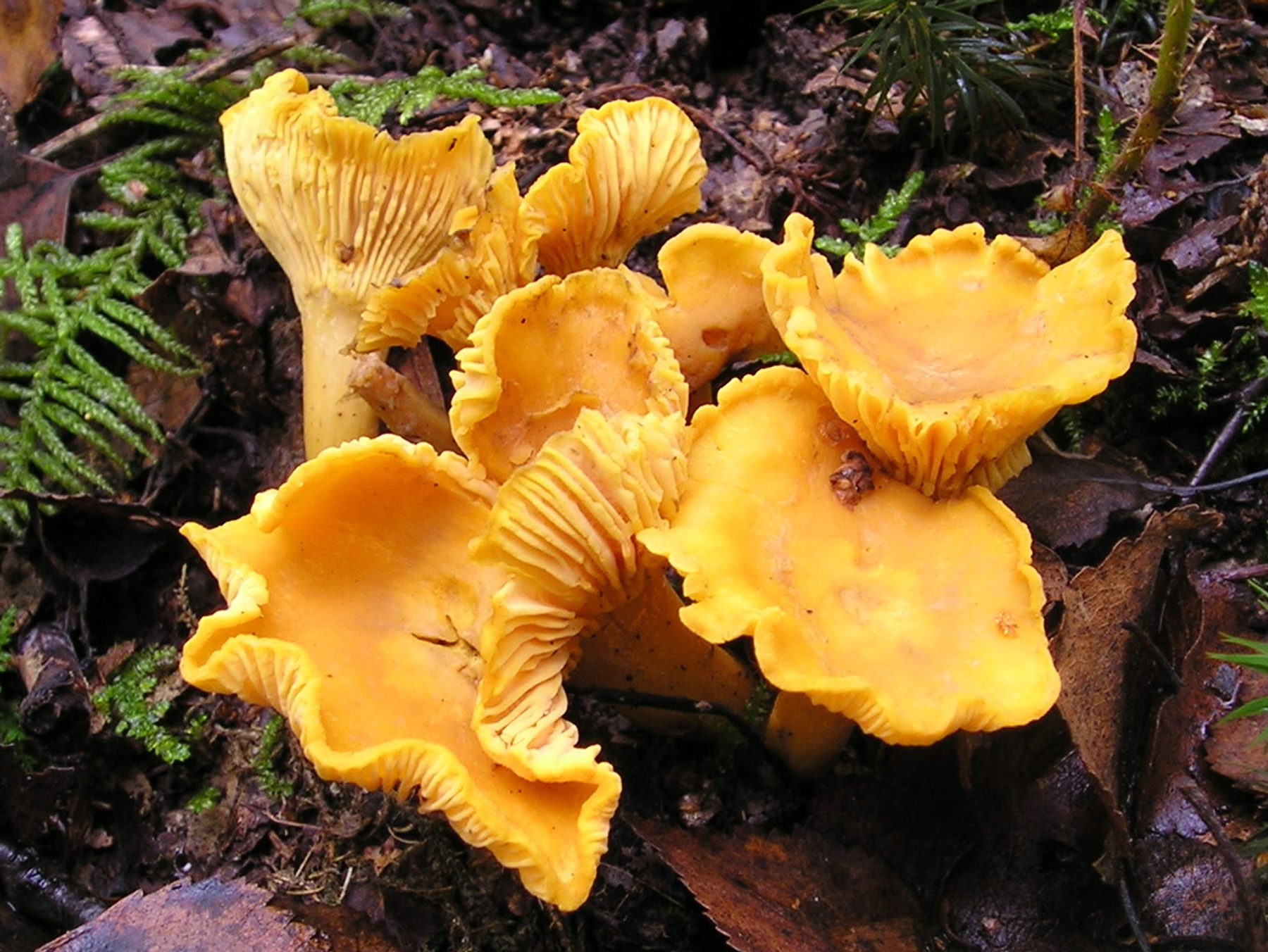
The mushrooms have started, which in Estonia is a piece of news rather than a fact about weather.
Late August is when the forests begin to be worth entering, and when a certain kind of person becomes unreachable on weekends. There is a well-observed etiquette around it. You do not ask where somebody picks. If you are told where somebody picks, you have been given something, and you do not pass it on. My grandmother's generation treated the location of a good chanterelle slope roughly the way other families treat the combination to a safe.
I went out last weekend with someone who has been doing this for fifty years, and I spent most of the afternoon being quietly humiliated.
Not because I picked anything dangerous. Because of the speed.
She would be walking, not obviously looking, in conversation about something unrelated, and then she would stop, take three steps off the path, move a fern with her boot, and there would be mushrooms. Repeatedly. All afternoon. I was scanning the ground with the intensity of a man defusing a bomb and finding perhaps one for her ten.
At one point I asked her how she does it.
She thought about it for a while — genuinely thought, she was not being coy — and said: “You just see it.”
I pushed. What is it? The soil? The trees? The light?
She said: “All of that. But you do not think about it. You just walk and then your eye stops.”
This is, I have come to believe, one of the more important sentences anyone has said to me in a while.
The Knowledge That Cannot Be Written Down
The philosopher Michael Polanyi gave this a name in 1966. He called it tacit knowledge, and summarised it in a phrase that has never been improved: we can know more than we can tell.
His standard example is the human face. You can recognise a person you know among a thousand strangers, instantly, with total confidence. You cannot describe how. You could not write a specification of that face detailed enough for a stranger to make the same identification. The knowledge is entirely real, entirely reliable, and almost entirely unavailable to you as words.
Mushroom foraging is nearly a pure case.
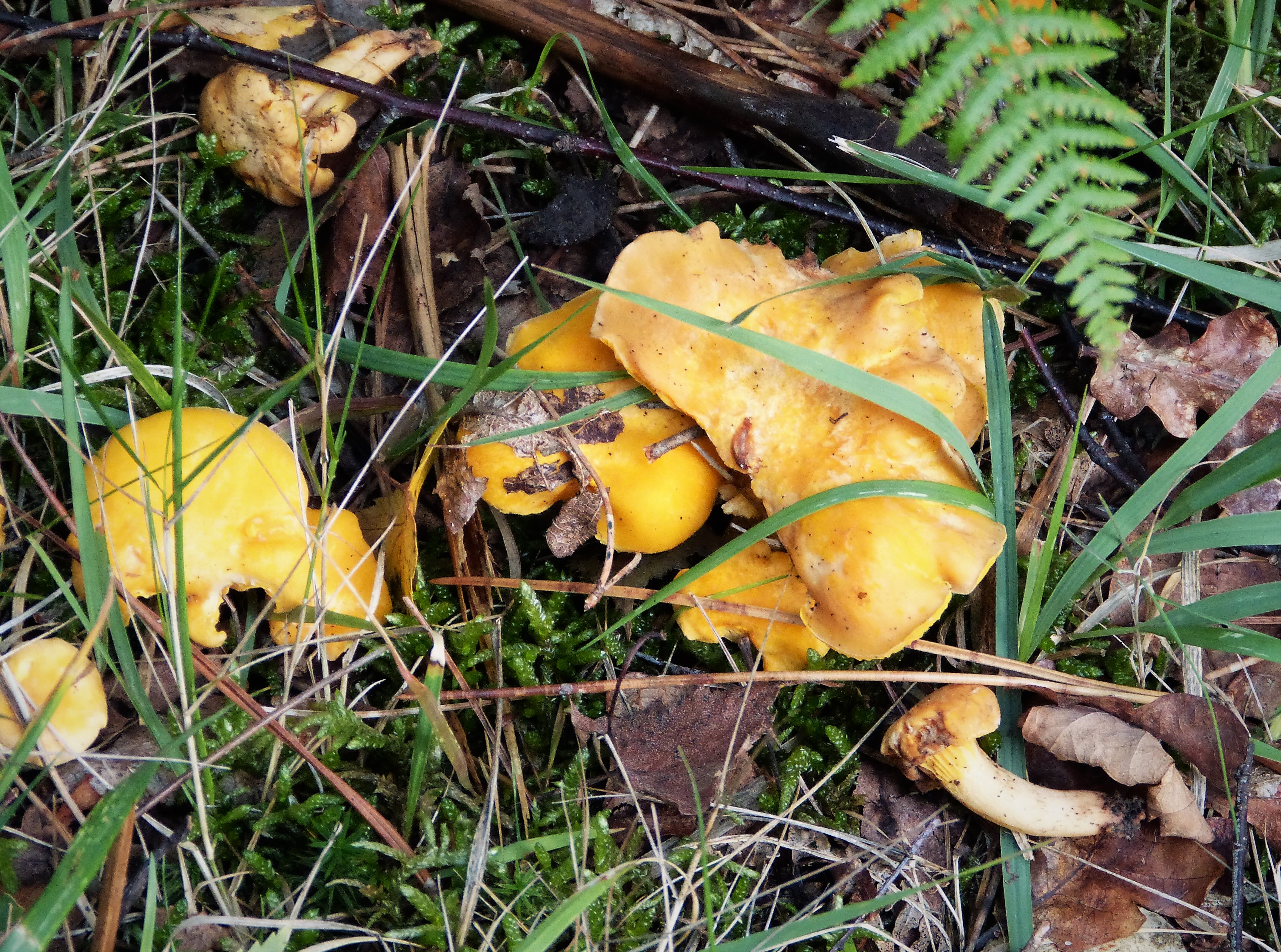
There are field guides, and they are useful, and I have several. But no field guide has ever taught anyone to find mushrooms — only, at best, to check them once found. The finding is a different faculty. It runs on the whole scene at once: the species of tree overhead, the age of the stand, the slope, the drainage, what the moss is doing, what the weather did nine days ago, and a set of small visual cues about how a partly hidden cap breaks up the pattern of leaf litter.
An experienced picker is not running through that list. The list is the reconstruction offered afterwards by someone who has been asked to explain. What actually happens is that the whole configuration is processed below the level of description and the result surfaces as an urge to look slightly left.
Mycologists have their own version. Ask one how they identified a specimen and you will often get a hedged, structured answer about spore print and gill attachment and stem base — and then, if you know them well, the admission that they knew what it was before any of that, from across the clearing, from the way it stood.
Field naturalists in English have a word for this. They call it the jizz of an organism: the overall gestalt by which experienced observers identify a bird or a plant at a distance and in poor conditions, faster and more reliably than by working through diagnostic features.
It is real expertise. It is developed only by enormous exposure. And it is close to untransmittable by language.
How It Is Actually Passed On
Which raises the practical question. If it cannot be told, how does anyone get it?
The answer, in the Estonian case and in every comparable tradition I know of, is embarrassingly low-technology: you walk in the forest, for years, with somebody who already has it.
_M%25C3%25A4nnikj%25C3%25A4rve_laudtee.jpeg)
Not being lectured. Walking. The transmission happens through a thousand small corrections and confirmations, most of them non-verbal. She stops; you look where she looked. You pick something; she glances at it and makes a face, or does not. You develop the pattern by being repeatedly exposed to the pattern in the company of someone whose responses are correct.
This is how a great deal of the most valuable knowledge in the world moves. Surgery works this way. So does cooking at a high level, playing an instrument, diagnosing a patient, judging whether a piece of writing is finished, telling whether someone is lying, and knowing when a negotiation has actually turned.
All of it is teachable. Almost none of it is tellable.
And it has an unusual transmission property: it requires the physical co-presence of the two people, over time, doing the actual thing. It cannot be scaled. It cannot be broadcast. It cannot be extracted from the expert and stored.
Which is a problem, because extraction and storage is very much the project of the current decade.
The Machine and the Forest
I should be upfront that I work in artificial intelligence. This is not a column written by someone standing outside the industry throwing rocks at it. I use these systems daily, I build with them, and I think they are among the most useful tools I have ever had.
But mushroom identification is the place where the limits are least deniable, because the failure mode is not embarrassment. It is a liver transplant.
Identification apps are now good enough to be dangerous. They will return an answer with a confident-looking percentage for a photograph of a species they have never reliably distinguished, and mycological societies in several countries have spent the last few years issuing increasingly exasperated warnings about people poisoning themselves after consulting one. The specific hazard is that the genuinely lethal species tend to have close, harmless-looking relatives, and that the distinguishing features are often not visible in a photograph — they are in the smell, the base of the stem below the soil line, the bruising response, the substrate.
The system gives an answer because it is built to give an answer. It has no way to represent the thought I would need to hold this.
The experienced picker has that thought constantly. The single most reliable marker of expertise in the forest is not speed of identification. It is the frequency and comfort with which somebody says “I do not know what that is” and puts it down.
That is the part that does not survive transfer into a system optimised to produce output.
What We Are Actually Losing
I want to be careful here, because there is a lazy version of this argument that I do not want to make. Technology is not making us stupid. Written language did not destroy memory, printing did not destroy thought, and the calculator did not destroy mathematics. Every one of those panics was wrong.
The narrower worry is about a specific category.
Knowledge that can be written down is now being written down, indexed, and made instantly available at essentially zero cost. This is an extraordinary good. But it produces a side effect: the knowledge that cannot be written down becomes progressively less visible, because it does not appear in the place where everyone now looks.
If it is not in the corpus, it increasingly does not register as knowledge at all. It registers as a personal quirk, a knack, or folklore.
And tacit knowledge has always been fragile in a way that written knowledge is not. A book survives neglect for centuries in a dry room. Tacit knowledge survives exactly one generation of non-transmission. If nobody walks in the forest with the person who has it, it is gone — not degraded, not partially recoverable, gone — and the field guides that remain will not regenerate it, because they never contained it in the first place.
My grandmother's generation held an enormous amount of this. Where things grow, when to cut, how to read weather from a specific sky, what a sound in a building means, how long something should be salted. Very little of it was ever written, because there was no reason to write it. It was transmitted by being in the same place as the person who knew.
The diaspora knows this loss better than most. The first generation carries it. The second half-carries it. The third has the recipes but not the hands, and discovers that the recipe was never the thing.
The Etiquette, Revisited
Which brings me back to the secrecy about picking spots, and why I have stopped finding it faintly absurd.
The obvious reading is that it is possessiveness about a resource. Some of it certainly is.
But I think there is something else in it. What the good picker actually possesses is not a location. It is a model — of that forest, its species, its drainage, its history, its behaviour after rain. The coordinates are just the output the model happens to produce.
Giving away the coordinates gives away nothing that matters, and slightly devalues the only thing that does. Whereas taking someone into the forest and walking with them for a season gives away everything, permanently, in the only way it can actually be given.
So the etiquette turns out to be precise rather than mean. The information is withheld. The knowledge is available to anyone willing to spend the afternoons.
I have started to suspect that most of the things I actually want to learn have this structure, and that I have spent an unreasonable proportion of my life trying to acquire them by reading.
You cannot read your way to it. You can only walk beside someone for long enough that your eye starts stopping in the right places, and then, embarrassingly, be unable to explain to anyone else how you did it.
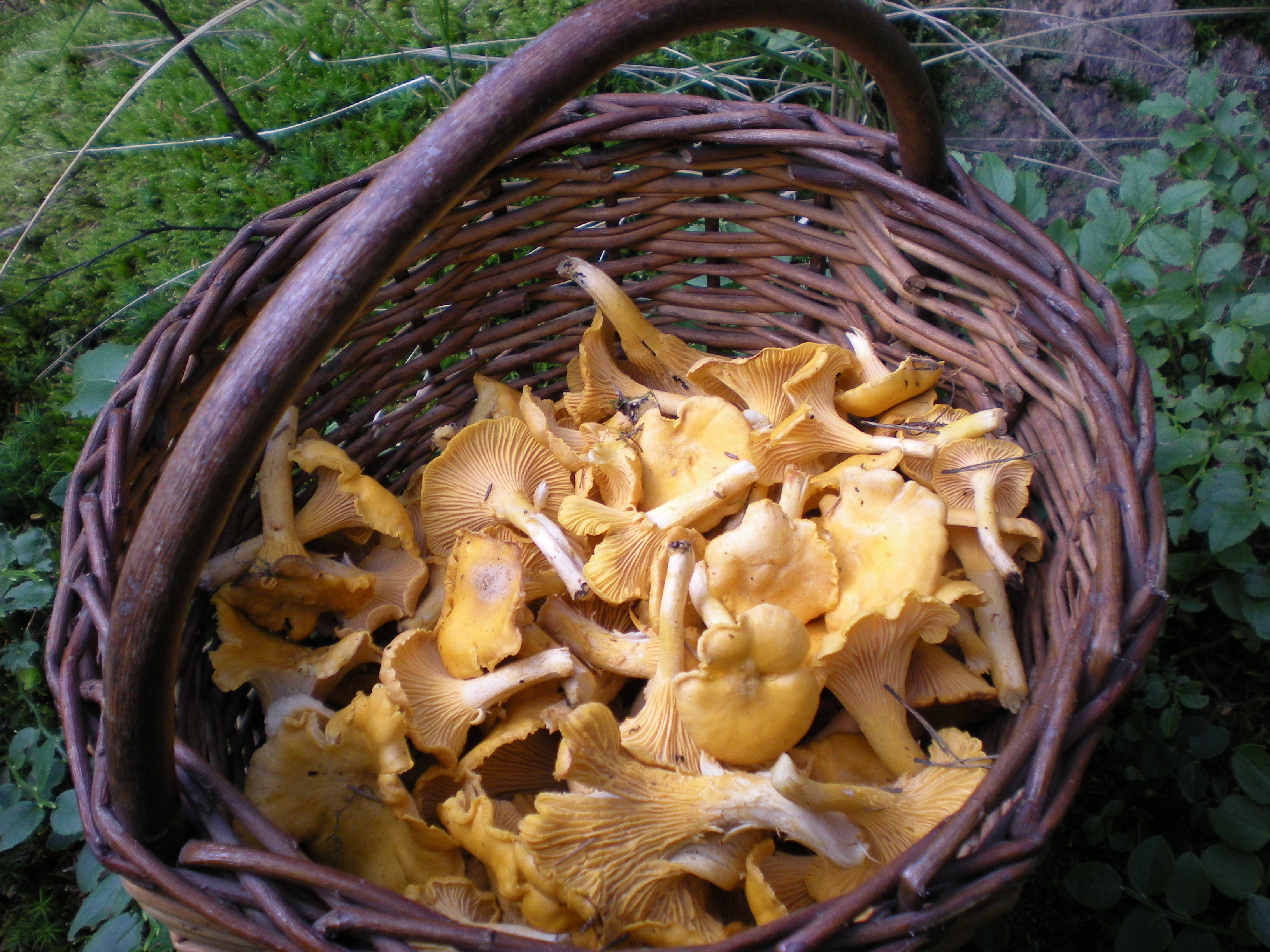
She gave me about a third of what she found, on the grounds that I had earned it by carrying the basket.
We fried them in butter that evening with nothing else on them, which is the correct treatment and also a thing nobody had to tell me, because I had watched it happen perhaps four hundred times before I was old enough to remember any of it.
Selected reading
Michael Polanyi, The Tacit Dimension (University of Chicago Press, 1966).
Hubert L. Dreyfus and Stuart E. Dreyfus, Mind over Machine: The Power of Human Intuition and Expertise in the Era of the Computer (Free Press, 1986).
Harry Collins, Tacit and Explicit Knowledge (University of Chicago Press, 2010).
Gary Klein, Sources of Power: How People Make Decisions (MIT Press, 1998), on recognition-primed decision making in experts.
The North American Mycological Association publishes ongoing guidance on identification and on the limits of photograph-based identification tools.
.jpg)