Valev Laube: The Third Generation Problem
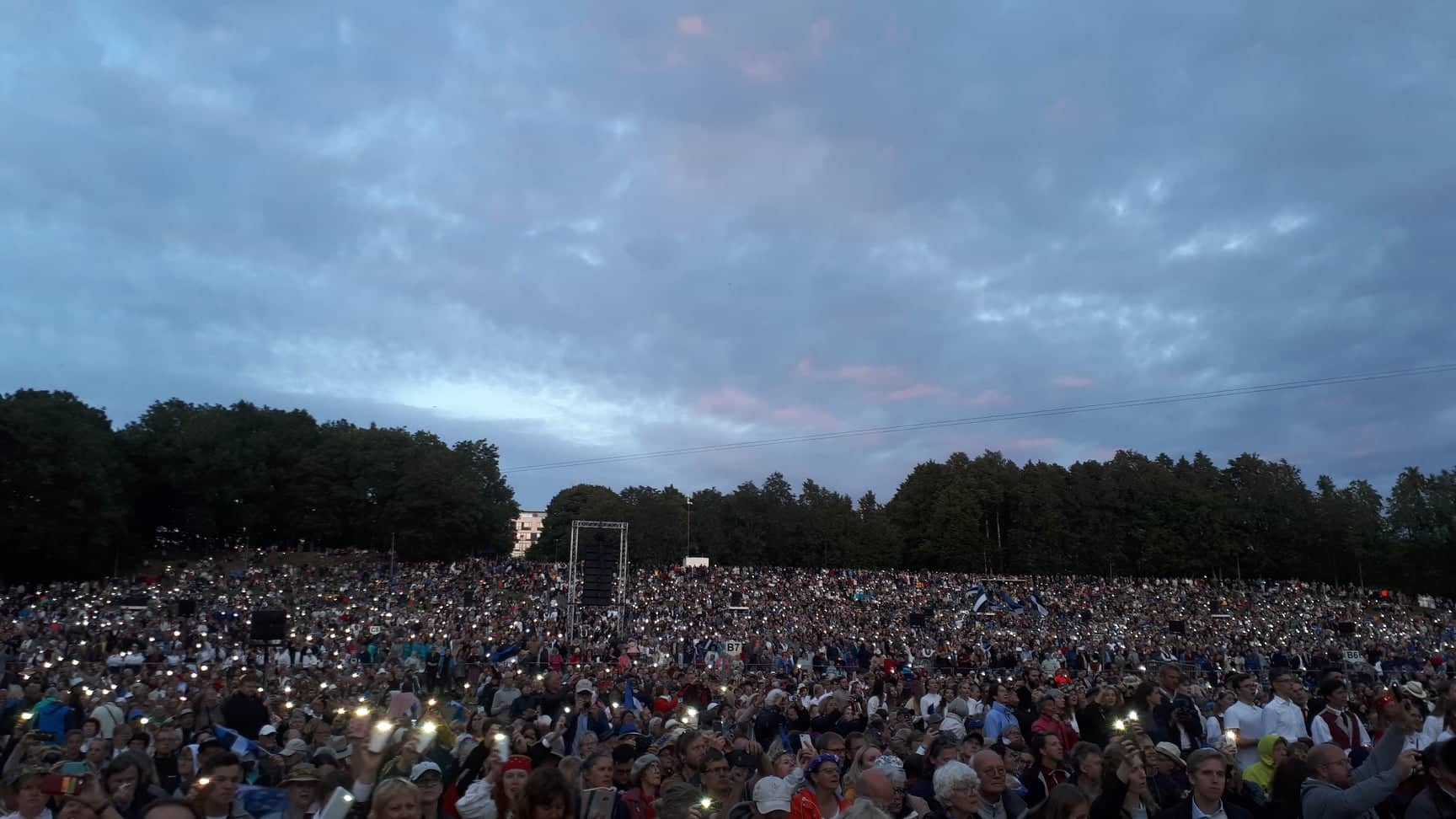
A woman came up to me after a talk in New York last year and told me, with some embarrassment, that her grandmother had been Estonian and she could say four words.
She said them. They were correct. Her accent was better than she thought it was, which happens more often than people expect — the phonology is often the last thing to go, long after the vocabulary has gone.
Then she apologised. That is the part I have not stopped thinking about.
She apologised for having four words. Not for having lost the language, which was not her doing, but for the four words being all she had, as though possessing a fragment were worse than possessing nothing.
I did not have a good answer at the time. I have been working on one since.
The man who named it
In 1938 an American historian called Marcus Lee Hansen gave an address to the Augustana Historical Society under the title The Problem of the Third Generation Immigrant. Hansen was the son of Danish and Norwegian immigrants, he was forty-five years old, and he died later that year.
The address contains one line that has outlived everything else he wrote: “What the son wishes to forget the grandson wishes to remember.”
Hansen's observation was that immigrant assimilation does not run in a straight line. The first generation arrives foreign and stays foreign, because it has no choice. The second generation grows up between two worlds and resolves the tension by aggressively choosing the new one — dropping the language, anglicising the name, avoiding the church hall, being embarrassed by the parents. The third generation, secure in a way its parents were not, goes looking for what the second generation threw away.
Sociologists have spent nearly a century arguing about whether Hansen was right. The consensus is roughly: not as a law, yes as a pattern, and more reliably about interest than about competence. The grandson does wish to remember. The grandson generally cannot.
That gap — between the wish and the capacity — is the actual problem, and Hansen did not solve it. Neither has anyone else.
The order in which things go
Having watched this from an unusual angle — I am not the third generation, I am the first, an Estonian who moved to the United States in 2014 and has spent a decade among people whose families made the same move seventy years earlier — I have come to think the sequence is more predictable than people assume.
Language goes first, and it goes fast. The standard finding in the sociology of language shift is that a minority language rarely survives three generations of immigration without deliberate institutional support. Generation one speaks it at home. Generation two understands it and answers in English. Generation three has four words. Joshua Fishman built an entire eight-stage scale around measuring exactly where on this slope a community is standing, and the uncomfortable insight of that scale is that by the time a community notices it is losing the language, it is usually already several stages down.
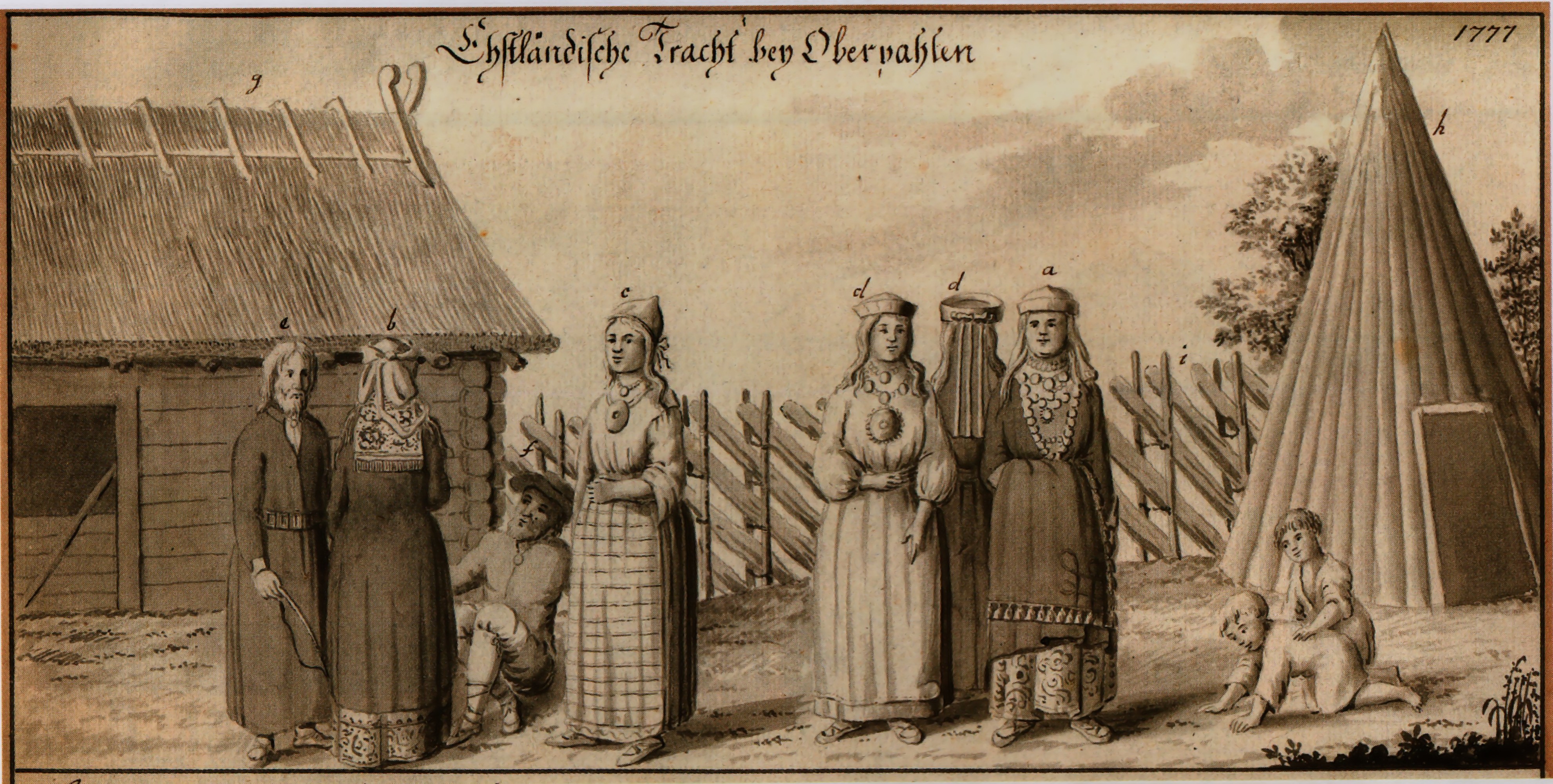
The calendar goes second. Not the big days — the small ones. Christmas Eve survives, because the surrounding culture has a Christmas to hang it on. The days with no local equivalent are the ones that quietly stop being observed: the name days, the November days for the dead, the specific Thursday when a specific thing was always done. There is nothing to attach them to and no one asking about them.
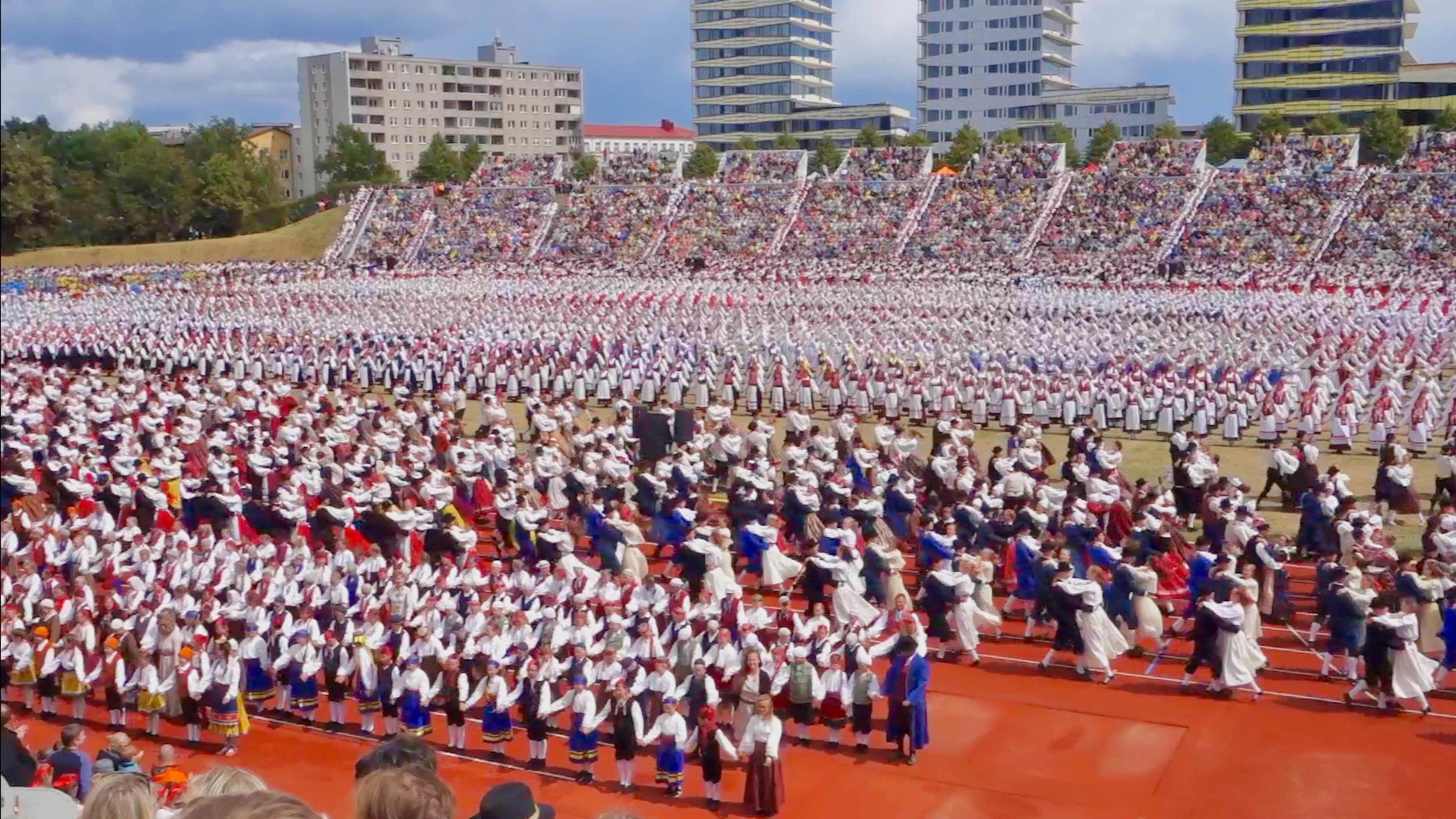
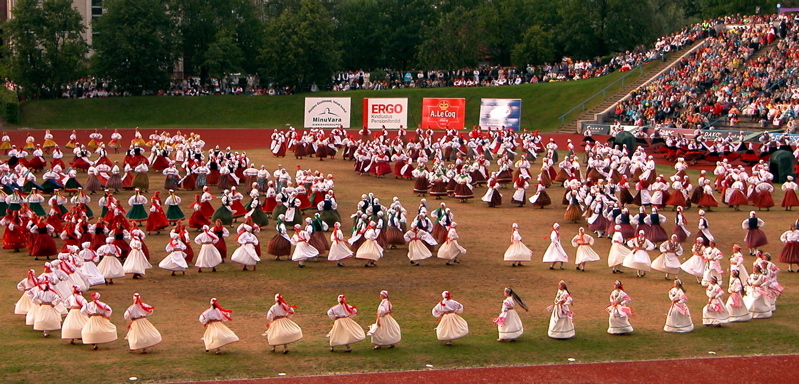
Music goes third, and it lasts longer than people expect, because it is carried by institutions rather than households — choirs, festivals, church congregations. A community that keeps a choir keeps considerably more than a community that does not, and it is not only about the singing.
Food goes last, and food goes strange. It is the most durable element and the least reliable witness. Dishes survive for four and five generations, but they drift: substituted ingredients, half-remembered proportions, a technique replaced by a shortcut that becomes the recipe. Diaspora food is not preserved food. It is food that kept evolving in a different place, which is why a dish in a Toronto kitchen and the same dish in Tartu can taste like distant cousins.
Then, underneath all of it, there is the category I wrote about last month: the knowledge that was never written down because nobody thought to write it. How long a thing should be salted. What a particular sky means. Where things grow.
That category does not degrade across generations. It is simply present or absent. And it is absent the moment nobody is standing next to the person who has it.
The thing the second generation is usually blamed for
There is a version of this essay that is unkind to the second generation, and I want to avoid writing it, because I think it is both cruel and wrong.
The second generation is routinely described as having “let” the language go. In the diaspora communities I know, the second generation is the one that gets quietly resented — by its parents at the time, and by its children later.
But consider what was actually being asked of them.
They were children in a country that, in the 1950s and 60s, was not neutral about foreignness. They were told, frequently by teachers and sometimes by doctors, that speaking two languages at home would confuse them and hold them back — advice that was universally given and has since been comprehensively demolished by the research, but which was the professional consensus at the time. They were the household's interpreters, its translators of official letters, its point of contact with a bureaucracy their parents could not navigate. They watched their parents be treated as less intelligent than they were because of an accent.
Then they made a rational decision to spare their own children that, and their children grew up and asked why nobody taught them Estonian.
Hansen saw the resentment and named it. What he did not fully say is that the second generation's choice was, in its own terms, an act of protection.
What actually works
If you look at which diaspora communities in North America still have functioning third and fourth generations — not nostalgic ones, functioning ones — the common factor is not sentiment. It is buildings.
A hall. A camp. A credit union. A church that held on to its congregation. A school that met on Saturdays and that everybody complained about. A choir with a rehearsal schedule.
These are unglamorous, expensive, difficult to maintain, and they are the entire mechanism. Culture that lives only inside households dies with the households. Culture with a lease survives the households, because it creates the one thing a household cannot: a room where the language is the default and a child is surrounded by people who are not their parents using it.
The Estonian, Latvian and Lithuanian communities that arrived in North America after 1944 understood this with unusual clarity, partly because they believed — correctly, as it turned out, but only after fifty years — that they were holding something in trust until they could take it home. They built out of proportion to their numbers.
A great many of those buildings are now maintained by people in their seventies and eighties, and the succession question is not theoretical.
The reframe I now offer
Here is what I should have said to the woman with four words.
The third generation is not a failed version of the first. It is a different thing, and measuring it against the first guarantees that it will always come up short, which is exactly why so many people in that position feel a low-grade shame about something that was never their decision.
What the third generation actually has is not a preserved culture. It is a relationship to one. And a relationship is not a lesser object than an inheritance — it is a different object, with its own properties. It can be chosen rather than merely received. It can be built in adulthood, which an inheritance cannot. It can be entered at any depth.
Four words is not nothing. Four words is a door with a handle on it.
What I have noticed among the people who walk through that door — the ones who start the language at thirty-five, who show up at the hall, who go to the country for the first time at forty — is that they very rarely become the first generation. They become something the first generation never was: people who chose it on purpose, in adulthood, with full information, at cost, when nothing whatsoever obliged them to.
That is not a diluted version of belonging. In some ways it is a more serious one.
The first generation, mine, did not choose Estonian. We were simply handed it, and most of us have never had to examine what it is worth, because we have never been at risk of losing it.
The third generation has to decide. Every single one of them, individually, without help, usually in their thirties, usually because somebody died and left a box.
Some of them decide yes. That is the part of this that is not a problem at all.
Selected reading
Marcus Lee Hansen, The Problem of the Third Generation Immigrant (Augustana Historical Society, 1938).
Peter Kivisto and Dag Blanck, eds., American Immigrants and Their Generations: Studies and Commentaries on the Hansen Thesis after Fifty Years (University of Illinois Press, 1990).
Joshua A. Fishman, Reversing Language Shift (Multilingual Matters, 1991), for the Graded Intergenerational Disruption Scale.
Ellen Bialystok's work on bilingualism and cognition, for what the mid-century advice against speaking two languages at home got wrong.
.jpg)