There Are 12,800 Setos. Their Band Says 25 Million People Are Behind It.
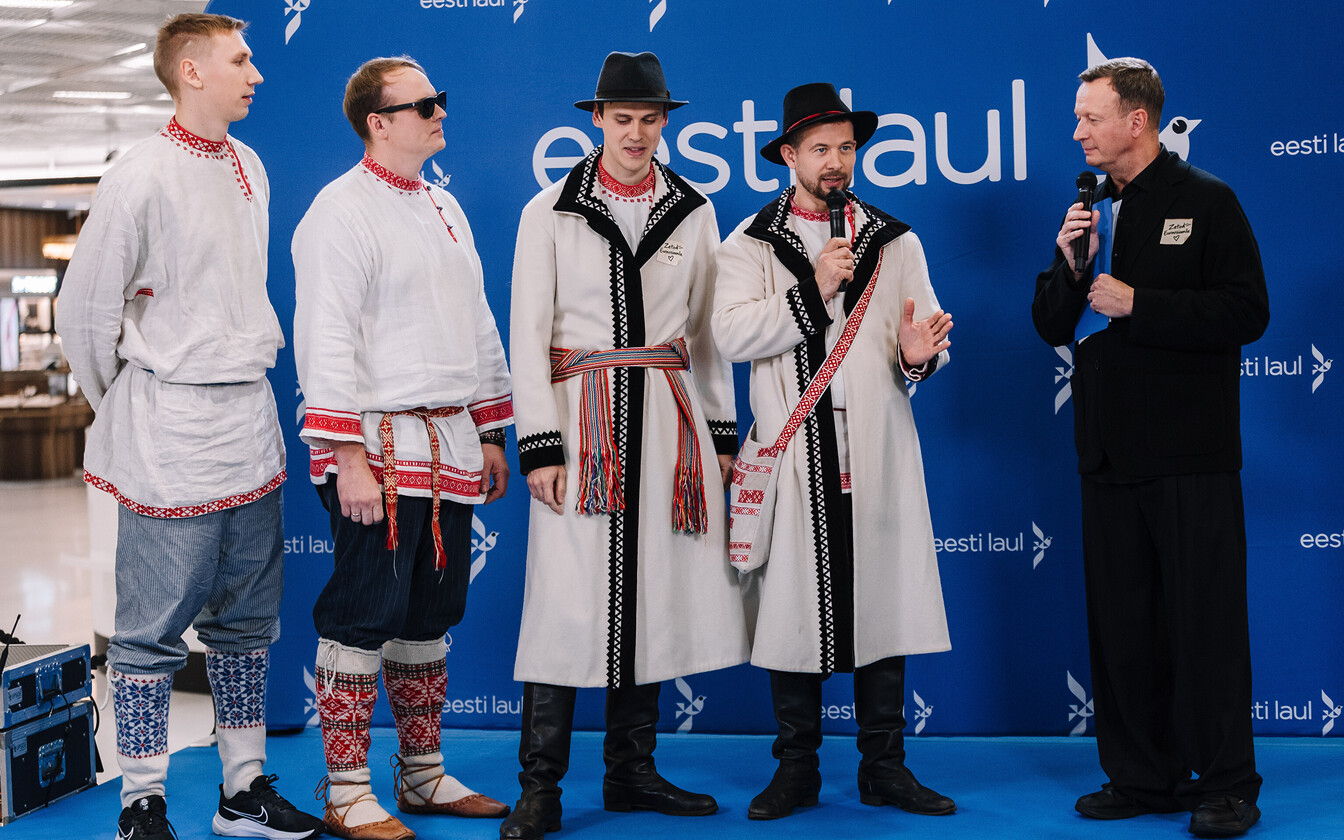
Jalmar Vabarna has an unglamorous explanation for why his band has never entered Estonia’s Eurovision selection in twenty-three years of playing together.
They kept missing the form. “We slept through the Eesti Laul deadline for five years, and this year we didn’t,” he told ERR after the lineup was announced.
That is how Seto leelo ended up on the shortlist for the Eurovision Song Contest.
Zetod, from Setomaa in Estonia’s southeastern corner, are one of twelve acts in the Eesti Laul 2027 final on 30 January at Unibet Arena in Tallinn. Their entry is called “Kipõ-kipõ” — roughly “hurry, hurry” — and they will perform it with the singer Hellika, who has Seto and Võro roots. It was written by Vabarna with Matis Leima, Jaanus Viskar, Martin Kütt and Artur Linnus. Estonian broadcaster ERR received 155 submissions this year, from Estonia and twenty other countries; sixty were in Estonian, ninety-five in a foreign language, and one in a language somebody invented.
The song itself is not public yet. ERR expects the twelve entries to be released by 27 November. What the band has described is its subject: the speed at which everyone now lives. Leima has said that pace can turn unhealthy, and that the song’s argument is to stop working yourself to death, slow down, and make time to sing.
It is a conventional enough sentiment. What makes it worth paying attention to from this side of the Atlantic is who is making it, and in what.
A nation of 12,800
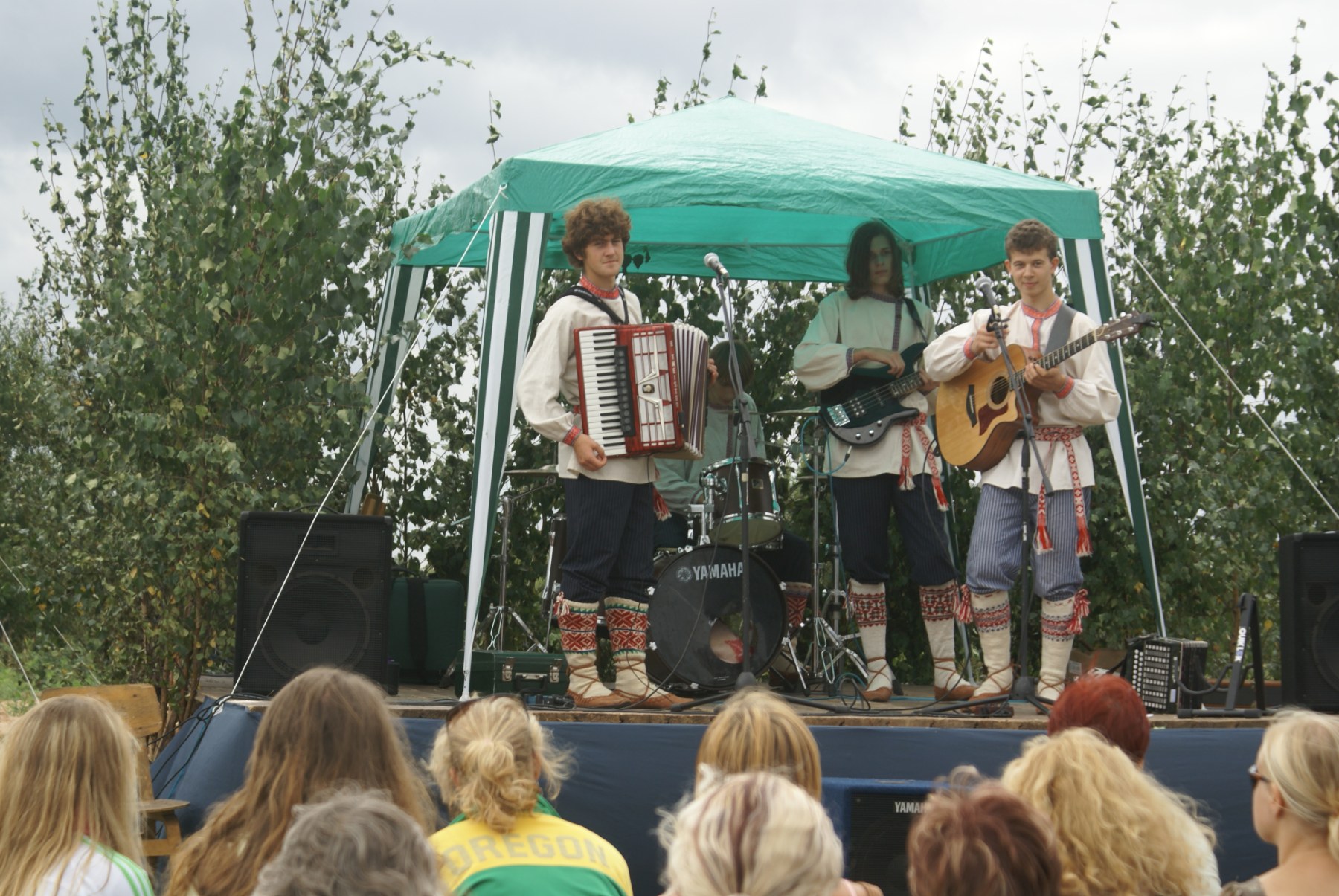
There are about 12,800 Setos. Roughly 12,500 of them are in Estonia and 234 were counted in Russia in 2020. In the 2011 census, close to 12,500 people in Estonia spoke Seto, and about two-thirds of them lived outside the historic Seto regions — which is to say that the language has already largely left the land it comes from.
Setomaa sits south of Lake Peipus, around the Piusa river. The Treaty of Tartu put all of it inside the Republic of Estonia in 1920. Moscow redrew the line on 15 August 1944, and when Estonia restored its independence in 1991 that Soviet-era border became an international one. The historic Seto homeland has been cut in two ever since, with the monastery town of Petseri on the Russian side.
Setos are Orthodox Christian and also keep older observances, including those attached to the god-king Peko. Since the early 2000s they have pressed for Seto to be recognized as a language in its own right rather than a dialect of Estonian, and in 2002 the sixth Seto Congress declared the intention to be counted as a distinct people.
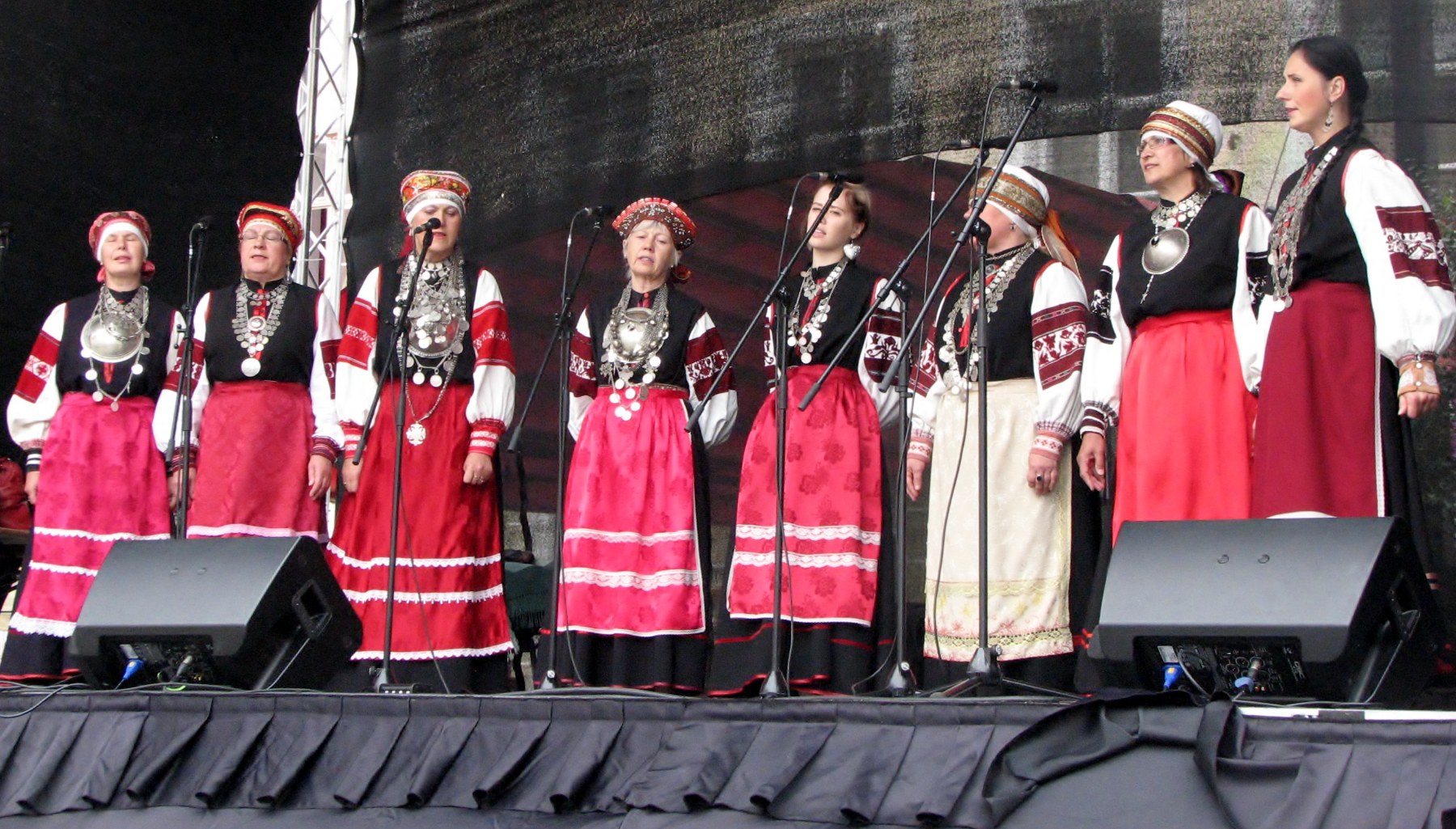
Leelo, the polyphonic singing Zetod are drawing on, went onto UNESCO’s intangible cultural heritage list in 2009. It is usually sung by women in traditional dress, led by one voice with the group answering. At Seto Kingdom Day each year the best lead singer is named Mother of Song.
So the tradition behind “Kipõ-kipõ” is a women’s choral form, protected by UNESCO, belonging to a people who number fewer than the population of a small American town.

The six-person problem
Zetod wanted to bring a leelo choir to the stage. They could not.
Eurovision permits six performers on stage. Zetod are five. That arithmetic left exactly one place, and the band gave it to Hellika on the reasonable grounds that this is a singing contest and she is a singer. Vabarna has pointed out that they could have brought a mother or a sister instead.
It is worth sitting with that for a second, because it is the most revealing detail in the whole story. A rule written to keep the contest manageable and fair — six bodies, no more — is neutral on its face and not neutral at all in effect. A four-piece guitar band loses nothing to it. A choral tradition whose entire character comes from many voices in close harmony has to be shrunk to one voice plus a backing band before it is allowed on the stage.
Every folk form that goes to Eurovision makes some version of this trade. It is the price of the platform, and plenty of artists have decided it is worth paying. But it is a real cost, and it tends to be invisible in the coverage.
Twenty-five million, more or less
Vabarna’s pitch is that the band does not go alone. He has said the whole Finno-Ugric world is behind them — twenty-five million people — and that this is what gives them the nerve to put on folk costume in Bulgaria and stand up straight.
The number deserves a note. Estimates of native speakers of Uralic languages come to roughly 21.3 million, the overwhelming bulk of them Hungarian, Finnish and Estonian. Counts of people who identify as Finno-Ugric without speaking the language run higher, which is probably where twenty-five million comes from. Either way the shape of the thing is the same: a language family of nine undisputed branches in which three languages hold almost everyone, and the rest — Sámi, Mari, Mordvinic, Permic, Mansi, Khanty, the Samoyedic languages, the smaller Finnic ones — hold very few.
Seto belongs to that long tail. So the claim Vabarna is making is not really a demographic one. It is that a song in a minority Finnic language carries something on behalf of every other minority Finnic language that will never get a turn at a stadium microphone. That is a lot to ask of three minutes.
It has been tried once before
Estonia has already sent a South Estonian song to Eurovision, and the result is instructive.
In 2004 the group Neiokõsõ won Eurolaul on a pure public televote with “Tii,” and became the first act in the contest’s history to perform in Võro. In the semi-final on 12 May 2004 they sang seventeenth and finished eleventh with 57 points. The top ten advanced.
They missed the final by one place.
Twenty-three years later, a band from the next valley over is trying again, in a related language, at a contest that has changed a good deal in the meantime — and whose audience has in recent years rewarded exactly the kind of entry that sounds like nowhere else.
Why this matters from here
For Estonian, Finnish and Hungarian communities in the United States and Canada, Eurovision is one of the very few nights when a small Northern European language gets broadcast to a hundred million people without apology or translation. That is not a small thing in a diaspora where the heritage language is usually the first thing to go.
It is also, bluntly, the most efficient cultural export any of these countries has. A Seto song that reaches the Eurovision stage in Burgas next May would put a UNESCO-listed tradition belonging to twelve thousand people in front of an audience roughly eight thousand times that size. Whether it survives contact with the format is a separate question — see the six-person rule — but the arithmetic of attention is hard to argue with.
And there is a version of this that fails quietly. Zetod have to win Eesti Laul first, against eleven other songs, in a field that includes several established pop acts. The superfinal is decided by televote alone, which in 2004 was the mechanism that sent Võro to Eurovision in the first place.
The dates
The twelve Eesti Laul entries are due to be released by 27 November. The final is on 30 January 2027 at Unibet Arena in Tallinn: three songs advance from the first round on a combination of jury and public vote, and the winner is picked by televote alone.
Eurovision 2027 is in Burgas, Bulgaria, at Arena Burgas, after Dara won this year’s contest for the host country with “Bangaranga.” The semi-finals are on 11 and 13 May and the final on 15 May.
Thirty countries had confirmed by September. One of them will arrive with a song in a language spoken by about twelve thousand people, if Tallinn votes that way in January.
A running forecast for the 2027 contest, built on past voting patterns, is kept at Douze Points.
The Eesti Laul 2027 lineup and submission figures are from ERR. Quotations from Jalmar Vabarna and Matis Leima are translated from ERR’s Estonian-language interview. Songwriting credits are as listed by the fan site Eurovisioon.ee. Seto population and language figures, the history of the Setomaa border and the 2009 UNESCO inscription of leelo are from published reference sources; the Uralic native-speaker estimate of 21.3 million is likewise a published estimate and is not directly comparable with counts of ethnic identification. Estonia’s 2004 result is from the contest record. Lead photograph: Zetod at the Eesti Laul 2027 press presentation in Tallinn on 29 October 2026, by Ken Mürk / ERR, reproduced for editorial coverage of the contest. In-text photographs are credited in their captions. “Kipõ-kipõ” had not been released when this article was published, and this publication has not heard it.
Disclosure: Douze Points, the Eurovision 2027 forecast board linked above, is a personal project of this publication’s editor, Valev Laube. It is not affiliated with the EBU, ERR or the Eurovision Song Contest.

)%20(1).avif)