A Supreme Court Ruled the Turbines Illegal. Five Years On, All 151 Are Still Turning
Feature · Nordic Stories
On 11 October 2021, eleven justices of the Supreme Court of Norway ruled unanimously that two wind farms on the Fosen peninsula in Trøndelag violated the human rights of the Sámi reindeer herders whose winter pasture they stood on. The licences and the expropriation decisions were declared invalid.
Today all 151 turbines are still there, still turning, still selling electricity.
How both of those sentences can be true is the most instructive story in Nordic Indigenous politics, and it is almost unknown in North America.
First, who the Sámi are — and why nobody can tell you how many
The Sámi are the Indigenous people of the northern parts of Norway, Sweden, Finland and the Kola Peninsula in Russia — a territory they call Sápmi, which does not correspond to any state border.
Almost every English-language article states a population figure. Almost none of them should.
Statistics Norway says so plainly: there is no collective register of the Sámi population, so producing statistics on the Sámi as a group is not possible. What Norway publishes instead is geographic — figures for a defined northern area, which the agency itself notes includes people who are not Sámi and excludes Sámi living elsewhere.
The Finnish Sámi Parliament's own estimate is 75,000 to 100,000 in total, explicitly hedged as depending on the method of calculation, with around 10,000 in Finland — more than 60 per cent of them living outside the Sámi homeland.
The honest sentence is that estimates run from roughly 50,000 to 100,000, that Norway holds much the largest share, and that the range exists because Norway and Sweden keep no ethnic registers. The only hard numbers anywhere are the Sámi parliaments' electoral rolls, and those measure registration, not population.
There are ten Sámi languages, and every one of them appears in the UNESCO atlas of endangered languages. North Sámi accounts for about 90 per cent of all Sámi speakers. The others are small and getting smaller: Kildin around 700 speakers, Lule around 650 active, South Sámi — the language of the Fosen herders — around 500, Inari around 450, Skolt around 300.
One legal fact explains most of the divergence between the three Nordic countries: only Norway has ratified ILO Convention 169 on Indigenous and Tribal Peoples. Sweden and Finland have not.
Three parliaments, and what they can and cannot do
Each Nordic country has a Sámi parliament, and none of them is a legislature in the sense a North American reader would assume.
Norway's Sámediggi at Kárášjohka is the oldest and strongest. Sweden's Sametinget, established 1 January 1993 with 31 representatives, has the peculiar dual character of being simultaneously a popularly elected body and a Swedish state administrative agency reporting to the government — which is the standard criticism of the Swedish model. Finland's Saamelaiskäräjät, legislated in 1995, has 21 members and a mandate covering linguistic and cultural autonomy, operating under the Ministry of Justice.
Two further bodies get confused constantly in English coverage. The Sámi Parliamentary Council, founded in 2000, is the three parliaments coordinating with each other, with Russian Sámi organisations as permanent participants because there is no elected Sámi body in Russia. The Saami Council is something else entirely: a voluntary NGO founded in 1956, with nine member organisations across four countries, holding Permanent Participant status at the Arctic Council.
.jpeg)
What Norway has already admitted
On 1 June 2023, a truth and reconciliation commission chaired by Dagfinn Høybråten delivered a report of nearly 700 pages to the Storting, covering the state's policy of fornorsking — Norwegianisation — towards the Sámi, the Kven and the Forest Finns.
The commission investigated the policy from the 1860s to 1963. Its instruments were not subtle: a fund from 1851 paying teachers to Norwegianise their pupils; an 1899 regulation barring Sámi and Kven speakers from teaching in mixed-language schools; boarding schools from 1901 designed to separate children from their communities; and a 1902 land act that required buyers of land in Finnmark to speak Norwegian daily, which functionally barred Sámi speakers from owning it.
The public reading of the report took more than thirty-five hours and was broadcast live on NRK.
Among the commission's central findings was what it called an implementation gap: the distance between rights secured in national and international law, and what municipalities and agencies actually do.
King Harald V, who died last week, had apologised to the Sámi on behalf of the Norwegian state in 1997.
Norway has therefore acknowledged the past about as fully as a European state ever has. Fosen is about the present.
Fosen
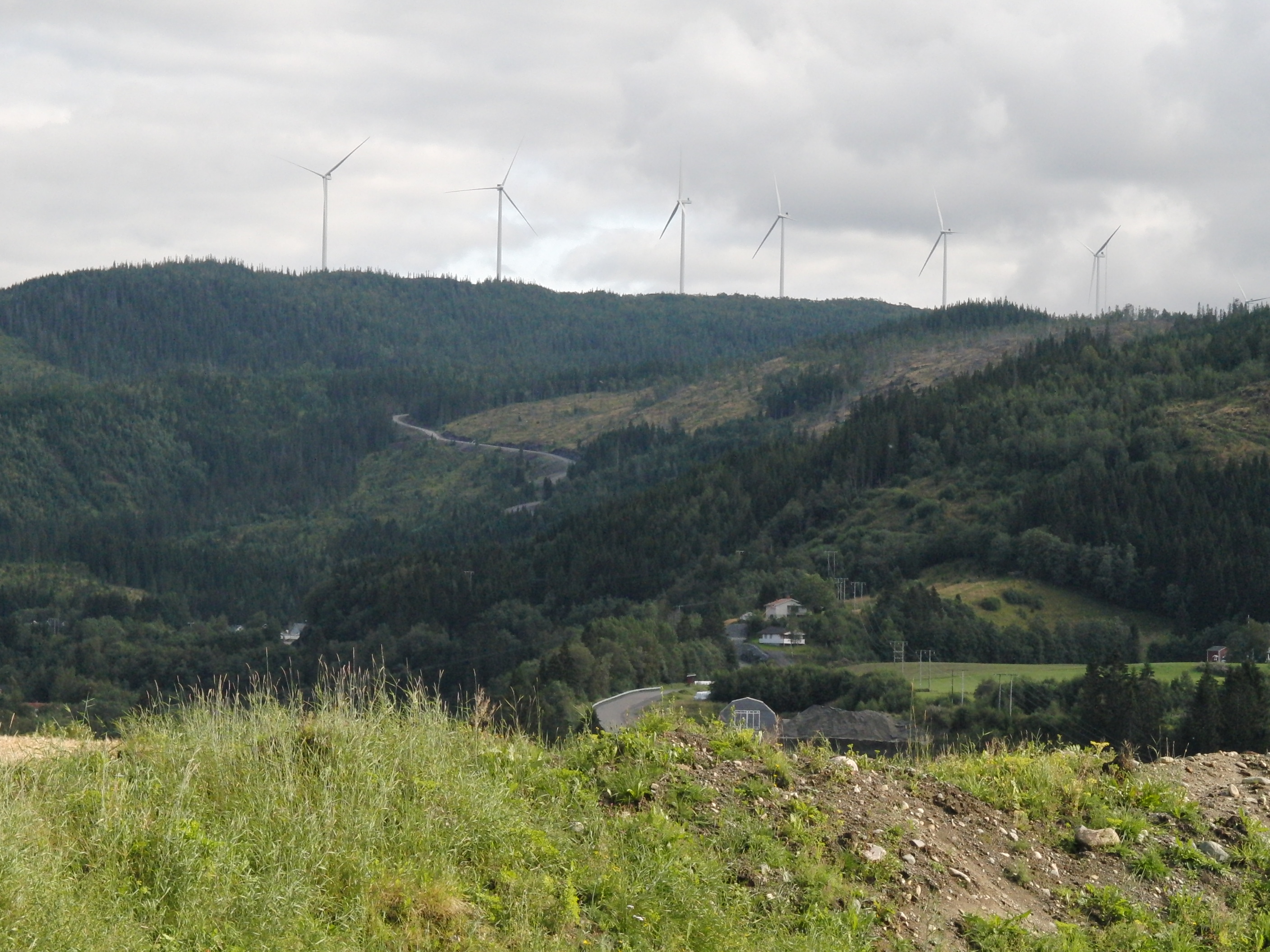
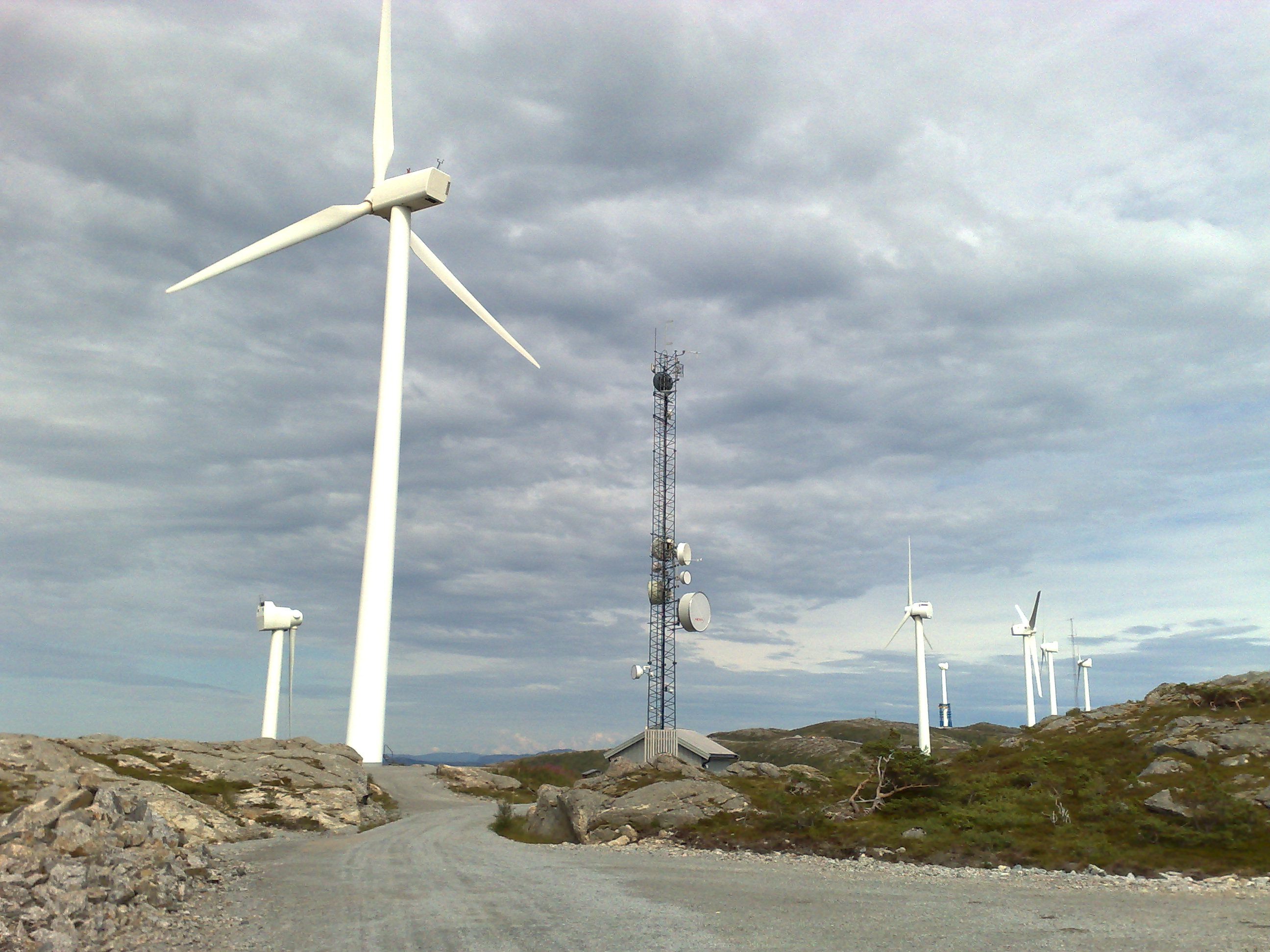
The Fosen Vind complex in Trøndelag — 1,000 megawatts across six wind farms, around €1.1 billion, commissioned between 2018 and 2020 — was the largest onshore wind project in Europe when it was built.
Two of those farms are the ones in the case. Storheia: 80 turbines, 288 megawatts, on the winter grazing land of the Sør-Fosen sijte. Roan: 71 turbines, 256 megawatts, on the land of the Nord-Fosen siida.
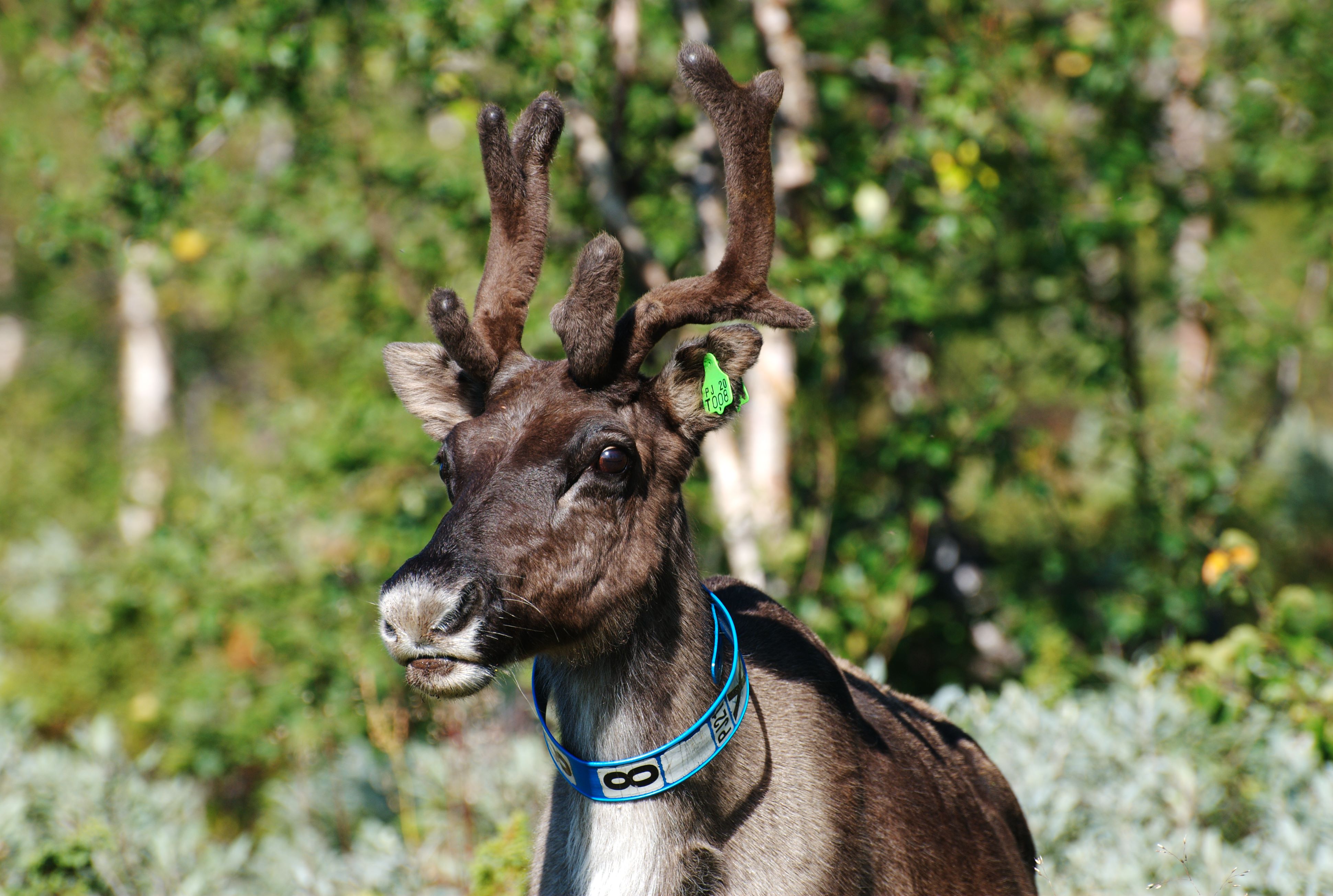
The word that matters is winter. Winter pasture is the binding constraint in South Sámi reindeer herding — the bottleneck that determines how many animals a district can keep. Summer grazing is comparatively abundant. Lose the winter ground and the herd size is capped regardless of what else you have.
The Supreme Court heard the case in grand chamber and ruled on 11 October 2021.
The instrument it turned on is worth noting, because it is what makes the judgment internationally citable: Article 27 of the International Covenant on Civil and Political Rights — the right of minorities to enjoy their own culture. Not ILO 169, and not Norwegian property law.
The court held that the developments would have a significant adverse effect on the herders' ability to practise their culture at Fosen, and that alternative locations existed which would have served Norway's renewable energy goals without imposing that burden. It declared the licences and the expropriation decisions invalid.
It also did two more specific things. It rejected the idea that feeding penned reindeer through the winter was adequate mitigation, holding that such solutions carry too much uncertainty to be relied on as part of the herders' duty to adapt. And it noted that the violation could have been prevented by satisfactory remedy measures.
That last clause is the doorway everything since has walked through.
What the court did not do was order the turbines removed. It invalidated the licences and left the remedy to the government. Any account saying the court ordered demolition is wrong.
Five hundred days
After the ruling, the Norwegian state did nothing.
Norway's own National Human Rights Institution has recorded that the government took more than 500 days to acknowledge that an ongoing violation existed.
On 23 February 2023 — the timing was the entire point — the youth wing of the Norwegian Sámi Association occupied the Ministry of Petroleum and Energy in Oslo. They were joined by Natur og Ungdom, by Greenpeace, and by Greta Thunberg. The occupation spread to blockades of the entrances of ten ministries. Around thirty people were arrested and about ninety removed.
On day eight, 2 March 2023, two government ministers apologised. The energy minister Terje Aasland said the licensing conditions entailed a violation of human rights because of their effect on the herders' ability to enjoy their own culture.
The protest ended on 3 March with nearly two thousand people outside the Royal Palace.
It is worth being precise about one thing here, because the international coverage was not. This was organised and led by Sámi youth. Thunberg joined it. Making her the story was itself among the things Sámi organisers objected to.
What the herders actually got
The Sør-Fosen sijte settled with Fosen Vind on 19 December 2023. The terms: NOK 7 million a year for 25 years, about NOK 175 million in total; a right of veto over any extension or renewal once the current concession expires; and a state commitment to secure additional winter grazing land, targeted for the winter of 2026/27.
The Nord-Fosen siida held out. In December 2023 it was still refusing compensation and demanding the turbines come down. It settled on 6 March 2024, on comparable terms — NOK 7 million a year through the licence period, the same veto on renewal, the same promise of replacement pasture.
The legal mechanism by which the turbines stayed up is elegant and worth understanding. No new licences were granted. Production simply continues under the original ones. The settlements were treated as the satisfactory remedy measures the Supreme Court had contemplated, which meant the violation had been repaired and the licences no longer breached Article 27. The ministry concluded it therefore had no grounds to begin reversing the licensing decisions.
A supreme court declared the licences invalid. Nobody had to take anything down.
One further detail belongs in any account of this. Roan is 60 per cent owned by a holding company in which Stadtwerke München, the municipal utility of the city of Munich, holds 49 per cent. A German city council part-owns a wind farm that a national supreme court found to violate Indigenous rights.
Where it stands this month
The replacement winter pasture — the core state obligation in both agreements, the thing that was supposed to make the deal whole — has not been delivered.
On 24 September 2025 the Ministry of Agriculture and Food cancelled the tender for the required impact assessment. Of three bids in the second round, two were rejected as non-compliant, leaving one, and the department concluded it had no real competition. It set a new deadline of 1 July 2026 and said the full process was expected to conclude by 2027.
The area under consideration is Håmmålsfjellet–Sålekinna, in the municipalities of Os, Tolga and Engerdal — Østerdalen, hundreds of kilometres south of Fosen.
On 3 September 2026, three days ago, the impact assessment finally went out for public consultation: fourteen specialist reports prepared by Norconsult, with a comment deadline of 26 October.
So the position in September 2026 is this. The turbines stand. The money is being paid. The land that was promised for the winter of 2026/27 is a consultation document with an October deadline and a process the ministry itself expects to run into 2027. And Norwegian regional media report that the Fosen Sámi are themselves divided about moving reindeer to Østerdalen — which, if it holds up, means the remedy for a displacement is a proposal for another one.
The wider ledger
Fosen is not an outlier, and the record does not point in one direction.
In Karasjok, on 31 May 2024, the Norwegian Supreme Court sat in grand chamber again and held, by six votes to five, that the population of the municipality is not the collective owner of its land — more than 5,300 square kilometres of Finnmark. Residents hold use rights in traditional harvesting and pasture areas; ownership rests with the state body that manages Finnmark. Lower courts had found the other way. A single vote decided it, and it got almost no English-language coverage.
In Sweden, the Gállok iron ore deposit near Jokkmokk has been contested since 2013. The government refused the concession in February 2020 and granted it in March 2022. Sweden's Supreme Administrative Court upheld that grant in June 2024, rejecting a challenge from Sámi reindeer-herding communities and the Swedish Society for Nature Conservation. No environmental permit has been granted, and there is no mine.
In Norway, the Nussir copper project at Repparfjord received strategic project status under the EU's Critical Raw Materials Act in March 2025 and resumed construction in June, over objections about calving grounds and marine tailings disposal.
The pattern is consistent enough to state: Sámi herders win recognition regularly and lose land regularly, and the two are not in tension because the remedy for the first is almost never the return of the second.
Why this should matter in North America
There is no substantial Sámi diaspora in the United States or Canada, and this publication is not going to invent one.
The reason to run this is different, and it is twofold.
The first is that North American readers hold a picture of the Nordic countries — progressive, consensual, exemplary on rights — that is broadly earned and that has a specific hole in it. Norway apologised for Norwegianisation, ratified ILO 169, built a Sámi parliament, and then took five hundred days to admit its own Supreme Court was right and settled by paying rent on land it had been told it could not use that way.
The second is that the Fosen judgment turned on Article 27 of a covenant the United States and Canada have both ratified, in a dispute about renewable energy sited on Indigenous land. That is not a Norwegian problem. Anyone following consultation fights over transmission lines, lithium, or wind siting in North America is watching the same argument in a different language.
Norway's Supreme Court gave the strongest ruling an Indigenous community in Europe has won in a generation.
Five years later, the herders have a cheque, a veto that starts when the concession ends, a promise of land somewhere else that has not arrived, and 151 turbines on their winter pasture.
That is what winning looks like.
Sources
Supreme Court of Norway, HR-2021-1975-S, 11 October 2021 (official English summary), and HR-2024-982-S, 31 May 2024.
Truth and Reconciliation Commission report to the Storting, 1 June 2023; Norway's National Human Rights Institution on the Fosen judgment.
Norwegian Government announcements of the Sør-Fosen sijte agreement (19 December 2023) and the Nord-Fosen siida agreement (6 March 2024), and the ministerial apology of 2 March 2023.
Ministry of Agriculture and Food on the cancelled tender, September 2025; NIBIO on the impact assessment consultation, September 2026.
Statistics Norway and the Sámi Parliament of Finland on population estimates; UNESCO and UiT on the Sámi languages.

)%20(1).avif)