How North America Invented “Scandinavian Design” — and What Marimekko’s 75th Says About It
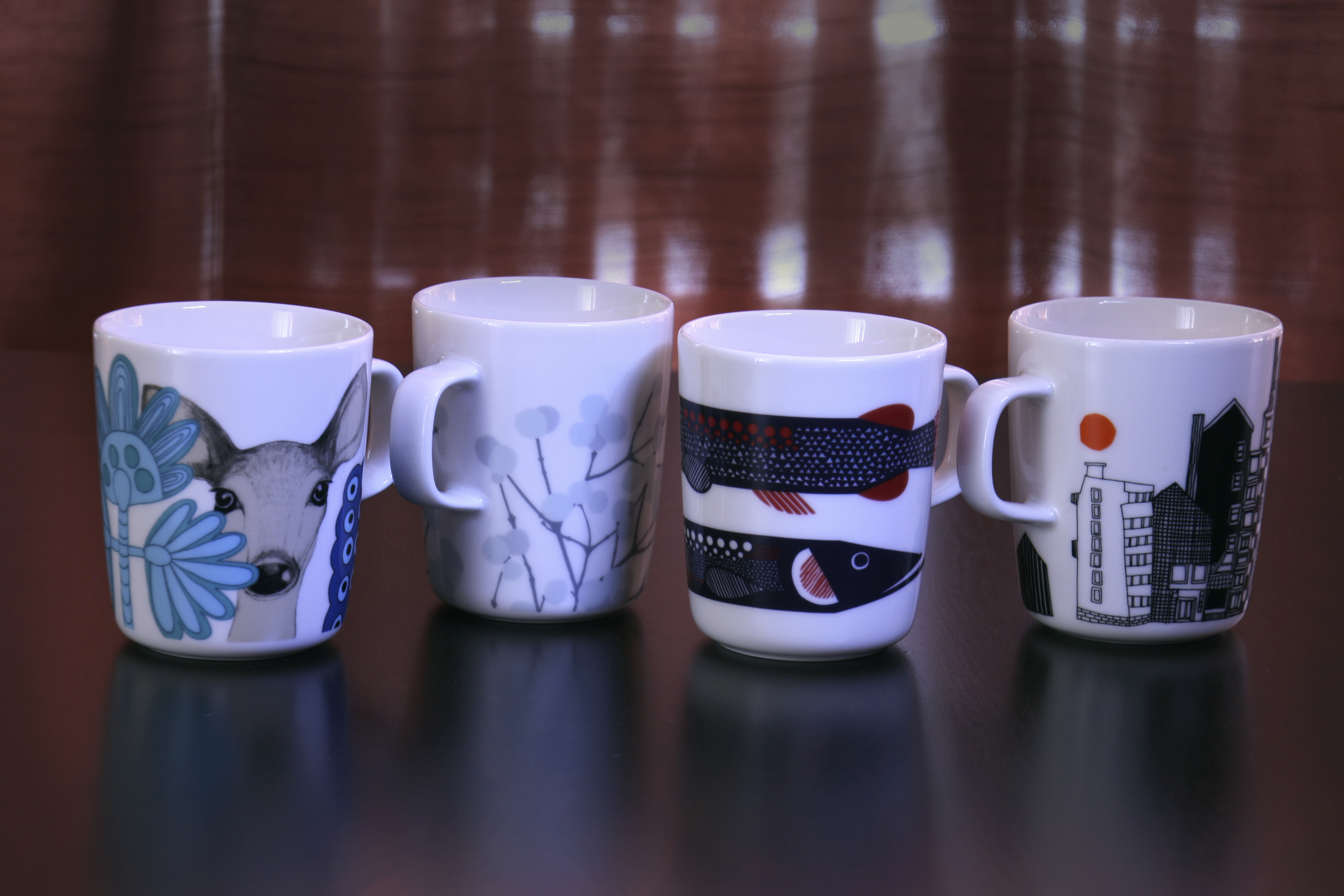
Marimekko turns seventy-five this year, and the anniversary is being marked more or less everywhere: retrospectives, reissues, the enormous red poppy of the Unikko print reappearing on everything from tote bags to aircraft liveries.
It is a good moment to say something that sounds like a provocation and is simply a matter of record.
The version of Nordic design that North Americans know — the light wood, the clean line, the phrase “Scandinavian design” itself as a category you can shop by — was not exported from the North and passively received here. It was substantially assembled in North America, by a touring exhibition, a Cambridge shop, and a presidential campaign.
The design was Nordic. The idea of the design was, to a surprising degree, made in the United States and Canada.
The Exhibition That Named the Thing
Start in 1954.
An exhibition called Design in Scandinavia opened its North American tour that year and did not finish until 1957. It carried more than seven hundred objects from Denmark, Finland, Norway and Sweden — furniture, glass, ceramics, textiles, silver and steel — and it moved through more than twenty museums across the United States and Canada over three and a half years.
Consider what that meant in practice. A curated selection of household objects from four countries, presented together as a coherent body of work, shown to hundreds of thousands of North Americans in their own cities, in the middle of the greatest domestic building boom in the continent's history.
Before that tour, the four countries did not constitute a single design category in the North American mind. There were Danish cabinetmakers, Finnish glassmakers, Swedish manufacturers. They had distinct national traditions, different institutions, and in several cases a history of regarding each other as rivals rather than a bloc.
The exhibition presented them as one thing.
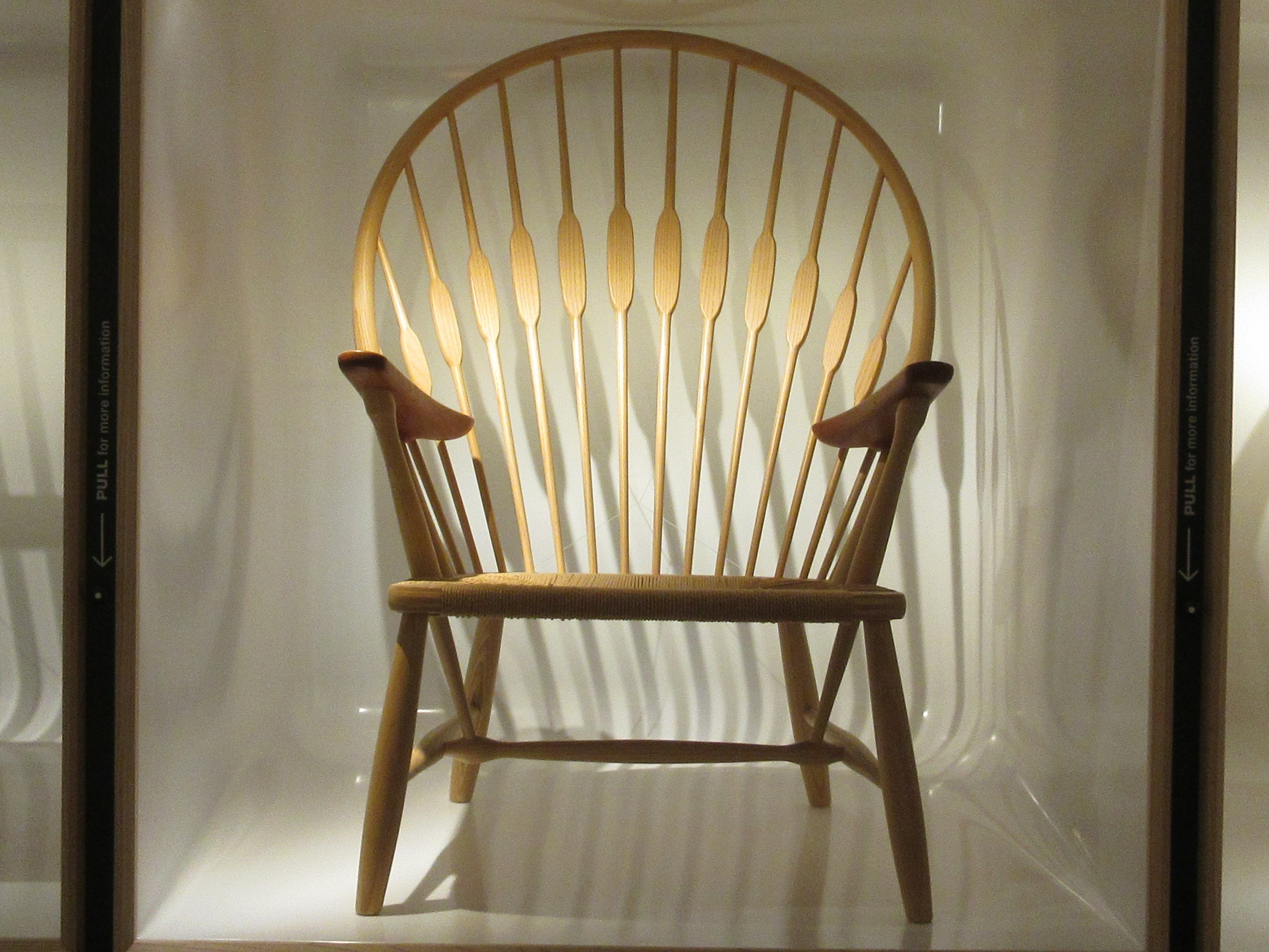
It worked. “Scandinavian design” entered the language as a recognisable category, complete with an implied philosophy — democratic, functional, humane, made of natural materials, affordable to ordinary people, good for family life.
Every part of that description was true of some of the objects. The synthesis was a curatorial argument, made for an American audience, at a moment when that audience was extraordinarily receptive to it.
Why 1954 Was the Right Year to Arrive
The receptiveness is worth explaining, because it was not really about aesthetics.
Postwar North America was building suburbs at unprecedented speed and filling them with young families who had money, small houses, and no inherited furniture. They needed to furnish a home from nothing, and the two available options were both unsatisfying.
One was reproduction traditional furniture: heavy, dark, expensive, and aspiring to an aristocratic European past that most buyers had no connection to.
The other was hard-edged International Style modernism: intellectually serious, visually severe, and difficult to love in a room where a child was learning to walk.
The Nordic work offered a third position. It was unmistakably modern — no ornament, no historical pastiche — but it was made of warm materials, rounded at the edges, and designed around domestic life rather than against it. It looked like modernism that liked you.
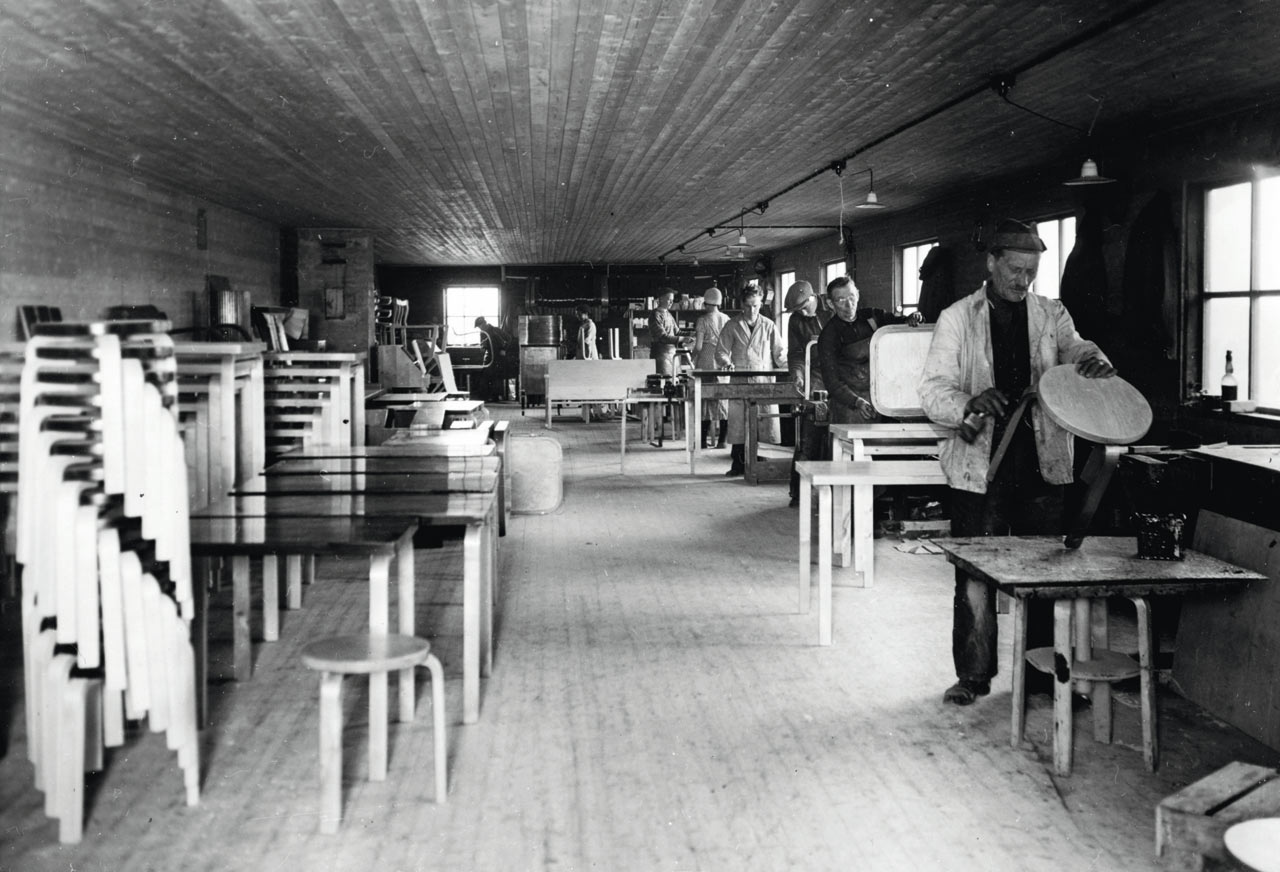
It also arrived with a story that North American buyers found flattering: this was design produced by egalitarian social democracies, for everybody, on the principle that beautiful useful objects should not be a privilege of the rich. Whether or not that was a complete account of the Nordic furniture industry, it was an appealing thing to believe while buying a chair.
The Cambridge Shop
An exhibition creates awareness. Somebody has to sell the objects.
That job fell substantially to Design Research, the store the architect Benjamin Thompson opened in Cambridge, Massachusetts in 1953. D/R was not organised like a furniture showroom. It was arranged as a home — objects displayed in rooms, in combination, as you might actually live with them — and it sold Nordic furniture, glass, textiles and kitchenware to an academic and professional clientele around Harvard and MIT.
It was, in effect, a permanent version of the touring exhibition, with a cash register.
And in 1960 it did the single most consequential thing in the North American history of Finnish design. Jacqueline Kennedy, whose husband was running for president, bought eight Marimekko dresses at Design Research.
She wore them through the campaign. One appeared on the cover of Sports Illustrated that December.
Marimekko was nine years old, a small Helsinki company founded in 1951 by Armi and Viljo Ratia around the then-unusual proposition that printed textiles could be sold as an attitude rather than a fabric. Armi Ratia's insight was that the dresses were almost a delivery mechanism: simple, unstructured shapes whose purpose was to carry a print into the world.

The campaign photographs did what no advertising budget available to a Finnish textile company in 1960 could have done.
Unikko — the poppy print, designed by Maija Isola in 1964, and now the most recognisable Finnish design object on Earth — arrived in a North American market that had already been taught to look for exactly this.
The Uncomfortable Part
There is a version of this history that is simply a nice story about cultural exchange. The more interesting version has some friction in it.
The category “Scandinavian design” flattened real differences. Finland is not Scandinavian in the strict geographic sense, and Finnish design in particular — Aalto's laminated wood, Wirkkala's glass, Marimekko's prints — came from a different design culture, a different language family, and a very different twentieth-century political experience than Denmark's cabinetmaking guilds. The Baltic states, whose material culture overlaps substantially with the Nordic countries, were behind the Iron Curtain and were excluded from the category entirely, which is a large part of why “Baltic design” has no comparable shelf in a North American shop today.
The category was also, in the end, a commercial asset that stopped belonging to anyone. Nothing prevents a furniture company with no Nordic connection from describing its output as Scandinavian-inspired, and this is now an enormous industry. The look is available at every price point, mostly manufactured in Asia, frequently by companies whose relationship to any actual Nordic design tradition is a mood board.
What Armi Ratia built and what a large flat-pack retailer sells are not the same enterprise, but they occupy the same phrase.
And the philosophy the exhibition sold — good design as a social good, produced for everyone — sits awkwardly against a market in which a genuine mid-century Danish chair is now a collector's asset, priced far beyond the households it was supposedly designed for.
What the Anniversary Is Actually For
Marimekko at seventy-five is a useful test case, because it is one of the few companies from that moment that is still Finnish, still printing in Helsinki, still run as a design business rather than a licensed name.
It survived by doing something the category did not require of it: continuing to commission new work. Unikko is a 1964 print, but the company has kept putting new designers into the archive rather than living entirely off it. The 1950s and 60s designs did not become the whole product.
That is the difference between a design tradition and a design style. A style can be reproduced indefinitely by people with no stake in it. A tradition has to keep making things.
For readers in the United States and Canada with Nordic and Baltic family, there is something particular in this history worth holding onto.
Your grandparents' generation did not merely receive Nordic design in North America. In a real institutional sense, North America is where the idea was assembled, argued for, sold, and turned into a category — in museums in Toronto and Minneapolis, in a shop in Cambridge, in the wardrobe of a woman on a campaign bus.
The objects came from the North.
The story about them was written here.
Further reading
Design in Scandinavia: An Exhibition of Objects for the Home from Denmark, Finland, Norway, Sweden (exhibition catalogue, 1954; catalogue design by Tapio Wirkkala).
Jane Thompson and Alexandra Lange, Design Research: The Store That Brought Modern Living to American Homes (Chronicle Books, 2010).
Marianne Aav, ed., Marimekko: Fabrics, Fashion, Architecture (Bard Graduate Center / Yale University Press, 2003).
The Design Museum in Helsinki and the National Nordic Museum in Seattle both hold significant collections and mount regular exhibitions on this period.

)%20(1).avif)