170 Years Without a Garrison: Åland in a NATO Baltic
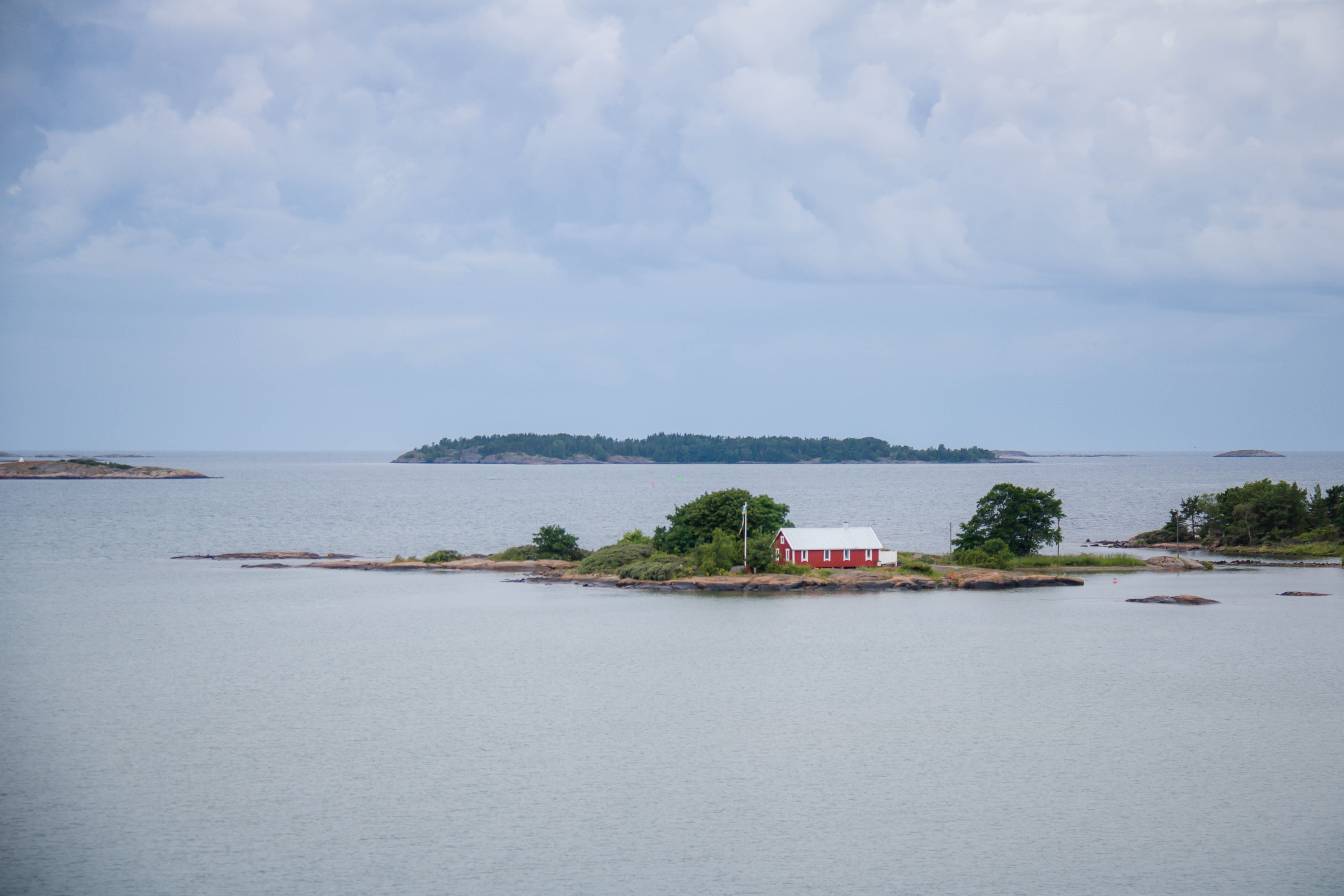
On 30 March this year the Åland Islands marked 170 years as a demilitarised territory. There was no parade, which was rather the point.
Åland is an archipelago of some six thousand islands and skerries at the mouth of the Gulf of Bothnia, between Sweden and Finland. It is Finnish territory, Swedish-speaking, self-governing, and home to 30,952 people as of 30 June this year. It is also the only place in the Baltic Sea where, by treaty, no state may build a fortification, station a garrison, or land a military aircraft — and where, in wartime, no belligerent may conduct operations at all.
Finland joined NATO on 4 April 2023. Sweden joined on 7 March 2024. The Baltic is now, in the phrase everyone uses, a NATO lake. And in the middle of it sits a demilitarised zone whose legal architecture predates the telephone.
Three words that are not synonyms
Almost every English-language account of Åland blurs three distinct things. They are worth separating, because the difference is the whole story.
Demilitarisation is a peacetime restriction on what may physically exist on the territory: no fortifications, no bases, no stationed forces.
Neutralisation is a wartime status: the territory must be kept outside the theatre of war, and belligerents may not fight over it or on it.
Neutrality is neither of those. It is a security-policy posture adopted by a state. Åland is not neutral. Finland is not neutral. Finland is in NATO, and Åland is Finnish.
The practical consequence is the one that surprises people: Åland is demilitarised, but Finland is legally entitled — and considers itself obliged — to defend it. Article 7 of the governing convention says so expressly. If Åland's neutrality is imperilled by sudden attack, Finland shall “take the necessary measures in the zone to check and repulse the aggressor.” Demilitarisation is not disarmament of the defender.
Four treaties, no exit clause
1856. The Åland Servitude, annexed to the Treaty of Paris ending the Crimean War, signed 30 March. France and Britain imposed it on Russia: the islands shall not be fortified and no military or naval establishment shall be maintained there. Demilitarisation only — no neutralisation yet.
1921. The Convention on the Non-Fortification and Neutralisation of the Åland Islands, signed at Geneva on 20 October by ten states — Germany, Denmark, Estonia, Finland, France, Great Britain, Italy, Latvia, Poland and Sweden. It followed the League of Nations Council's decision of 24 June 1921 awarding sovereignty to Finland while guaranteeing Swedish language, culture and self-government. It is detailed to the point of fussiness: Finland may keep light surface warships to an aggregate 6,000 tons, temporarily; military aircraft may overfly but not land; no other power's warships may enter except one at a time. Soviet Russia was not a party. And there is no denunciation clause.
1940. The Moscow Agreement of 11 October, between Finland and the USSR, which fills the 1921 gap. Finland undertakes not to fortify the islands and not to place them at the disposal of foreign armed forces. It also establishes a Soviet — now Russian — consulate at Mariehamn whose function extends beyond ordinary consular work to supervising compliance, including a right to request joint investigation of suspected violations. Confirmed by exchange of notes in 1948 and by a Finnish–Russian protocol in 1992.
1947. Article 5 of the Paris Peace Treaty: the Åland Islands “shall remain demilitarised in accordance with the situation as at present existing.”
One widespread error is worth correcting. Protocol 2 of Finland's 1995 EU accession is often described as confirming the demilitarisation. It does not. The words do not appear in it. Protocol 2 protects Åland's right of domicile rules and its exemption from EU turnover and excise harmonisation — which is what preserves the duty-free trade on the Stockholm ferries. It nods to Åland's “special status… under international law” in its preamble, and stops there.
Why it is so hard to undo
In 1920 the League of Nations Commission of Jurists described the Åland settlement as having been created “in European interests” and as forming part of “European law” — concluding that it could not be abolished or modified by the acts of one power, or by agreement among only some of them.
That is the argument that the regime binds all interested states rather than merely its signatories. Combined with the absence of any denunciation clause, it is why the question “could Finland simply end this?” has no easy answer.
What autonomy actually contains
The Act on the Autonomy of Åland dates from 1991 and came into force on 1 January 1993, the third such act since 1920. Swedish is the sole official language — not one of two, as in mainland Finland. Finnish has no official standing on the islands.
Residence rights run through hembygdsrätt, a regional citizenship within Finnish citizenship, granted to Finnish citizens after five years' residence, satisfactory Swedish and permanent relocation. It confers the right to vote in Lagting elections, to buy real property without restriction, and — the clause that matters here — exemption from military conscription, with a right to serve instead in pilotage, lighthouse or civil administration work. In practice no such substitute service has been organised, and Ålanders do not serve.
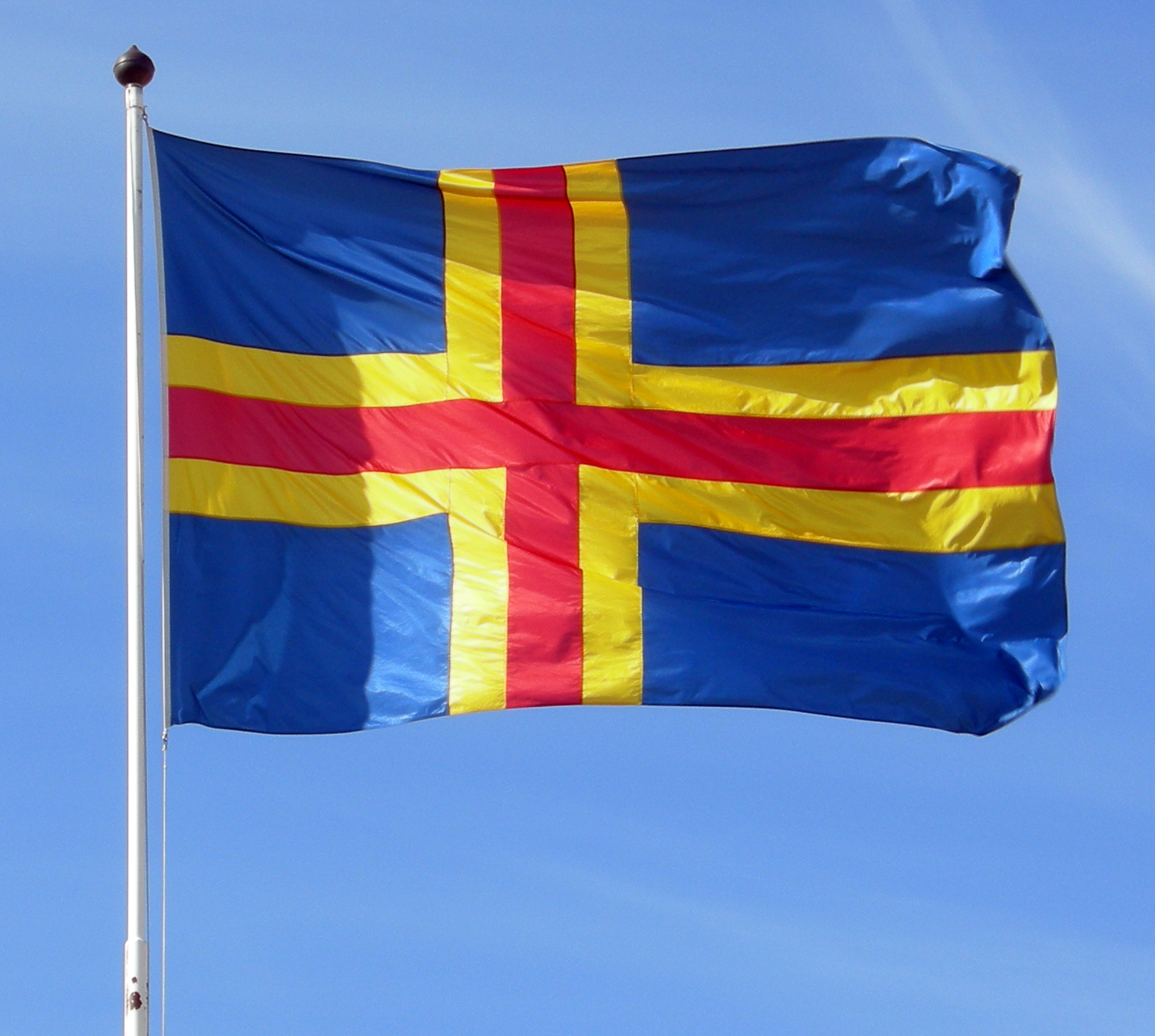
The Lagting has thirty members. The government is headed by the lantråd, currently Katrin Sjögren of the Liberals, elected in December 2023. Åland has had its own representation in the Nordic Council since 1970 and appoints two of its 87 members. It has a flag (1954), its own stamps (first issue 1 March 1984), and the .ax domain.
One live detail: a total reform of the Autonomy Act is under way, with consultation having run from May to August this year and parliamentary handling expected around the end of October. It contains nothing about demilitarisation. Åland's constitutional settlement is being rewritten this autumn; its security settlement is not.
NATO changed nothing, officially
Finland's foreign ministry is unambiguous. Its published position states that membership “will not affect the status of the Åland Islands, which is based on international treaties,” that Finland “respects the demilitarisation of Åland and is prepared to take the necessary measures to defend Åland's neutrality,” and that the Åland treaties “are not in conflict with the obligations of Article 5 of the North Atlantic Treaty.”
That last sentence answers the loophole argument that circulates in think-tank commentary. Helsinki's view is that defending Åland is Finland's own treaty responsibility, expressly authorised by the 1921 Convention, and that no NATO ally needs to arrive for it to happen.
There was a formal review, and it is the document to read. At the request of the Åland Islands Peace Institute during the accession debate, the foreign ministry published a legal report on Åland's status on 19 December 2023. On the consulate, its conclusion was blunt: there is no legally certain and indisputable means under the law of treaties for denouncing or suspending the provision. It also recorded that no joint investigation under the 1940 agreement has been undertaken in recent decades, and that Russian consulate staffing has declined since the early years.
A checkable corollary: the Finland–United States Defence Cooperation Agreement, in force since 1 September 2024, lists fifteen agreed facilities and areas in Finland. Åland is not among them. The nearest are on the south coast — the Nyland Brigade at Dragsvik, the Syndalen training area at Hanko, the naval base at Upinniemi.
The consulate nobody can close
The Russian consulate in Mariehamn is the single most contested object in this story, and it is still open.
A citizens' initiative to close it was launched in April 2023 and cleared the 50,000-signature threshold. Prime Minister Petteri Orpo called the consulate a “historical relic.” Finland closed Russia's consulate general in Turku in October 2023 — but not Mariehamn. On 11 December 2023 parliament rejected the initiative in plenary, and did so on a technicality: Deputy Speaker Paula Risikko ruled it inadmissible in form, since a citizens' initiative must contain a bill or a proposal to begin drafting one, and this was simply a request. No MP objected. Foreign Minister Elina Valtonen said the consulate “cannot be separated from the other agreements concerning Åland's status.”
The logic is circular and Finland knows it. The consulate exists because of a treaty, not because of ordinary consular relations. Closing it would mean beginning to dismantle the demilitarisation regime — which is precisely what Finland has decided it does not want to do.
The argument is getting louder. The policy is not moving.
This is the part that gets misreported, so it is worth stating carefully.
Mats Löfström, Åland's sole MP in the Finnish parliament, published an op-ed in April under the headline “No discussion of demilitarisation in parliament.” His argument: the media debate has no legislative counterpart; the treaties were reviewed years ago and nothing has changed; and demilitarisation does not mean Åland is undefended — there are annual meetings between the Navy and Åland's political leadership, and planning exists within the treaty framework.
President Alexander Stubb, visiting the Nyland Brigade in March, said the government had gone through how Åland would be defended in a crisis and that he was “completely confident” the defence forces, border guard and coast guard could manage it. Visiting the islands in 2024 he had said the status “is not a problem” and that he slept well at night.
Public opinion splits along a fault line that will surprise nobody. A Hufvudstadsbladet/Taloustutkimus survey in March found 73% of Ålanders want to keep demilitarisation. Polling of mainland Finns has repeatedly found a majority open to scrapping it — though the most-cited figures date from 2022 and should carry that date.
The most substantive revisionist case is new. In late 2025 Major Daniel Forsell, a general staff officer, completed a thesis at the Finnish National Defence University directly challenging the foreign ministry's report and proposing a two-stage exit: terminate the 1856 and 1921 conventions by agreement among the signatories, then terminate the 1940 Moscow Agreement by unilateral Finnish notification, accepting the political consequences. He grounds it in changed circumstances, obsolescence and national-security necessity.
It is a staff-college thesis reported in a party-adjacent outlet, not government policy. But it is evidence that the argument is being worked out seriously inside the Finnish defence establishment, and that is itself news.
What the islands are actually worth, militarily
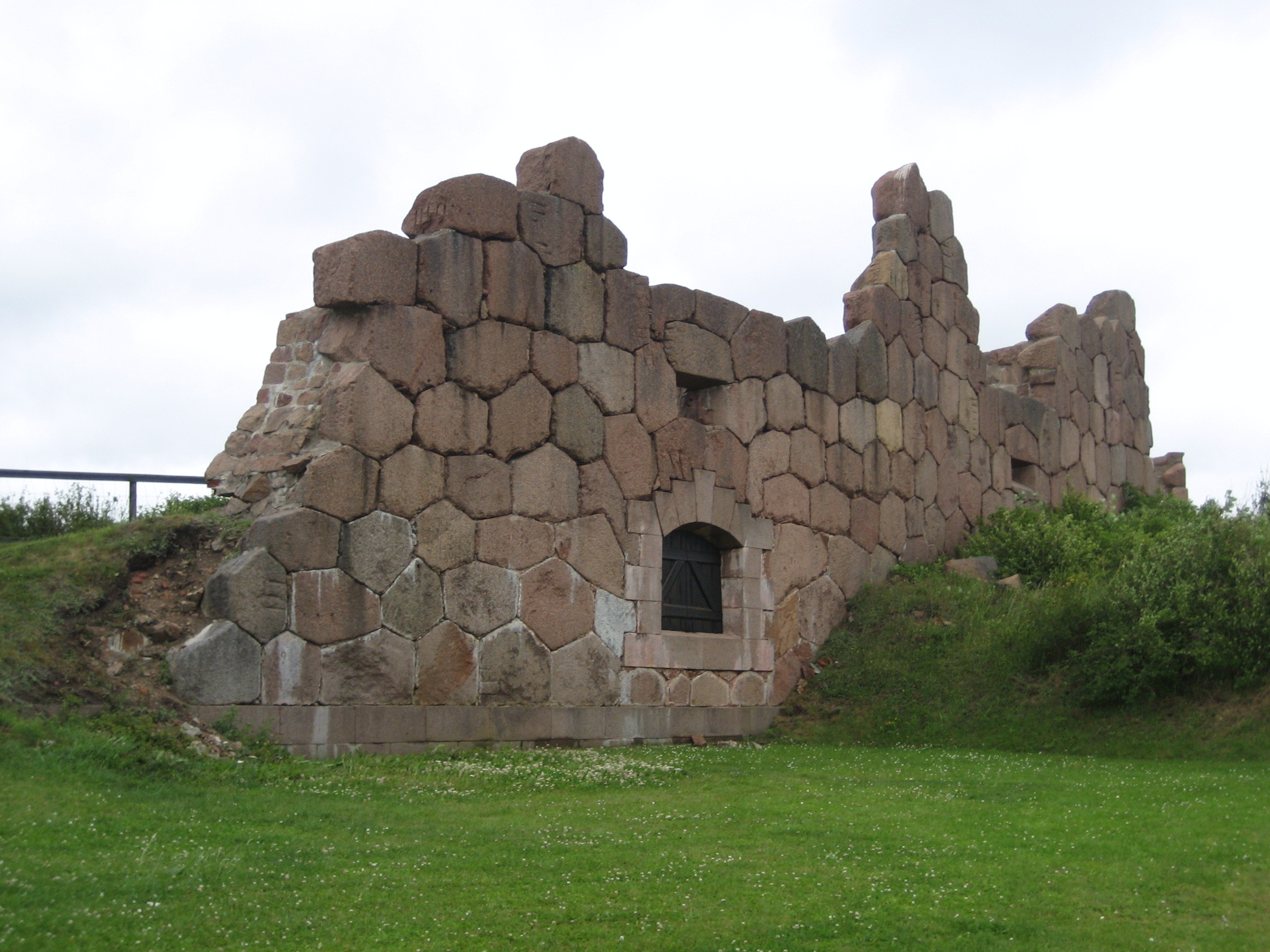
Åland commands the northern approaches to the Baltic, sitting across the routes into the Gulf of Bothnia and toward the Gulf of Finland. Napoleon is said to have called the islands the “foreposts of Stockholm.” Russia used them as a naval base against the Swedish coast in the early eighteenth century; the fortress at Bomarsund was destroyed by an Anglo-French force in 1854, which is the event that produced the 1856 servitude in the first place.
The recurring analytical phrase is military vacuum — used by Defence Minister Jussi Niinistö in 2016 and revived by Forsell. (He is not to be confused with former President Sauli Niinistö; English-language sources conflate them with some regularity.) The Lagting's counter-formulation, in an April report, is that demilitarisation “constitutes a stabilising factor in the Baltic Sea.”
A caution on the cable story, because it is repeated loosely. The documented Baltic sabotage and anchor-damage incidents — the November 2024 cuts, the December 2025 Elisa cable damage in the Gulf of Finland — did not happen at Åland. What the Lagting has recorded is generalised concern: shadow-fleet activity, rising cable damage from anchors, cyber threats to Åland infrastructure. Åland sits in a sea where this is happening. That is not the same as saying it has happened there.
Moscow's interest in the status quo
In August 2024 Russian state television broadcast a six-minute segment filmed on Åland, featuring the Russian consul and footage of President Stubb's boat arriving at Mariehamn. It asked why Finns “dream of militarising Åland” and why Ålanders permit their Swedish-speaking community to be displaced by Ukrainian refugees. The Russia specialist Kalle Kniivilä called it classic propaganda — truth, half-truth and possibly some lies, with only sources fitting the narrative.
The segment is instructive. Russia markets Åland's demilitarisation as a norm the West is preparing to violate. Any Finnish move to revisit it would hand Moscow a ready-made grievance, which is itself among the stronger arguments for leaving it alone.
The Åland that left
For readers here, there is a piece of this history that has almost no institutional memory in North America.
Between 1893 and 1924, roughly 7,200 people — about a quarter of Åland's population — took out passports to emigrate. The Åland Islands Emigrant Institute in Mariehamn, which collects the material, cautions that the figures are unreliable in both directions: many people emigrated repeatedly and appear more than once, while others left unofficially. The distinctively Ålandic route was to desert ship abroad, which a deep-sea sailing community was unusually well placed to do.
They arrived as individuals rather than in organised groups, and they did not form enclaves. There is no Åland-American society, no federation, no lodge. Ålanders in North America were absorbed into the wider Swedish-Finn and Finnish-American communities — the Swedish Finn Historical Society in Seattle is the closest institutional home, and it covers Swedish-speaking Finns generally. A quarter of a population left, and left no organisation behind.
Where this stands
The legal architecture is 170 years old, unusually robust, and neither Helsinki nor Mariehamn wants to touch it. Finland's own post-accession legal review concluded there is no clean way out even of the Russian consulate clause, let alone the wider regime.
What has changed since 2023 is not the law. It is the volume of the argument: a staff-college thesis mapping an exit route, a mainland majority open to change, an Åland majority firmly against, and a set of institutions — the Lagting, the foreign ministry, the Peace Institute — all working quite hard to keep the question technical rather than political.
Whether that holds is a question for the next decade rather than the next parliamentary session. For now, the islands remain what they have been since 1856: the one place in a militarised sea where, by the agreement of powers most of which no longer exist, nothing military is allowed to be.

)%20(1).avif)