The Faroe Islands Sanctioned Two Russian Fishing Firms — and Signed the Deal Anyway
In May of this year the European Union, the United Kingdom and Iceland put a proposal to the North East Atlantic Fisheries Commission. Russia had unilaterally allocated itself 67,548 tonnes of mackerel; the proposal would restrict it to 1,495 in international waters. It passed by postal vote.
One party declined to support it. The Faroe Islands — population roughly 56,000, self-governing within the Kingdom of Denmark, four months into a new government — abstained from the squeeze.
The new foreign affairs and fisheries minister, Bárður á Steig Nielsen, acknowledged that Russia's self-allocation was “not acceptable,” but argued that the restriction served little practical purpose while risking the wider fisheries relationship.
That is the Faroese position in miniature, and it has now survived a change of government.
The agreement everyone else cut
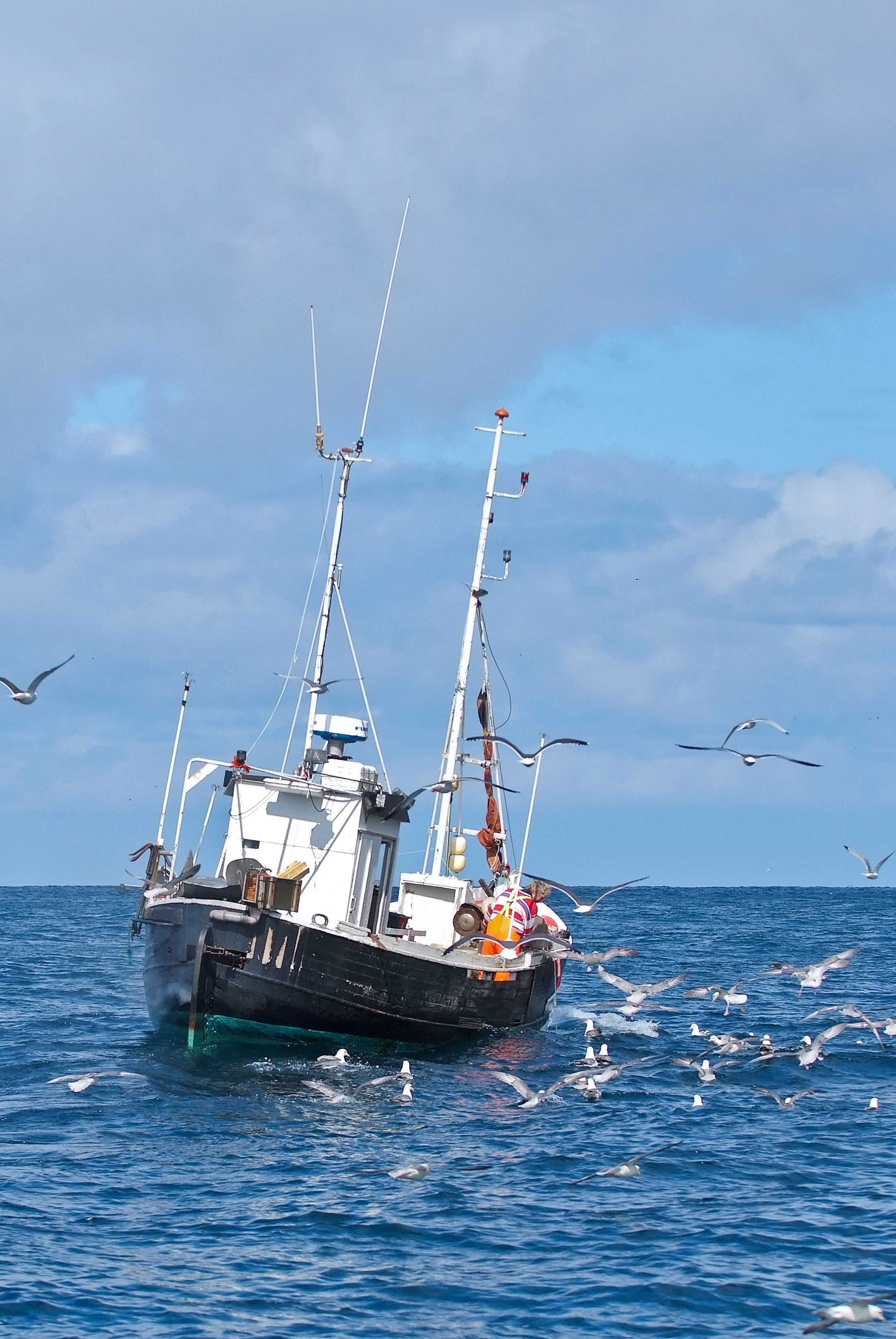
The Faroe–Russia fisheries arrangement is a quota exchange dating to 1977, renewed annually. Faroese vessels get access to Barents Sea cod, haddock, flatfish and shrimp. Russian vessels get access to blue whiting, mackerel and Atlanto-Scandian herring in Faroese waters.
After February 2022 the Faroes did not suspend it — alone in the Nordic region — on the argument that food is not sanctioned. The decision drew sustained criticism, most persistently from the United Kingdom, whose fishing industry objected to Russian trawlers being licensed into a zone jointly managed with the Faroes that Britain would not license them into.
Then the evidence changed. In April 2023 a joint Danish, Swedish and Norwegian press investigation found military radios aboard at least two Russian trawlers in Faroese waters. In June 2023 the Faroes restricted Russian port access: only vessels fishing under the bilateral agreement could enter, and only for crew changes, bunkering, provisioning, landing and transshipment. Maintenance and purchases were prohibited.
The Netherlands banned Russian fishing vessels in June 2024. Norway sanctioned two companies — Norebo and Murman Seafood — in July 2024, after one of Murman's vessels, the Melkart-5, showed what was described as highly unusual navigation near subsea cables in the Norwegian North Sea shortly before cable damage occurred.
What the Løgting actually did
The Faroese parliament began debating sanctions on the same two companies in August 2025, and it split openly.
Sirið Stenberg, then foreign affairs and industry minister, argued the position that eventually prevailed: “If the Faroes don't do the same that our allies have done, we would be the only place in this whole area where ships that have been blacklisted by others could go.” And: “It's a very serious situation if we accept that other countries sanction but that we don't.”
Against her, Jacob Vestergaard of Fólkaflokkurin — now labour minister in the current government — gave the argument that explains a great deal about Faroese fisheries policy: “The E.U. and Norway have never been our allies in fisheries – never. They still aren't today.”
Hanus Hansen, chairman of the Faroese Shipowners' Association, was blunter: “This could have great consequences for the Faroe Islands, so we're against it.”
On 4 December 2025 the Løgting passed the bill. The sanctions took effect on 1 January 2026: licences stripped, port entry barred.
And in between — on 22, 23 and 29 December, negotiating digitally — the Faroes and Russia agreed the 2026 quota exchange. It concluded on 30 December 2025, the day before the sanctions bit.
Minister Eirikur í Jákupsstovu said sanctioning the two companies had been “a non-negotiable condition” and that he was “very pleased with the fact that we were able, in these difficult times, to arrive at an agreement.” The Russian delegation said the sanctions violated the 1977 framework and that the Faroes would bear responsibility for the consequences.
Renewed — but narrowed
The 2026 agreement is materially smaller than its predecessors.
Faroese access in Russian waters: cod down 1,139 tonnes to roughly 6,300; haddock up 484 to about 1,500; flatfish 900; northern shrimp 4,000. A net reduction of around 655 tonnes.
Russian access in Faroese waters cut harder. Blue whiting down 10,000 tonnes to 65,000 — and, more consequentially, capped at 30,953 tonnes inside Faroese waters, a 41% reduction in in-zone access. Mackerel roughly halved, down 3,879 tonnes to 4,201. Herring up 1,914 to 7,714.
Reporting also indicates Russian vessels were excluded entirely from the jointly-managed UK–Faroes “Special Area” north of Scotland — the single loudest British grievance since 2022. We have not been able to corroborate that exclusion in the UK's own 2026 agreed record, which makes no reference to third countries, and flag it accordingly.
The number that corrects the story
Nearly every account of this frames it as export dependence: the Faroes sell fish to Russia and cannot afford to stop. That framing is wrong, and the figures say so plainly.
In 2016, Russia took 23.8% of Faroese exports and was the single largest market — the product of a specific window in which Russian counter-sanctions on EU and Norwegian salmon made the Faroes the preferred supplier. The islands got rich off a loophole.
In 2025, Faroese seafood exports to Russia were DKK 180.4 million — about 1.3% of a total of DKK 13.4 billion. The EU took DKK 6.5 billion. The collapse was largely self-inflicted: Bakkafrost and Hiddenfjord, the two salmon farmers, voluntarily boycotted Russia from 2022.
So the dependency is not the market. It is access to Barents Sea cod for the demersal fleet, and the port business that Russian vessels bring — landings, transshipment, bunkering. In May 2023 alone, Russian vessels bought DKK 16.4 million of fuel in Faroese ports.
Fish are about 93% of Faroese goods exports. Any article that presents this as the Faroes needing Russian customers is describing a trade that has already ended.
The government that inherited all of this
The Faroes went to the polls on 26 March 2026. Turnout was about 89.5%, a figure worth pausing over for a North American readership.
The election was called on 25 February, when Prime Minister Aksel V. Johannesen dissolved the Løgting the same day parliament approved the Suðuroy tunnel. The coalition had collapsed over a linked bargain — Framsókn would back the tunnel only if others backed raising the retirement age, and when that support evaporated so did the government. The election was triggered by a tunnel and a pension age, not by independence or Russia.
Fólkaflokkurin came first with nine of the 33 seats. On 13 April the Løgting elected Beinir Johannesen as løgmaður. He was born in February 1997 — 29 years old, the youngest in Faroese history — leading a coalition with the unionist Sambandsflokkurin and the social democratic Javnaðarflokkurin. His deputy and foreign minister is Bárður á Steig Nielsen, himself a former løgmaður. His finance minister is Aksel V. Johannesen, the man he replaced.
The Faroese party system does not map onto left and right. Tjóðveldi is left and separatist; Fólkaflokkurin is right and separatist; Javnaðarflokkurin is left and unionist. Which is why a coalition that looks incoherent from outside works perfectly well from inside.
The constitutional project that stopped
The Faroes have been trying and failing to write their own constitution for twenty years. A draft went to the Løgting in 2017 with a referendum announced for 25 April 2018. The referendum never happened; the committee could not agree how to reconcile a Faroese constitution with the Danish one, and the coalition split.
Constitutionally, the islands run on the Home Rule Act of 23 March 1948 and the Takeover Act of 24 June 2005, which lets them unilaterally assume authority in most fields. Tjóðveldi's method, as one of its MPs has described it, is to “empty” the Home Rule Act — take over every jurisdiction available, step by step.
Then something notable happened, and it is the most important recent finding about Faroese politics. A policy brief published in March by the University of the Faroe Islands reports that Faroese parties across the spectrum had converged on formal sovereignty in association with Denmark as the next constitutional step — converting a hierarchical realm into a lateral community of states — and then paused it. American pressure on Greenland made even independence-minded parties conclude that destabilising the Kingdom's structure at that moment was too risky.
The Faroes deferred their own national project to avoid weakening Greenland's position. The new prime minister has said negotiations will nonetheless be opened with Copenhagen so that the Faroes can represent their own interests in foreign policy, and that on full independence the negotiations must happen first to “show how far we get.”
Why the Faroes are not Greenland
The two territories are constantly bracketed together, and the differences are more instructive than the similarities.
Legally, Greenland's 2009 Self-Government Act explicitly recognises Greenlanders as a people with a right to independence under international law. The Faroese arrangement contains no such codified route — which is exactly why they have spent two decades trying to write one. Greenland got in 2009 what the Faroes failed to get in 2018.
Economically, the position reverses. The Danish block grant to the Faroes is about DKK 641.8 million — roughly 8.5% of public revenue, and it has been frozen since 2015 and then reduced by agreement. Greenland's is around DKK 3.8 billion, roughly 30% of public revenue, and indexed annually. The Faroes are close to fiscal independence and walking away from the money incrementally. Greenland cannot afford to.
The Faroes have the economy but not the legal route. Greenland has the legal route but not the economy. Neither has both.
And on great-power attention, the asymmetry is the point. There is no American acquisition rhetoric aimed at the Faroe Islands. No purchase talk. Nothing analogous to the Greenland campaign. What Washington has offered the Faroes is an annual Partnership Dialogue and a desk in the House of Sweden. The Faroes have neither minerals nor an ice cap suitable for airbases. They have fish, and nobody wants to buy the country to get them.
Where the Faroes have been drawn in is indirectly: they froze their own constitutional process, and a Danish–Faroese defence agreement concluded in August has been reported as part of Copenhagen's response to American pressure over Greenland. The islands' position in the GIUK gap makes them structurally central to any Arctic posture the Kingdom adopts.
The North American footnote
There is no Faroese-American community, and the absence is itself the finding.
The Faroese did not join the great nineteenth-century transatlantic migration in organised numbers. Faroese labour migration went to fishing and, later, to Denmark. Those who did reach America travelled on Danish citizenship, were recorded as Danes, often bore Danish-form surnames, and arrived as individuals rather than in groups — men typically as sailors leaving a ship, women often through marriage. They formed no enclaves, and so left no institutions. The historian Michael J. Douma, who has done the only preliminary research on the group, calls them “an immigrant group without a written history.”
The actual Faroese diaspora is Danish, concentrated in Copenhagen and Aalborg, and it is growing at roughly 240 people a year — about half a per cent of the population annually. Retaining young people was the new prime minister's stated second priority on taking office.
What has arrived in North America is governmental rather than diasporic, and it is very recent. The Faroe Islands opened a representation in Washington on 18 September 2024, sharing the House of Sweden with the Swedish and Icelandic embassies. Its head, Bjørn Kunoy, previously ran the Faroese representation in Moscow. In 2024 the Faroese government and Scandinavia House staged Faroe Islands Culture Days in New York, from April to July, opening with a concert by Eivør and an exhibition of eight contemporary Faroese artists.
And since 1 January this year, the Faroe Islands, Greenland and Åland hold permanent seats on the Presidium of the Nordic Council, having been observers before — participating, as the Council put it, on an equal footing with the five sovereign states.
What to watch
The next quota negotiation with Russia falls at the end of December, and it will be the first conducted entirely under the current government. The sanctions on Norebo and Murman Seafood will have been in force for a year. Whether Moscow tolerates that a second time is the open question.
The larger one is whether the constitutional process resumes — and the University of the Faroe Islands brief is explicit that its authors think it should, but only once the pressure on Greenland eases. A 29-year-old prime minister has time to wait. Whether his coalition does is another matter.

)%20(1).avif)