The Sauna Reached Michigan Long Before It Reached Manhattan
Culture · Nordic Stories
Walk around Brooklyn, Toronto, Portland or Austin at the moment and you will find saunas being opened at a rate that would have seemed absurd five years ago. Bathhouses, sauna studios, barrel saunas on trailers, cold plunges in the back, membership tiers, an app.
The framing is almost always the same: recovery, longevity, heat-shock proteins, cardiovascular markers, discipline. Sauna as a protocol.
This is a strange thing to watch if you know where the sauna already was.
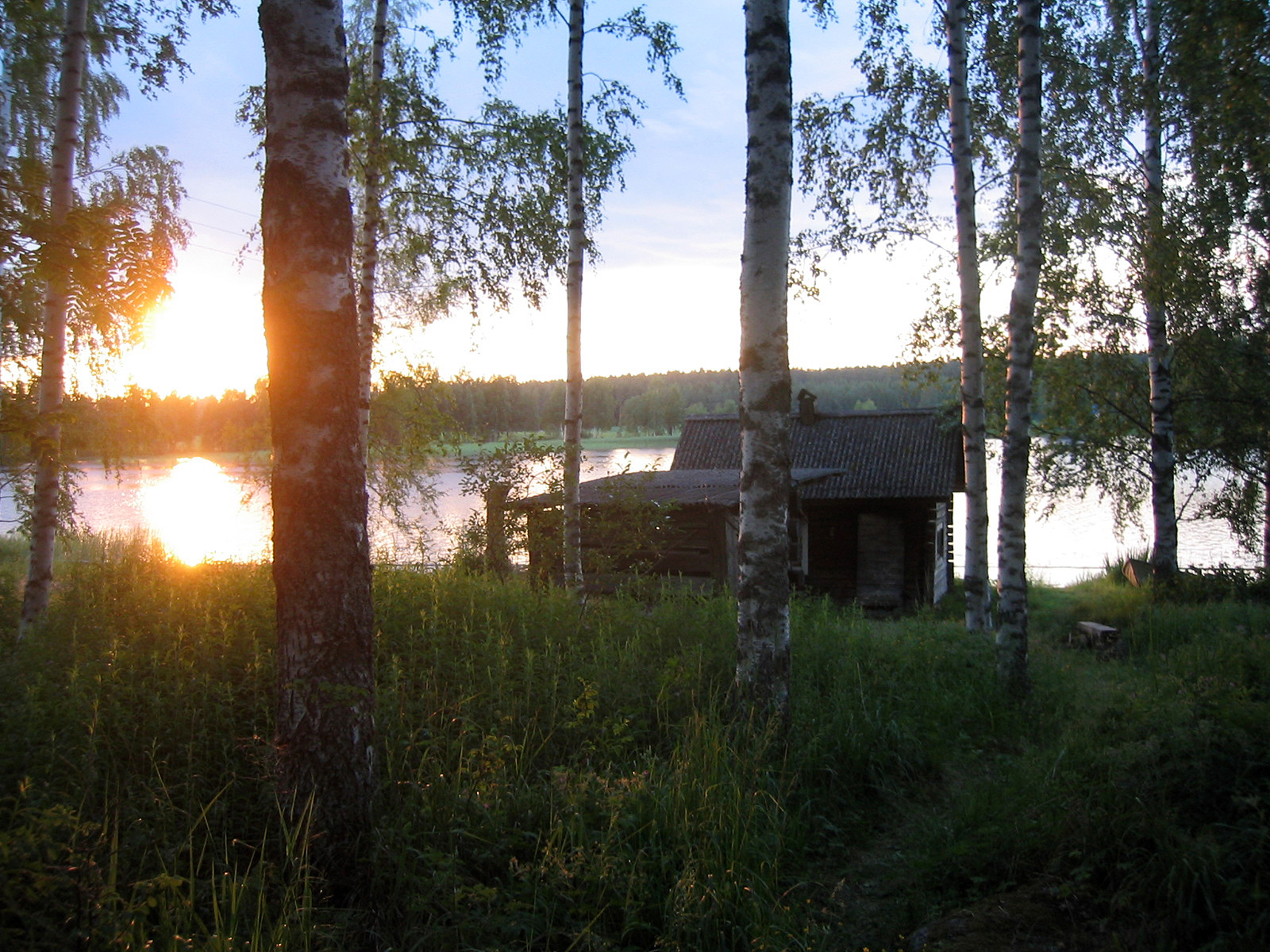
Because it was in Michigan. It was in Minnesota. It was in northern Wisconsin, Ohio, Oregon, Ontario and British Columbia, and it got there in the 1880s and 1890s, built by Finnish immigrants who were not optimising anything. It has been continuously present in North America for roughly a hundred and forty years, and the current boom is largely unaware of it.
What UNESCO actually inscribed
In December 2020, at its fifteenth session, the UNESCO intergovernmental committee added sauna culture in Finland to the Representative List of the Intangible Cultural Heritage of Humanity.
The wording matters. UNESCO did not inscribe the sauna. It inscribed the culture — the social practice, the customs around it, the meaning attached to it.
The listing describes a country with roughly 3.3 million saunas for 5.5 million people, which is to say rather more saunas than households. It notes that the practice is not stratified by class or status, that it is transmitted through families, student organisations and sauna clubs, and that the point is not heat but something closer to a state — a clearing of the head as much as the body, with an old association to the sacred.
Central to it is löyly: the burst of steam produced when water is thrown on the hot stones. Finns will tell you, in a way that sounds like mysticism and is actually a technical claim, that a sauna without good löyly is not a sauna. It is a hot room.
UNESCO also records that no type ranks above another — electric, wood-heated, smoke, even infrared. That is more generous than most Finns are in practice, but it is the official position.
How it got to the Iron Range
Finnish emigration to North America ran heavily from the 1880s into the 1920s, and it concentrated where the work was: copper in Michigan's Keweenaw Peninsula, iron on Minnesota's Mesabi and Vermilion ranges, logging across the northern tier, fishing on the Pacific coast.
These were not comfortable places to arrive. Company housing was crowded, plumbing was rare, and winters were long.
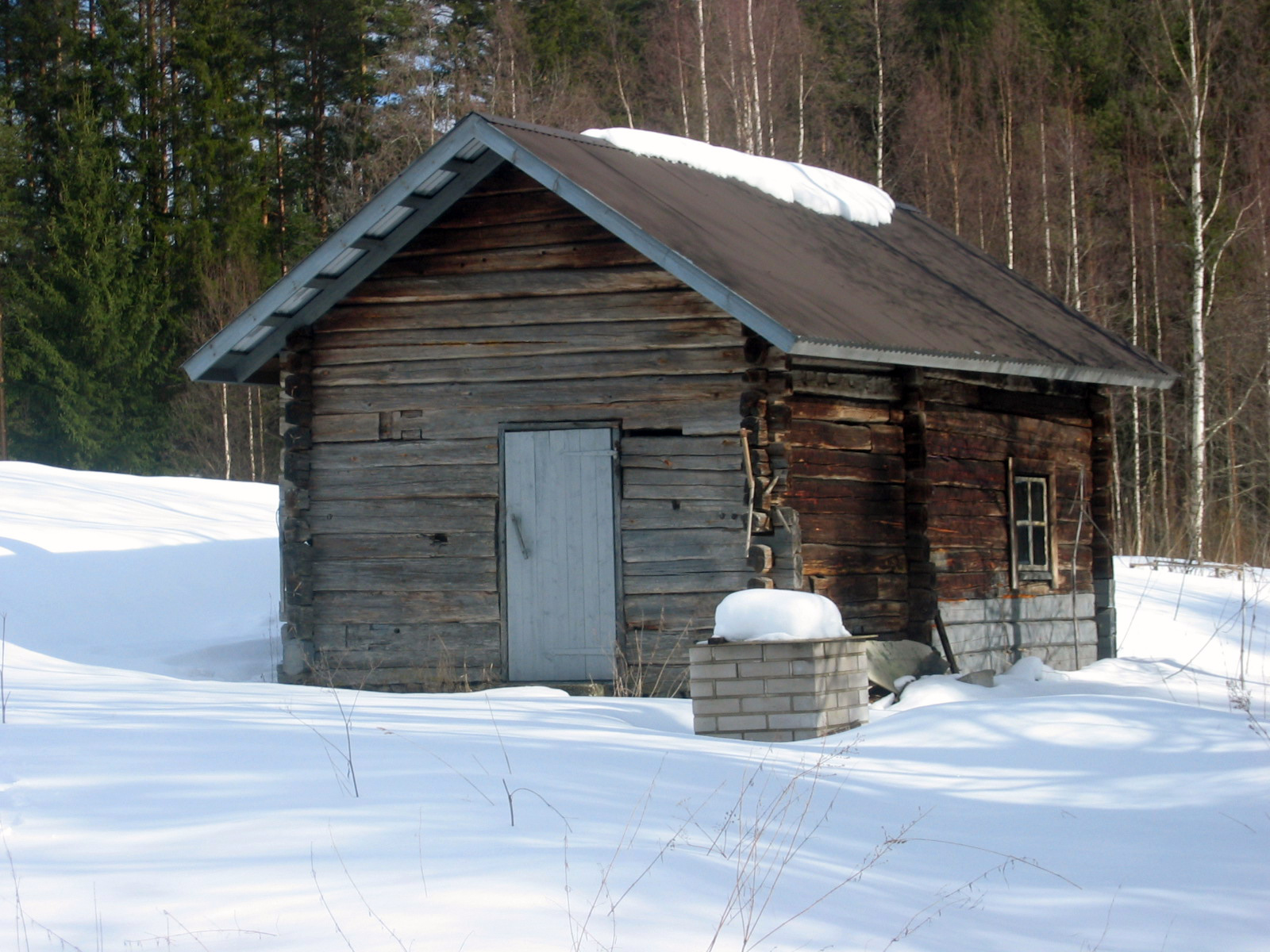
Finnish immigrants built saunas, and in the tradition they carried, the sauna was not a luxury appended to a finished house. It was infrastructure. It was where you washed when there was no bathroom, where the sick were tended, where meat was smoked and malt dried, and — within living memory in rural Finland — where children were born, because it was the cleanest warm room on the property and the only one that could be got properly hot.
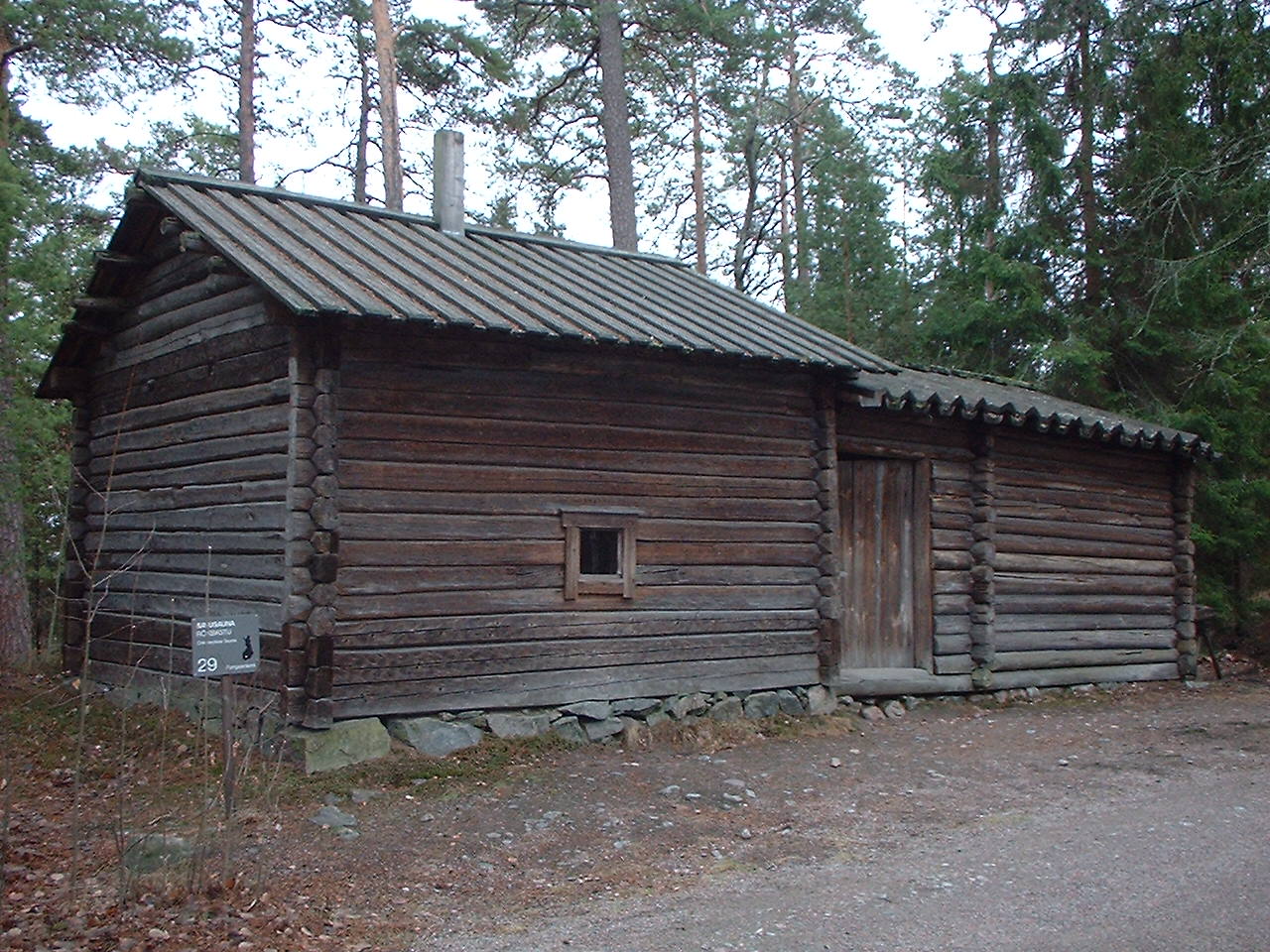
A remarkable amount of this transferred intact. The Erick and Kristina Nelimark Sauna in Embarrass, Minnesota — a log building put up by Nelimark himself around 1930, now part of a homestead museum — was added to the National Register of Historic Places in 1990, recognised for significance in agriculture, architecture and European ethnic heritage. A sauna, on the National Register, as a document of how a community farmed and built.
The public sauna on First Street
The building that tells the story best is at 105 South 1st Street in Virginia, Minnesota, on the Mesabi Range.
Built around 1912, two storeys of brick, twenty-five feet by a hundred, flat roof. It was a commercial public sauna, and it existed because Finnish miners and their families largely did not have private bathing facilities and wanted the sauna they had grown up with.
It functioned the way a coffee house or a tavern functions in other communities: as the place people went, repeatedly, to be among their own. It was added to the National Register in 1980 for its significance in architecture and social history — explicitly as evidence of Finnish-American influence on the Iron Range and of the commercial services that grew up to sustain it.
It outlasted its competitors, partly because its owners thought it mattered, and partly because it kept a clientele of older people, migrant workers and locals who never stopped coming. It was still operating when the listing was made. It has since closed.
That arc — immigrant necessity, then community institution, then a handful of loyal regulars, then nothing — is the same arc that ran through Finnish halls, temperance societies, co-operatives and newspapers across the region. Indoor plumbing did to the public sauna roughly what television did to the Finnish hall.
What the boom gets right, and what it drops
The current wave is not fake and it is not silly. The physiological research on regular sauna bathing is genuinely interesting, some of the best of it out of Finland, and people are getting real benefit.
But two things get dropped in translation, and they are the two things UNESCO actually listed.
The first is that sauna is social. In the Finnish practice, you go with people. Business is done there, disputes are settled there, families sit together in silence there. The North American version is frequently solitary — a session, timed, tracked, between two other appointments. You can extract every physiological benefit that way and still have removed the part a Finn would say was the point.
The second is that it is unremarkable. The Finnish sauna is not an event. It is Saturday. It is what you do. Turning it into a paid, scheduled, optimised practice makes it a discipline, and a discipline is a different object from a habit — more strenuous, more virtuous, and much easier to stop doing.
The cold plunge was never the hard part
The ice bath is the element that has travelled furthest and been branded hardest. Contrast therapy, cold exposure, the whole apparatus of endurance and willpower built around getting into cold water on purpose.
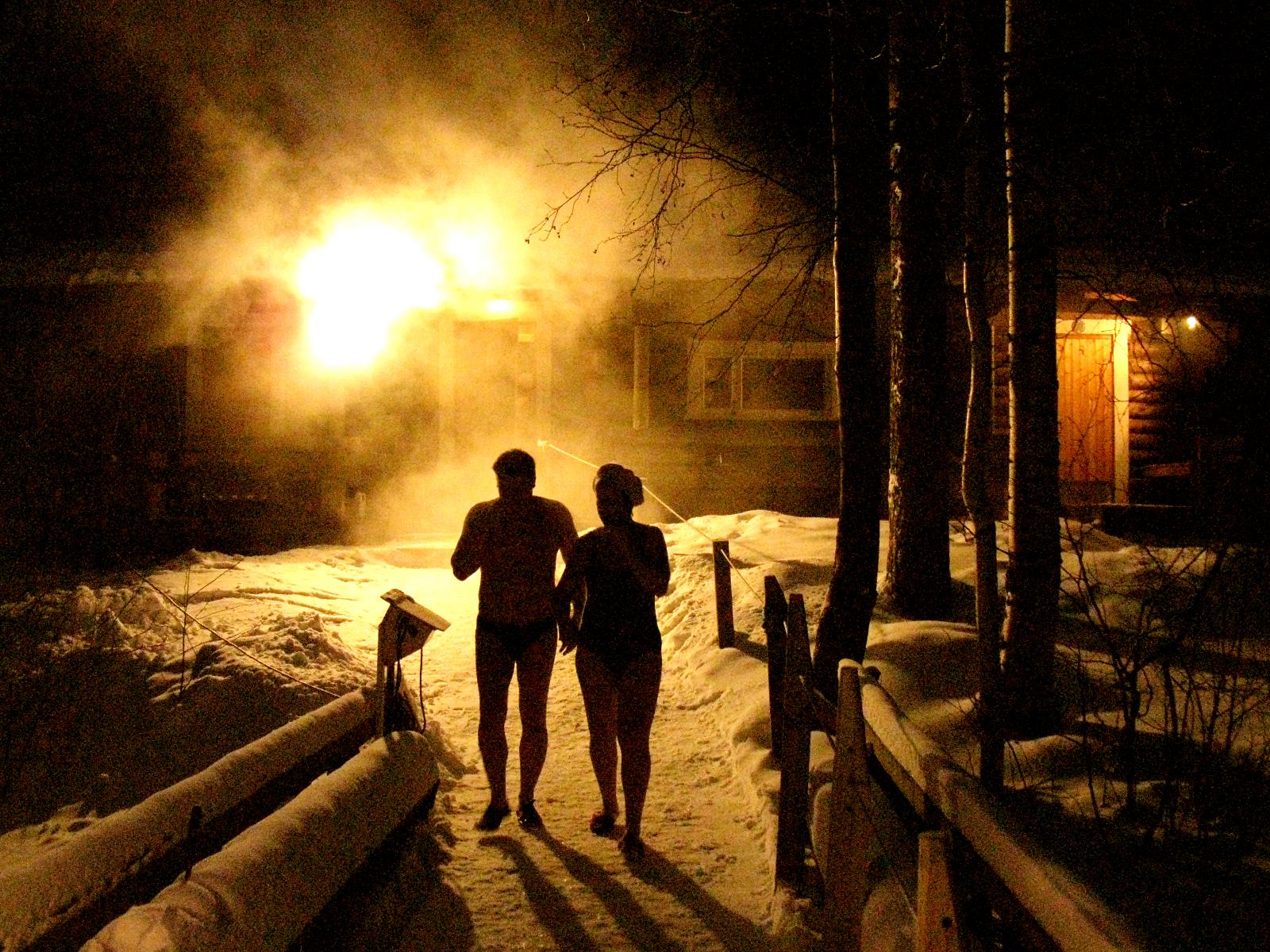
In Finland it is called avanto, it is a hole in the ice, and it is not framed as an achievement. You get hot, you get cold, you get hot again, you have a beer and a sausage. Nobody films it.
What has been imported is the sequence. What has not been imported is the shrug.
Where to find the old version
For readers in North America who want the thing rather than the product, the older layer is still there and is mostly not marketed.
The Upper Peninsula of Michigan and the Minnesota Iron Range still have community saunas, Finnish-American associations that run them, and a very large number of private family saunas on lakes. The Finnish American Heritage Center in Hancock, Michigan holds the archival record of how this community built and lived. Embarrass, Minnesota has preserved homestead saunas you can visit. FinnFest, the roving Finnish-American gathering, moves between host cities each year.
None of it will sell you a membership.
If you are going to build a sauna, or join one, the questions worth asking are the Finnish ones. Can you throw water on the stones, and does the room take it? Is there anywhere to sit and talk afterwards? And can you go often enough that it stops feeling like an occasion?
The answer to that last one is the whole tradition. Everything else is a hot room.
Sources
UNESCO Intangible Cultural Heritage, “Sauna culture in Finland”, inscribed 2020 (15.COM).
National Register of Historic Places: Finnish Sauna, Virginia, Minnesota (listed 1980); Erick and Kristina Nelimark Sauna, Embarrass, Minnesota (listed 1990).
Finnish American Heritage Center and the Finnish American Historical Archive, Hancock, Michigan.

)%20(1).avif)