Finland Closed Its Eastern Border. It Now Plans to Keep the Power to Do So Until 2028.
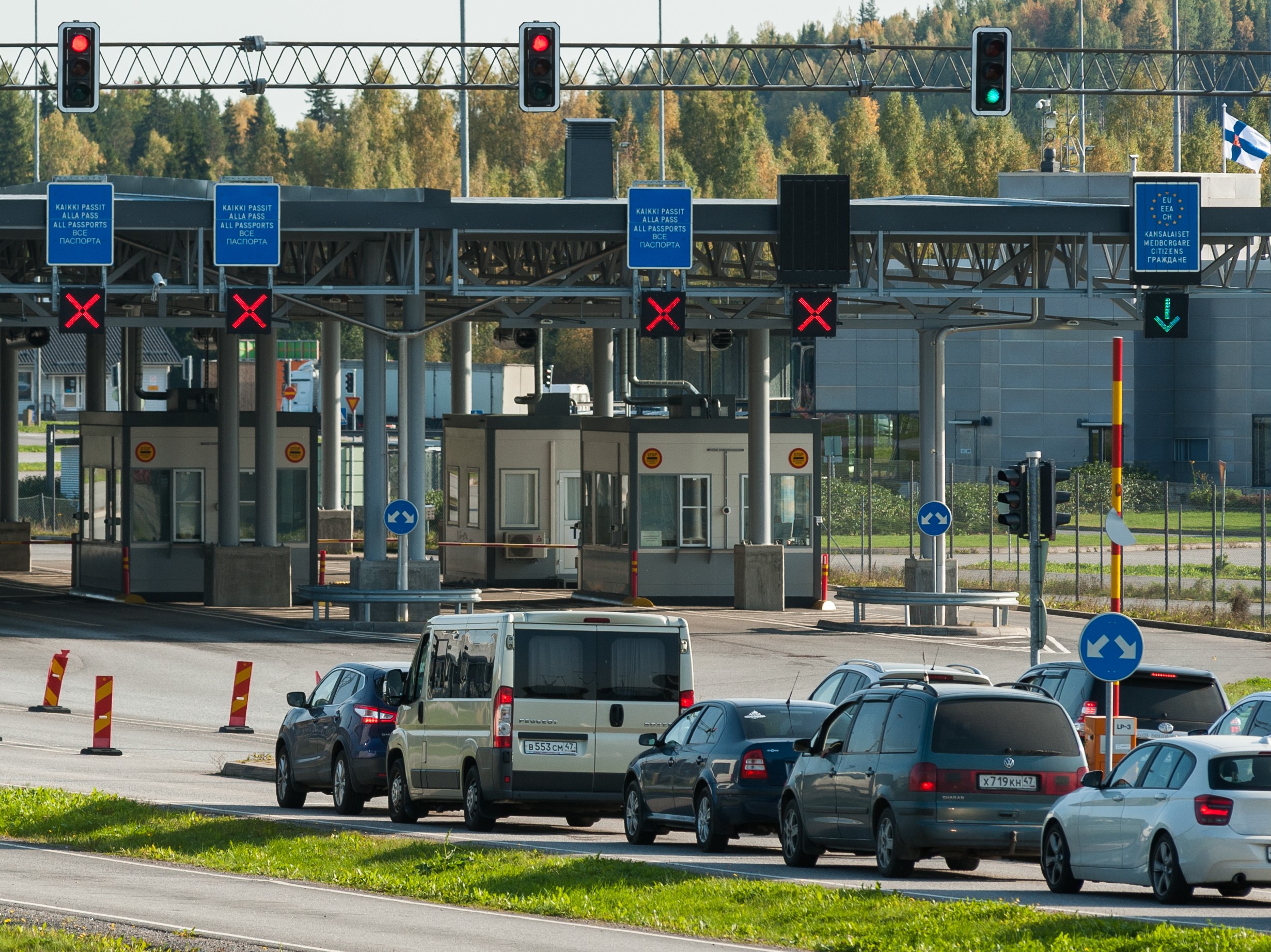
On 15 December 2023, at eight in the evening, Finland closed the last of its road crossings into Russia. The measure was announced as temporary. Nearly three years later it is still in force, and on 3 September the Finnish government decided to propose keeping the legal machinery behind it in place until the end of 2028.
For a country that spent the post-Cold War decades building a working relationship with its eastern neighbour — visa centres, twinned towns, cross-border bus routes, the Allegro trains that ran from Helsinki to St Petersburg until they were suspended in March 2022 — this is a larger rupture than the phrase border closure suggests. Finland shares roughly 1,340 kilometres of frontier with Russia, the longest of any EU member state. Eight road crossing points served it: Vaalimaa, Nuijamaa and Imatra in the south-east, Niirala in North Karelia, Kuusamo, Salla and Vartius further north, and Raja-Jooseppi in Lapland. All eight are shut.
How it happened
The trigger was not an invasion. It was a queue.
Through the late summer and autumn of 2023, people without Finnish or Schengen visas began arriving at the southern crossings — very often on bicycles, because Russian rules do not permit crossing the border on foot — and claiming asylum on arrival. The Finnish Border Guard's own accounting put the scale plainly: since the beginning of August 2023, more than 1,300 third-country nationals had arrived in Finland from Russia without a visa. In comparable earlier periods the figure had been negligible.
Helsinki concluded that the arrivals were not spontaneous. Finnish authorities described what they were seeing as instrumentalised migration — people moved toward a frontier by a state that intends the movement itself to be the pressure. The people at the border were not the adversary in this reading; they were the instrument. It is a distinction that Finnish officials have been careful to keep making, and one that gets lost quickly in translation.
Closures began on 16 November 2023 and rolled northward crossing by crossing until, on 15 December, the last one shut. The legal basis was the Border Guard Act, which permits closing crossing points where there is a serious threat to public order, national security or public health. Maritime traffic followed: Haapasaari, the port at Nuijamaa and Santio were closed to leisure vessels on 15 April 2024.
The emergency law that has never been used
In the summer of 2024 the Finnish parliament approved something considerably more contentious. The Act on Temporary Measures to Combat Instrumentalised Migration — the “pushback law” in shorthand — allows the government, in tightly defined circumstances, to decline to accept applications for international protection at the eastern border. It passed on 16 July 2024, was extended on 27 June 2025, and runs to 31 December 2026.
It has never been applied. Not once.
The reason is almost banal: the border is closed, so there is nobody at the crossing points to turn away. Finland legislated an emergency instrument, then rendered it redundant through a simpler measure taken under older law. Human rights bodies inside and outside Finland argued during the parliamentary process that the act sat badly with the country's obligations under the Refugee Convention and the European Convention on Human Rights; the government's position was that it was a proportionate response to a state-manufactured threat and that it would be used only as a last resort. Both arguments remain untested, because the instrument has never left the shelf.
That fact is the clearest evidence of what the closure actually is. It is not, at bottom, a migration policy. It is a security posture that happens to be enforced at a migration chokepoint.
What reopening would take
President Alexander Stubb has been unusually direct about the conditions. Speaking in May, he tied any reopening not to arrival numbers, not to the seasons, and not to pressure from the border regions — but to security guarantees from the Kremlin. That is to say: to the outcome of a negotiation that has not begun.
It is worth being clear about what that means for the towns along the line. Lappeenranta and Imatra built a retail economy on Russian day-trippers. Hotels in the south-east were sized for a cross-border market that no longer exists. Those places have absorbed a permanent structural loss, and the September decision to seek an extension of the Border Security Act to 31 December 2028 tells them, as plainly as a government can, not to plan around a reopening.
The Schengen argument
Finland has meanwhile taken the case to Brussels. It is one of eleven European states pressing for a stricter Schengen visa policy toward Russian citizens, and the number they keep returning to sits awkwardly beside a sealed Finnish border: 477,878 Schengen visas were granted to Russian tourists in the most recent year for which figures were compiled.
The Finnish position is not hard to follow. A closed 1,340-kilometre land border achieves relatively little if the same travellers can enter the Schengen area through a consulate in a member state that takes a more relaxed view. Whether the argument prevails is a separate question; visa policy is a national competence exercised inside a common framework, and the eleven are not a majority.
Why this matters beyond Finland
For readers in North America with family in Finland, the practical effect is narrow but real: there is no longer a Finnish route east, and there has not been one for nearly three years. The wider significance is harder to see from a distance.
Finland's accession to NATO in April 2023 was described at the time as the end of a long ambiguity. The border closure is what the end of that ambiguity looks like in daily administration — not a dramatic rupture but a slow, legally meticulous sealing, renewed on schedule, with each extension slightly less newsworthy than the last. The eight crossing points are still there. The buildings are maintained. The Border Guard still staffs the line. What has gone is the assumption, held for thirty years, that the border was primarily a place where things crossed.
The Northern Voices will continue to follow the parliamentary handling of the proposed extension to 2028.
