A Minnesota Church Serves Its Last Lutefisk Dinner After More Than a Century. The Same Day in Wisconsin, 1,400 Are Expected.
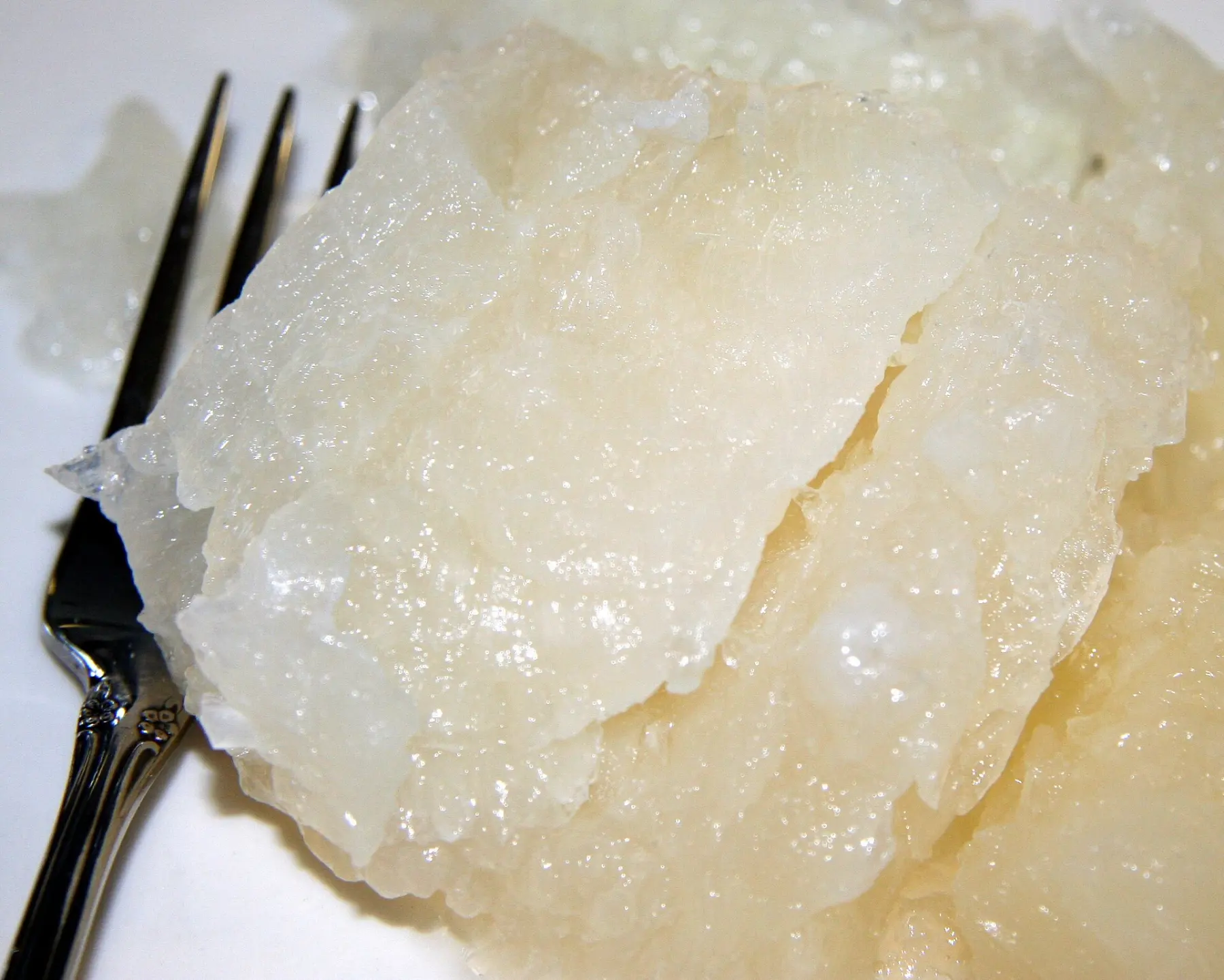
Our Savior’s Lutheran Church in Cloquet, Minnesota, has held a lutefisk dinner for more than a hundred years. The one on its calendar for Saturday 14 November, with 125 pounds of fish on the kitchen’s order, carries a title in the church’s own announcement: “The Last Lutefisk Dinner.”
For the same Saturday, Christ Lutheran Church in DeForest, Wisconsin, set its Lutefisk and Meatball Dinner and said it expected “about 1,400+ members, friends and neighbors.” Every sit-down seat was reserved by 27 October.
Both things are true of the same fish in the same week, and between them they say more about the state of a Nordic American tradition than either does alone.
The last one
The Cloquet dinner was set for 3 to 6 p.m. on Saturday 14 November at 615 12th Street. The church billed it as a Lutefisk, Salmon and Meatball Dinner: $20 for adults, children ten and under free with a paying adult, tickets at the church office and at the door until they ran out.
Fox 21 News in Duluth, which reported the ending on 12 November, put numbers on the kitchen: 125 pounds of lutefisk, about 60 pounds of meatballs, 50 pounds of boiled potatoes and roughly 600 pieces of lefse.
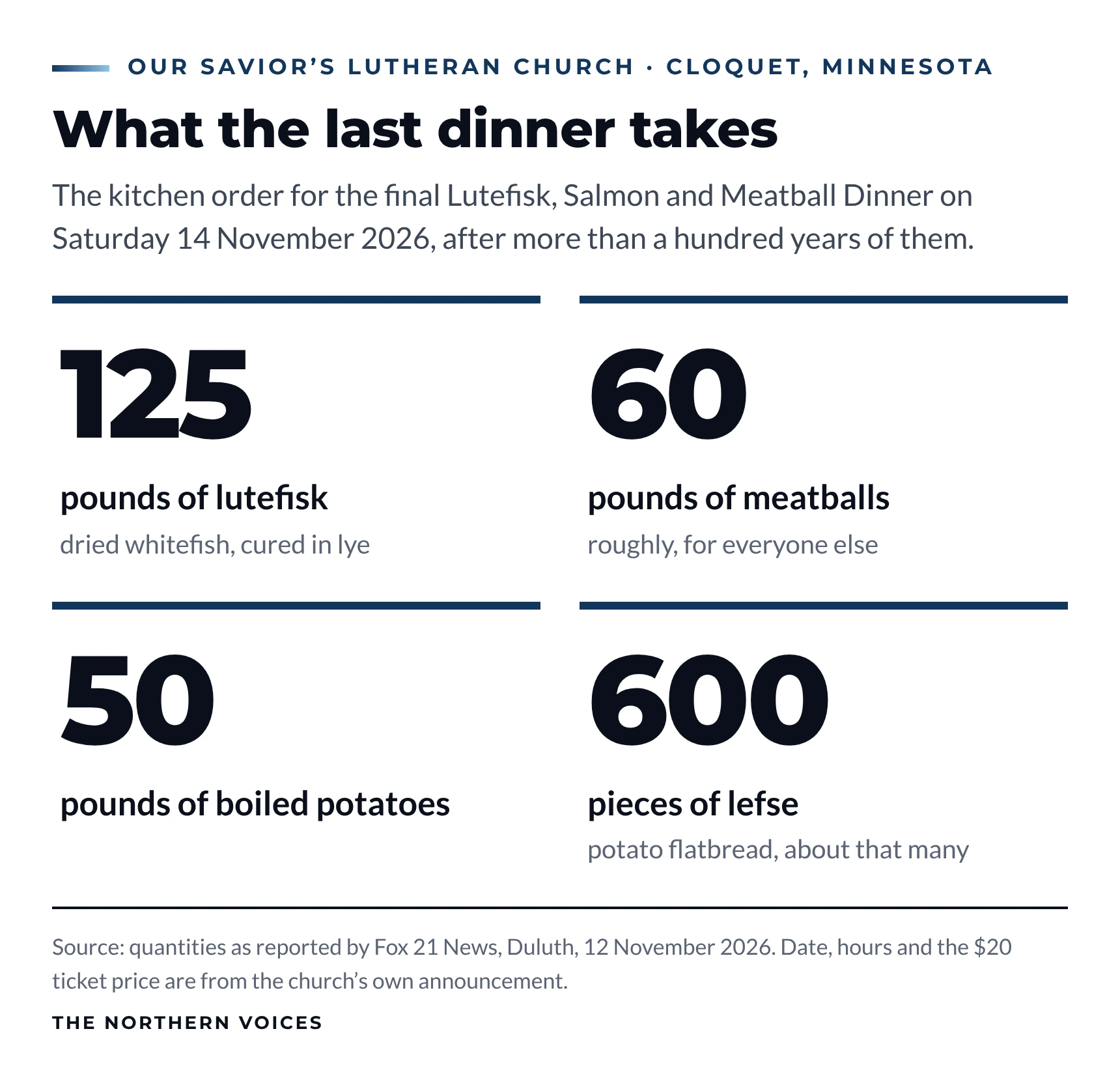
The reason the station was given is the plainest one available. Fewer people want to eat it.
Richard Krikava, who coordinates the dinner, did not describe a funeral. He told Fox 21 he “would not be terribly shocked to see this tradition evolve rather than just disappear.” The world keeps changing, he said, and it may be time for the lutefisk dinner to change a little with it.
The church’s announcement does not say what, if anything, takes its place.
What is being given up
Lutefisk is dried whitefish, soaked in lye and then in water until it swells back into something that can be boiled or baked. It arrives at the table pale and trembling, under melted butter or a white sauce. People who love it and people who do not tend to describe it in the same words.
It came to the Upper Midwest with Norwegian and Swedish immigrants, and it stayed after the reasons for it went. Nobody in Minnesota needs to preserve fish through a winter without refrigeration. Writing in Smithsonian Magazine, Erika Janik observed that far more lutefisk is now eaten in the United States than in Scandinavia, “much of it in church and lodge basements.”
A good deal of it passes through one address in Minneapolis. Olsen Fish Company was founded in 1910 by Olaf Olsen and John Norberg, both emigrants from Norway, and calls itself one of the leading lutefisk producers in the world. It makes the product from Norwegian ling, has a fresh-pack season that runs from September to the middle of May, and sells in bulk containers of 25 and 50 pounds, sizes meant for a church kitchen and not a household.
The dinner is the real product. A church lutefisk dinner is a fundraiser, a reunion and an annual test of whether a congregation can still field a kitchen. The fish is the occasion. The meatballs are for everyone else, and every menu we read this week has them.

The same Saturday, 1,400 plates
If the appetite were gone everywhere, DeForest would not look the way it does. Christ Lutheran posted on 27 October that its dinner reservations were full; carryout was still being offered through the church. Setup was scheduled for Friday afternoon, and carryout packing for eight on Saturday morning. Orders for lutefisk and herring to take home closed on 3 November.
In Minneapolis, Mindekirken, the Norwegian Lutheran Memorial Church, serves its dinner family style on Saturday 21 November: lutefisk, meatballs, coleslaw, lefse, potatoes, coffee and dessert, at $28 for adults. There are three seatings. As of 13 November, the 12:30 and the 2:30 were sold out, leaving the 4:30.

And at Mount Olivet Lutheran Church, also in Minneapolis, Friday 4 December is the church’s 96th lutefisk dinner. Adults pay $30. The menu runs to Swedish meatballs, rutabagas, boiled potatoes, pickled beets, lefse, limpa rye bread and rice pudding with lingonberries, and the church’s announcement settles the old argument by offering both: “butter or white sauce.”
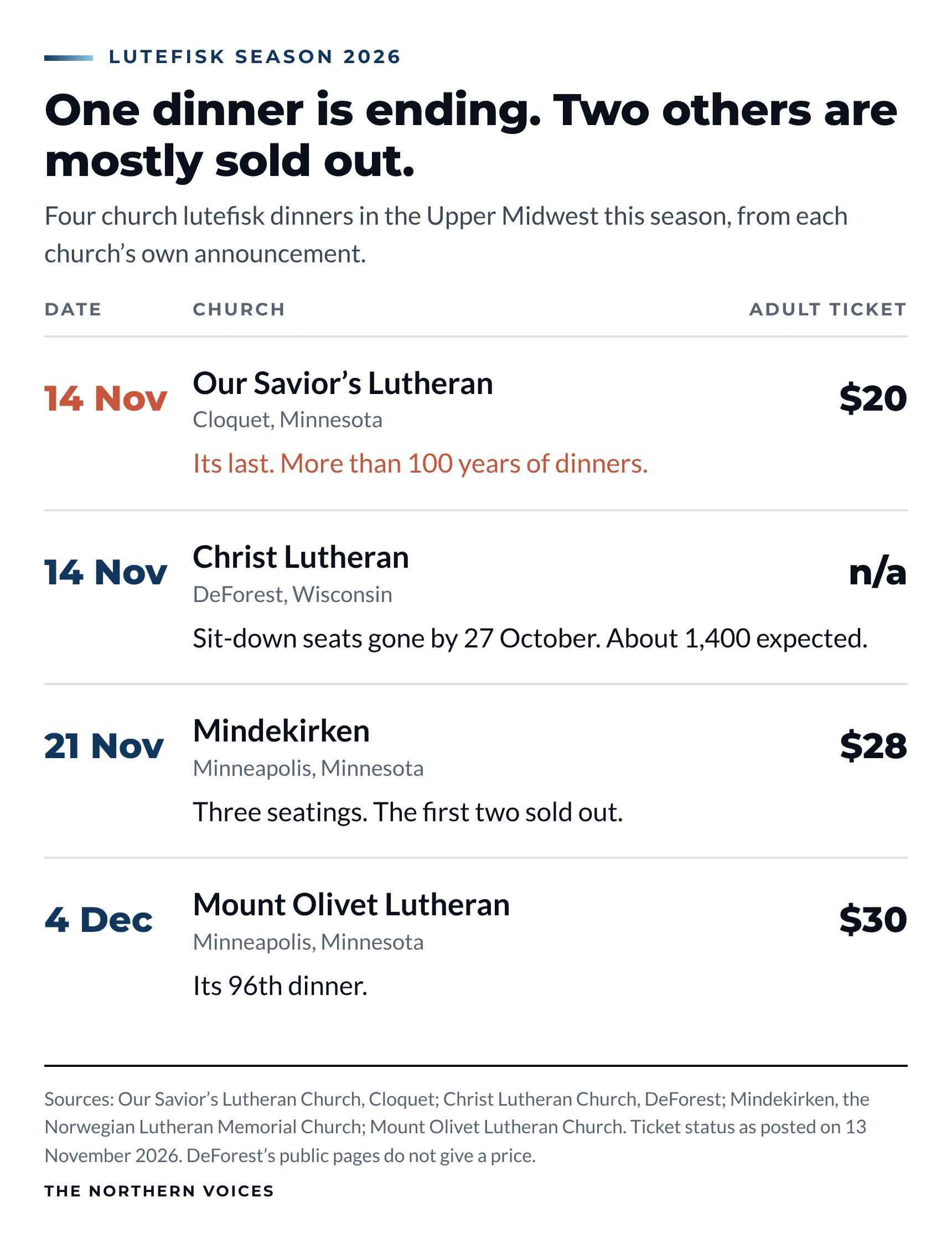
Four dinners are not a survey, and we know of no one who keeps a count of them. What the four show is narrower and still useful. The tradition is not ending evenly. In one town it stops; in another the seats are gone more than two weeks ahead.
Appetite, or hands
Cloquet’s stated reason is appetite, and we take the church at its word.
The other reason these dinners end is the one organizers have been giving for years, and it has nothing to do with the fish. When Smithsonian visited Lakeview Lutheran Church in Madison, Wisconsin, the dinner there was in its sixtieth year and went through 1,000 pounds of lutefisk for nearly 1,000 people. Its pastor, Dean Kirst, named a different pressure. People, he said, “just don’t have the time they used to” to put the dinner on.
A lutefisk dinner for several hundred is days of work: boiling fish in batches, rolling lefse by the hundred, setting a hall and clearing it again. It is work handed down, learned from the people who did it the year before. A dinner can run out of eaters. It can also run out of cooks first, and from the dining room the two look the same.

That is why Krikava’s word is the interesting one. A dinner that evolves might keep the salmon and the meatballs, which Cloquet already serves, and let the lutefisk become a side dish, or a spoonful for the curious. It would be easy to call that a loss. It would also be a full hall on a Saturday in November, which is most of what the dinner was for.
We wrote recently about a Norwegian-American museum opening its anniversary exhibition to every tradition. The instinct is the same one. Institutions built by one immigrant generation are deciding what to carry and what to set down, and the ones that last tend to be the ones that decide for themselves.
The season’s dinners
- Cloquet, Minnesota: Our Savior’s Lutheran Church, 615 12th Street. Saturday 14 November, 3 to 6 p.m., Fellowship Hall, Door 2. $20 for adults; ten and under free with a paying adult. Announced as the last.
- DeForest, Wisconsin: Christ Lutheran Church. Saturday 14 November. Sit-down reservations were full by 27 October, with carryout offered through the church.
- Minneapolis: Mindekirken, 924 East 21st Street. Saturday 21 November. $28 for adults, $14 for ages 7 to 12, free for six and under. Only the 4:30 seating had tickets left when we checked.
- Minneapolis: Mount Olivet Lutheran Church, 5025 Knox Avenue South. Friday 4 December, 3 to 7 p.m. $30 for adults, $10 for children twelve and under. Registration opened on 1 November.
If your church or lodge still holds a lutefisk dinner, or has just held its last, we would like to hear about it.
Details of the Cloquet dinner are from the announcement on Our Savior’s Lutheran Church’s website. The length of the tradition, the quantities, the reason given for ending it and Richard Krikava’s remarks are from a report by Lauren Martinson for Fox 21 News, Duluth, on 12 November 2026. Details of the DeForest, Mindekirken and Mount Olivet dinners are from each church’s own website as they stood on 13 November 2026; Christ Lutheran’s public pages do not give a ticket price. Olsen Fish Company’s history and season are from the company’s website. The quotation on American consumption and the account of Lakeview Lutheran Church are from Erika Janik’s article on lutefisk in Smithsonian Magazine, which is undated online. Lead photograph: lutefisk at Christ Lutheran Church, Preston, Minnesota, in December 2010, by Jonathunder, CC BY-SA 3.0, via Wikimedia Commons. In-text photographs are credited in their captions.

)%20(1).avif)