Why Vilnius Was Called the Jerusalem of the North
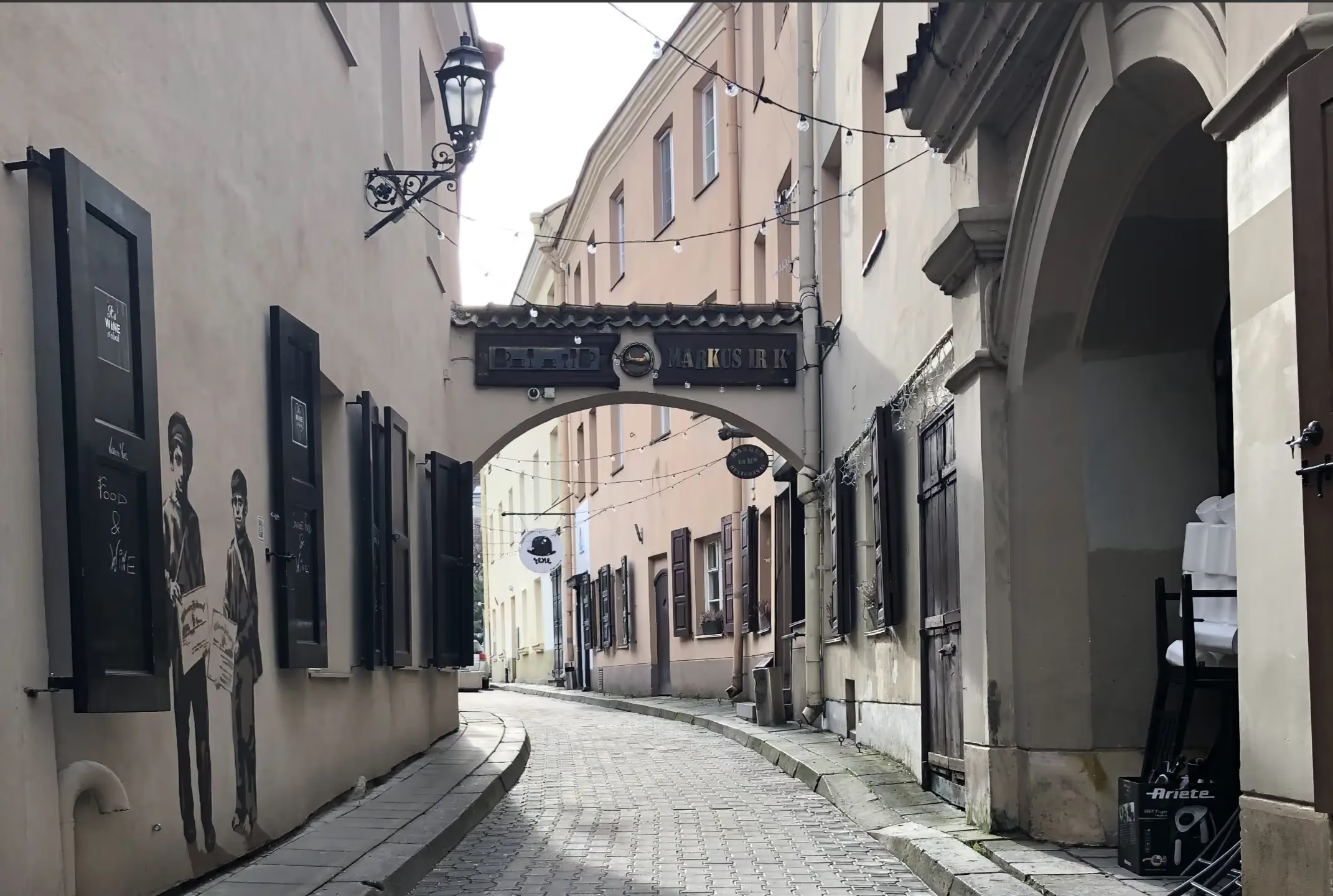
To walk through Vilnius today is to move through layers that rarely announce themselves all at once. The city can feel Baroque, Polish, Lithuanian, Soviet, European, Baltic, and increasingly global. Its Old Town turns inward through courtyards and church towers; its newer skyline rises across the Neris River in glass and steel. Yet beneath this visible city lies another Vilnius—one that once made the city famous far beyond Lithuania.
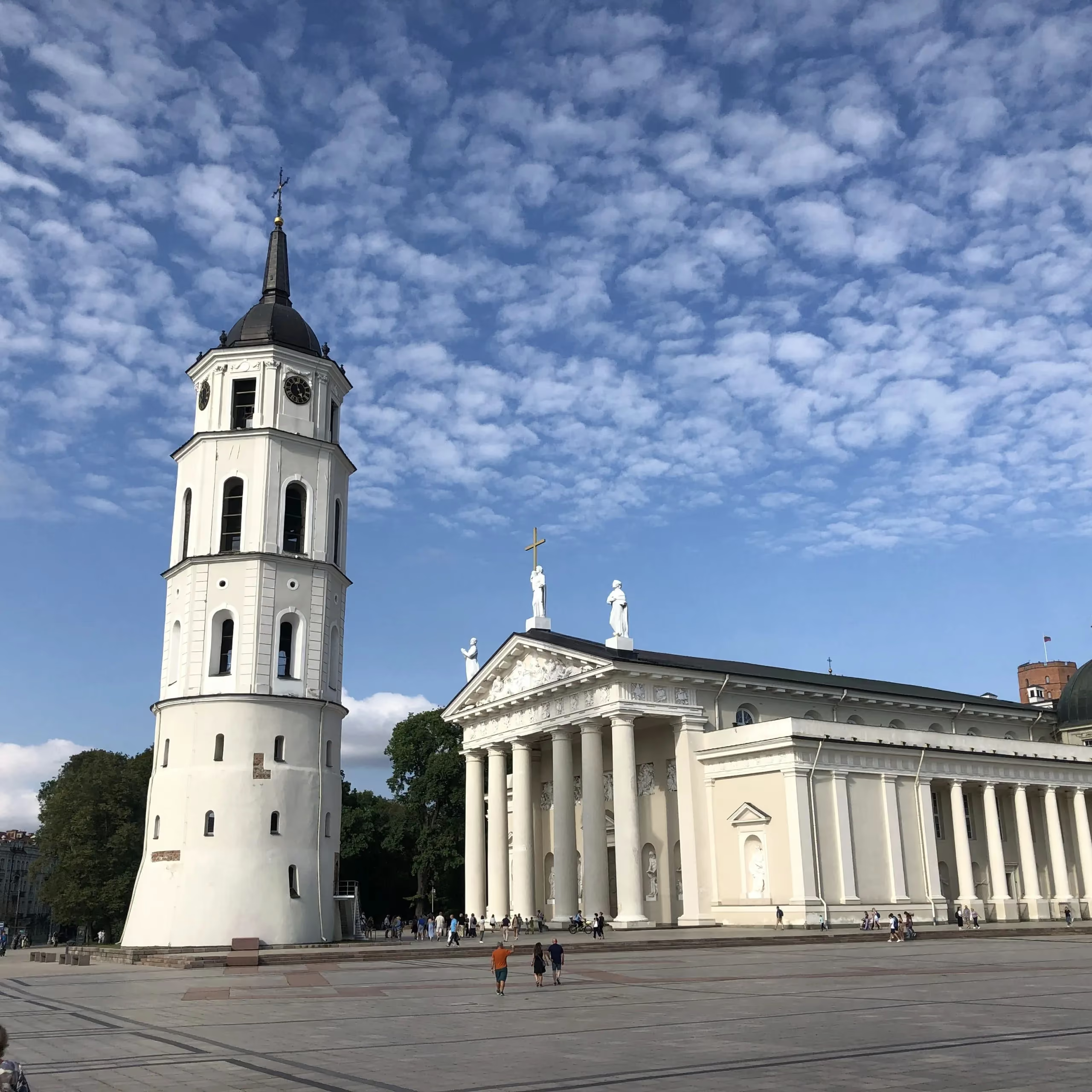
For centuries, Jewish Vilna, as the city was known in Yiddish, was one of the great centers of Jewish life in Europe. It was called the “Jerusalem of Lithuania,” and later often rendered in English as the “Jerusalem of the North.” The phrase can sound romantic today, almost like a tourism slogan. It was not. It was a recognition of intellectual power.
Vilnius did not receive the name because it resembled Jerusalem physically. It did not sit on the edge of desert hills, nor did it contain the ancient Temple Mount. Nor was the comparison primarily demographic, though Vilna’s Jewish population was substantial. The name referred to something more specific: the density of Jewish learning, argument, publication, religious authority, political thought, and cultural production concentrated in one Baltic city.
In the Jewish imagination of Eastern Europe, “Jerusalem” could mean more than a place. It could mean a center of gravity—a city where texts were studied with unusual rigor, where scholarship shaped communities far beyond its streets, and where Jewish life produced institutions strong enough to influence the wider diaspora. By that measure, Vilna earned the title.
The figure most closely associated with this reputation was Elijah ben Solomon Zalman, better known as the Vilna Gaon. Born in 1720 and active in Vilna during the 18th century, the Gaon became one of the most revered authorities in Jewish religious and intellectual life. His scholarship was not narrow. He was known for mastery of Talmud, Midrash, biblical commentary, mystical literature, grammar, mathematics, astronomy, geography, botany, and zoology. His approach emphasized rigor, textual precision, rational inquiry, and synthesis.
This intellectual discipline helped define the Litvak tradition. Litvaks—Jews connected to the historical lands of Lithuania, broadly understood—became associated with analytical study, skepticism toward emotional excess, and a fierce commitment to learning.
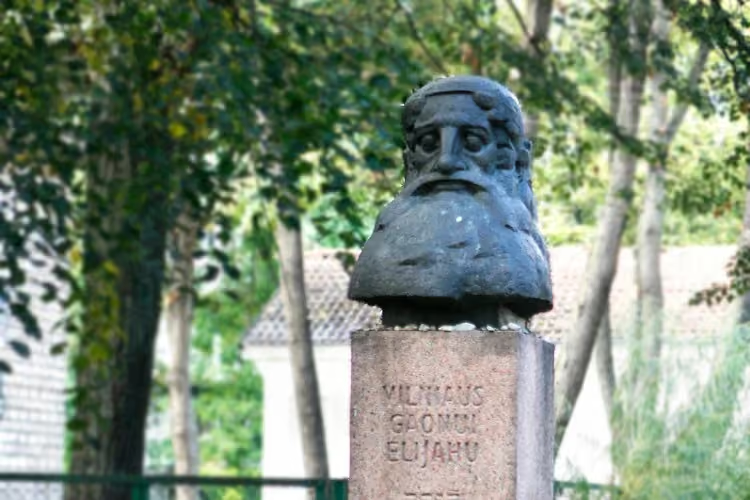
Vilna was not the only important Jewish city in Eastern Europe, but it became one of the symbolic capitals of this intellectual world.
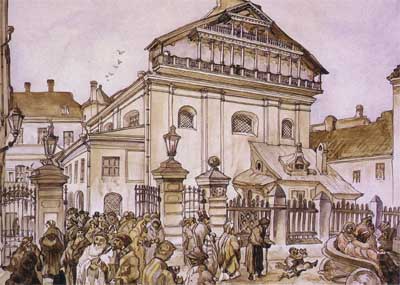
That reputation deepened in the 19th and early 20th centuries. Vilna became a major center of Jewish printing, including editions of the Talmud. It was home to the Romm Press, one of the most influential Jewish publishing houses in Eastern Europe. The city supported synagogues, study halls, libraries, schools, newspapers, theaters, political movements, and charitable institutions. Before World War II, more than 100 synagogues operated in Vilna, reflecting not only the size of the community but the variety of its religious and social life.
The city was also modern, politically alive, and ideologically diverse. In 1897, the General Jewish Workers’ Union—better known as the Bund—was founded in Vilna, making the city central to Jewish socialist politics. Zionist organizations were also active there. So were Hebraists, Yiddishists, religious traditionalists, secular intellectuals, educators, writers, and community leaders. Vilna was not a museum of piety. It was a living city of debate.
One of the most important institutions born from this environment was YIVO, the Yiddish Scientific Institute, founded in 1925 with Vilna as its headquarters. YIVO was dedicated to the scholarly study of Yiddish language, East European Jewish culture, folklore, history, economics, education, and social life. Its founders understood something radical: the everyday life of Yiddish-speaking Jews was worthy of serious academic study. In Vilna, Jewish culture was not only practiced; it was documented, analyzed, archived, and defended.

This is why the phrase “Jerusalem of the North” can be misleading if heard too literally. In the 18th and 19th centuries, Jerusalem itself was under Ottoman rule and had a long-established but often economically constrained Jewish community. Its Jewish population grew significantly during the 19th century, but the comparison with Vilna was never simply a question of which city had more Jews at a given moment. Jerusalem was the ancestral and spiritual center of Jewish longing. Vilna was a diaspora capital of study and argument. The metaphor worked because it expressed reverence, not equivalence.
The Napoleon story, often repeated in popular accounts, should be handled carefully. According to an old Vilna tradition, Napoleon Bonaparte, passing through the city in 1812 during his invasion of Russia, was struck by the visible Jewish life of Vilna and referred to it as a northern Jerusalem. It is a compelling story and may carry cultural truth, but it is difficult to treat as fully documented historical fact. What is certain is that the name “Jerusalem of Lithuania” circulated widely in Jewish memory and was rooted in the city’s real standing.
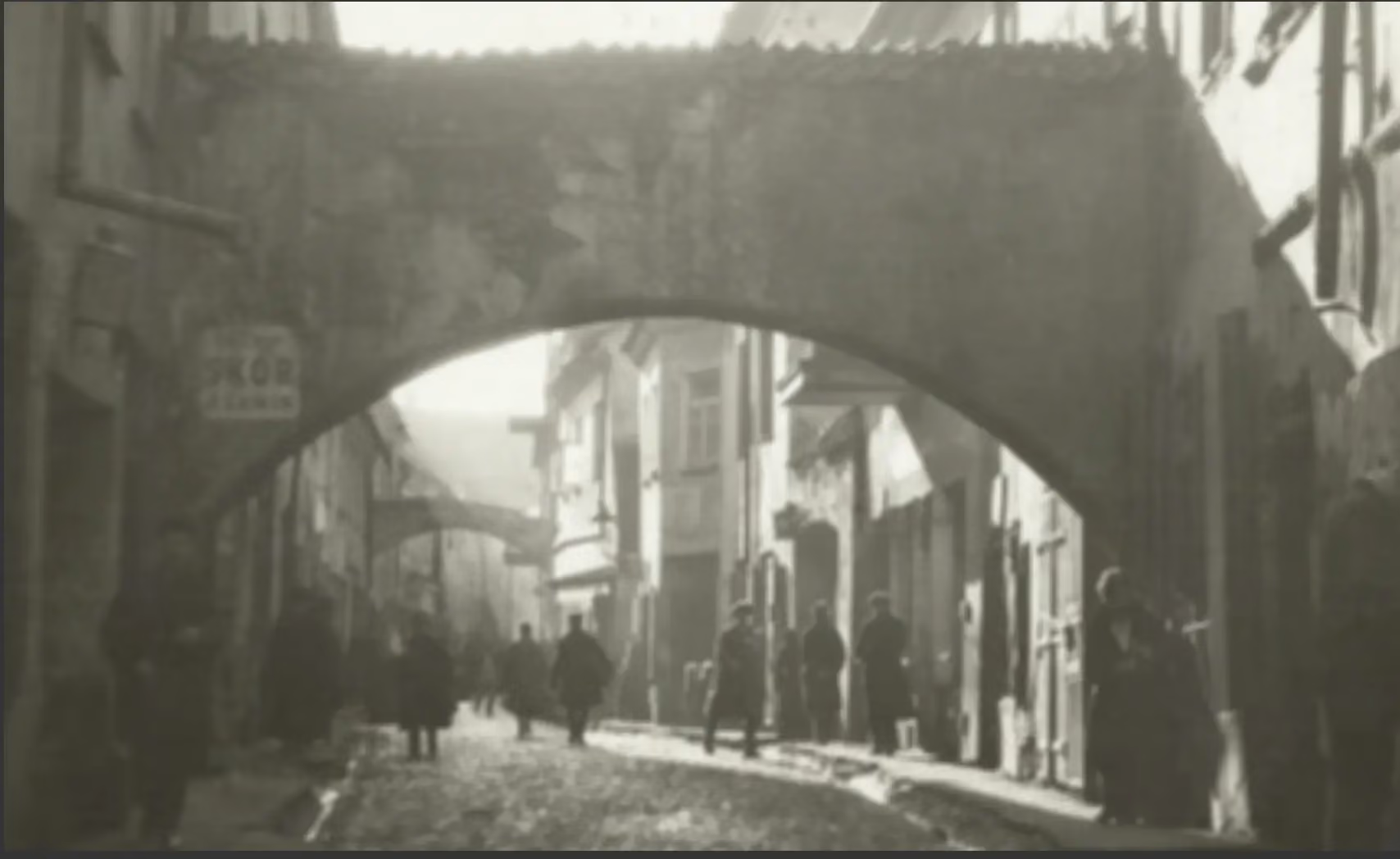
By the interwar period, Vilna remained one of the largest and most important Jewish centers in Eastern Europe. In 1921, about 46,500 Jews lived in the city, roughly 36 percent of the population. By 1931, the number had grown to about 55,000. Yiddish was the mother tongue for the overwhelming majority. The city’s Jewish quarter was not a single institution or monument; it was a lived urban world of bookshops, schools, courtyards, synagogues, printing presses, theaters, political meetings, libraries, and family life.
Then came destruction.
Before World War II, Vilna was part of northeastern Poland. In 1939, following the German-Soviet Pact and the invasion of Poland, the city passed through Soviet occupation and was transferred to Lithuania. By that time, the city’s population was around 200,000, including more than 55,000 Jews, with an additional 12,000 to 15,000 Jewish refugees from German-occupied Poland finding shelter there.

Nazi Germany occupied Vilna in June 1941. Within weeks, mass murder began. German Einsatzgruppen, aided by Lithuanian auxiliaries, murdered thousands of Jewish residents in the Ponary, or Paneriai, forest southwest of the city. By the end of 1941, about 40,000 Jews had been killed there. By July 1944, perhaps as many as 75,000 people had been murdered at Ponary, the vast majority of them Jews.
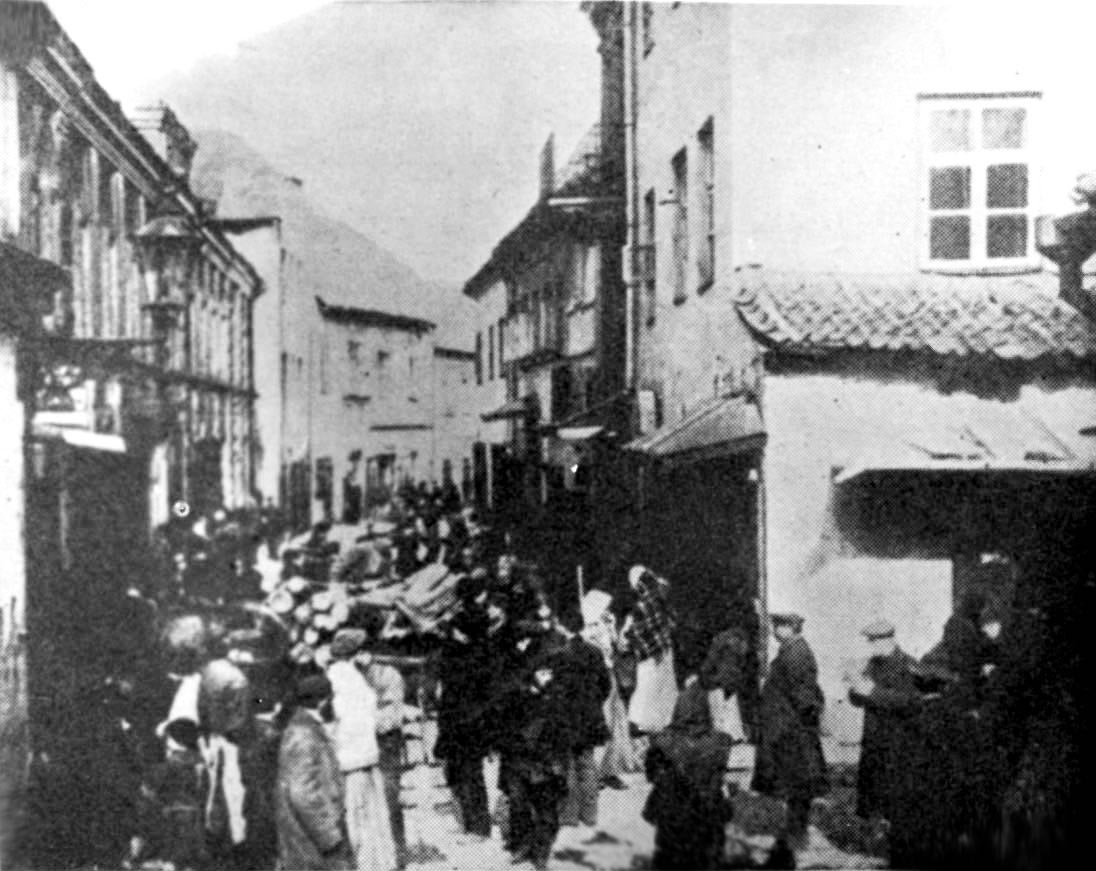
The Vilna Ghetto became one of the tragic centers of Holocaust history: a place of hunger, forced labor, terror, resistance, cultural endurance, and eventual liquidation. The same city that had been famed for books and argument became a site where books, archives, people, and memory were targeted for destruction.
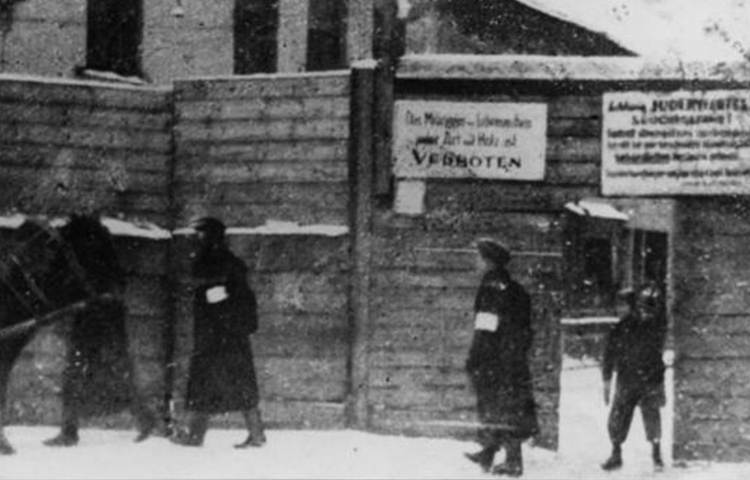
Yet even in catastrophe, Vilna’s intellectual legacy produced resistance. Under Nazi occupation, YIVO’s collections fell into the hands of the Einsatzstab Reichsleiter Rosenberg, the Nazi looting organization tasked with seizing Jewish cultural property. Jewish ghetto inmates assigned to sort books and documents for shipment or destruction risked their lives to hide manuscripts, archives, and rare materials. This group became known as the Paper Brigade. Their work was not only archival; it was civilizational resistance. They understood that destroying a people’s books was part of destroying the people themselves.
The Great Synagogue of Vilna, constructed in the 17th century, embodied the older spiritual heart of the city. It stood within a larger communal complex of synagogues, study halls, kosher food stalls, council buildings, and religious institutions. Damaged and desecrated during the war, the synagogue was later demolished under Soviet rule. A school was built on the site, burying much of the physical memory beneath ordinary urban life.


That buried history has re-emerged, literally. Archaeological work beginning in the 2010s has uncovered remains of the Great Synagogue, including parts of its bimah and other structural elements. The excavation is more than a heritage project. It is a confrontation with absence. Vilnius is not simply restoring a monument; it is learning how to read the ground beneath itself.
Today, the Jewish community of Lithuania is small. According to recent estimates, Lithuania has about 2,400 Jews, with most living in Vilnius. That number is almost impossible to place beside the vanished world of prewar Vilna without feeling the scale of rupture. The “Jerusalem of the North” is no longer a living Jewish metropolis in the way it once was. Its synagogues, presses, schools, and neighborhoods were not merely diminished; they were largely annihilated.
And yet the name persists because names can carry responsibilities. To call Vilnius the Jerusalem of the North today should not be an aesthetic flourish. It should not reduce Jewish history to a charming layer of Old Town atmosphere. The phrase asks something more demanding of the city, of Lithuania, and of the wider Baltic world.
It asks whether a society can remember what made one of its cities great before it remembers only how that greatness was destroyed. It asks whether heritage can move beyond plaques and walking tours into education, archival work, restitution, and honest public conversation. It asks whether the story of Vilna’s Jews can be understood not as a minority footnote, but as central to the cultural history of Lithuania and the Baltic region.
For Nordic and Baltic communities abroad, especially in North America, this question matters deeply. Diaspora identity often preserves simplified versions of homeland stories: songs, costumes, foods, flags, occupations, independence movements, and national awakenings. These are important. But they are incomplete without the multicultural worlds that shaped Baltic cities for centuries. Vilnius was Lithuanian, Polish, Jewish, Belarusian, Russian, Catholic, Orthodox, secular, socialist, Zionist, rabbinic, and Yiddish-speaking. Its identity was never as neat as a modern national map.
That complexity is not a threat to Baltic memory. It is its richness.
Vilnius was called the Jerusalem of the North because, for generations, Jewish life there helped define what intellectual seriousness could look like in exile. It was a city of scholars and printers, mystics and rationalists, revolutionaries and archivists, rabbis and poets. It was a place where the sacred and the modern argued in the same streets.
The tragedy is that so much of that world was destroyed. The responsibility is that it not be flattened into nostalgia.
To remember Vilna properly is not only to mourn what was lost. It is to understand what existed: a civilization of learning in the heart of the Baltics, one that made a northern city into a Jerusalem not by imitation, but by force of mind.


)%20(1).avif)