What Handmade Nordic Heritage Still Knows About Belonging
In many immigrant communities, culture survives first in the things people can carry.
A song. A recipe. A prayer. A way of setting a table. A pattern remembered by hand long after the original village, dialect, or family farm has receded into story.
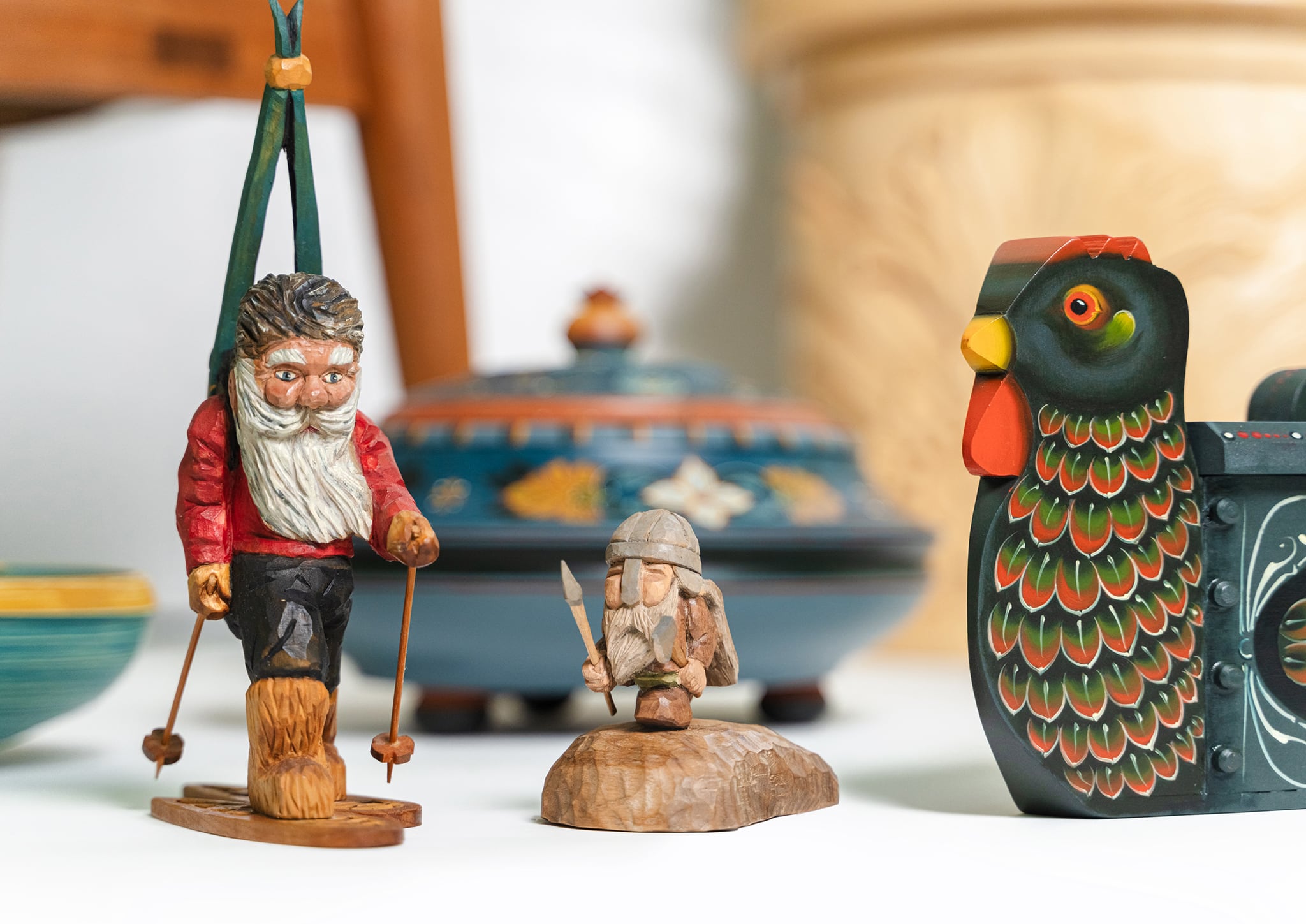
For Norwegian North Americans, handcraft has long been one of those durable forms of memory. Rosemaling, weaving, woodworking, knifemaking, and blacksmithing are easy to describe as traditions, but that word can make them sound fixed, even fragile. In real life, they are neither. They are practices. They are learned, argued over, adapted, admired, judged, sold, gifted, and handed down. They are not just evidence of heritage. They are one way heritage stays alive.
That is part of what makes Vesterheim’s 2026 National Norwegian-American Folk Art Exhibition in Decorah, Iowa, feel larger than a seasonal museum event. On paper, it is a summer exhibition of contemporary artists working in Norwegian-rooted forms. In practice, it is also a reminder that culture in the diaspora does not survive by staying untouched. It survives because people keep making things.

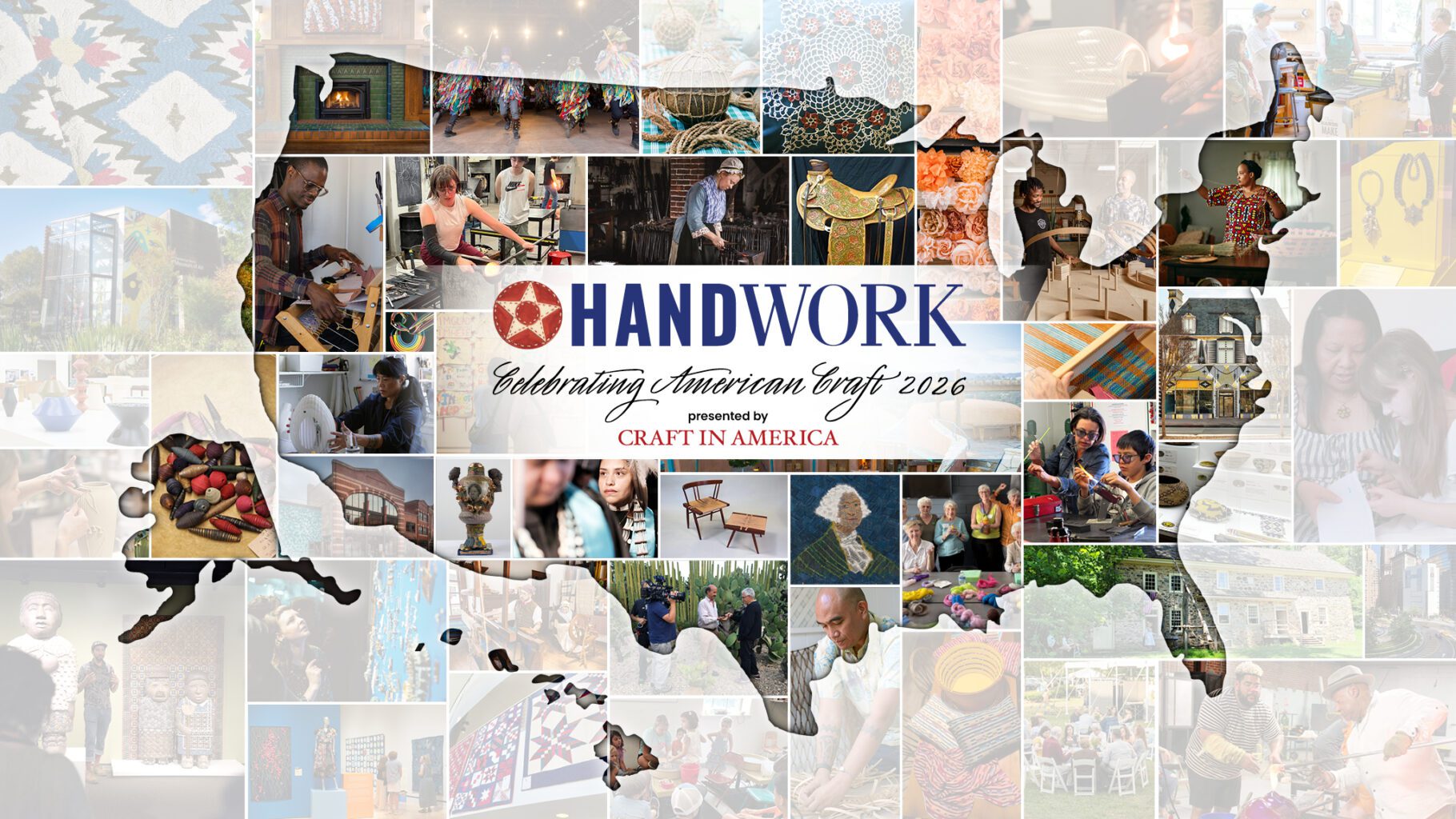
This year, the exhibition arrives with a wider national frame. Vesterheim is participating in Handwork 2026, a major initiative presented by Craft in America that brings together more than 250 arts organizations across the country to examine the place of handmade work in American history and contemporary life. That context matters. It places Norwegian-American folk art not at the decorative edge of American culture, but inside a broader conversation about what craft does in public life.
Handmade objects do more than preserve beauty. They preserve ways of knowing.
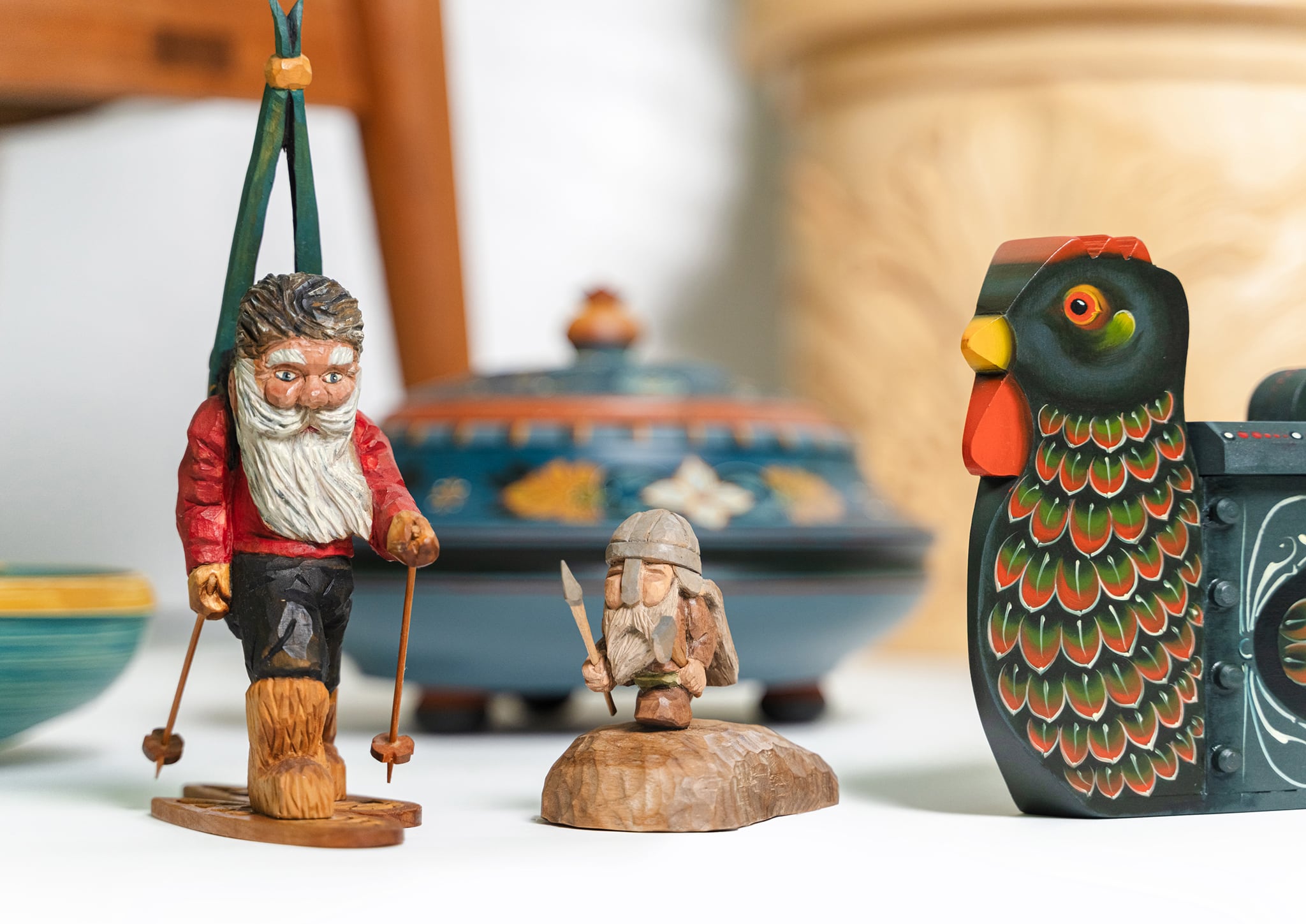
That idea is especially resonant for Nordic and Baltic readers in the United States and Canada, where cultural inheritance often becomes practical before it becomes fluent. Not everyone keeps the language. Not everyone inherits the full set of customs. But many people still recognize the authority of the made object. A carved surface, a woven structure, a painted curve, a silver detail on a festive garment: these can carry identity across generations with surprising force. They teach the eye before they teach the tongue.
Vesterheim’s exhibition quietly reflects that larger truth. Its categories — rosemaling, weaving, woodworking, knifemaking, and blacksmithing — are rooted in Norwegian traditions, but the artists entering the exhibition are contemporary makers living in the United States and Canada. Their work belongs to inheritance, but also to the present. It is old knowledge under new hands.
The work is judged, and ribbons matter. So does the long arc toward a Vesterheim Gold Medal. But the deeper cultural meaning lies in the fact that these traditions are still active enough to sustain standards, disagreement, apprenticeship, and ambition. A living tradition is not one people merely admire. It is one they still care enough to do well.
That may be why handcraft often feels so emotionally legible in diaspora communities. It makes continuity visible. An object can show what a family valued, what a region favored, what a teacher passed on, what a maker changed. It can also show what migration does to style.
In North America, folk art rarely remains a simple copy of what came before. It absorbs local materials, local homes, local color preferences, local audiences, and local confidence. A rosemaled object made in Iowa, Minnesota, Wisconsin, Alberta, or Ontario may carry memory of Norway, but it is not being made in Norway. It is being made here, under different skies, for different rooms, by people whose relationship to heritage includes distance as well as devotion.
This is not a lesser version of tradition. It is the real story of it.
For communities spread across large geographies, that matters. A museum in Decorah may seem very specific, but its cultural logic is widely recognizable. Across the United States and Canada, Nordic and Baltic institutions, festivals, choirs, language schools, craft guilds, and heritage camps all confront the same question: what does continuity look like when everyday life no longer automatically supplies it?
Handcraft offers one answer because it turns identity into practice. You do not have to claim everything at once. You can begin with one technique, one motif, one class, one object, one inherited fascination.
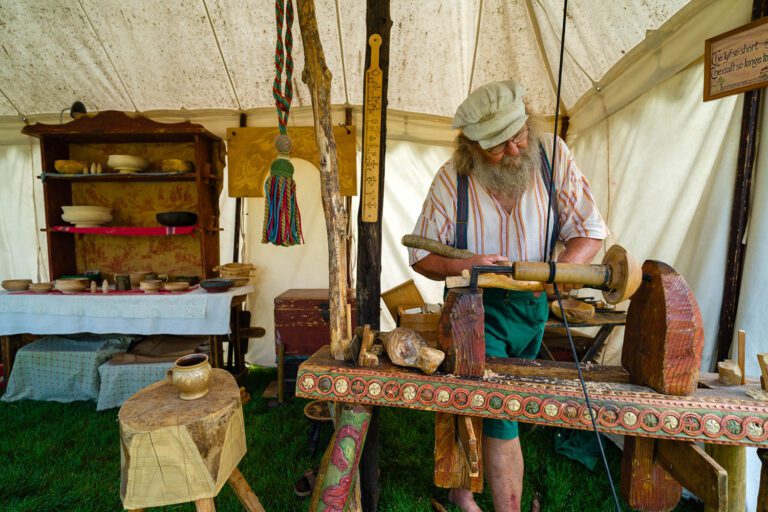
There is also something refreshingly unsentimental about craft. It resists vague belonging. If you weave, the structure either holds or it does not. If you carve, paint, forge, or make a knife, the work asks for patience, precision, and repetition. In that sense, folk art can offer a sturdier relationship to heritage than performance alone. It asks not just for affection, but for discipline.
That can be a powerful counterweight in an era when ethnic identity is often flattened into aesthetics without labor. Heritage can be marketed quickly now: a pattern on a product, a holiday post, a generalized Nordic mood of candles, wool, forests, and clean lines. Craft moves at a different speed. It requires submission to process. It asks the maker to learn from someone else before making the form their own.
And yet craft is not only labor. It is pleasure. It is beauty. It is the thrill of seeing that old forms still have room in them.
That is one reason Vesterheim’s role matters. The museum is not only preserving objects. Through its Folk Art School, exhibitions, collections, and public programs, it participates in the ongoing life of Norwegian-American culture. It creates space where heritage can be studied, handled, questioned, practiced, and seen in public. That public visibility is important. Diaspora traditions can become private very quickly: something kept in drawers, remembered at holidays, or spoken of only in family terms. Exhibitions bring those practices back into shared view.
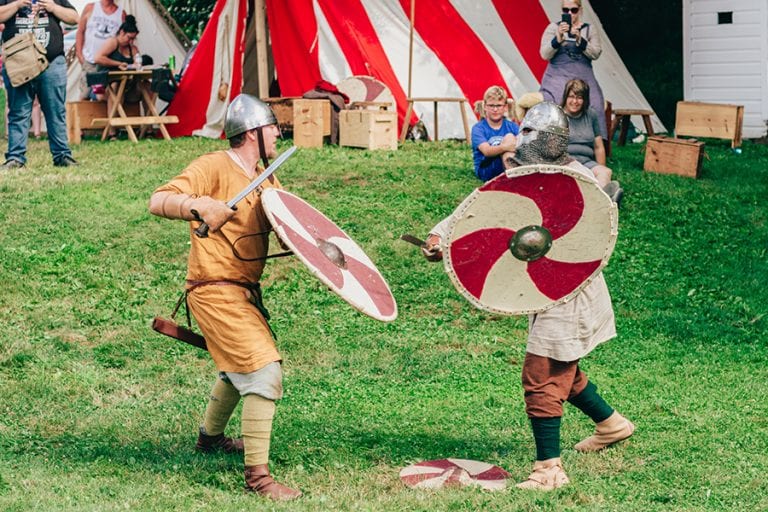
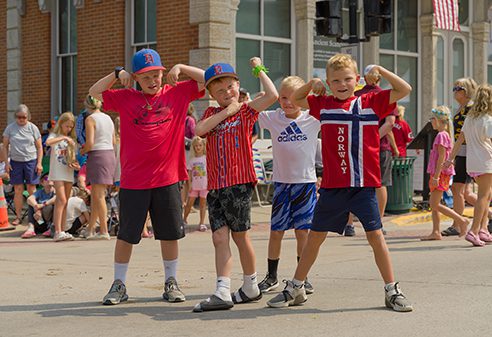
The timing of the 2026 exhibition adds another layer. Later in July, the show will overlap with Nordic Fest, when Decorah fills with visitors for one of the region’s best-known celebrations of Scandinavian heritage. Festivals and exhibitions do different work, but together they show how public culture actually survives: in the movement between spectacle and study, celebration and practice, crowd energy and quiet skill. One brings people in. The other gives them something lasting to look at more closely.
For readers of The Northern Voices, the larger lesson may be simple. Culture is not only what we inherit. It is what we continue.
Sometimes that continuation sounds like a choir or a festival chorus. Sometimes it sounds like a half-remembered language reclaimed in adulthood. Sometimes it appears in a church basement, a community hall, a museum classroom, or a summer camp where someone teaches a younger person how to hold a tool properly. And sometimes it is nearly silent: the scratch of a pencil marking a pattern, the pull of thread, the tap of metal, the steady hand painting a curve first imagined generations ago and made new again on this side of the Atlantic.
In diaspora life, that kind of making is never just ornamental.
It is one of the oldest ways of saying: we are still here.

)%20(1).avif)