From Jaanipäev to Midsommar, the Longest Day Still Brings Us Together

The longest days of June carry many names across the Nordic and Baltic world.
Jaanipäev. Jāņi. Joninės. Rasos. Juhannus. Midsommar. Midtsommer. Sankthans. Sankt Hans.
The languages change. The spellings change. The songs, foods, flowers, fires, and local habits change. But the emotional architecture is familiar: people gather outside, make something with their hands, sing something older than themselves, and stay awake a little longer than they normally would.
Across the United States, midsummer does not arrive as a single holiday. It arrives as a map.
It appears under summer trees at Estonian houses, in Latvian cultural centers, at Lithuanian clubs, in Scandinavian parks, on museum lawns, beside maypoles, near saunas, around carefully permitted bonfires, and on community grounds where generations have learned that culture is something you do together.
For Nordic and Baltic communities in North America, midsummer is more than a seasonal party. It is one of the few holidays that still asks people to participate with their whole bodies: weave crowns, raise poles, light fires, sing choruses, grill food, dance in circles, bring children, bring grandparents, bring friends who may not know the words yet but can learn them by standing close enough to someone who does.
That is what makes the holiday so durable in diaspora life. Midsummer does not depend only on language fluency or formal knowledge. It welcomes memory, movement, music, weather, appetite, and presence. A person can belong by carrying firewood, tying flowers, serving food, tuning a fiddle, holding a child’s hand during a ring dance, or standing quietly near the bonfire as dusk refuses to become full night.
In 2026, Nordic and Baltic communities across the United States are again preparing for midsummer gatherings large and small. This roundup is a living list, focused on public events that readers may wish to attend or share with family and friends. Details can change, and smaller celebrations often appear through community newsletters, Facebook groups, churches, lodges, camps, and cultural centers, so readers should confirm times, ticketing, and access with each host before attending.
Still, even a starter list shows something powerful: the longest day continues to gather people.
Estonian Jaanipäev
For Estonians, Jaanipäev is one of the great summer markers: a holiday of fire, food, song, games, and staying together outdoors. In the diaspora, it has also become one of the most visible ways Estonian houses and societies keep community life moving from one generation to the next.
On Long Island, New York, the Long Island Estonian House in Middle Island is hosting its Midsummer Solstice Celebration and Sports Day from June 12 to 14. The weekend includes Estonian song, dance, sports, children’s programming, a concert, sauna, pool time, and a large midsummer bonfire. The 2026 program also features ZETOD, the folk-rock band from Setomaa in southern Estonia.
In Riverwoods, Illinois, Chicago Estonian House will hold its traditional Jaanipäev on June 13. The event includes a grill-bar, Estonian beer, games, bonfire, and music by Band MaMa from Estonia.
In Jackson Township, New Jersey, Lakewood Estonian House is marking Võidupüha and Jaanipäev on June 20. The evening is listed from 4 to 10 p.m., with Victory Day observance, Jaaniõhtu, folk games, group singing, dancing, food, drinks, and community vendors.
In Los Angeles, the Estonian Society of Los Angeles is holding Jaanipäev at the Los Angeles Estonian House on June 20 from 5 to 11 p.m. The gathering is framed as a potluck and community midsummer celebration with grilling, music, and time together.
Together, these events show how Jaanipäev continues to function as a homecoming ritual for Estonians abroad. It is not only about marking a date on the calendar. It is about returning to a place where people know what the fire means.
Latvian Jāņi
Latvian Jāņi is a holiday of wreaths, songs, names, food, and staying awake through the shortest night. In Latvia, it is one of the most beloved celebrations of the year. In North America, it remains one of the clearest expressions of Latvian communal life.
In Freehold, New Jersey, Priedaine Latvian American cultural center lists its traditional Jāņi celebration for June 20 into the early hours of June 21. Priedaine has long served as a gathering place for Latvian community life in the region, and Jāņi remains one of the moments when that role becomes visible across generations.
In Shelton, Washington, the West Coast Latvian Education Center will host a summer solstice Jāņi celebration from June 20 to 21. The program includes wreath making, sports, activities around the lake, dinner, singing, dancing, live music, and a bonfire-centered evening.
Jāņi carries a particular kind of participatory power. The flowers matter. The cheese matters. The songs matter. But the deeper point is that the celebration asks people to join the circle rather than simply watch it.
Lithuanian Joninės and Rasos
Lithuanian midsummer traditions carry several names and layers, including Joninės and Rasos. The holiday is associated with wreaths, singing, water, fire, herbs, and the older seasonal rituals that mark the turning point of summer.
In Shrewsbury, Massachusetts, a public listing points to Joninės at Maironis Club on June 19 from 6 to 10 p.m., organized with the Boston Lithuanian Youth Association. The event should be useful for Lithuanian American readers in New England, especially younger community members looking for a midsummer gathering rooted in Lithuanian tradition.
Because Lithuanian Joninės listings in the United States often circulate through local clubs, youth groups, parishes, and community networks, readers are encouraged to send additional public events for inclusion in future updates.
Finnish Juhannus
For Finnish communities, Juhannus is closely tied to the summer solstice, nature, sauna, lakes, music, and the lighting of the kokko bonfire. In the United States, one of the strongest public Juhannus celebrations is found in Michigan’s Copper Country.
Hancock, Michigan, will host its Juhannus Summer Solstice Celebration from June 17 to 21. The event celebrates Finnish heritage through music, dance, sauna culture, cold plunges, markets, games, and community programming across Hancock and the surrounding Keweenaw area.
The setting matters. Michigan’s Upper Peninsula has deep Finnish American roots, and Juhannus there is not simply imported heritage. It is local memory, regional identity, and Nordic tradition meeting the particular landscape of the Copper Country.
Swedish Midsommar
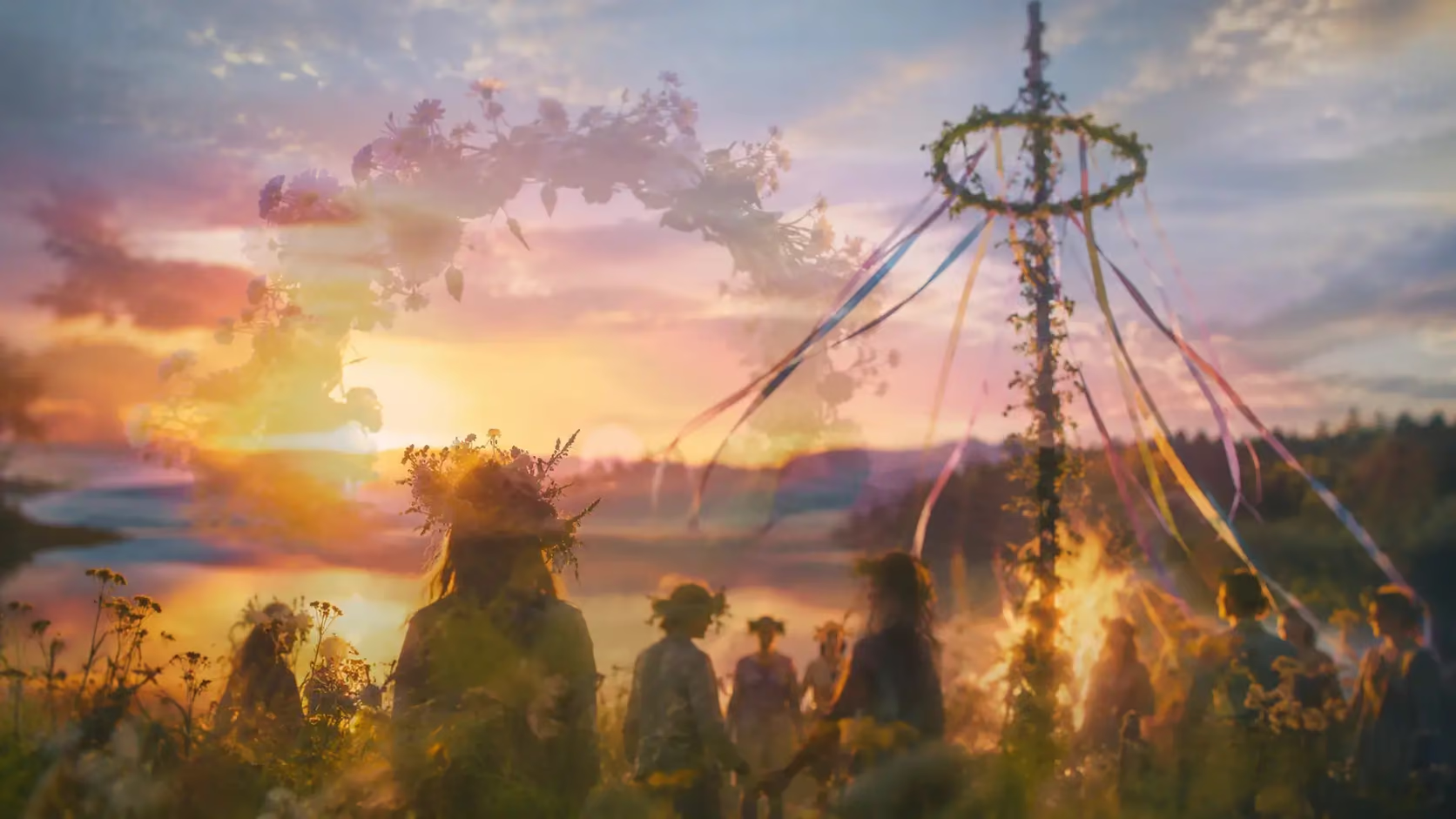
Few midsummer images are as widely recognized as the Swedish majstång, or maypole, ringed by dancers wearing flower crowns. Across the United States, Swedish American organizations, museums, parks, and city partners continue to make Midsommar one of the most public-facing Nordic celebrations of the season.
In Washington, DC, the Swedish Midsummer Celebration returns to the National Mall on June 12 from 6 to 9:30 p.m. The event includes maypole dancing, music, games, crafts, wreath making, and picnic space in the heart of the capital.
In Minneapolis, the American Swedish Institute will host its Midsommar Celebration on June 20 from 10 a.m. to 4 p.m., with live music, dancing around the majstång, wreath making, Swedish foods, crafts, family activities, and market offerings.
In New York City, the Swedish Midsummer Festival will take place at Rockefeller Park in Battery Park City on June 20 from 4 to 9 p.m. The annual celebration includes dancing around the Midsummer pole, floral wreaths, parade elements, children’s games, music, and Swedish delicacies.
In Lindsborg, Kansas, Midsummer’s Festival will be celebrated on June 20. The town’s Swedish heritage celebration includes Swedish dancing, a Kubb tournament, craft demonstrations, food vendors, music, and evening traditions connected to the raising of the midsummer pole.
In Philadelphia, the American Swedish Historical Museum will hold its Midsommarfest on June 20. The museum’s annual celebration includes food, music, dance, games, children’s activities, and time around the midsommarpole.
These events are not identical, and that is part of their strength. Some are museum festivals. Some are city park gatherings. Some are small-town heritage celebrations. Each one shows how a Swedish summer ritual has been adapted to American public life without losing its communal core.
Scandinavian and Nordic Midsummer Festivals
Many midsummer celebrations in the United States are proudly pan-Scandinavian or broadly Nordic, bringing together Swedish, Norwegian, Finnish, Danish, Icelandic, and regional heritage traditions. These events often serve mixed families and local communities whose cultural life has always been wider than a single flag.
In Astoria, Oregon, the Astoria Scandinavian Midsummer Festival runs June 19 to 21 at the Clatsop County Fair and Expo Center. A long-running festival on the Oregon Coast, it celebrates the Nordic heritage brought to the region by immigrants from Scandinavia, with music, dance, food, pageantry, and midsummer traditions.
In Minot, North Dakota, Scandinavian Heritage Park will hold its Midsummer Festival from June 19 to 21. The celebration includes music, vendors, demonstrations, workshops, food, kids’ activities, and bonfires, weather permitting.
In New Sweden, Maine, the Midsommar Festival weekend honors Swedish heritage with maypole dancing, traditional folk costumes, music, Swedish foods, flower crowns, craft vendors, and cultural demonstrations connected to the New Sweden Historical Society.
In Poulsbo, Washington, Poulsbo Sons of Norway and Poulsbo Leikarringen will host Midtsommer and Midsommar celebrations on June 20. The day includes flower crown making, live music, dance performances, a maypole raising, audience participation, and an evening bonfire inspired by Norwegian Sankthans traditions.
In Portland, Oregon, Nordic Northwest’s Oregon Midsummer Festival will take place June 26 and 27 at the Nordic Northwest campus. The festival includes flower crowns, Midsummer pole decorating, music, performers, Nordic foods, games, crafts, and vendors.
In Shrewsbury, Massachusetts, the 123rd Scandinavian Midsummer Festival at SAC Park will take place on June 27. The festival includes a midsummer pole raising ceremony, dances, live music, food, and family activities, continuing a long tradition at the Scandinavian Athletic Club.
Also in Massachusetts, the Danish Society of Massachusetts lists its Sankt Hans celebration for June 27 in Concord. Danish Sankt Hans traditions often center on fire, outdoor gathering, food, and the turning of the summer season.
In Kenmore, Washington, the Skandia Folkdance Society will hold Midsommarfest at St. Edward State Park on June 28 from 11 a.m. to 6 p.m. The event includes a parade, traditional pole raising, music, dancing, children’s activities, flower crowns, vendors, and a full day of Nordic folk culture.
These pan-Scandinavian festivals are reminders that diaspora communities often become meeting grounds. Swedish maypoles, Norwegian bonfires, Finnish music, Danish summer rituals, and broader Nordic foodways can appear side by side, not because distinctions do not matter, but because the act of gathering matters too.
Why Midsummer Still Works
Midsummer survives in diaspora because it is both specific and generous.
It is specific enough to hold difference. Estonian Jaanipäev is not the same as Latvian Jāņi. Lithuanian Joninės is not the same as Finnish Juhannus. Swedish Midsommar is not the same as Danish Sankt Hans or Norwegian Sankthans. Each tradition carries its own language, songs, rituals, foods, and memories.
But the season is generous enough to let people recognize each other across borders.
Bonfires speak across languages. Wreaths speak across languages. Dancing in a circle speaks across languages. So does the impulse to stay outside as long as the light allows.
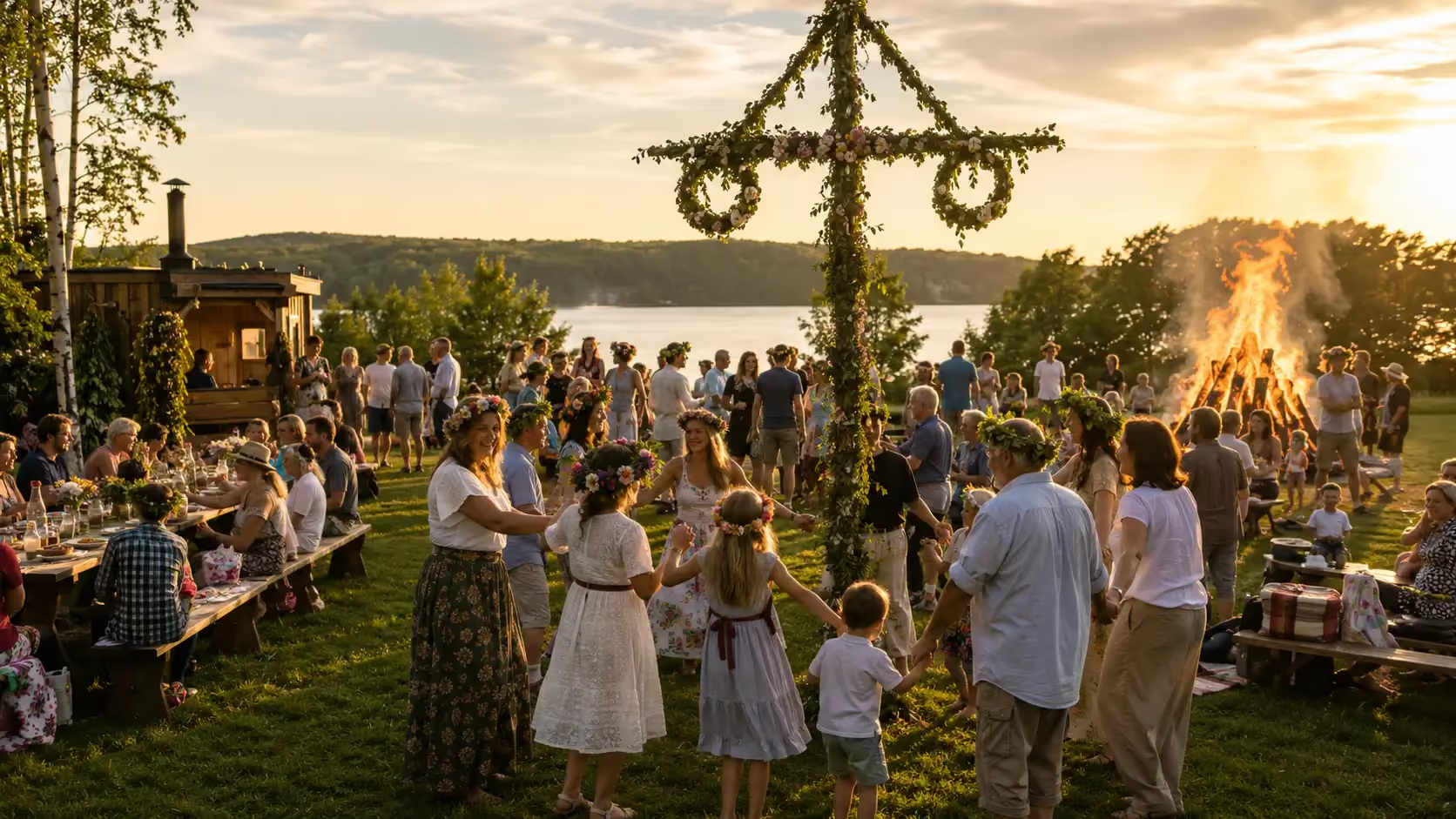
That is why midsummer often becomes one of the first holidays outsiders can enter. A friend, spouse, neighbor, or curious visitor may not understand every song, but they can hold flowers. They may not know every word, but they can join the dance. They may not have grown up with the holiday, but they can feel what it means when a community gathers around fire and refuses to let the year’s brightest night pass unnoticed.
For children and younger generations, that matters. Midsummer turns heritage into action. It gives culture a smell, a sound, a taste, a movement, a place. It teaches that identity is not only inherited through explanation. Sometimes it is inherited through repetition: coming back each June, seeing the same grounds, recognizing the same songs, watching adults do the same slightly strange and beautiful things again.
A flower crown may wilt by morning. A bonfire burns down. A pole is taken down. The food is eaten. The games end. But the memory stays because people made it together.
Send Us Your Midsummer Event
No single list can catch every Nordic and Baltic midsummer gathering in the United States, especially the smaller ones held at camps, churches, private community grounds, lodges, cultural centers, and family-run organizations.
That is part of the beauty of the season. The map is made by people who keep showing up.
The Northern Voices welcomes additions to this living roundup. Nordic and Baltic community organizations with public midsummer events may send the event name, date, time, location, public link, organizer name, and any photo credit information for possible inclusion in an updated guide.
Because the longest day belongs not only to the places where it is officially marked, but to every community that still knows how to gather under the light.

)%20(1).avif)