Iceland's Sundhnúksgígar eruption forces tourist evacuations
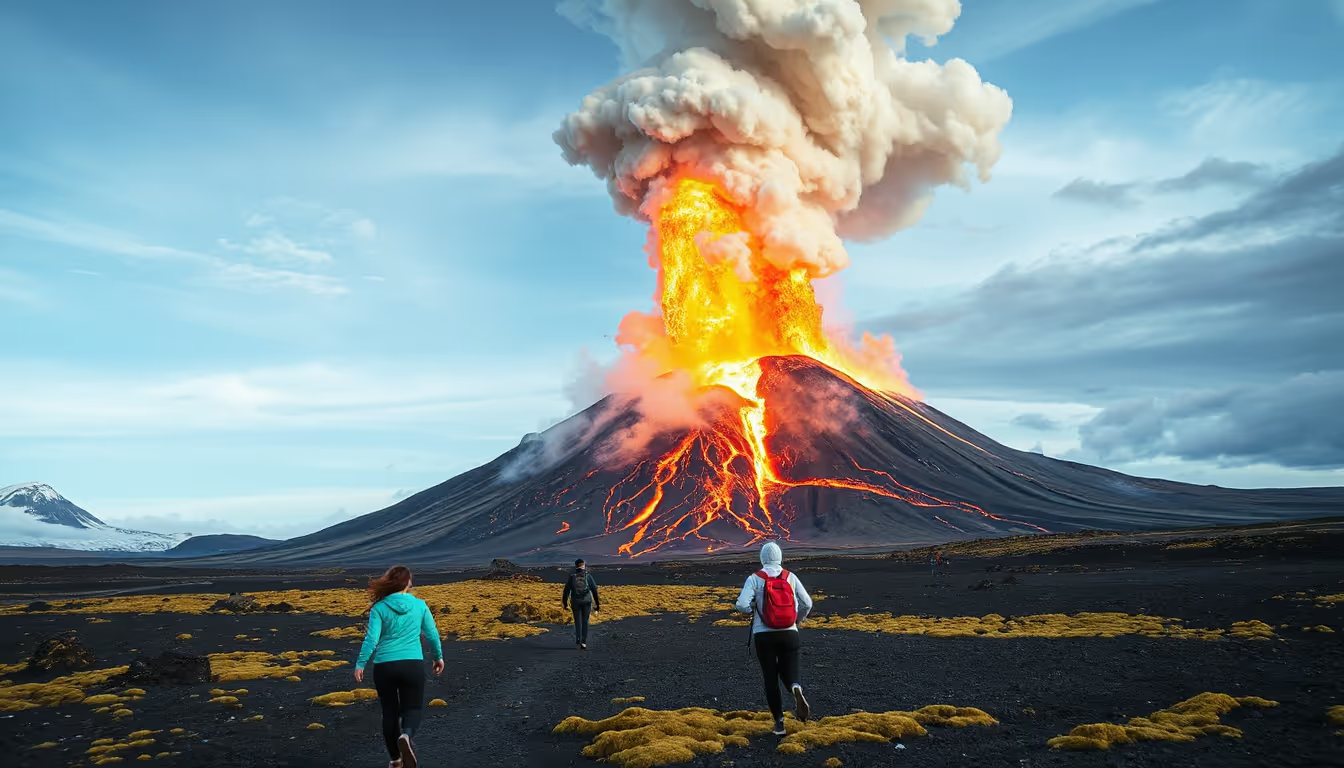
Reykjavik, Iceland – On the morning of April 1, 2025, the Sundhnúksgígar crater row in southwest Iceland erupted, prompting immediate evacuations in nearby popular tourist areas after a series of small earthquakes paved the way for the volcanic activity.
The Icelandic Meteorological Office issued its first red alert for the region around 6 a.m. local time, indicating a high probability of an impending eruption. Lava began to flow shortly thereafter, marked by reports of a fissure approximately 500 meters long opening north of the protective barriers near the town of Grindavík. The fissure expanded through the morning, raising concerns about further growth.
The nearby fishing town of Grindavík, where only around 40 homes were still occupied after earlier evacuations, was cleared again as seismic activity increased. Additionally, around 200 guests at the Blue Lagoon hot springs were evacuated as a precaution.
Runólfur Þórhallsson of Iceland's Department of Civil Protection and Emergency Management expressed serious concerns regarding the eruption. He referred to the event as one of the worst-case scenarios the agency had considered, noting its potential similarity to a previous eruption in January 2024. To assess the situation, the Coast Guard deployed helicopters to capture accurate observations of the eruption's magnitude and location. Preliminary reports suggested the fissure system could extend for several kilometers, among the longest recorded on the peninsula since 2023. The Icelandic Meteorological Office also issued warnings regarding air quality, stating that wind patterns might carry pollutants from the eruption toward the northeast, potentially affecting the capital region.
Iceland, known as the land of fire and ice for its glaciers and volcanoes, has seen an uptick in volcanic activity in recent years. Since March 2021, the Reykjanes Peninsula has experienced a series of eruptions, first at Fagradalsfjall and, since late 2023, repeatedly along the Sundhnúkur crater row. Sundhnúksgígar sits roughly 32 kilometers southwest of Reykjavík.
To date, the eruptions on the Reykjanes Peninsula have not directly affected Reykjavík, with minimal ash dispersal into the stratosphere, averting significant air travel disruptions. However, the ongoing volcanic activity near Grindavík, a town with a pre-evacuation population of roughly 3,800, has caused severe damage to homes and kept residents away for extended periods.
Iceland's dramatic volcanic landscape is a consequence of its location along the tectonic rift between the Eurasian and North American plates, making it a significant area for seismic activity. The most notable eruption in recent history was that of Eyjafjallajökull in 2010, which sent up massive ash clouds that disrupted air travel across Europe.
Iceland is home to 33 active volcanic systems, more than any other country in Europe.

)%20(1).avif)