The Capital That Was Never Meant to Last: Kaunas and Lithuania's Interwar Interlude
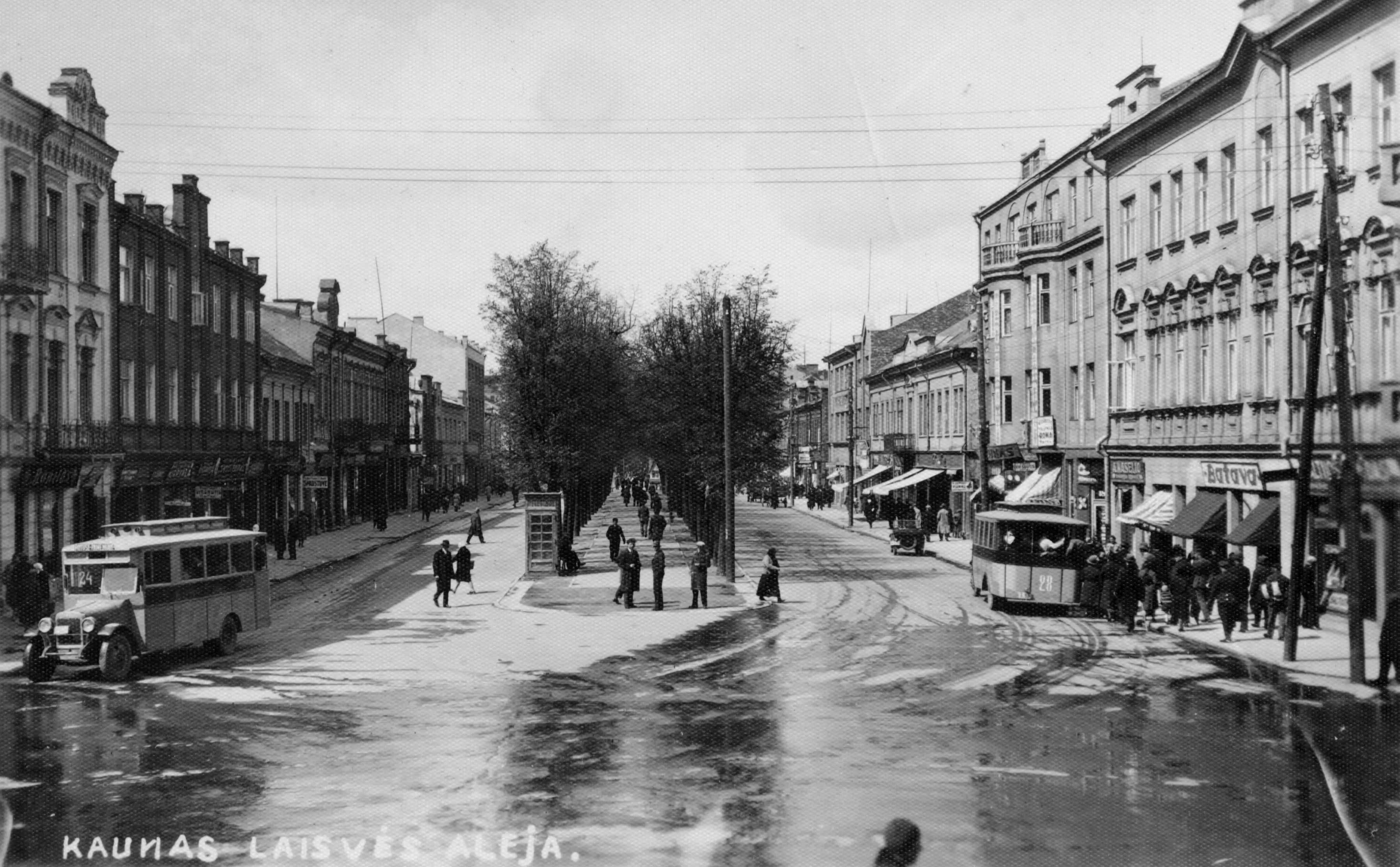
There is a particular kind of city that history creates almost by accident: one asked to be something it was never designed to be, handed a role it did not seek, and made to grow into it under pressure. Between the two world wars, Kaunas was such a city. For roughly two decades it functioned as the working capital of Lithuania while carrying the strange, self-effacing official title of laikinoji sostinė — the temporary capital. The word "temporary" was not a footnote. It was the defining condition of everything the city became.
To understand how a modest town at the confluence of the Nemunas and Neris rivers came to house a president, a parliament, a diplomatic corps, and a national university, we have to begin not in Kaunas at all, but in Vilnius — and in the tangle of war, diplomacy, and betrayal that separated Lithuania from its ancient capital.
A capital declared, a capital lost
When Lithuania proclaimed its independence on 16 February 1918, the act named Vilnius as the capital of the new democratic republic. The claim rested on deep historical ground: Vilnius had been the seat of the Grand Duchy of Lithuania since the fourteenth century, the city of Gediminas, the symbolic core of Lithuanian statehood. But the Vilnius of 1918 was a multi-ethnic city — heavily Polish and Jewish in population — and more than one nation laid claim to it.
The next two years were chaos. A new Lithuanian government established itself in Vilnius in late 1918, only to evacuate when Soviet forces entered in January 1919. Polish troops drove the Red Army out a few months later and occupied the city themselves. Control of Vilnius changed hands repeatedly as the Polish–Soviet War and the parallel Polish–Lithuanian conflict churned across the region.
The decisive moment came in October 1920. Under pressure from the League of Nations, Poland and Lithuania signed the Suwałki Agreement on 7 October, drawing a demarcation line meant to calm the fighting. The ink was barely dry. On 8 October — just hours later — Polish general Lucjan Żeligowski marched on Vilnius at the head of his troops, claiming to act on his own initiative to defend the region's Polish population. The "mutiny" was theatre. It had been planned and authorised by the Polish head of state, Józef Piłsudski, precisely so that Poland could seize the city while officially disowning the act and preserving its standing with the League, which was mediating other sensitive Polish disputes at the time.
Żeligowski's forces took Vilnius, and on 12 October he proclaimed a puppet state, the Republic of Central Lithuania, with Vilnius as its capital. After a disputed 1922 election, that entity was absorbed into Poland, where Vilnius would remain until 1939. Lithuania never recognised the seizure. It refused to establish normal diplomatic relations with Poland, kept the dispute alive as a matter of national principle, and clung constitutionally to Vilnius as its rightful capital.
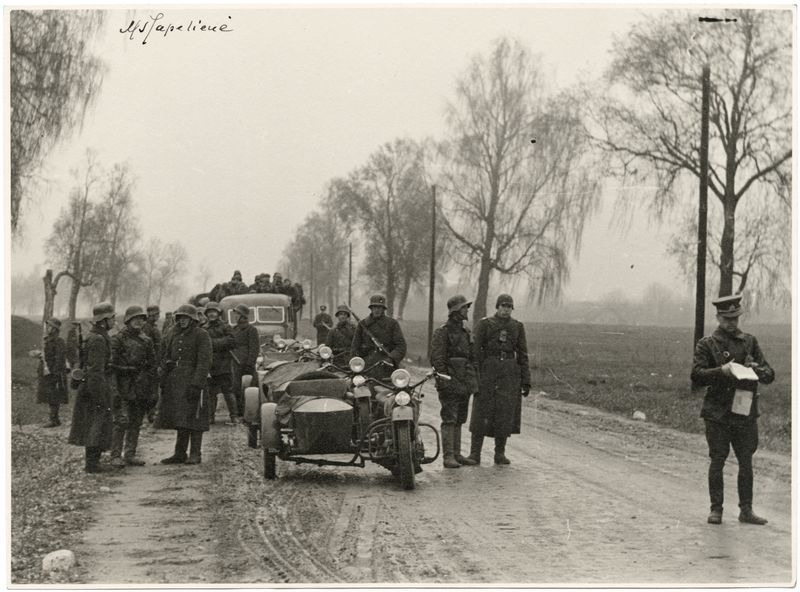
But a government cannot run from a city it does not hold. And so the machinery of the Lithuanian state settled, provisionally, into its second city.
Why Kaunas
Kaunas was not chosen for its grandeur. It had almost none. It was a former garrison town of Tsarist Russia — a fortress city, ringed by defensive works, oriented toward the old Prussian border. Heritage researchers describe an interwar Kaunas that lacked nearly everything a European capital was expected to have: infrastructure, government buildings, hotels, representational architecture, even the population base. It was, by the standards of the role it was about to assume, a provincial town.
What it did have was availability and safety. It sat firmly within the territory Lithuania actually controlled, at a defensible river confluence, large enough to be the country's second city and close enough to the center of national life to serve. It was where the government had retreated, and it was where the government stayed.
The peculiar psychology of the arrangement shaped the city for two decades. Because Kaunas was only ever temporary — because to invest heavily in it might look like quietly accepting the permanent loss of Vilnius — a strain of hesitation ran through the early years. To build a real capital in Kaunas risked admitting that Vilnius was gone for good. For a while, that anxiety acted as a brake on ambition.
Eventually, the brake gave way. The country needed a functioning capital now, not whenever Vilnius might be recovered, and by the late 1920s and especially the 1930s the hesitation had turned into something closer to defiant momentum.
The building of a nation, one boulevard at a time
The transformation that followed is genuinely remarkable, and it is the reason Kaunas matters far beyond Lithuania's borders today.
In a compressed, intense burst — roughly 1919 to 1939 — Kaunas built itself a capital almost from scratch. The city's population expanded by around two-thirds in a mere sixteen years. A state that had to be invented needed the physical apparatus of statehood, and all of it went up at once: government ministries, a central bank, a national university, museums, schools, hotels, post offices, cinemas, banks, corporate headquarters, and thousands of apartment houses and private homes.
Crucially, the people building it were a new generation of Lithuanian architects and specialists who had studied in Western and Central Europe and come home carrying the ideas of European modernism — functionalism, Art Deco, a stripped and confident neoclassicism. They fused these international currents with a search for a distinctly Lithuanian "national style." The results were extraordinary and are extraordinarily well preserved: something on the order of six thousand interwar buildings, with roughly fifteen hundred concentrated in the districts of Naujamiestis (the New Town) and Žaliakalnis.
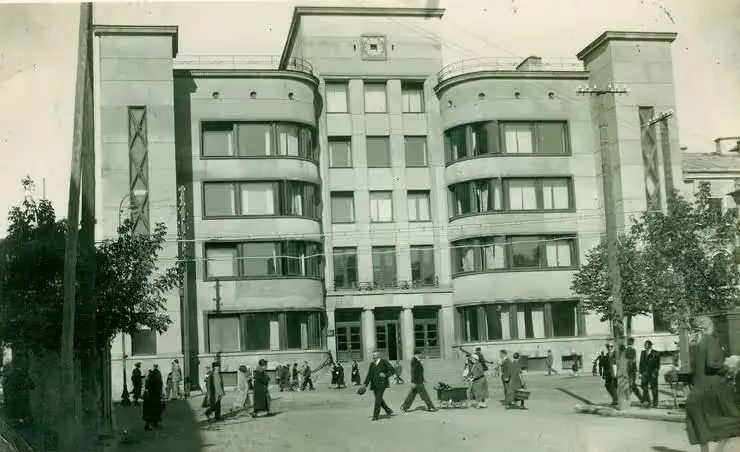
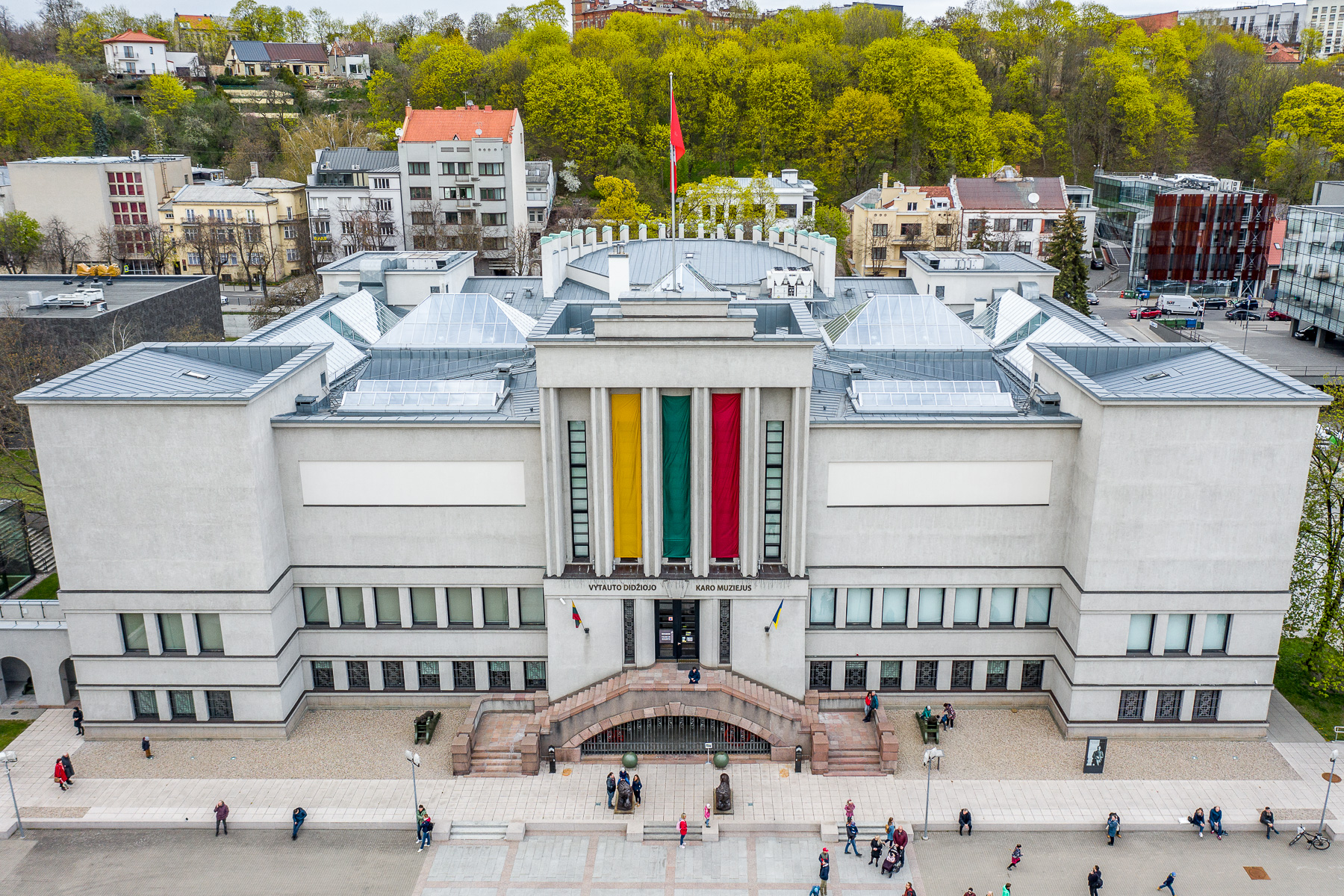
The landmarks tell the story. The Bank of Lithuania became, in effect, the hallmark of the capital's transfer to Kaunas — a serious institution announcing that this was now where the state's business was done. The Central Post Office on Laisvės alėja, completed in 1932 to Feliksas Vizbaras's design, married functionalism to national decorative motifs and became a model of the local style. The vast Vytautas the Great War Museum complex, finished in 1936, housed both a military museum and the M. K. Čiurlionis art museum, monumentalising the nation's history and culture in a single ensemble. The Pienocentras milk-processing headquarters, with its curved corner façade, won a bronze medal at the 1937 Paris International Exposition — a small country's modernist architecture recognised on the world stage. Christ's Resurrection Church rose on the Žaliakalnis hill as a great white symbol of the era.
The city's central artery, Laisvės alėja — Freedom Avenue — became the spine of this new capital: a tree-lined boulevard of cafés, bookshops, cinemas, pharmacies, and editorial offices. By 1940 the city supported seventeen cinemas; the Romuva, which opened in April 1940 just two months before independence was extinguished, still operates today. Vytautas Magnus University anchored intellectual life, and returning graduates staffed the ministries, newspapers, and design studios that gave the city its restless, forward-leaning energy.
This was, as one apt phrase has it, an architecture of optimism. Kaunas became perhaps the clearest European example of large-scale interwar urbanisation driven by the confidence of a young nation-state. It is a case study in a truth easy to forget: national identity is not simply inherited, it is built — in institutions, in habits, and quite literally in brick, concrete, and glass. In 2015 the European Heritage Label recognised "1919–1940 Kaunas," and in 2023 UNESCO inscribed Modernist Kaunas: Architecture of Optimism, 1919–1939 as a World Heritage Site, the only European city representing interwar urbanisation on this scale.
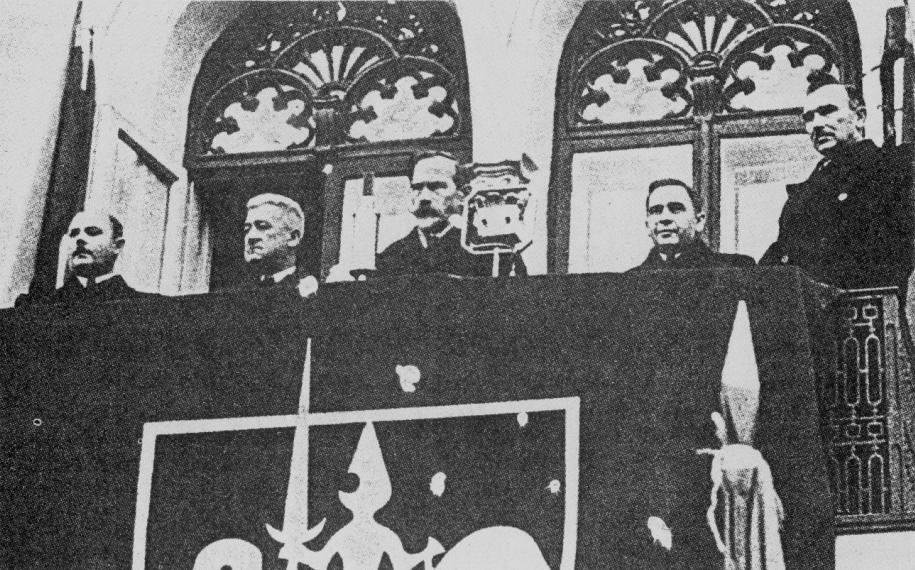
It should be said plainly that this golden period had shadows. Lithuania's brief democratic experiment was cut short by Antanas Smetona's authoritarian nationalist coup in 1926, and much of the intensive building boom unfolded under his one-party rule; the ruling Nationalists were themselves patrons of prominent buildings on Laisvės alėja. And the interwar city's celebrated multiculturalism — its large Jewish community above all — would be annihilated in the genocide of 1941–1944. The optimism was real, but so was its fragility.
The title goes home
The story's ending carries a bitter irony that the word "temporary" only half prepared anyone for.
Vilnius returned to Lithuania not through liberation, and not on Lithuania's own terms, but as a bargaining chip in the opening moves of the Second World War. The Molotov–Ribbentrop Pact of August 1939 secretly divided Eastern Europe between Nazi Germany and the Soviet Union, placing Lithuania in the Soviet sphere. When Germany and the USSR invaded and partitioned Poland in September 1939, Soviet forces took Vilnius.
Then came the offer. In October 1939, the Soviet Union proposed to hand Vilnius and part of the Vilnius region back to Lithuania — in exchange for the right to station Soviet military bases and some 20,000 troops on Lithuanian soil. The Lithuanian foreign minister, Juozas Urbšys, was summoned to Moscow, where Stalin presented the choice starkly: accept the mutual assistance treaty and regain the historical capital, or refuse, forfeit Vilnius, and face ruin. On 10 October 1939 the treaty was signed, and on 27–28 October Lithuanian troops formally entered Vilnius. After nineteen years, the ancient capital was Lithuanian again.

Lithuanians greeted the transfer as an act of historical justice. But the price was the country's independence in all but name. Those Soviet garrisons, welcomed as the cost of Vilnius, were exactly the instrument the USSR used the following June to occupy and annex Lithuania outright. A grim contemporary saying captured it: Vilnius mūsų, o mes rusų — "Vilnius is ours, but we are Russia's."
Notably, Lithuania did not immediately move its capital back. The government remained in Kaunas through the short-lived return, pursuing a contentious policy in the majority-Polish Vilnius region even as its own sovereignty drained away. It was only under Soviet rule, in 1940, that Vilnius formally resumed its place as the capital — this time as the capital of the Lithuanian Soviet Socialist Republic. The city Lithuania had longed for came back to it inside the cage that would hold the whole nation for the next half-century.
What the temporary capital left behind
The interwar chapter closed the way so much of twentieth-century Baltic history did: with a nation's genuine achievement overtaken by forces vastly larger than itself. Kaunas lost the title it had never officially wanted, and then Lithuania lost everything else.
Yet the city that "temporary" built proved anything but. The Soviets disdained interwar Kaunas as a monument to bourgeois pretension — they went so far as to convert the great Christ's Resurrection Church into a radio-factory — but they could not erase it. The ensemble survived, and with the restoration of independence and the recognitions that followed, Kaunas has reclaimed its interwar decades as a source of deep pride: proof that in the narrowest of windows, under the most provisional of mandates, a small nation built itself a capital worthy of the name.
That is the paradox worth holding onto. Kaunas spent twenty years as a placeholder, a stand-in, a capital with an asterisk — and in doing so it produced one of Europe's most complete and confident expressions of the interwar spirit. The title went back to Vilnius, as it was always meant to. But the city that carried it in the meantime turned "temporary" into something permanent after all.


)%20(1).avif)