Ingmar Kiviloo From Berklee to a New Musical Horizon
.avif)
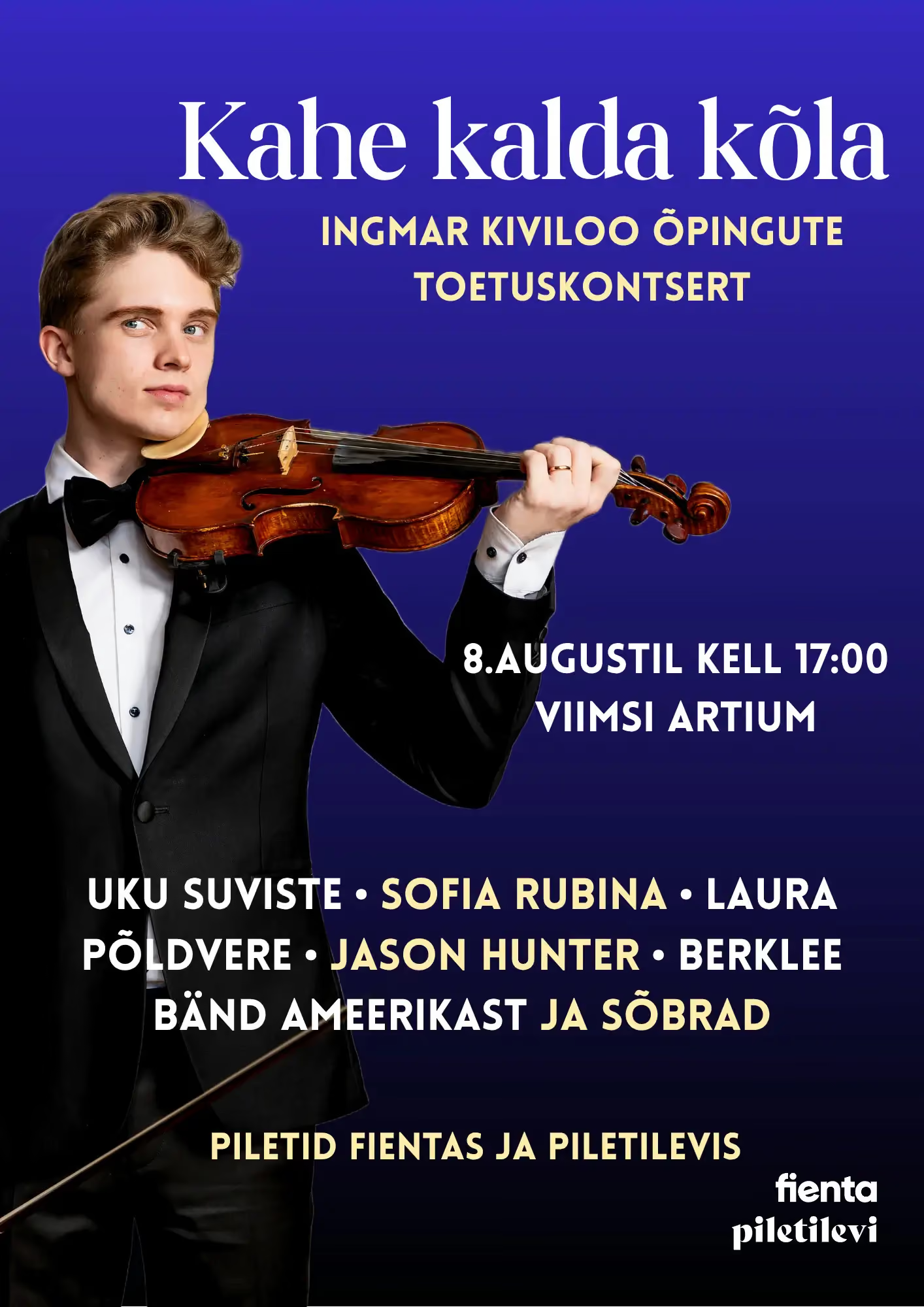
On August 8, the title “Kahe kalda kõla” — “The Sound of Two Shores” — will become more than a poetic description. Inside the great hall of Viimsi Artium, musicians from Estonia and the United States will gather around the work of violinist, composer, singer, and multi-instrumentalist Ingmar Kiviloo.
The concert celebrates Kiviloo’s graduation from Berklee College of Music in Boston while raising support for the next stage of his education: a master’s degree in composition at the University of Toronto. Yet the evening is not simply a farewell to one school or a fundraiser for another. Its program has been conceived as a musical map of the places, traditions, and communities that have shaped him — Tallinn, Boston, Toronto, Estonia’s classical heritage, North American jazz and pop, and the cultural life sustained by Estonians abroad.
It is also an invitation. For members of the Estonian community in the United States and Canada who have followed Kiviloo’s development, attended his performances, or welcomed him into diaspora cultural life, the concert offers a meaningful opportunity to participate in what comes next.
A Musical Education That Refused to Stay in One Category
Born in Tallinn in 2004, Kiviloo entered music at an early age. He began singing in the Estonian Television Children’s Choir at three and studying violin at six. He later attended Vanalinna Hariduskolleegium while continuing his violin studies at the Youth Academy of the Estonian Academy of Music and Theatre. His musical education also extended to voice, organ, and drums.
In 2022, he moved to Boston to attend Berklee College of Music. He graduated in 2026 in Contemporary Writing and Production, with violin as his principal instrument, and was named to Berklee’s Dean’s List from 2023 through 2026.
That breadth helps explain the unusual architecture of the Viimsi concert. Kiviloo’s work does not divide neatly into the roles of classical composer, violinist, singer-songwriter, arranger, or producer. His development has taken place between those identities, allowing one discipline to inform another.
As a violinist, he has earned prizes at numerous national and international competitions. As a vocalist, he reached sixth place in Eesti otsib superstaari and later appeared in Eesti Laul with his original song “Dreaming.” His performances have taken him from Estonian concert halls to the NATO 75th Anniversary Gala in Washington, D.C., and a benefit concert for Ukraine at Carnegie Hall.
In 2022, Kiviloo initiated Maailm, mis jääb meile, a large-scale benefit concert for Ukrainian refugee children in Estonia. Nearly 500 musicians participated in the event, which was broadcast on Estonian national television. The project revealed an instinct that remains visible in “Kahe kalda kõla”: for Kiviloo, composing, performing, producing, and bringing people together are often parts of the same artistic act.
Music as a Way of Carrying Place
The first half of “Kahe kalda kõla” will focus on Kiviloo’s original compositions for violin, chamber ensembles, and choir.
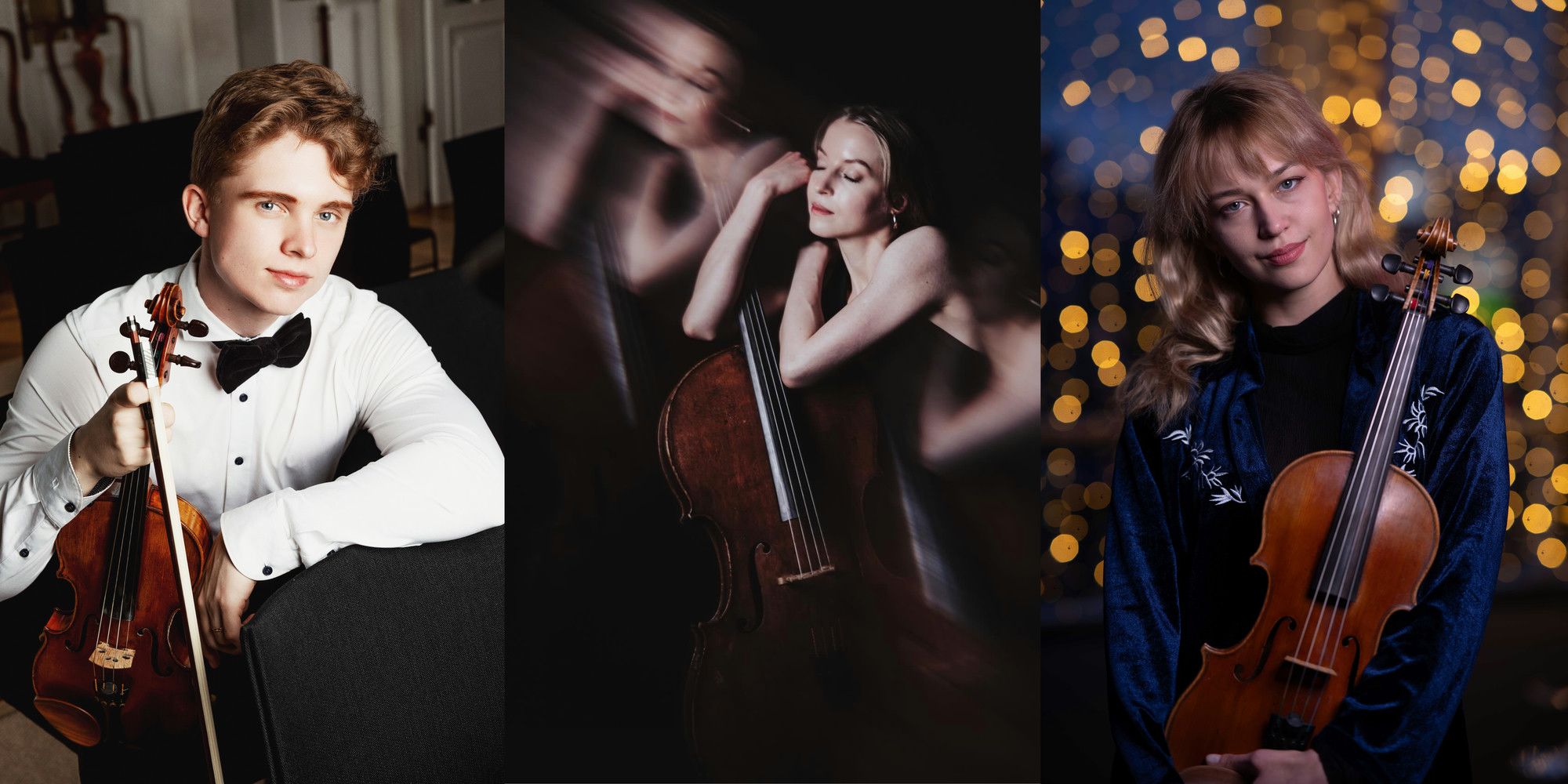
The program includes two world premieres. The first, “Eestimaa hetked,” is a string trio for violin, viola, and cello, performed by Kiviloo, Maria Ridbeck, and Loo Arukask. The second, “Theme and Variations on ‘Tuljak,’” reimagines one of Estonia’s most recognizable musical and dance traditions as a work for solo violin.
The act of returning to “Tuljak” is significant. Rather than placing a familiar cultural symbol behind glass, Kiviloo treats it as living material — something that can be examined, transformed, and heard differently by a contemporary audience.
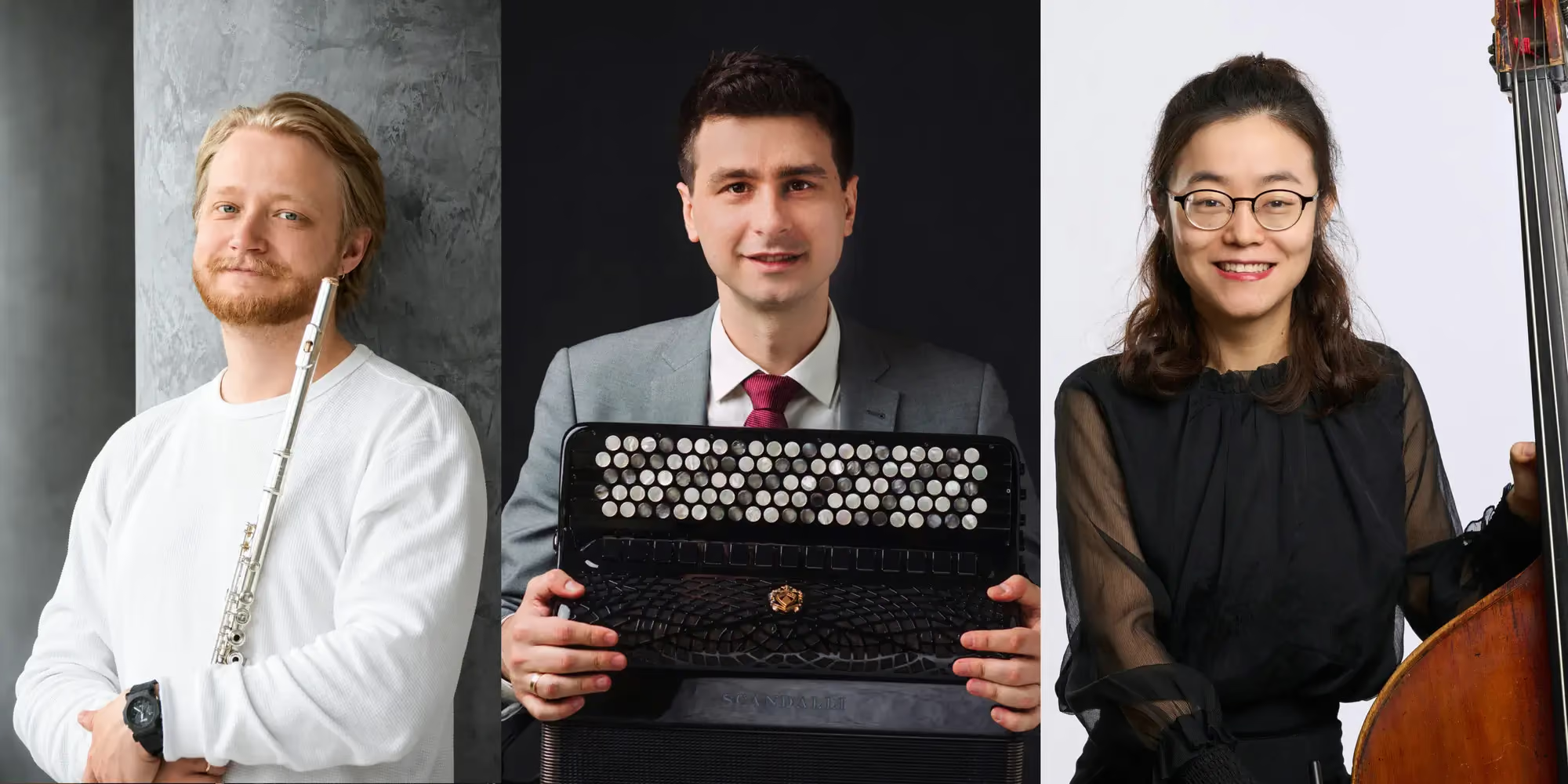
The program will also feature “Metsavana,” a trio for flute, accordion, and double bass that reached the final of the 2026 LHV Young Composer Competition. It will be performed by flutist Kristjan Lume, accordionist Momir Novaković, and double bassist Xiaonan Nie. This year’s competition received 67 works from 43 composers, with the jury describing the overall standard and level of competition as particularly high.
Another work, “Kodumaa süit,” draws upon Kiviloo’s own family history. He has described the composition as being inspired by his grandparents’ flight during the Second World War and by the family’s country home in Illi village. Rather than presenting homeland as an abstract patriotic idea, the suite approaches it through inherited memory, displacement, landscape, and the emotional geography of a family story.
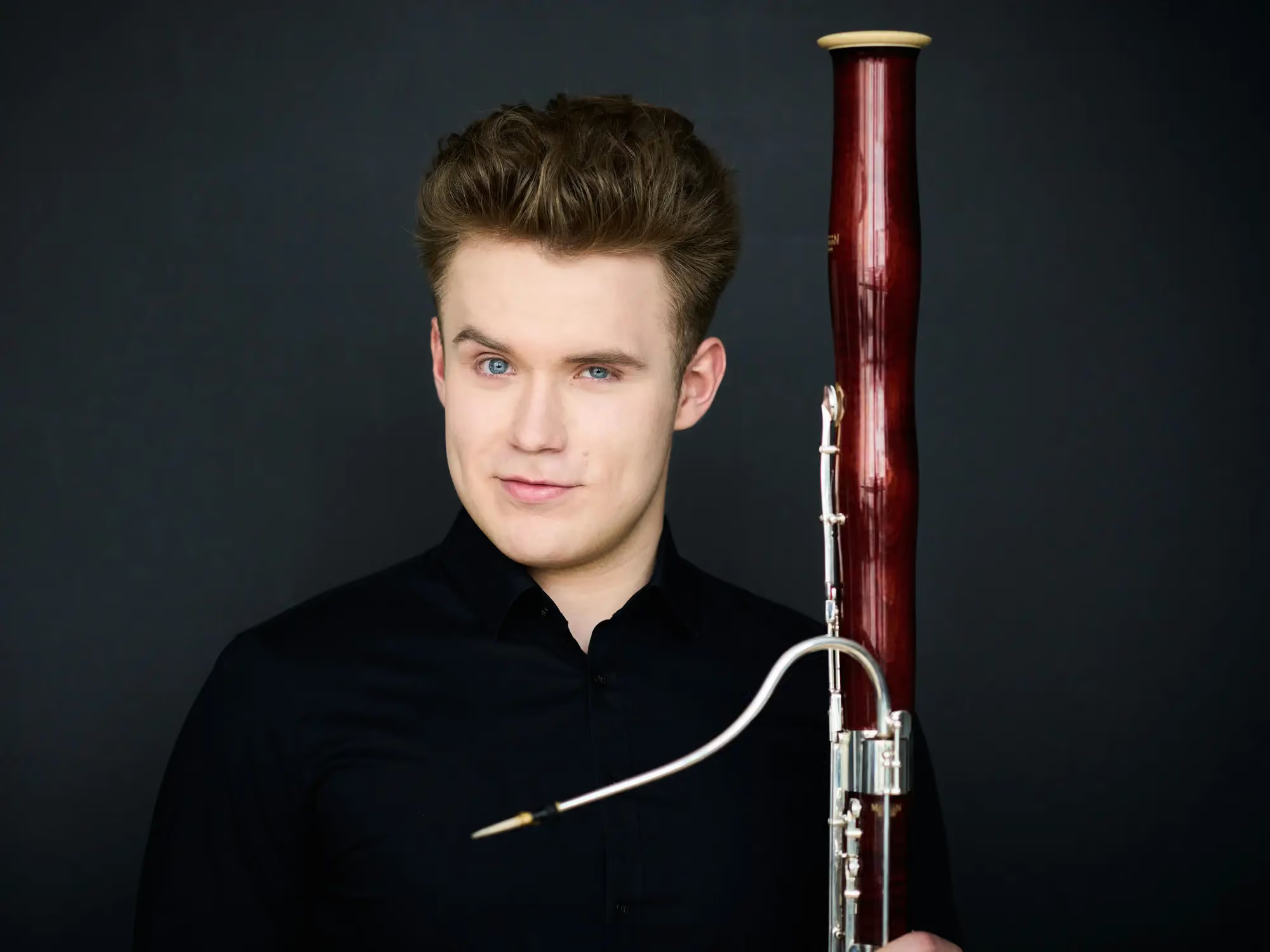
A choral dimension enters through “Õites puud on inimeste moodi,” created in collaboration with celebrated Estonian poet and writer Leelo Tungal. The classical program will also include bassoonist Robert Nael, pianist Kristiina Rokashevich, cellist Margus Uus, and other professional Estonian musicians, alongside young laureates of the Tallinna Talent competition.
Taken together, these works suggest that Kiviloo is not interested in preserving tradition unchanged. Folk associations, choral writing, family history, and memories of Estonia become materials that can be rearranged and brought into conversation with the present.
That approach also appears in his wider cultural work. In 2025, the Association for the Advancement of Baltic Studies awarded Kiviloo its Baumanis Grant for “Laulu võim” — “The Power of Song.” The interactive project examines how song festivals and communal singing have helped preserve identity in Estonia, Latvia, Lithuania, diaspora communities, and places of exile.
The project considers how music travels through censorship, migration, assimilation, and generational distance. It asks how melodies and traditions change when communities carry them into new countries, and how singing can preserve a sense of belonging even when the idea of home has become geographically complicated.
“Kahe kalda kõla” can be understood as a live expression of a similar question: what happens to a musical identity when it crosses an ocean, enters another institution and another genre, and then returns home?
When Boston Meets Tallinn
Following the chamber and choral works of the first half, the concert will turn toward pop and jazz.
Four of Kiviloo’s Berklee classmates are travelling to Estonia specifically for the event: pianist Matthew Bennett of Minnesota, bassist Evan Boucher and drummer Blake Thompson of Tennessee, and guitarist Tage Garvin of Oregon. They will join Estonian Berklee alumni Uku Suviste, Laura Põldvere, Sofia Rubina, and Jason Hunter, performing music developed during Kiviloo’s years in Boston.

The ensemble will also revisit the music of Raimond Valgre through arrangements created especially for the concert. Valgre’s songs occupy a distinctive position in Estonian cultural memory, bringing together jazz-influenced popular songwriting, intimacy, longing, and an unmistakable sense of time and place.
At Viimsi Artium, those songs will pass through the musical language of Berklee-trained performers from Estonia and the United States. The intention is not to detach Valgre from his history, but to demonstrate why his work remains capable of renewal.
The result promises to be more than a conventional crossover concert in which classical repertoire simply gives way to a lighter second half. Both portions of the evening are concerned with arrangement and transformation.
A folk-associated melody becomes a work for solo violin. Family memory becomes a chamber suite. Estonian popular standards are placed in the hands of an international jazz and pop ensemble.
The genres change, but the underlying conversation continues.
A Canadian Connection Rooted in Family and Diaspora
Canada is not entering this story only because Kiviloo will begin graduate studies in Toronto.
Kiviloo was born with both Estonian and Canadian citizenship. His Canadian citizenship comes through his father, an Estonian from Toronto’s diaspora community. His relationship with Canada is therefore both personal and cultural, preceding his admission to the University of Toronto by many years.
Since 2015, Kiviloo has regularly travelled to Canada to perform and participate in Estonian community events. He first appeared there with the violin ensemble Võlukeeled and later returned as a soloist, building relationships with the community that had formed part of his own family’s history.
That background gives the concert’s title another layer. Its “two shores” refer most immediately to Estonia and the United States, whose musicians will meet onstage in Viimsi. Yet the evening also looks toward Canada, where Kiviloo’s family connection to the diaspora will now intersect with his formal development as a composer.
He is expected to relocate to Toronto in mid-August, only days after the concert.
The University of Toronto’s Master of Music in Composition is an advanced two-year program centered on individual composition work, graduate seminars, performance opportunities, and the creation of a substantial original or electroacoustic composition defended through an oral examination. Students can work across compositional theory, history, live performance, and advanced digital technologies.
For an artist already moving between acoustic composition, production, popular music, performance, and cultural research, the program represents a continuation of an existing direction rather than a sudden departure from it.
The Viimsi concert allows audiences to hear the body of work, influences, and international community Kiviloo will carry with him into that next chapter.
A Concert That Invests in What Comes Next
All proceeds from “Kahe kalda kõla” will support Kiviloo’s graduate studies in Toronto. Alongside standard admission, supporters can purchase special tickets priced at €50 or €100. A separate €10 youth supporter ticket allows someone unable to attend personally to provide concert admission for a student at an Estonian music school.
The option extends the purpose of the evening beyond supporting one musician’s education. It gives a younger student the opportunity to witness how a musical life can develop across countries, institutions, genres, and communities.
For Estonians in the United States and Canada, the supporter tickets offer a way to participate even from a distance. Kiviloo has performed for diaspora audiences across North America, represented Estonia on major international stages, and devoted significant parts of his work to questions of cultural continuity. Supporting this next stage of his education is therefore not merely assistance with tuition. It is an investment in an artist whose work already connects Estonia with the communities that have preserved Estonian culture abroad.
The setting is particularly appropriate. Opened in 2022, Viimsi Artium was created to bring classical music, jazz, pop, theatre, film, visual art, and education together under one roof. Located approximately 12 kilometres from central Tallinn, it is also home to the Viimsi music, art, and science schools.
On August 8, that multidisciplinary space will contain a story extending far beyond the building itself.
“Kahe kalda kõla” celebrates an educational milestone, but its deeper subject is movement: between Estonia and North America, composition and improvisation, cultural inheritance and new creation, personal ambition and collective support.
For one evening, those journeys will meet on the same stage. What follows will depend, in part, on the community willing to help carry the music toward its next horizon.

