Zetod bring Seto leelo to Eesti Laul with “Kipõ-Kipõ”

Of the twelve songs revealed for Eesti Laul 2027 on Friday night, one arrived with a whole region behind it. “Kipõ-Kipõ” by Zetod, featuring the singer hellika, is a folk-rock tribute to the Seto, the small Finno-Ugric community of Setomaa in Estonia's southeastern corner, and to leelo, the polyphonic singing tradition that UNESCO lists as part of humanity's intangible cultural heritage.
It is also the song that opened our first-listen ranking of the field. In our sound check of all twelve music videos, “Kipõ-Kipõ” was the fastest, at about 166 beats per minute, and it reaches full energy quicker than any other song in the lineup. It is up-tempo, warm and built to get a hall singing along.
Twenty-three years in the making
Zetod are no newcomers. The five-piece band has been playing for 23 years, mixing Seto song with rock, and it has become a fixture of Estonia's folk-festival summers, from Viljandi Folk to its own home ground in Setomaa. Its members include Jalmar Vabarna, known to international audiences from the folk trio Trad.Attack!, and Matis Leima. In February 2025 the band played Estonia's Independence Day anniversary concert.
Yet this is their first Eesti Laul. Speaking to ERR, Vabarna was disarmingly honest about why: for five years running, the band simply missed the entry deadline. This year, they didn't.

A song about slowing down, played at full speed
The title has been translated as “Hurry, hurry!”, and the song turns that rush into its subject. The band told ERR that “Kipõ-Kipõ” is about how hurried and overloaded modern life has become, and that its advice is simple: don't work yourself to death, make time to sing, rest and enjoy life. The lyrics call on listeners to leelo, to sing in the Seto way, and send that singing out from Setomaa to the world.
“With our song we pay tribute to Seto culture, which is so unique in the world,” Vabarna told ERR. He added that he hopes all of Setomaa is behind them, and the band has spoken of the wider Finno-Ugric family, some 25 million people, as the support they would carry to Bulgaria.
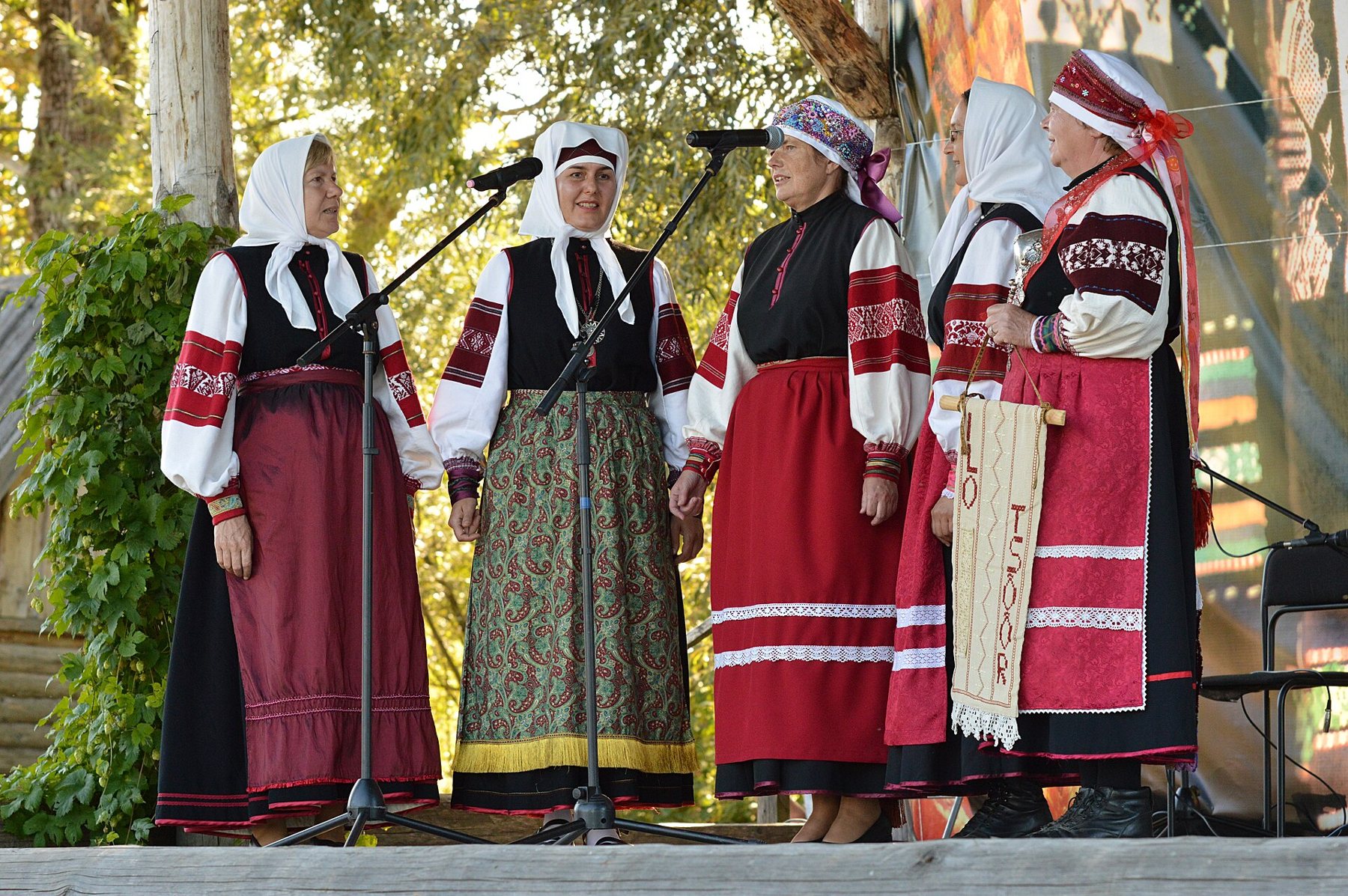
Why hellika?
The band's first idea was to bring a leelo choir onto the stage. Eurovision allows no more than six performers, though, and with five band members there was room for just one more. They chose hellika, a singer with Seto and Võru roots, who joins them for the competition.
What the sound check found
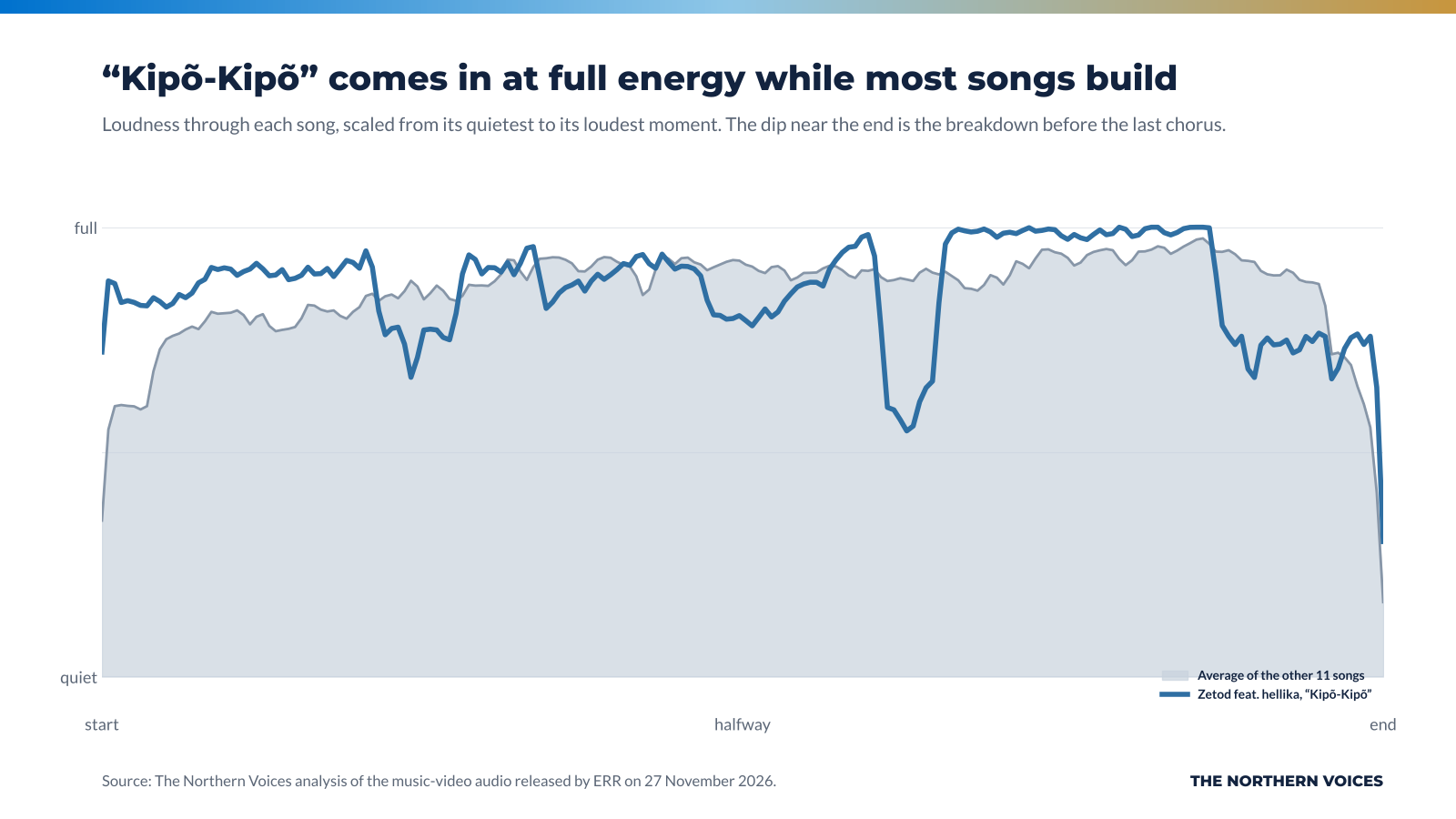
Most of this year's Eesti Laul songs start gently and build. “Kipõ-Kipõ” does the opposite: it comes in at full volume and stays near the top, with one deliberate breakdown before its last and loudest chorus. That shape suits a live television final, where a song has seconds to win a room. It also measured as the third most danceable song in the field, it is in E minor like much of 2020s Eurovision, and at 2 minutes 58 seconds the music-video version already fits inside the contest's three-minute limit.
There is a Eurovision echo, too. Its cheeky, crowd-lifting energy recalls Austria's “Who the Hell Is Edgar?” from 2023, and its pairing of tradition with a modern rock engine follows a path that has served folk-rooted entries well with both juries and viewers.
From Setomaa to the arena
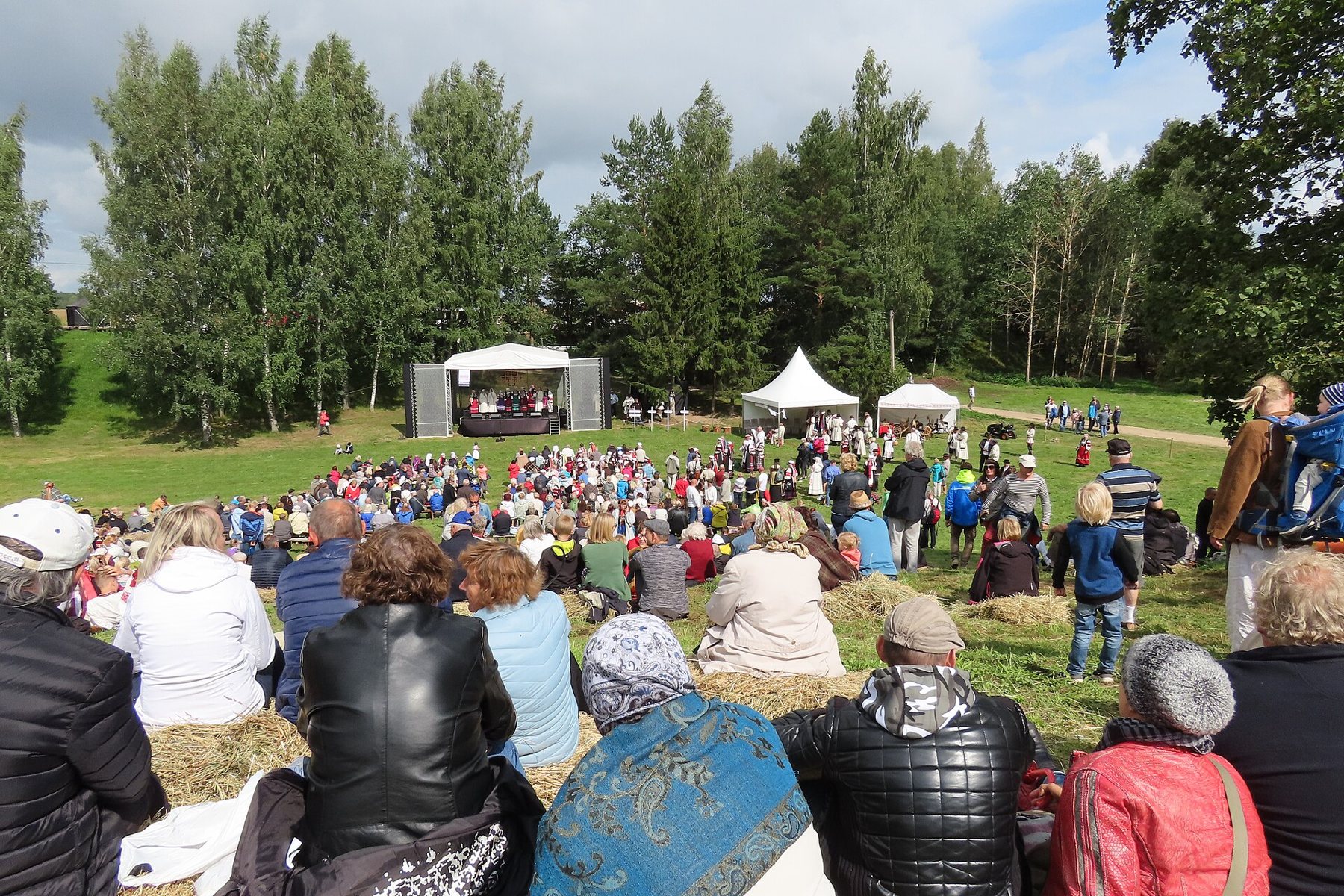
Setomaa straddles the border between Estonia and Russia, and the Seto have kept their language, songs and customs through a century that often pulled the community apart. A Seto song on the Eesti Laul stage carries that history with it, and for many listeners in North America with roots in southern Estonia, it will sound like home.
The final is on Saturday, January 30, at Unibet Arena in Tallinn. Juries and viewers, 50/50, choose three songs for a superfinal, and then the public alone picks Estonia's entry for Eurovision 2027 in Burgas, Bulgaria. Until then, the best way to back the song is the simplest: watch it, share it and sing along.
Above: Zetod perform “Pohmela” at the Republic of Estonia's 107th anniversary concert in February 2025. Read our first listen to all twelve Eesti Laul 2027 songs, and see the full sound check on the Eesti Laul 2027 page of Douze Points, the unofficial Eurovision forecast site made by The Northern Voices founder.
Sources: ERR (Eeter and Ringvaade interviews with Zetod, October 2026), ERR's Eesti Laul 2027 music videos, Eurovoix and Eurovisioon.ee.

)%20(1).avif)